






Gjør som tusenvis av andre bokelskere
Abonner på vårt nyhetsbrev og få rabatter og inspirasjon til din neste leseopplevelse.
Ved å abonnere godtar du vår personvernerklæring.Du kan når som helst melde deg av våre nyhetsbrev.

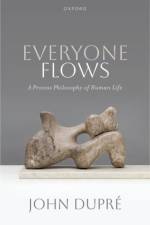
This book develops a new metaphysical framework in which time is motion through a higher dimension. In other words, time literally flows. It breaks through the long debate about time flow and temporal experience in metaphysics by offering an entirely new approach that reconciles psychological time with the time of science.
This, the final volume in Diane Morgan's acclaimed Lost Aberdeen trilogy, is a fascinating, ground-breaking account of the west side of the city. Featuring period photographs, illustrations and maps, Lost Aberdeen: The Freedom Lands uncovers the forgotten hamlets and communities that make up this large area of the modern city.
A searing insight into the radicalization of Silicon Valley, from Elon Musk to Peter Thiel, David Sacks and Donald Trump, and how it will affect the future of all our lives.
Originally published in 1985 the discussions in this book open up a series of important issues for the ethical practice of social work, including questions about the proper relations between personal and professional values, professional responsibility, relations between professionals and their employers and the rights of clients. .
Originally published in 1980, this book introduces students of social studies to ideas in moral, social and political philosophy which are useful for assessing social policy. At the same time the book enables philosophy students to discover the value of social and political philosophy beyond its traditional confines.
Originally published in 1985, this book investigates, through real cases, whether independently funded research which was intended to solve social problems has had the desired effect.
Everyone Flows provides novel ways of thinking about personal identity and the boundaries between stages of a life, and hence illuminates topics such as pregnancy and life extension.
This book explores the concept of exile, experienced not as a physical displacement, but as a subjective experience of disconnection from the Other.
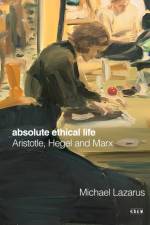
It is not false consciousness that is bad, in itself, but rather the regressive impulses it creates politically, socially and morally.
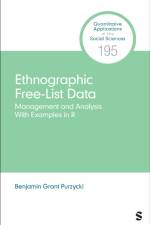
This method involves research participants listing what they know or think about the researcher's topic. This book incorporates free-list analyses with other analytical methods and demonstrates their broad applicability. The book starts with descriptive methods, then outlines a predictive statistical framework. The author explains how to collect, clean, and manage free-list data and how to use R to calculate and visualize them.
This book explores Fichte's theory of sensibility, focusing on its theoretical and practical significance. It offers unique insight into Fichte's reinterpretation of Kant's aesthetic theory.
This book offers a multifaced understanding of how the 9/11 attacks and the subsequent War on Terror affected the Caribbean.
Flannery O'Connor is a guide for the Catholic who seeks to gain a deeper understanding of what it means to live the life of faith in the modern world. O'Connor describes herself as a Catholic burdened by the modern consciousness which the psychologist Carl Gustav Jung views as "unhistorical, solitary, and guilty." Ann Hartle understands O'Connor's fiction as her confrontation with this specifically modern form of consciousness. The seventeenth-century philosopher Blaise Pascal helps us to experience the meaning of O'Connor's fiction because Pascal confronted that same consciousness in its origins in Montaigne's philosophy. O'Connor recognizes in Pascal a truly Catholic modern philosopher who speaks to the experience of the searching mind of modern man. Flannery O'Connor and Blaise Pascal approaches O'Connor's fiction from a philosophical perspective rather than the perspective of a literary critic. The goal of this volume is to deepen the experience of the meaning of her stories insofar as they are addressed to a specifically modern audience burdened with the form of consciousness that is highly skeptical of the historical reality of the Christian mystery. Hartle's argument is that modern consciousness rests on the "spiritualization" of the Incarnation. Both Montaigne and Jung abstract a purely human meaning from the historical embodied reality of the Incarnation and place that meaning in the service of modern man's attempt at self-creation and self-redemption. O'Connor presents us with an especially vivid picture of Jung's truly modern individual in Hazel Motes, Hulga Hopewell, George Rayber, and The Misfit. In her comic art, O'Connor brings out the possibility of grace against the background of the pervasive psychological attitude toward human conduct. She shows us how the modern distortions of the human personality can be addressed in a specifically Catholic way, that is, through the meaning of the Catholic sacramental view of life and the Catholic principle of mutual interdependence.
Thomas Aquinas and Medieval Canon Law bridges, for the first time, two worlds of scholarship that have never been explored in book-length form and investigates an under-researched area in Thomistic studies, namely the question of how Thomas Aquinas engaged the ecclesiastical law and jurisprudence of his day.>Neither historians of medieval canon law nor experts on Thomas's thought have previously paid much attention to the canon law tradition as a source for Thomas's work and an influence on his thought. But, as this volume shows, his consideration of mendicant life, law, justice, oaths, penance, clerical orders, the Eucharist, baptism, property, commerce, marriage and more reveal engagement with key canon law texts and concepts and with the jurisprudence of major canonists. The book uncovers how Aquinas encountered canonical regulations and jurisprudence as a Dominican, an educator in both theology and pastoral care, and a participant in the secular-mendicant controversy. In his life, education, community, and his way of thought, Thomas Aquinas could not avoid and necessarily encountered and dealt with the canonical tradition. He did so in a distinctive way, working as he did with his theological and philosophical source material to craft his own great synthesis. What this volume shows, if nothing else, is that the canon law tradition should be taken into consideration when assessing Thomas's synthetic thought. Following the editors' introduction, thirteen scholarly contributions and an epilogue explore Aquinas's interaction with medieval canon law through four major themes: Dominican Matters; Foundations Matters of Faith, Truth, and Law; Moral Matters; and Sacramental Matters. Approximately half the contributors are specialists from the field of medieval canon law, and half are grounded in Thomistic tradition. The result is a unique and scholarly contribution to two major research areas that may open avenues for similar studies of other key figures in the scholastic tradition.
Abonner på vårt nyhetsbrev og få rabatter og inspirasjon til din neste leseopplevelse.
Ved å abonnere godtar du vår personvernerklæring.