



Gjør som tusenvis av andre bokelskere
Abonner på vårt nyhetsbrev og få rabatter og inspirasjon til din neste leseopplevelse.
Ved å abonnere godtar du vår personvernerklæring.Du kan når som helst melde deg av våre nyhetsbrev.

Explores the dynamic integration of soft robotics and biomedical sciences and how soft robotic technologies can alter the healthcare sector, from personalized treatment to cutting-edge medical equipment. Discusses soft robotics in implanted devices, artificial muscles, robotics for limb design, and more.
This book investigates African philosophical contributions to the concept of deep ecology. This book is an important read for researchers, advocates and other stakeholders working in the fields of environmental philosophy, climate change, indigenous studies, and African Studies.
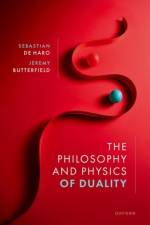
This book discusses dualities in physics. It covers what dualities are, their main examples-from quantum mechanics and electrodynamics to statistical mechanics, quantum field theory, and string theory-and the philosophical questions they raise.
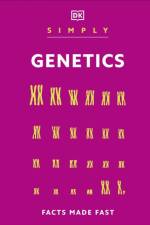
Combining bold graphics with easy-to-understand text, this is the perfect introduction to the blueprint of life for those who are short on time but hungry for knowledge.Covering a broad range of fields from the cell biology of genes and DNA to cutting-edge gene-editing technologies like CRISPR, Simply Genetics demystifies the complexities of genetic code, its role in the evolution of species, and how it might reshape humanity and the world we live in.Explaining individual aspects of genetics more clearly than ever before, the book outlines the molecular science behind the crucial discoveries in the field, profiles revolutionary applications in agriculture and health like stem cell therapy, and explores the ethical implications of genetic research and technologies like "designer" babies.Whether you are studying genetics- or biology-related subjects at school or college, or simply want a jargon-free overview of this pioneering field of science, this essential guide is packed with everything you need to understand the basics quickly and easily.
The book attempts to configure the distinctive and enduring reflective ethos of Sanskrit traditions - an ethos which barely receives attention in the prevailing approaches to these reflective traditions.
Igniting political power through the lens of art and the imaginationPostpolitics and the Aesthetic Imagination investigates the erosion of meaningful political action in today's world. Gathering together writings from an array of scholars, editor Juan Meneses asks: can an aesthetic theory of postpolitics help us understand and counteract the most insidious processes of depoliticization? The contributors to this volume explore how the aesthetic imagination can play a crucial role in reenvisioning key political elements, including governance, agency, rights, and responsibility. With a survey of various artistic mediums-film, dance, music, literature, and digital media-the essays illustrate how the aesthetic can reveal ways to breathe new life into the work of emancipatory politics. Reclaiming the arts and humanities as vital to political life, the contributors revisit but also move beyond the social sciences' central focus on neoliberalism and public administration to address other topics such as tech-capitalism, race, environmental violence, and patriarchy. Postpolitics and the Aesthetic Imagination argues for a conscious deployment of aesthetics to resist political anesthesia and promote a more just society, underscoring the role of the imagination in political engagement and change. Contributors: Jacquelyn Arcy, U of Wisconsin-Parkside; Christopher Breu, Illinois State U; Stephen Charbonneau, Florida Atlantic U; Eric Lemmon, Webster U; Robert P. Marzec, Purdue U; Allison Page, Rutgers U-Camden; Matthew Scully, U of Lausanne; Eric Swyngedouw, U of Manchester; Sherryl Vint, U of California, Riverside.
Explores how the tremendous wealth of newly unearthed artifacts and manuscripts have changed our understanding of China's past.
A vivid and accessible new translation of essential selections from Boethius’s Consolation of Philosophy—a moving classic about facing life’s worst events with courage and hopeWhat do you do when your life has fallen apart? Fifteen hundred years ago, a Roman nobleman named Boethius (ca. 480–524 CE) asked this question as he was sitting in a prison cell waiting to die, accused—probably unjustly—of treason. Boethius had been a rich and powerful man with all a person could want in life, but now he had lost everything. Shaken, he wondered how such terrible misfortune could have happened to him and why life was so unfair. When Philosophy herself appears in his cell and confronts Boethius, the conversation that follows between the two on the nature of evil and why humans suffer is as powerful and inspiring today as it was to its first readers. In How to Endure Hardship, Philip Freeman presents a lively modern translation of essential selections from Boethius’s classic, complete with an introduction and the original Latin on facing pages.This translation vividly captures Boethius’s journey from bitterness and anger to reconciliation and peace, showing how ancient philosophy, especially Stoicism, can help readers deal with adversity in their own lives. The book reveals the qualities that have made The Consolation of Philosophy one of the most popular and influential works of classical and world literature, and an inspiration to countless writers, including Thomas Aquinas, Dante, and Chaucer.
How to make sense of the divergence between philosophers' quest for a single morality and social scientists' assumption that there are multiple moralitiesWhen we speak of morals, what are we speaking of? Is morality singular (as many philosophers tend to assume, even if they don't agree on what it is) or are there multiple moralities (which social scientists, notably anthropologists, study)? In The Diversity of Morals, Steven Lukes brings together these differing perspectives. Drawing on philosophy, sociology, social anthropology, psychology, and political theory, Lukes considers what the moral domain includes and what it excludes; how what is moral differs from what is conventional or customary in different contexts; whether morality is unified or a series of fragments; and, if there is a diversity of morals, what that diversity consists of. Lukes looks both ways-toward philosophers' quest for a single best answer to the question of morality and toward sociologists' and anthropologists' assumption that there are several, even many, even very many, answers-to make sense of their divergence. He traces the two approaches back to their beginnings, linking them to the differences between the ideas of David Hume, Johann Gottfried Herder and Adam Smith. Lukes examines how we went from viewing the social world as "us" versus "them" to thinking of morality as universal, envisioning shared humanity and the sacredness of the human person, and what prevents this vision from being realized. Considering the breakdown of moral constraints in the perpetration of mass atrocities, Lukes asks if there are phenomena that are beyond moral justification. And he raises this crucial question: in light of the vast variation that history and the ethnographic record display, how wide and how deep is the diversity of morals?
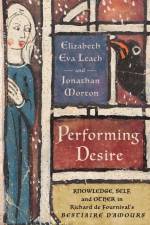
Performing Desire examines the intellectual and philosophical complexity of a monument of medieval literature: the mid-thirteenth century Bestiaire d'amours of Richard de Fournival. Although the Bestiaire was recognized in its time as significant, as evinced by numerous surviving manuscript copies and its influence on other literary works, modern scholarship has tended to neglect it. Performing Desire remedies this omission by detailing the contributions of the Bestiaire to medieval literature and thought. Attending to the phenomenology, psychology, and philosophy of Fournival's Bestiaire, Elizabeth Eva Leach and Jonathan Morton reconsider the work as a literary experiment that explores erotic desire and the construction of a self. Leach and Morton further show that the Bestiaire is as much a meditation on sound and performance as it is a study of desire. Synthesizing methods from musicology, literary studies, and manuscript studies, Leach and Morton consider the complex and hybridized workings of text, image, sound, and cues for performance in the surviving manuscripts of the Bestiaire. Through their analysis, Leach and Morton find that the distinctive aspect of the Bestiaire's philosophical method is its self-conscious status as a performance between the oral and the literary, the voice and the page. It is this aspect, they contend, that left such a mark on the medieval European tradition of philosophical fiction. In Performing Desire, Richard de Fournival's hybrid text emerges as one of the most philosophically sophisticated and important works of medieval literature not only in French but in any language.
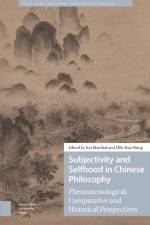
Human beings have always been concerned with fundamental questions about their selves, including the deeply personal nature of human experience, the persistence of the self over time, the relation between mind and body, and the interdependence between self and community. The goal of this volume is to rethink these questions against the backdrop of Chinese philosophical traditions, covering the ideas of major thinkers from Classical to late imperial China, with a particular focus on the fact that human experience is necessarily characterized by the first-person perspective. The contributors to this volume employ different methods (historical, comparative, phenomenological), but they all aim at bringing the rich resources of Chinese philosophy to life in our global present.
Abonner på vårt nyhetsbrev og få rabatter og inspirasjon til din neste leseopplevelse.
Ved å abonnere godtar du vår personvernerklæring.