








Gjør som tusenvis av andre bokelskere
Abonner på vårt nyhetsbrev og få rabatter og inspirasjon til din neste leseopplevelse.
Ved å abonnere godtar du vår personvernerklæring.Du kan når som helst melde deg av våre nyhetsbrev.

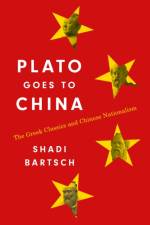
The surprising story of how Greek classics are being pressed into use in contemporary China to support the regime's political agendaAs improbable as it may sound, an illuminating way to understand today's China and how it views the West is to look at the astonishing ways Chinese intellectuals are interpreting-or is it misinterpreting?-the Greek classics. In Plato Goes to China, Shadi Bartsch offers a provocative look at Chinese politics and ideology by exploring Chinese readings of Plato, Aristotle, Thucydides, and other ancient writers. She shows how Chinese thinkers have dramatically recast the Greek classics to support China's political agenda, diagnose the ills of the West, and assert the superiority of China's own Confucian classical tradition.In a lively account that ranges from the Jesuits to Xi Jinping, Bartsch traces how the fortunes of the Greek classics have changed in China since the seventeenth century. Before the Tiananmen Square crackdown, the Chinese typically read Greek philosophy and political theory in order to promote democratic reform or discover the secrets of the success of Western democracy and science. No longer. Today, many Chinese intellectuals use these texts to critique concepts such as democracy, citizenship, and rationality. Plato's "e;Noble Lie,"e; in which citizens are kept in their castes through deception, is lauded; Aristotle's Politics is seen as civic brainwashing; and Thucydides's criticism of Athenian democracy is applied to modern America.What do antiquity's "e;dead white men"e; have left to teach? By uncovering the unusual ways Chinese thinkers are answering that question, Plato Goes to China opens a surprising new window on China today.
This book provides in-depth coverage of metrology principles for students, practicing engineers, technologists, and researchers. This book aims to give both the technician and the academic researcher in the field a thorough understanding of both the mathematical principles and uses, and their applications.
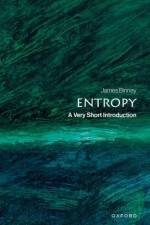
Entropy is an idea that is no less important than energy, but it is not widely understood. We are surrounded by free energy: what we value is energy that's not too polluted with entropy. This book explains how the concepts of energy and entropy were separated from one another over half a century.
Cicero was one of the leading figures at a time of great historical significance, the late Roman republic. This book presents a concise and accessible account of his life and work and shows connections between apparently disparate endeavours.
The speed of the expansion of the universe is governed by the Hubble constant. Discordance tells of its troubled 100-year history, from tentative steps to measure the distances of nearby stars to orbiting telescopes peering into the far reaches of space. But recent results hint at more trouble ahead: the 'Hubble tension'. The story is not over yet.
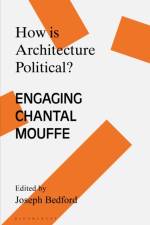
Chantal Mouffe has transformed the contemporary understanding of politics through her re-reading of political theory inspired by anti-foundationalist philosophy-based on Saussure's linguistics, Freud's psychoanalysis and Derrida's deconstruction. Her writings have challenged the centrist, post-political ideology of the 1990s and presciently diagnosed the emergence of right-wing populism seen today with Trump and Brexit. For Mouffe, such populism is the result of the failed centrist conception of politics reduced to technical management. She has called for a "return to politics" on the view that social antagonisms cannot be reconciled but must be channeled into an agonistic form of institutionally stabilized struggle. This book brings Chantal Mouffe's agonistic model of politics into direct dialogue with architecture and inquiries into the role that architecture plays constructing the political order of society, either by concealing or revealing its antagonisms and ideological conflicts. In doing so, it asks in what ways architecture operates politically; whether institutionally, in terms of its spaces and its part in forming cities, or as an aesthetic object with mediatic agency. Through this detailed exchange between Mouffe and four of the world's leading architectural thinkers; Reinhold Martin, Ines Weizman, Pier Vittorio Aureli and Sarah Whiting, a debate unfolds within the book that tests the implications of Mouffe's agonistic model of politics for architectural practice today. Through this, Bedford explores how architectural history, architectural drawing, the making of spectacular monuments, the design and policies behind housing, and the making of public and private space, all potentially contribute to the formulation of the channeling of social conflict into an agonistic form.
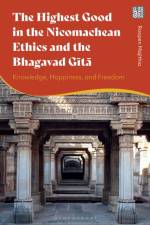
This open access book presents a comparative study of two classics of world literature, offering the first sustained consideration of what unites and divides the Nicomachean Ethics and the Bhagavad Gita. Focusing on the nature of ethical action and how it relates to the highest good, Roopen Majithia demonstrates how the Gita stresses the objectivity of knowledge and freedom from being a subject, while the Ethics emphasizes the knower, working out Aristotle's central commitment to the idea of substance as the primary building block of the world. Yet both the Gita and the Ethics explain variety in human behaviour in terms of three driving forces. Both agree moral agency is a construct that is a function of background, education, and habit, presupposing a cultural, political, and economic infrastructure, all of which shapes how each in turn conceives the highest good. What distinguishes the texts is how the content of right action is generated. Reading them together, alert to their individual accounts of how the practical relates to the reflective dimensions of life, Majithia enriches our understanding of two cornerstone texts in the Greek and Indian philosophical traditions. The ebook editions of this book are available open access under a CC BY-NC-ND 4.0 licence on bloomsburycollections.com. Open access was funded by The Marjorie Young Bell Faculty Fund, The Philosophy Department's Baxter Fund and The Hart Almerrin Massey Endowment.
This book frames mannerism as an inescapable stage in the creative process. The mannerist phase is usually an adolescent stage of language, preceding the consolidation of thought. It is that period when architects design spaces, not yet knowing what it means to design places.
This book offers an exploration of the diverse perspectives shaping the future of Artificial Intelligence, highlighting the influence of non-Western thinking in its development. Whether you're a curious reader, a policy maker, a scholar, or a tech innovator, this is your guide to the different cultural perspectives on AI ethics.
This book offers an analysis of the wide range of attitudes that communist movements and regimes adopted towards atheism during the twentieth century.
Abonner på vårt nyhetsbrev og få rabatter og inspirasjon til din neste leseopplevelse.
Ved å abonnere godtar du vår personvernerklæring.