

















Gjør som tusenvis av andre bokelskere
Abonner på vårt nyhetsbrev og få rabatter og inspirasjon til din neste leseopplevelse.
Ved å abonnere godtar du vår personvernerklæring.Du kan når som helst melde deg av våre nyhetsbrev.

Morel tells the story of subterranean geometry, a forgotten discipline that developed in the silver mines of early modern Europe where mining and metallurgy were of great significance. Through vivid case studies, he illustrates how geometry was used in metallic mines, from surveying to map-making, by practitioners using esoteric manuscripts.
A provocative account that looks at why human doctors are failing their patients-and how AI is better placed to save lives Hundreds of thousands of people die every year, not from a plane crash or a shooting incident, but from misdiagnosis at the hands of those we most trust with our health: doctors. Today doctors are facing unprecedented levels of stress, with rising patient numbers and a constant evolution of medical knowledge. But at the same time, they are prone to racial, class, and social biases that affect the care patients receive. How can we improve patient experience and alleviate the burdens of doctors at the same time? In this groundbreaking study, Charlotte Blease reveals how AI could emerge as the most reliable physician in history. Drawing on firsthand interviews with leading authorities in AI, doctors, and patients themselves, Blease shows how technology is already changing things for the better. From diagnosis and second opinions to treatment and aftercare, AI has the potential to revolutionise healthcare-if we give it a chance.
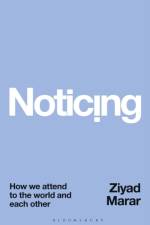
What does it mean to truly notice something? To really see it. Noticing is different from simply being aware of something or merely perceiving it. It requires us to show care to a thing or a person and not just acknowledge its existence. From the etymology of the word 'noticing' to insights from the psychology of perception and attention, Ziyad Marar considers noticing as a fundamental dimension to what it is to be human.The book explores how noticing is often motivated whether by a need or pre-occupation or a pet theory. What humans notice, in particular because we're such hyper social creatures, is different from what dogs or dragonflies notice because we operate with different interests and perceptual skills. On the flipside of noticing, of course, is the common and very necessary practice of ignoring. Noticing properly doesn't necessarily mean what falls outside of that pool of light. Whether through inattentional blindness or change blindness we can miss what is in front of our eyes. Sometimes we serve our interests by ignoring what it would be inconvenient to notice. A paranoid or jealous person can start hyper-noticing in ways that can be destructive. Simone Weil for example was so sensitive to the suffering of others that she neglected to notice her own needs. Sometimes we care too much, and in these cases it might pay to look away.Noticing looks at what it means to engage with care, consideration and meaning without becoming overwhelmed: the elusive balance between having to ignore some things whilst truly noticing others.
World-renowned experts explain the most important developments in philosophical thought and practice from 1945 to 2015, covering the analytic, comparative, and Continental schools and exploring major and rising topics of interest. This accessible and authoritative guide to contemporary philosophy will interest students and scholars of all levels.
This book explores what lies between the statuses of insider and outsider in immigrant nations. It highlights the often-overlooked conditionality and temporality of immigrant inclusion, the messiness of policies aimed at ethnic diversity, and the uneven distribution of attitudes among members of minority groups.
This textbook on principles, numerical methods, and aplications of multiscale modeling of materials and the coupling of mechanical, thermal, and electromagnetic fields at the nanoscale covers the Principle of Objectivity, the coupling of mechanics, thermal science, and electromagnetics, Sequential and Concurrent Multiscale Modeling and CGMD.
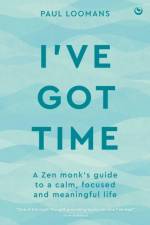
This isn't a book about making your time more productive... this is a book being more productive with your time. Learn from a Zen monk how to find calm, be more present and get more out of the time you have.Learn from a Zen monk how to turn time pressure into tranquility. Time is our most precious commodity, but all too often it is swallowed up by the frantic pace of work and our always-on connection to the world.But it doesn't have to be that way. Zen monk Paul Loomans is here to share the seven steps you can take to form a new, calmer connection to time while still being able to get everything done.His "Time Surfing" method emphasizes using your intuition to decide what to do, rather than trying to control time itself. You'll learn to:act from inner peacegain perspectiveenjoy your workbecome more productiveand stay healthy.A sense of serenity will arise in every area of your life – for good.
Abonner på vårt nyhetsbrev og få rabatter og inspirasjon til din neste leseopplevelse.
Ved å abonnere godtar du vår personvernerklæring.