





Gjør som tusenvis av andre bokelskere
Abonner på vårt nyhetsbrev og få rabatter og inspirasjon til din neste leseopplevelse.
Ved å abonnere godtar du vår personvernerklæring.Du kan når som helst melde deg av våre nyhetsbrev.

Written by world-leading experts in particle physics, this new book from Luciano Maiani and Omar Benhar, with contributions from the late Nicola Cabibbo, explores key elements of gauge theories as well as renormalization in Quantum Electrodynamics.
Suitable for students of inorganic chemistry or for chemists pursuing self-study, this book emphasizes fundamental principles-including molecular structure, acid-base chemistry, coordination chemistry, ligand field theory, and solid state chemistry - and presents topics in a clear, concise manner.
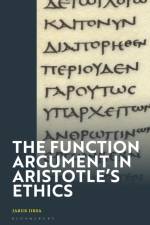
The first book-length study of the "function argument", which plays a central role in Aristotle's ethics, with critical commentary outlining its importance for Aristotle's understanding of happiness and living well.The Function Argument in Aristotle's Ethics gives a systematic account of the development of the "function argument" from Plato's Republic to the Nicomachean Ethics, with an explication of the interdependence between different versions of the argument which appear in Aristotle's ethical writings. In careful close readings of Aristotle's ethical writings in each of the Proptrepticus, the Eudemian Ethics and the Nicomachean Ethics, Jirsa makes the case that the function (ergon) argument--that the function of human beings is virtuous activity of the rational part of the soul-serves to differentiate between happiness (eudaimonia) and the happy life (eudaimon bios). The book then evaluates Aristotle's function argument against contemporary critiques. With original English translations of sections of the Proptrepticus based on the recent reconstruction from ancient sources and fragments, this volume gives a novel context for understanding a key element of Aristotle's ethical works, and is an ideal reference for those studying Aristotelian ethics, virtue ethics and the history of philosophy.
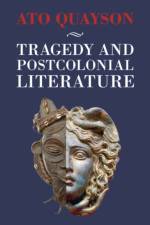
This book examines tragedy and tragic philosophy from the Greeks through Shakespeare to the present day. It explores key themes in the links between suffering and ethics through postcolonial literature. Ato Quayson reconceives how we think of World literature under the singular and fertile rubric of tragedy. He draws from many key works - Oedipus Rex, Philoctetes, Medea, Hamlet, Macbeth, and King Lear - to establish the main contours of tragedy. Quayson uses Shakespeare's Othello, Chinua Achebe, Wole Soyinka, Tayeb Salih, Arundhati Roy, Toni Morrison, Samuel Beckett and J.M. Coetzee to qualify and expand the purview and terms by which Western tragedy has long been understood. Drawing on key texts such as The Poetics and The Nicomachean Ethics, and augmenting them with Frantz Fanon and the Akan concept of musuo (taboo), Quayson formulates a supple, insightful new theory of ethical choice and the impediments against it. This is a major book from a leading critic in literary studies.
This rich and comprehensive volume surveys and illuminates the numerous and complicated interconnections between philosophical and scientific thought as both were radically transformed in the period from the late sixteenth to the mid-eighteenth century.
Abonner på vårt nyhetsbrev og få rabatter og inspirasjon til din neste leseopplevelse.
Ved å abonnere godtar du vår personvernerklæring.