

Gjør som tusenvis av andre bokelskere
Abonner på vårt nyhetsbrev og få rabatter og inspirasjon til din neste leseopplevelse.
Ved å abonnere godtar du vår personvernerklæring.Du kan når som helst melde deg av våre nyhetsbrev.

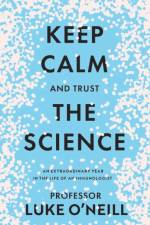
What is life like at the edge of science in a pandemic? World renowned immunologist Professor Luke O'Neill tells all, sharing his diaries from the front-line of the scientific fight for a vaccine as the world grappled with Covid 19.
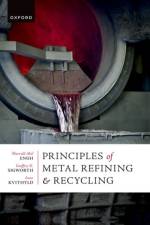
The book is a greatly extended update of the 1992 book Principles of Metal Refining. It includes, in particular, the subject of metal recycling. It includes metalloids like silicon, ferrous and non-ferrous metal refining, and gives a comprehensive overview of metal production today, its applications, purification, and recycling.
This timeless journal is an indispensable companion if you want to live a more focused, positive life. It contains a twelve month strategy that creates space for introspection and self-discovery so you can gain a renewed sense of freedom.
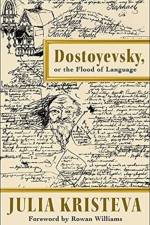
Growing up in Bulgaria, Julia Kristeva was warned by her father not to read Dostoyevsky. "e;Of course, and as usual,"e; she recalls, "e;I disobeyed paternal orders and plunged into Dosto. Dazzled, overwhelmed, engulfed."e; Kristeva would go on to become one of the most important figures in European intellectual life-and she would return over and over again to Dostoyevsky, still haunted and enraptured by the force of his writing.In this book, Kristeva embarks on a wide-ranging and stimulating inquiry into Dostoyevsky's work and the profound ways it has influenced her own thinking. Reading across his major novels and shorter works, Kristeva offers incandescent insights into the potent themes that draw her back to the Russian master: God, otherness, violence, eroticism, the mother, the father, language itself. Both personal and erudite, the book intermingles Kristeva's analysis with her recollections of Dostoyevsky's significance in different intellectual moments-the rediscovery of Bakhtin in the Thaw-era Eastern Bloc, the debates over poststructuralism in 1960s France, and today's arguments about whether it can be said that "e;everything is permitted."e; Brilliant and vivid, this is an essential book for admirers of both Kristeva and Dostoyevsky. It also features an illuminating foreword by Rowan Williams that reflects on the significance of Kristeva's reading of Dostoyevsky for his own understanding of religious writing.
Abonner på vårt nyhetsbrev og få rabatter og inspirasjon til din neste leseopplevelse.
Ved å abonnere godtar du vår personvernerklæring.