
Gjør som tusenvis av andre bokelskere
Abonner på vårt nyhetsbrev og få rabatter og inspirasjon til din neste leseopplevelse.
Ved å abonnere godtar du vår personvernerklæring.Du kan når som helst melde deg av våre nyhetsbrev.

The brilliant follow-up to David Walliams' bestseller The World's Worst Children! Ten more stories about a brand new gang of hilariously horrible kids from everyone's favourite children's author, illustrated in glorious full colour by Tony Ross.
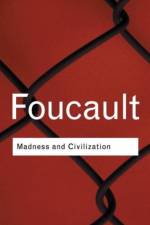
In this classic account of madness, Michel Foucault shows once and for all why he is one of the most distinguished European philosophers since the end of World War II.
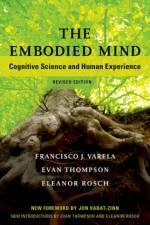
A unique, sophisticated treatment of the spontaneous and reflective dimension of human experience.
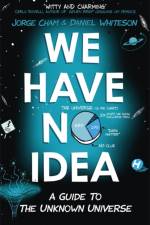
'This witty book reveals the humbling vastness of our ignorance about the universe, along with charming insights into what we actually do understand' Carlo Rovelli, author of Seven Brief Lessons on Physics and Reality Is Not What It SeemsIn our small corner of the universe, we know how some matter behaves most of the time and what even less of it looks like, and we have some good guesses about where it all came from. But we really have no clue what's going on. In fact, we don't know what about 95% of the universe is made of. So what happens when a cartoonist and a physicist walk into this strange, mostly unknown universe? Jorge Cham and Daniel Whiteson gleefully explore the biggest unknowns, why these things are still mysteries, and what a lot of smart people are doing to figure out the answers (or at least ask the right questions). While they're at it, they helpfully demystify many complicated things we do know about, from quarks and neutrinos to gravitational waves and exploding black holes. With equal doses of humour and delight, they invite us to see the universe as a vast expanse of mostly uncharted territory that's still ours to explore. This is a book for fans of Brian Cox and What If. This highly entertaining highly illustrated book is perfect for anyone who's curious about all the great mysteries physicists are going to solve next.
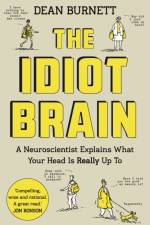
Why do you lose arguments with people who know MUCH LESS than you? Why can you recognise that woman, from that thing... but can't remember her name?And why, after your last break-up, did you find yourself in the foetal position on the sofa for days, moving only to wipe the snot and tears haphazardly from your face?Here's why: the idiot brain. For something supposedly so brilliant and evolutionarily advanced, the human brain is pretty messy, fallible and disorganised. For example, did you know that your memory is egotistical? That conspiracy theories and superstitions are the inevitable effects of a healthy brain? Or that alcohol can actually improve your memory?** In The Idiot Brain, neuroscientist Dean Burnett tours our mysterious and mischievous grey (and white) matter. Along the way he explains the human brain's imperfections in all their glory and how these influence everything we say, do and experience. Expertly researched and entertainingly written, this book is for anyone who has wondered why their brain appears to be sabotaging their life, and what on earth it is really up to.**Editor's note: please read the book before testing this conclusion.
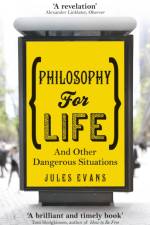
In his engaging book, Jules Evans explains how ancient philosophy saved his life, and how we can all use it to become happier, wiser and more resilient. Jules imagines a dream school, which includes 12 of the greatest and most colourful thinkers the world has ever known. Each of these ancient philosophers teaches a technique we can use to transform ourselves and live better lives. These practical techniques are illustrated by the extraordinary stories of real people who are using them today - from marines to magicians, from astronauts to anarchists and from CBT psychologists to soldiers. Jules also explores how ancient philosophy is inspiring modern communities - Socratic cafes, Stoic armies, Platonic sects, Sceptic summer camps - and even whole nations in their quest for the good life.
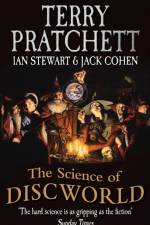
The fantastic first book in the Sunday Times bestselling Science of Discworld seriesWhen a wizardly experiment goes adrift, the wizards of Unseen University find themselves with a pocket universe on their hands: Roundworld, where neither magic nor common sense seems to stand a chance against logic. The Universe, of course, is our own. And Roundworld is Earth. As the wizards watch their accidental creation grow, we follow the story of our universe from the primal singularity of the Big Bang to the internet and beyond. Through this original Terry Pratchett story (with intervening chapters from Cohen and Stewart) we discover how puny and insignificant individual lives are against a cosmic backdrop of creation and disaster. Yet, paradoxically, we see how the richness of a universe based on rules, has led to a complex world and at least one species that tried to get a grip of what was going on. Terry Pratchett is the acclaimed creator of the global bestselling Discworld series, the first of which, The Colour of Magic, was published in 1983. Raising Steam is his fortieth Discworld novel. His books have been widely adapted for stage and screen, and he is the winner of multiple prizes, including the Carnegie Medal, as well as being awarded a knighthood for services to literature. After falling out with his keyboard he now talks to his computer. Occasionally, these days, it answers back.www.terrypratchett.co.uk@terryandrob Professor Ian Stewart is the author of many popular science books. He is the mathematics consultant for New Scientist and a Professor of Mathematics at the University of Warwick. He was awarded the Michael Faraday Prize for furthering the public understanding of science, and in 2001 became a Fellow of the Royal Society. Dr Jack Cohen is an internationally-known reproductive biologist, and lives in Newent, Gloucestershire. Jack has a laboratory in his kitchen, helps couples get pregnant by referring them to colleagues, invents biologically realistic aliens for science fiction writers and, in his spare time, throws boomerangs. Jack, who has more letters to his name than can be repeated here, writes, lectures, talks and campaigns to promote public awareness of science, particularly biology. He is mostly retired.
The unabridged, downloadable audiobook edition of Michael J Sandels, Justice: Whats the Right Thing to Do? Read by the author himself. Considering the role of justice in our society and our lives, Michael Sandel reveals how an understanding of philosophy can help to make sense of politics, religion, morality - and our own convictions. Breaking down hotly contested issues, from abortion, euthanasia and same-sex marriage, to patriotism, dissent and affirmative action, Sandel shows how the biggest questions in our civic life can be broken down and illuminated through reasoned debate. Justice promises to take readers - of all ages and political persuasions - on an exhilarating journey to confront todays political and moral controversies in a fresh and enlightening way.
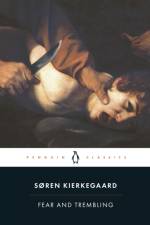
Writing under the pseudonym of Johannes de silentio, Kierkegaard uses the form of a dialectical lyric to present his conception of faith. Abraham is portrayed as a great man, who chose to sacrifice his son, Isaac, in the face of conflicting expectations and in defiance of any conceivable ethical standard. The infamous and controversial 'teleological suspension of the ethical' challenged the contemporary views of Hegel's universal moral system, and the suffering individual must alone make a choice 'on the strength of the absurd'. Kierkegaard's writings have inspired both modern Protestant theology and existentialism.
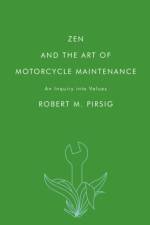
Acclaimed as one of the most exciting books in the history of American letters, this modern epic became an instant bestseller upon publication in 1974, transforming a generation and continuing to inspire millions. This 25th Anniversary Quill Edition features a new introduction by the author; important typographical changes; and a Reader's Guide that includes discussion topics, an interview with the author, and letters and documents detailing how this extraordinary book came to be. A narration of a summer motorcycle trip undertaken by a father and his son, the book becomes a personal and philosophical odyssey into fundamental questions of how to live. The narrator's relationship with his son leads to a powerful self-reckoning; the craft of motorcycle maintenance leads to an austerely beautiful process for reconciling science, religion, and humanism. Resonant with the confusions of existence, Zen and the Art of Motorcycle Maintenance is a touching and transcendent book of life.
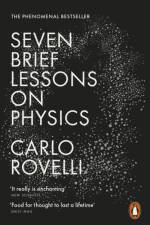
THE PHENOMENAL BESTSELLER'There's a book I've been carrying around like a small Bible, Seven Brief Lessons on Physics' - Benedict CumberbatchEverything you need to know about modern physics, the universe and your place in the world in seven enlightening lessonsThese seven short lessons guide us, with simplicity and clarity, through the scientific revolution that shook physics in the twentieth century and still continues to shake us today. In this beautiful and mind-bending introduction to modern physics, Carlo Rovelli explains Einstein's theory of general relativity, quantum mechanics, black holes, the complex architecture of the universe, elementary particles, gravity, and the nature of the mind. In under eighty pages, readers will understand the most transformative scientific discoveries of the twentieth century and what they mean for us. Not since Richard Feynman's celebrated best-seller Six Easy Pieces has physics been so vividly, intelligently and entertainingly revealed.
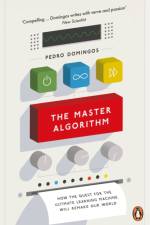
A spell-binding quest for the one algorithm capable of deriving all knowledge from data, including a cure for cancerSociety is changing, one learning algorithm at a time, from search engines to online dating, personalized medicine to predicting the stock market. But learning algorithms are not just about Big Data - these algorithms take raw data and make it useful by creating more algorithms. This is something new under the sun: a technology that builds itself. In The Master Algorithm, Pedro Domingos reveals how machine learning is remaking business, politics, science and war. And he takes us on an awe-inspiring quest to find 'The Master Algorithm' - a universal learner capable of deriving all knowledge from data.
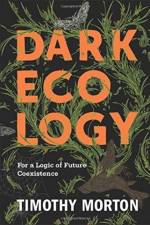
Timothy Morton argues that ecological awareness in the present Anthropocene era takes the form of a strange loop or Mobius strip, twisted to have only one side. Deckard travels this oedipal path in Blade Runner (1982) when he learns that he might be the enemy he has been ordered to pursue. Ecological awareness takes this shape because ecological phenomena have a loop form that is also fundamental to the structure of how things are.The logistics of agricultural society resulted in global warming and hardwired dangerous ideas about life-forms into the human mind. Dark ecology puts us in an uncanny position of radical self-knowledge, illuminating our place in the biosphere and our belonging to a species in a sense that is far less obvious than we like to think. Morton explores the logical foundations of the ecological crisis, which is suffused with the melancholy and negativity of coexistence yet evolving, as we explore its loop form, into something playful, anarchic, and comedic. His work is a skilled fusion of humanities and scientific scholarship, incorporating the theories and findings of philosophy, anthropology, literature, ecology, biology, and physics. Morton hopes to reestablish our ties to nonhuman beings and to help us rediscover the playfulness and joy that can brighten the dark, strange loop we traverse.
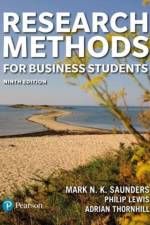
Research Methods for Business Students has been fully revised for this seventh edition and continues to be the market-leading textbook in its field, guiding hundreds of thousands of student researchers to success in their research methods modules, research proposals, projects and dissertations. So, if you're thinking . . . 'How do I choose my topic?''I'm confused by all these different philosophies''I need to collect my data; what do I do first?'When and what do I need to write? . . . then, open this book to discover: Regular checklists and Progressing your research project sections to give you step-by-step practical guidance on the process A glossary of clear definitions for 600 research terms Cases and examples of students and academics research and topical news articles illustrating research in practice Detailed chapters on choosing your topic, reviewing the literature, understanding philosophies, research design, access and ethics, secondary data, data collection and analysis, and writing about and presenting your researchDont forget to visit www.pearsoned.co.uk/saunders where you can use online tutorials on research software, such as IBM SPSS Statistics and NVivo, test yourself with hundreds of multiple choice questions, analyse over 60 further case studies, and learn how to search the Internet more efficiently and effectively with our Smarter Online Searching guide! Start your project with confidence and complete it with success!Mark Saunders is Professor of Business Research Methods at The Surrey Business School, University of Surrey. Philip Lewis was a Principal Lecturer and Adrian Thornhill was a Head of Department, both at the University of Gloucestershire.
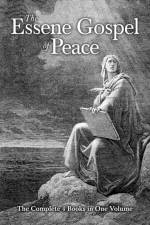
For the first time the complete 4 books of the Essene Gospel of Peace are available in one volume. The Essene Gospel of Peace, The Unknown Book of the Essenes, Lost Scrolls of the Essene Brotherhood & The Teachings of the Elect.The Essene Gospel of Peace were found in the Vatican Library and translated by Edmond Bordeaux SzekelyEdmond Bordeaux Szekely,grandson of Alexandre Szekely,eminent poet and Unitarian Bishop of Cluj,is a descendant of Csoma de Koros, Transylvanian traveler and philologist who,over 150 years ago, compiled the first grammar of the Tibetan language,the first English-Tibetan dictionary,and wrote his unsurpassed work, Asiatic Researches.He was also Librarian to the Royal Asiatic Society in India. Dr.Bordeaux earned his Ph. D. degree from the University of Paris,and other degrees from the Universities of Vienna and Leipzig.He also held professorships of Philosophy and Experimental Psychology at the University of Cluj. A well-known philologist in Sanscrit,Aramaic,Greek and Latin,Dr. Bordeaux spoke ten modern languages.In 1928,he founded the International Biogenic Society with Nobel Prize-winning author,Romain Rolland.His most important translations,in addition to selected texts from the Dead Sea Scrolls and the Essene Gospel of Peace over a million copies in 26 languages are selected texts from the Zend Avesta and from pre Columbian codices of ancient Mexico.His last works on the Essene Way of Biogenic Living have attracted worldwide interest.He is the author of more than 80 books published in many countries on philosophy and ancient cultures.
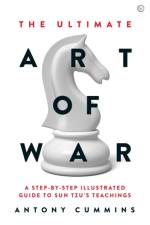
This is the most accessible edition of Art of War ever produced, with the text broken down into digestible individual lessons, unique teaching illustrations to clarify the text, and step-by-step commentary that draws on the full range of recent translations and ancient commentators.
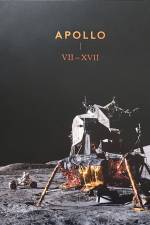
This thrilling photo book features previously-unpublished photographs from the NASA archives, captured by the Apollo astronauts during their missions.
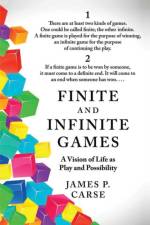
“There are at least two kinds of games,” states James P. Carse as he begins this extraordinary book. “One could be called finite; the other infinite.” Finite games are the familiar contests of everyday life; they are played in order to be won, which is when they end. But infinite games are more mysterious. Their object is not winning, but ensuring the continuation of play. The rules may change, the boundaries may change, even the participants may change—as long as the game is never allowed to come to an end. What are infinite games? How do they affect the ways we play our finite games? What are we doing when we play—finitely or infinitely? And how can infinite games affect the ways in which we live our lives? Carse explores these questions with stunning elegance, teasing out of his distinctions a universe of observation and insight, noting where and why and how we play, finitely and infinitely. He surveys our world—from the finite games of the playing field and playing board to the infinite games found in culture and religion—leaving all we think we know illuminated and transformed. Along the way, Carse finds new ways of understanding everything, from how an actress portrays a role to how we engage in sex, from the nature of evil to the nature of science. Finite games, he shows, may offer wealth and status, power and glory, but infinite games offer something far more subtle and far grander. Carse has written a book rich in insight and aphorism. Already an international literary event, Finite and Infinite Games is certain to be argued about and celebrated for years to come. Reading it is the first step in learning to play the infinite game.
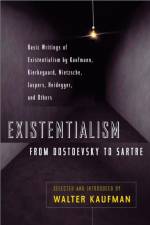
One of the foremost resources on existentialism from renowned philosopher, poet, and Nietzsche translator Walter Kaufmann-a must-read for philosophers, both armchair and professional. Existentialism from Dostoevsky to Sartre provides basic writings of Dostoevsky, Kierkegaard, Nietzsche, Rilke, Kafka, Ortega, Jaspers, Heidegger, Sartre, and Camus, including some not previously translated, along with an invaluable introductory essay by Walter Kaufmann.
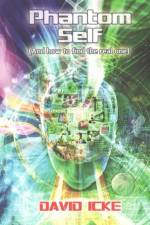
The vast majority of us unknowingly suffer from a slave mentality. We constantly experience the psychological phenomena of cognitive dissonance, where our beliefs and behaviour are in conflict, and Stockholm syndrome - the traumatic bonding with a captor. Our ability to decode reality is linked to what we are able to perceive. Icke believes our reality has been hijacked by an invisible force the Gnostics used to call Archons. He maintains that we are headed towards a cashless world and human settlements which are projected as local community initiatives but are actually centralized systems of control. Our health is being systematically weakened: if you are sick, you are easier to control. Ickes dystopian view of the future assumes that the masses will stay glued to their TVs, locked forever into the hive mind of the Matrix, which says "I have no power." Can humanity break free? Through truth and love we can become who and what we really are.
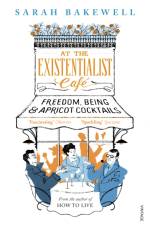
Three young friends meet over apricot cocktails at the Bec-de-Gaz bar on the rue Montparnasse. They are Jean-Paul Sartre, Simone de Beauvoir and their friend Raymond Aron, who opens their eyes to a radical new way of thinking...
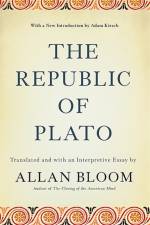
The definitive translation of Plato's Republic, the most influential text in the history of Western philosophyLong regarded as the most accurate rendering of Plato's Republic that has yet been published, this widely acclaimed translation by Allan Bloom was the first to take a strictly literal approach. In addition to the annotated text, there is also a rich and valuable essay -- as well as indices -- which will enable readers to better understand the heart of Plato's intention.
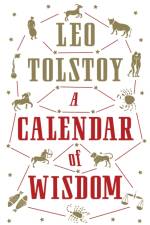
Banned in Russia under Communism, A Calendar of Wisdom was Tolstoy's last major work, and one of his most popular both during and after his lifetime. This new translation by Roger Cockrell will offer today's generation of readers the chance to discover, day by day, these edifying and carefully selected pearls of wisdom.
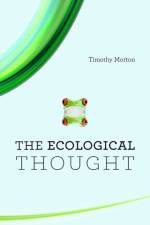
Argues that various forms of life are connected in a vast, entangling mesh and this interconnectedness penetrates different dimensions of life. This title investigates the profound philosophical, political, and aesthetic implications of the fact that these life forms are interconnected.
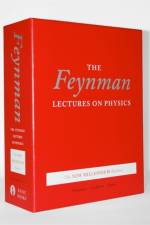
Eagerly awaited by scientists and academics worldwide, the complete series of Feynmans landmark Lectures on Physics
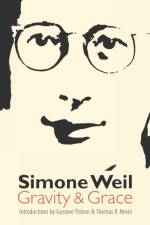
Simone Weil, the French philosopher, political activist, and religious mystic, was little known when she died in 1943. The aphorisms in this book reflect the religious philosophy of Weil's last years. This book shows why critics have called Weil "a great soul who might have become a saint" and "the outsider as saint, in an age of alienation".
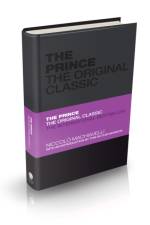
With simple prose and straightforward logic, this book offers lessons for managers and business leaders. It is suitable reading for anyone in the realm of business or politics.
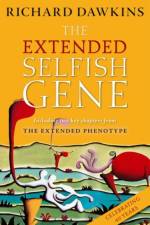
As relevant and influential today as when it was first published, this classic exposition of evolutionary thought, widely hailed for its stylistic brilliance and deep scientific insights, stimulated whole new areas of research. This extended edition includes a new epilogue from the author and two key chapters from The Extended Phenotype.
Abonner på vårt nyhetsbrev og få rabatter og inspirasjon til din neste leseopplevelse.
Ved å abonnere godtar du vår personvernerklæring.