


















Gjør som tusenvis av andre bokelskere
Abonner på vårt nyhetsbrev og få rabatter og inspirasjon til din neste leseopplevelse.
Ved å abonnere godtar du vår personvernerklæring.Du kan når som helst melde deg av våre nyhetsbrev.

How are we able to understand each other in our daily interactions? Through the use of such 'folk' concepts as belief, desire, intention, and expectation, Daniel Dennett asserts in this first fullscale presentation of a theory of intentionality that he has been developing for almost twenty years. We adopt a stance, a predictive strategy of interpretation that presupposes the rationality of the people-or other entities-we are hoping to understand and predict.
Provides a coherent picture of reality, and a guide to the meaning of an ethical life. This book follows a logical format, it defines in turn the nature of God, the mind, the emotions, human bondage to the emotions, and the power of understanding.
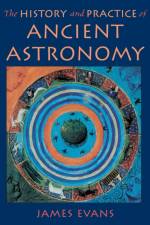
A study of the Western astronomical tradition from ancient Babylonia to the European Renaissance, with emphasis on the Greek period. The book explores the evidence for the astronomy of the ancient past and how astronomy was practised. Emphasis is placed on the material culture of ancient astronomy.
A sparkling and up-to-date new cover for one of Fontana Press's strongest-selling titles.
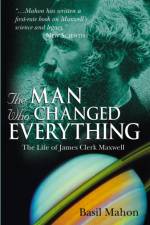
Contents 1. A A country boy 2. A Pins and string 3. A Philosophy 4. A Learning to juggle 5. A Blue and yellow make pink 6. A Saturn and statistics 7. A Cast of characters 8. A Spinning cells 9. A The beautiful equations 10. A The Laird at home 11. A The Cavendish 12. A Last days 13. A Maxwella s legacy 14.
'In Richard Fortey's capable hands the humble grey trilobite has been transformed into the E.T. of the Lower Palaeozoic - a remarkable and fascinating book.' SIMON WINCHESTER
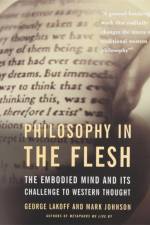
Three major findings of cognitive science cast doubt on the past 2,500 years of Western philosophy. Lakoff and Johnson propose to rebuild philosophy from the ground up, starting from clearly known facts about the mind.
A Short History of Nearly Everything is Bill Bryson's quest to find out everything that has happened from the Big Bang to the rise of civilization - how we got from there, being nothing at all, to here, being us. It's not so much about what we know, as about how we know what we know.
Simone de Beauvoir was a philosopher and writer of notable range and influence whose work is central to feminist theory, French existentialism, and contemporary moral and social philosophy. The essays in this 2003 volume examine all the major aspects of her thought.
"All art should become science and all science art; poetry and philosophy should be made one." Friedrich Schlegel's words perfectly capture the project of the German Romantics, who believed that the aesthetic approaches of art and literature could reveal patterns and meaning in nature that couldn't be uncovered through rationalistic philosophy and science alone. In this wide-ranging work, Robert J. Richards shows how the Romantic conception of the world influenced (and was influenced by) both the lives of the people who held it and the development of nineteenth-century science. Integrating Romantic literature, science, and philosophy with an intimate knowledge of the individuals involved--from Goethe and the brothers Schlegel to Humboldt and Friedrich and Caroline Schelling--Richards demonstrates how their tempestuous lives shaped their ideas as profoundly as their intellectual and cultural heritage. He focuses especially on how Romantic concepts of the self, as well as aesthetic and moral considerations--all tempered by personal relationships--altered scientific representations of nature. Although historians have long considered Romanticism at best a minor tributary to scientific thought, Richards moves it to the center of the main currents of nineteenth-century biology, culminating in the conception of nature that underlies Darwin's evolutionary theory. Uniting the personal and poetic aspects of philosophy and science in a way that the German Romantics themselves would have honored, The Romantic Conception of Life alters how we look at Romanticism and nineteenth-century biology.
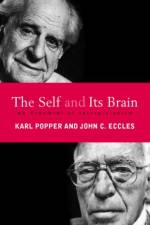
Distinguished philosopher Sir Karl Popper and Nobel Prize-winning neuroscientist Sir John Eccles argue the case for a highly distinctive view of the relation of mind and body.
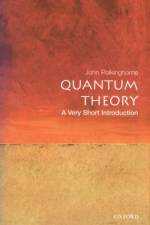
In simple language, without mathematics, this book explains the strange and exciting ideas that make the subatomic world so different from the world of the every day. It offers the general reader access to one of the greatest discoveries in the history of physics and one of the oustanding intellectual achievements of the twentieth century.
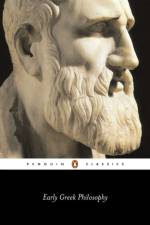
Collects works that form the true foundation of Western philosophy - the base upon which Plato and Aristotle and their successors would eventually build.
A brief, authoritative introduction to field experimentation in the social sciences.
The notion of identity - personal, religious, ethnic or national - is one that has given rise to heated passions and crimes throughout the history of mankind.
Questions of embodiment have become central to feminist theory, challenging the prevailing notion of disembodied reason in epistemology and criticizing modern political theory for separating human facts of death, birth, need, sex. This work includes a collection of articles on the female body experience among others.
A. C. Grayling's accessible introduction to Wittgenstein's work describes both his early and later philosophy, the differences and connections between them, and gives a fresh assessment of Wittgenstein's continuing influence on contemporary thought.
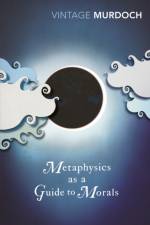
Here, drawing on a novelists insight into art, literature and psychology, Iris Murdoch conducts an ongoing debate with major writers, thinkers and theologians - from Augustine to Wittgenstein, Shakespeare to Sartre, Plato to Derrida - to provide fresh and compelling answers to these crucial questions.
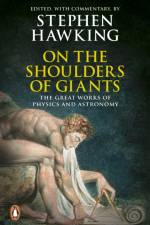
ON THE SHOULDERS OF GIANTS tells a compelling story, using original papers from Einstein, Copernicus, Galilei, Kepler and Newton. Theoretical physicist Stephen Hawking explains how these works changed the course of science, ushering astronomy and physics out of the Middle Ages and into the modern world.
* A book about our obsession with time and how we can cram as much as possible into the 1440 minutes of every day.
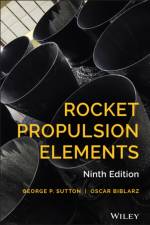
THE DEFINITIVE INTRODUCTION TO ROCKET PROPULSION THEORY AND APPLICATIONS The recent upsurge in global government and private spending and in space flight events has resulted in many novel applications of rocket propulsion technology.
Reconstructs Martin Heidegger's lecture course at the University of Marburg in the winter semester of 1924-25, which was devoted to an interpretation of Plato and Aristotle. This volume approaches Plato through Aristotle.
Friedrich Nietzsche was quite simply one of the most influential of modern thinkers. New readers and non-specialists will find this the most convenient, accessible guide to Nietzsche currently available. Advanced students will find a conspectus of recent developments in the interpretation of Nietzsche. This book was first published in 1996.
A study of the presiding genius of the Florentine Academy.
In this classic treatise, a complete physical picture of quantum theory, the Nobel Laureate covers not only his own far-reaching contributions to quantum theory, but also those of Dirac, Schroedinger, Compton, Wilson, Einstein and others. "An authoritative statement of Heisenberg's views on this aspect of the quantum theory."
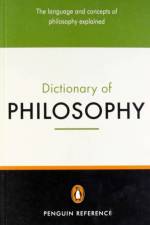
What do philosophers mean by 'absolute' and 'akrasia'? What are 'Polish notation' and 'prime matter'? What contributions to human thought were made by Plato, Machiavelli, Kant and Derrida? This dictionary answers these and other questions.
Abonner på vårt nyhetsbrev og få rabatter og inspirasjon til din neste leseopplevelse.
Ved å abonnere godtar du vår personvernerklæring.