











Gjør som tusenvis av andre bokelskere
Abonner på vårt nyhetsbrev og få rabatter og inspirasjon til din neste leseopplevelse.
Ved å abonnere godtar du vår personvernerklæring.Du kan når som helst melde deg av våre nyhetsbrev.

Soren Kierkegaard (1813-55), one of the original thinkers of the nineteenth century, wrote on religious, psychological, and literary themes. This book shows how Kierkegaard developed his views in emphatic opposition to prevailing opinions. It provides an introduction by showing how Kiekegaard has influenced contemporary thought.
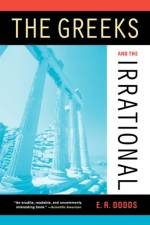
Takes on the traditional view of Greek culture as a triumph of rationalism. Using the analytical tools of modern anthropology and psychology, this title asks, 'Why should we attribute to the ancient Greeks an immunity from 'primitive' modes of thought which we do not find in any society open to our direct observation?'.
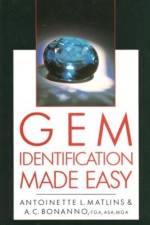
This is the first and only book that explains in non-technical terms how to use pocket, portable and laboratory instruments to identify diamonds and coloured gems and to separate them from imitations and 'look-alikes'.
This book sets forth a set of truly controversial and astonishing theories: First, it proposes that below the surface of the earth is a biosphere of greater mass and volume than the biosphere the total sum of living things on our planet's continents and in its oceans.
Schaum's Outlines present all the essential course information in an easy-to-follow, topic-by-topic format. You also get hundreds of examples, solved problems, and practice exercises to test your skills.
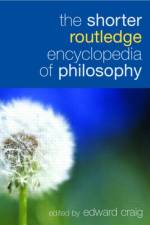
The Shorter REP presents the very best of the acclaimed ten volume Routledge Encyclopedia of Philosophy in a single volume. It makes a selection of the most important entries available for the first time and covers all you need to know.
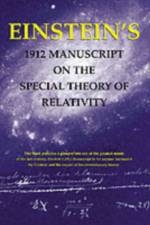
This volume presents Albert Einstein's 1912 manuscript on the special theory of the relativity, one of the most revolutionary and influential scientific documents of the 20th century.
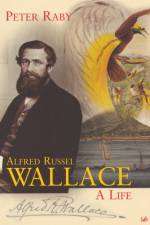
In 1858, aged thirty-five, weak with malaria, isolated in the remote Spice Islands, Alfred Russel Wallace wrote to Charles Darwin: he had, he said excitedly, worked out a theory of natural selection. A year later, with Wallace still at the opposite side of the world, On the Origin of Species was published.
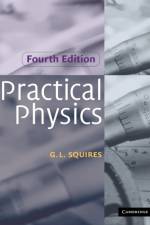
This classic companion to undergraduate experimental work in physics covers the statistical treatment of data, experimental methods, and gives advice on keeping efficient records, calculations, and scientific writing. It contains numerous examples and exercises. This new up-to-date edition includes further statistics, new experimental material, and worked examples based on spreadsheets.
Provides managers with a guide focused on the particular management needs for research and development in biotechnology and pharmaceutical industries. This work offers a way to improve the quality of interactions and creativity output in R&D, with real life case studies to illustrate key points.
Eighty letters, written over twenty-six years, record that friendship, and are published here in English for the first time.
With hand-drawn woodcut-style images, this primer on three-dimensional space takes the reader on a journey into the world of the regular solids, with reference to Plato, Kepler and other famous figures from history who were obsessed with these forms. With detailed appendices, this is a book for specialists and amateurs alike.
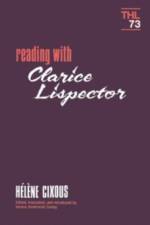
The texts that comprise this volume were selected from Cixous' seminars on the work of Clarice Lispector. They reflect Cixous' meditations on the art of reading, writing and related themes such as giving and loving as well as trace the influence of Lispector on Cixous' own development.
Distills the essence of a wide range of therapies into a creative synthesis, opening up a new way of understanding each person's confrontation with four ultimate concerns: isolation, meaninglessness, death, and freedom.
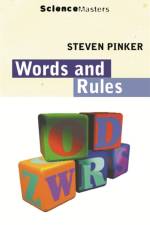
One of the world's science superstars presents a brilliantly illuminating, entertaining and cutting-edge account of how language actually works.
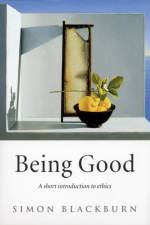
This is a very short introduction to ethics. It divides into three parts: first, introducing and discussing reasons for skepticism about ethics; second introducing themes of birth, death, happiness, desire and freedom to show how deeply our lives are interwoven with ethics; third, introducing attempts to found ethics, due to Aristotle, Kant, and the contractarian tradition.
These penetrating metaphysical and spiritual teachings cross the divides of culture and time, providing unexpectedly modern insight.
This book, written out of Derrida's long-standing friendship with Jean-Luc Nancy, examines the central place accorded to the sense of touch in the Western philosophical tradition.
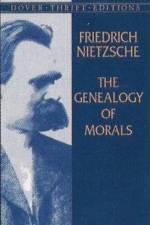
Major work on ethics, by one of the most influential thinkers of the last 2 centuries, deals with master/slave morality and modern man's current moral practices; the evolution of man's feelings of guilt and bad conscience; and how ascetic ideals help maintain human life under certain conditions.
A summary of mediaeval aesthetic ideas, by Italian novelist and playwright Umberto Eco. Juxtaposing theology and science, poetry and mysticism, Eco explores the relationship that existed between the aesthetic theories and the artistic experience and practice of mediaeval culture.
* Subtitled 'The Remarkable True Story of the Penicillin Miracle', this book is a wonderful combination of modern narrative history and popular science.
This book focuses on the issues facing practising clinicians wishing to engage in research. It outlines approaches involving both clients and other professionals in the research and argues for approaches that combine an exploration of the experience as well as the effectiveness of therapies.
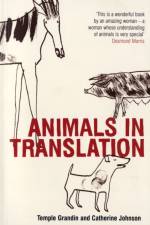
A groundbreaking book from one of the world's most celebrated animal scientists that will revolutionise our understanding of how animals think and feel
The Roman Empire was a remarkable achievement. This introduction covers the history of the empire at its height, looking at its people, religions and social structures. It explains how it deployed violence, 'romanisation', and tactical power to develop an astonishingly uniform culture from Rome to its furthest outreaches.
Addresses the nature of space and time, the role of God in creation, the history and future of the universe. This book guides nonscientists in the search for the tantalizing secrets at the heart of time and space.
A compact discussion of being, truth, and reality by Karl Jaspers (1883-1969), the founder of German existentialism.
Winner of the Aventis Science Book Prize. 'A scientific detective story, a brilliant cross between Edgar Allan Poe and Gray's anatomy' J G Ballard, New Stateman Books of the Year
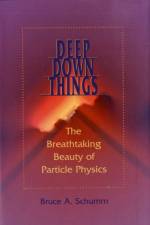
Introducing readers to the world of particle physics, Deep Down Things opens new realms within which are many clues to unraveling the mysteries of the universe.
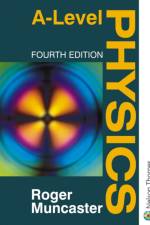
The fourth edition helps bridge the gap between GCSE and A Level Physics for your students of all different abilities, reflecting the different experience and knowledge of students coming to A Level Physics from GCSE.
Abonner på vårt nyhetsbrev og få rabatter og inspirasjon til din neste leseopplevelse.
Ved å abonnere godtar du vår personvernerklæring.