














Gjør som tusenvis av andre bokelskere
Abonner på vårt nyhetsbrev og få rabatter og inspirasjon til din neste leseopplevelse.
Ved å abonnere godtar du vår personvernerklæring.Du kan når som helst melde deg av våre nyhetsbrev.

Argues that taking on some of the characteristics of plants will help us and our relationship to our world.
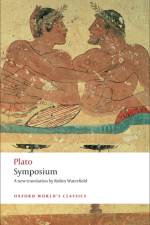
In his celebrated masterpiece, Symposium, Plato imagines a high-society dinner-party in Athens in 416 BC at which the guests - including the comic poet Aristophanes and, of course, Plato's mentor Socrates - each deliver a short speech in praise of love. The sequence of dazzling speeches culminates in Socrates' famous account of the views of Diotima, a prophetess who taught him that love is our means of trying to attain goodness. And then into the partybursts the drunken Alcibiades, the most popular and notorious Athenian of the time, who insists on praising Socrates himself rather than love, and gives us a brilliant sketch of this enigmatic character.The power, humour, and pathos of Plato's creation engages the reader on every page. This new translation is complemented by full explanatory notes and an illuminating introduction.
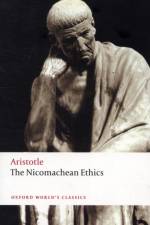
In the Nicomachean Ethics Aristotle examines the nature of happiness, which he defines as a specially good kind of life. He considers the nature of practical reasoning, friendship, and the role and importance of the moral virtues in the best life. This new edition features a revised translation and valuable new introduction and notes.
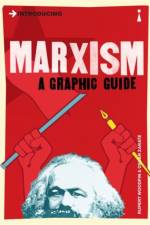
Was Marx himself a 'Marxist'? Was his visionary promise of socialism betrayed by Marxist dictatorship? Is Marxism inevitably totalitarian? What did Marx really say? "e;Introducing Marxism"e; provides a fundamental account of Karl Marx's original philosophy, its roots in 19th century European ideology, his radical economic and social criticism of capitalism that inspired vast 20th century revolutions. It assesses Marxism's Russian disciples, Lenin, Trotsky and Stalin who forged a ruthless dogmatic Communism. The book examines the alternative Marxist approaches of Gramsci, the Frankfurt School of critical theory and the structuralist Marxism of Althusser in the 1960s. It marshals postmodern interpretations of Marxism and raises the spectre of 'post-Marxism' in Derrida's confrontation with Fukuyama's 'end of history' doctrine.
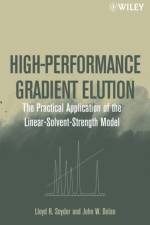
Written by the preeminent authorities in liquid chromatography, High Performance Gradient Elution Liquid Chromatography: The Linear-Solvent-Strength Model takes the mystery out of the practice of gradient elution and helps remove barriers to practical application of this important separation technique.
Written by one of the preeminent researchers in the field, this book provides a comprehensive exposition of modern analysis of causation. It shows how causality has grown from a nebulous concept into a mathematical theory with significant applications in the fields of statistics, artificial intelligence, philosophy, and cognitive science.
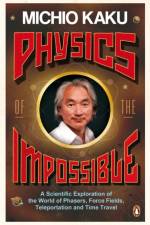
Physics of the Impossible takes us on a journey to the frontiers of science and beyond, giving us an exhilarating insight into what we can really hope to achieve in the future.Everyday we see that what was once declared 'impossible' by scientists has become part of our everyday lives: fax machines, glass sky-scrapers, gas-powered automobiles and a worldwide communications network. Here internationally bestselling author Micho Kaku confidently hurdles today's frontier of science, revealing the actual possibilities of perpetual motion, force fields, invisibility, ray guns, anti-gravity and anti-matter, teleportation, telepathy, psychokinesis, robots and cyborgs, time travel, zero-point energy, even extraterrestrial life. And he shows how few of these ideas actually violate the laws of physics. Where does the realm of science fiction end? What can we really hope to achieve? 'Anything that is not impossible, is mandatory!' declares Kaku in this lucid, entertaining and enlightening read.
Superconductivity is one of the most exciting areas of research in physics today. Outlining the history of its discovery, and the race to understand its many mysterious phenomena, this Very Short Introduction also explores the deep implications of the theory, and its potential to revolutionize the physics and technology of the future.
Feelings of Being is the first philosophical account of the nature, role and variety of existential feelings in psychiatric illness and in everyday life. These include feelings of familiarity, unfamiliarity, estrangement, isolation, emptiness, belonging, etc. It will be valuable for all philosophers and psychiatrists interested in emotion.
In Zizek's long-awaited magnum opus, he theorizes the "parallax gap" in the ontological, the scientific, and the political—and rehabilitates dialectical materialism.The Parallax View is Slavoj Zizek's most substantial theoretical work to appear in many years; Zizek himself describes it as his magnum opus. Parallax can be defined as the apparent displacement of an object, caused by a change in observational position. Zizek is interested in the "parallax gap" separating two points between which no synthesis or mediation is possible, linked by an "impossible short circuit" of levels that can never meet. From this consideration of parallax, Zizek begins a rehabilitation of dialectical materialism.Modes of parallax can be seen in different domains of today's theory, from the wave-particle duality in quantum physics to the parallax of the unconscious in Freudian psychoanalysis between interpretations of the formation of the unconscious and theories of drives. In The Parallax View, Zizek, with his usual astonishing erudition, focuses on three main modes of parallax: the ontological difference, the ultimate parallax that conditions our very access to reality; the scientific parallax, the irreducible gap between the phenomenal experience of reality and its scientific explanation, which reaches its apogee in today's brain sciences (according to which "nobody is home" in the skull, just stacks of brain meat—a condition Zizek calls "the unbearable lightness of being no one"); and the political parallax, the social antagonism that allows for no common ground. Between his discussions of these three modes, Zizek offers interludes that deal with more specific topics—including an ethical act in a novel by Henry James and anti-anti-Semitism.The Parallax View not only expands Zizek's Lacanian-Hegelian approach to new domains (notably cognitive brain sciences) but also provides the systematic exposition of the conceptual framework that underlies his entire work. Philosophical and theological analysis, detailed readings of literature, cinema, and music coexist with lively anecdotes and obscene jokes.
Jean Baudrillard meets Cookie Mueller in this gathering of French theory and new American fiction.Compiled in 2001 to commemorate the passing of an era, Hatred of Capitalism brings together highlights of Semiotext(e)'s most beloved and prescient works. Semiotext(e)'s three-decade history mirrors the history of American thought. Founded by French theorist and critic Sylvere Lotringer as a scholarly journal in 1974, Semiotext(e) quickly took on the mission of melding French theory with the American art world and punk underground. Its Foreign Agents, Native Agents, Active Agents and Double Agents imprints have brought together thinkers and writers as diverse as Gilles Deleuze, Assata Shakur, Bob Flanagan, Paul Virillio, Kate Millet, Jean Baudrillard, Michelle Tea, William S. Burroughs, Eileen Myles, Ulrike Meinhof, and Fanny Howe. In Hatred of Capitalism, editors Kraus and Lotringer bring these people together in the same volume for the first time.
Drawing on both theoretical debates and case studies from around the world, this book explores how the politics of reconciliation relates to various models of democratic citizenship.
Statistics has evolved into an exciting discipline which uses deep theory and powerful software to shed light on the world around us: from clinical trials in medicine, to economics, sociology, and countless other subjects vital to understanding modern life. This Very Short Introduction explores and explains how statistics works today.
Aesthetics is not a politics by accident but in essence. But this politics operates in the unresolved tension between two opposed forms of politics: the first consists in transforming art into forms of collective life, the second in preserving from all forms of militant or commercial compromise the autonomy that makes it a promise of emancipation.
The book that launched a movement: "Wilson speaks with a humane eloquence which calls to us all" (Oliver Sacks).
This book addresses one of the most exciting and innovative developments within higher education: the rise in prominence of the creative arts and the accelerating recognition that creative practice is a form of research.
Offers a text employing the tree method, a formal system of first-order logic. This book allows students to take control of the nuts and bolts of formal logic, and to move on to complex and abstract problems. The tree method is elaborated in steps over five chapters.
Einstein's theory of relativity shattered the world of physics - replacing Newtonian ideas of space and time with bizarre and counterintuitive conclusions: a world of slowing clocks and stretched space, black holes and curved space-time. This Very Short Introduction explores and explains the theory in an accessible and understandable way.
Games are played everywhere: from economics and online auctions to social interactions, and game theory is about how to play such games in a rational way, and how to maximize their outcomes. This VSI reveals, without mathematical equations, the insights the theory can bring to everything from how to play poker optimally to the sex ratio among bees.
The laws of thermodynamics drive everything that happens in the universe. From the expansion of a cloud of gas to the cooling of hot metal, and from the unfurling of a leaf to the course of life itself - everything is directed and constrained by four simple laws. Peter Atkins' powerful introduction explains what the laws are and how they work.
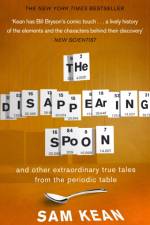
The fascinating tales in The Disappearing Spoon follow carbon, neon, silicon, gold and every single element on the table as they play out their parts in human history, finance, mythology, conflict, the arts, medicine and the lives of the (frequently) mad scientists who discovered them.
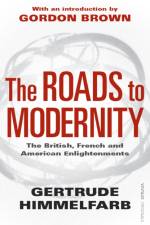
Contrasting the Enlightenments in the three nations, this book demonstrates the primacy and wisdom of the British, exemplified in such thinkers as Adam Smith, David Hume, and Edmund Burke, as well as the enduring contributions of the American Founders.
Chronicling the development of scientific ideas, practices, and institutions from pre-Socratic Greek philosophy to late-medieval scholasticism, this title surveys the themes in the history of science, including developments in cosmology, astronomy, mechanics, optics, alchemy, natural history, and medicine.
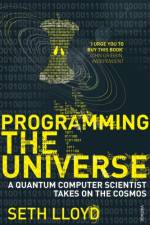
IN THE BEGINNING WAS THE BIT... The universe is made of bits of information and it has been known for more than a century that every piece of the the universe - every electron, atom and molecule - registers these bits and that information.
Abonner på vårt nyhetsbrev og få rabatter og inspirasjon til din neste leseopplevelse.
Ved å abonnere godtar du vår personvernerklæring.