




Gjør som tusenvis av andre bokelskere
Abonner på vårt nyhetsbrev og få rabatter og inspirasjon til din neste leseopplevelse.
Ved å abonnere godtar du vår personvernerklæring.Du kan når som helst melde deg av våre nyhetsbrev.

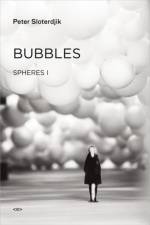
The first volume in Peter Sloterdijk's monumental Spheres trilogy: an investigation of humanity's engagement with intimate spaces.An epic project in both size and purview, Peter Sloterdijk's three-volume, 2,500-page Spheres is the late-twentieth-century bookend to Heidegger's Being and Time. Rejecting the century's predominant philosophical focus on temporality, Sloterdijk, a self-described "student of the air,” reinterprets the history of Western metaphysics as an inherently spatial and immunological project, from the discovery of self (bubble) to the exploration of world (globe) to the poetics of plurality (foam). Exploring macro- and micro-space from the Greek agora to the contemporary urban apartment, Sloterdijk is able to synthesize, with immense erudition, the spatial theories of Aristotle, René Descartes, Gaston Bachelard, Walter Benjamin, and Georges Bataille into a morphology of shared, or multipolar, dwelling—identifying the question of being as one bound up with the aerial technology of architectonics and anthropogenesis.Sloterdijk describes Bubbles, the first volume of Spheres, as a general theory of the structures that allow couplings—or as the book's original intended subtitle put it, an "archeology of the intimate.” Bubbles includes a wide array of images, not to illustrate Sloterdijk's discourse, but to offer a spatial and visual "parallel narrative” to his exploration of bubbles.Written over the course of a decade, the Spheres trilogy has waited another decade for its much-anticipated English translation from Semiotext(e). Volumes II, Globes, and III, Foam, will be published in the coming seasons.
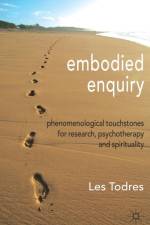
Drawing on a particular emphasis within the phenomenological tradition as exemplified by Maurice Merleau-Ponty and Eugene Gendlin, this book considers the role of the lived body as a way of knowing and being within three practical contexts that illustrate some of the nuances of embodied enquiry: qualitative research, psychotherapy, spirituality.
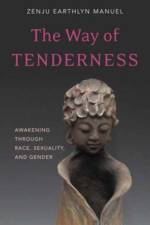
?What does liberation mean when I have incarnated in a particular body, with a particular shape, color, and sex??In The Way of Tenderness, Zen priest Zenju Earthlyn Manuel brings Buddhist philosophies of emptiness and appearance to bear on race, sexuality, and gender, using wisdom forged through personal experience and practice to rethink problems of identity and privilege. Manuel brings her own experiences as a lesbian black woman into conversation with Buddhism to square our ultimately empty nature with superficial perspectives of everyday life. Her hard-won insights reveal that dry wisdom alone is not sufficient to heal the wounds of the marginalized; an effective practice must embrace the tenderness found where conventional reality and emptiness intersect. Only warmth and compassion can cure hatred and heal the damage it wreaks within us. This is a book that will teach us all.
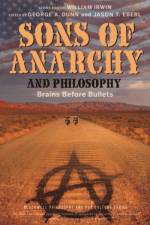
Brains before bullets ancient and modern wisdom for mechanics and motorcycle enthusiasts Essential reading for fans of the show, this book takes readers deeper into the Sons of Anarchy Motorcycle Club, the Teller-Morrow family, and the ethics that surround their lives and activities.
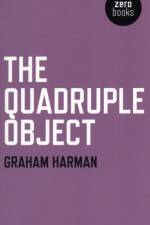
"In this book we again encounter Harman's voice and the extraordinary force of his theses." Quentin Meillassoux, Ecole normale superieure, author of After Finitude This bestselling book presents the metaphysical system of renowned philosopher Graham Harman in lucid form, aided by helpful diagrams.
Heart of Darkness describes the incredible saga of humankind's quest to unravel the deepest secrets of the universe. Over the past thirty years, scientists have learned that two little-understood components--dark matter and dark energy--comprise most of the known cosmos, explain the growth of all cosmic structure, and hold the key to the universe's fate. The story of how evidence for the so-called "e;Lambda-Cold Dark Matter"e; model of cosmology has been gathered by generations of scientists throughout the world is told here by one of the pioneers of the field, Jeremiah Ostriker, and his coauthor Simon Mitton. From humankind's early attempts to comprehend Earth's place in the solar system, to astronomers' exploration of the Milky Way galaxy and the realm of the nebulae beyond, to the detection of the primordial fluctuations of energy from which all subsequent structure developed, this book explains the physics and the history of how the current model of our universe arose and has passed every test hurled at it by the skeptics. Throughout this rich story, an essential theme is emphasized: how three aspects of rational inquiry--the application of direct measurement and observation, the introduction of mathematical modeling, and the requirement that hypotheses should be testable and verifiable--guide scientific progress and underpin our modern cosmological paradigm. This monumental puzzle is far from complete, however, as scientists confront the mysteries of the ultimate causes of cosmic structure formation and the real nature and origin of dark matter and dark energy.
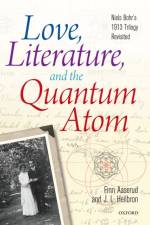
This book presents unpublished excerpts from extensive correspondence between Niels Bohr and his immediate family, and uses it to describe and analyze the psychological and cultural background to his invention of the quantum theory of the atom.
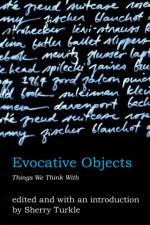
Autobiographical essays, framed by two interpretive essays by the editor, describe the power of an object to evoke emotion and provoke thought: reflections on a cello, a laptop computer, a 1964 Ford Falcon, an apple, a mummy in a museum, and other "things-to-think-with."For Sherry Turkle, "We think with the objects we love; we love the objects we think with." In Evocative Objects, Turkle collects writings by scientists, humanists, artists, and designers that trace the power of everyday things. These essays reveal objects as emotional and intellectual companions that anchor memory, sustain relationships, and provoke new ideas.These days, scholars show new interest in the importance of the concrete. This volume's special contribution is its focus on everyday riches: the simplest of objects—an apple, a datebook, a laptop computer—are shown to bring philosophy down to earth. The poet contends, "No ideas but in things." The notion of evocative objects goes further: objects carry both ideas and passions. In our relations to things, thought and feeling are inseparable.Whether it's a student's beloved 1964 Ford Falcon (left behind for a station wagon and motherhood), or a cello that inspires a meditation on fatherhood, the intimate objects in this collection are used to reflect on larger themes—the role of objects in design and play, discipline and desire, history and exchange, mourning and memory, transition and passage, meditation and new vision.In the interest of enriching these connections, Turkle pairs each autobiographical essay with a text from philosophy, history, literature, or theory, creating juxtapositions at once playful and profound. So we have Howard Gardner's keyboards and Lev Vygotsky's hobbyhorses; William Mitchell's Melbourne train and Roland Barthes' pleasures of text; Joseph Cevetello's glucometer and Donna Haraway's cyborgs. Each essay is framed by images that are themselves evocative. Essays by Turkle begin and end the collection, inviting us to look more closely at the everyday objects of our lives, the familiar objects that drive our routines, hold our affections, and open out our world in unexpected ways.
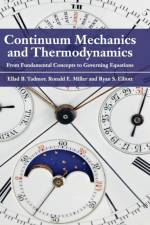
Connecting micro- and nanoscopic theories and emphasizing topics relevant to solid-state thermo-mechanical behaviour, this book treats subjects directly related to nonlinear materials modeling. Together with Modeling Materials, it presents the fundamentals of multiscale materials modeling for graduate students and researchers in physics, materials science, chemistry and engineering.
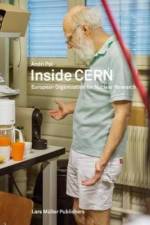
- Exclusive and uncensored portrait of the world-renowned research center - First volume in the series Places of Interest: photographic portraits of the most powerful and mysterious institutions worldwide
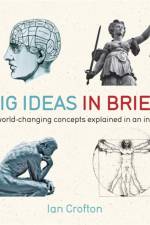
The quickest possible way to learn about all of the really Big Ideas - from Metaphysics, Marxism and Monetarism to Platonism, Predestination and Paradigm Shifts.
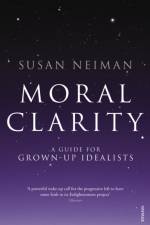
In Moral Clarity, Susan Neiman shows how the philosophical resources of the eighteenth-century Englightenment can help us to construct a politics that does not repeat the mistakes of Marxism or succumb to the temptation of a cynicism that masquerade as realism.
An anecdotal guide for the perplexed new investigator as well as a refreshing resource for the old pro, covering everything from valuable personality traits for an investigator to social factors conducive to scientific work.Santiago Ramón y Cajal was a mythic figure in science. Hailed as the father of modern anatomy and neurobiology, he was largely responsible for the modern conception of the brain. His groundbreaking works were New Ideas on the Structure of the Nervous System and Histology of the Nervous System in Man and Vertebrates. In addition to leaving a legacy of unparalleled scientific research, Cajal sought to educate the novice scientist about how science was done and how he thought it should be done. This recently rediscovered classic, first published in 1897, is an anecdotal guide for the perplexed new investigator as well as a refreshing resource for the old pro.Cajal was a pragmatist, aware of the pitfalls of being too idealistic—and he had a sense of humor, particularly evident in his diagnoses of various stereotypes of eccentric scientists. The book covers everything from valuable personality traits for an investigator to social factors conducive to scientific work.
A Global Catastrophic Risk is one that has the potential to inflict serious damage to human well-being on a global scale. This book focuses on such risks arising from natural catastrophes (Earth-based or beyond), nuclear war, terrorism, biological weapons, totalitarianism, advanced nanotechnology, artificial intelligence and social collapse.
Two pioneers in health - Dr Deepak Chopra and Prof Rudolph E. Tanzi, one of the world's foremost experts on the causes of Alzheimer's - share a bold new understanding of the brain and a prescriptive plan for how we can use it to achieve physical, mental and spiritual well-being. In his bestselling books Ageless Body, Timeless Mind and Reinventing the Body, Resurrecting the Soul, Deepak Chopra reveals 'the forgotten miracle' - the body's infinite capacity for change and renewal. Now, Chopra focuses his attention on a part of the body undergoing intense study and radical reevaluation: the brain. No one is better able to share the latest breakthroughs in neuroscience than preeminent neurologist Rudolph E. Tanzi and, together, Chopra and Tanzi present a new vision of the brain together with a practical plan for how to use it to achieve higher levels of success and fulfilment. They contend that by using techniques and skills such as mindfulness, intention and meditation, we can create new neural pathways in the brain. Thus, we can transform it into our most powerful tool for achieving health, happiness and enlightenment.
The No.1 SUNDAY TIMES bestseller. A fascinating explanation of how evolution works, from bestselling author of THE GOD DELUSION, Richard Dawkins.
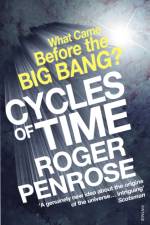
What came before the Big Bang? How did the universe begin and must it inevitably end? This book illuminates some of the deepest mysteries of the universe. It analyses the second law of thermodynamics - according to which the 'randomness' of our world is continually increasing - and examines the light-cone geometry of space-time.
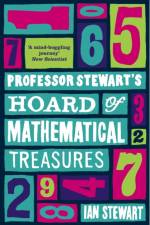
Presents a collection of games, puzzles, paradoxes, brainteasers, and riddles. This title helps you find out: how to organise chaos; how matter balances anti-matter; how to turn a sphere inside out (without creasing it); why you can't comb a hairy ball; and, how to calculate pi by observing the stars.
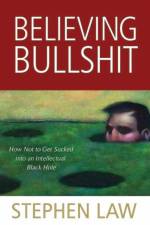
Includes an insightful critique that helps immunize readers against the wiles of cultists, religious and political zealots, conspiracy theorists, and various other nutcases by clearly setting out the tricks of the trade by which such insidious belief systems are created and sustained.
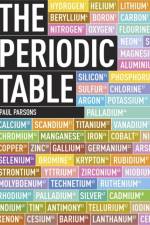
The indispensable guide to the building blocks of the universe: the elements
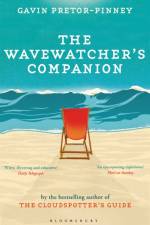
A humorous, original guide to the waves that surround us and throughwhich we experience the world, by the bestselling author of The Cloudspotter's Guide.
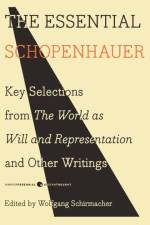
What is the meaning of life? How should I live? Is there any purpose to the universe? Generations have turned to the great German philosopher Arthur Schopenhauer because he tackled the big issues. This title presents a collection of Schopenhauer's work.
Suitable for the teaching of medieval philosophy, this title features judicious selections and translations based on critical editions.
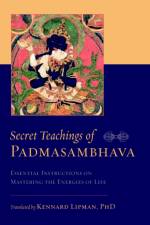
These ancient texts, attributed to the great Tibetan meditation master Padmasambhava, offer traditional Vajrayana Buddhist teachings on the nature of the fundamental elements that make up our world. The translator’s commentaries show us a practical view of how to use these life-energies for personal development.
Three renowned contemporary theorists discuss their different perspectives for politics and thought.
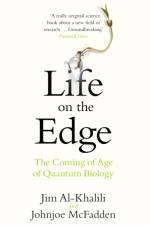
Are we missing a vital ingredient in its creation? Like Richard Dawkins' The Selfish Gene, which provided a new perspective on evolution, Life on the Edge alters our understanding of life's dynamics as Jim Al-Khalili and Johnjoe Macfadden reveal the hitherto missing ingredient to be quantum mechanics.
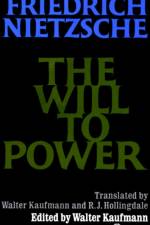
Represents a selection from Nietzche''s notebooks to find out what he wrote on nihilism, art, morality, religion, and the theory of knowledge, among others.Nietzsche''s notebooks, kept by him during his most productive years, offer a fascinating glimpse into the workshop and mind of a great thinker, and compare favorably with the notebooks of Gide and Kafka, Camus and Wittgenstein. The Will to Power, compiled from the notebooks, is one of the most famous boooks of the philosophy. Here is the first critical edition in any language. Down through the Nazi period The Will to Power was often mistakenly considered to be Nietzche''s crowning systematic labor; since World War II it has frequently been denigrated. In fact, it represents a stunning selection from Nietzsche''s notebooks, in a a topical arrangement that enables the reader to find what Nietzsche''s wrote on a variety of subjects. Walter Kaufmann, in collaboration with R. J. Holilngdale, brings to this volume his unsurpassed skills as a Nietzsche translator and scholar. Professor Kaufmann has included an approximate date of each note. His running footnote commentary offers information needed to follow Nietzsche''s train of thought, and indicates, among other things, which notes were eventually superseded by later formulations. The comprehensive index serves to guide the reader to the extraordinary riches of this book.
Abonner på vårt nyhetsbrev og få rabatter og inspirasjon til din neste leseopplevelse.
Ved å abonnere godtar du vår personvernerklæring.