
















Gjør som tusenvis av andre bokelskere
Abonner på vårt nyhetsbrev og få rabatter og inspirasjon til din neste leseopplevelse.
Ved å abonnere godtar du vår personvernerklæring.Du kan når som helst melde deg av våre nyhetsbrev.

Elucidates the interconnected 'four faces of our being': the political, personal, historical, and sacred. This volume identifies several modes of political activity, warns against the dangers of leaving politics to professional politicians, and urges us to build networks of compassion that include everyone in a just society.
Humour is a universal feature of human life. In this Very Short Introduction Noel Carroll considers the nature and value of humour, from its leading theories and its relation to emotion and cognition, to ethical questions of its morality and its significance in shaping society.
Jean Baudrillard (1929-2007) was one of the world's most influential, celebrated and controversial thinkers. This collection gathers 23 insightful yet previously difficult to find interviews, ranging over topics as diverse as art, war, technology, globalisation, terrorism and the fate of humanity.
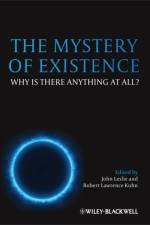
Offers a study of the origins of all that exists, including explanations of the entire material world. This title traces the responses of philosophers and scientists to the most elemental and haunting question of all: Why is anything here - or anything anywhere? Why is there something rather than nothing? Why not nothing?
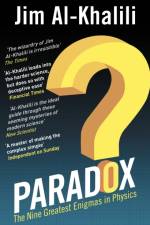
or the Grandfather Paradox - if you travelled back in time and killed your grandfather you would not have been born and would not therefore have killed your grandfather.
Han Fei Tzu (280?-233 BC) was a prince of the ruling house of Han. A representative of the Fa-chia, or legalist, school of philosophy, he produced the final exposition of its theories. His handbook deals with the problem of preserving and strengthening the state.
The course provides fundamental definitions of radiative processes and serves as a brief introduction to Bremsstrahlung and black body emission, relativistic beaming, synchrotron emission and absorption, Compton scattering, synchrotron self-compton emission, pair creation and emission.
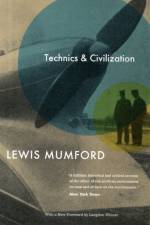
Drawing upon art, science, philosophy, and the history of culture, this title explains the origin of the machine age and traces its social results, asserting that the development of modern technology had its roots in the Middle Ages rather than the Industrial Revolution.
Drawing inspiration from philosophy, history, and literature, Martha C. Nussbaum takes us to task for our religious intolerance, identifies the fear behind it, and offers a way past fear toward a more equitable, imaginative, and free society, through the consistent application of universal principles of respect for conscience.
This volume looks at the meaning of "right" and asks - what makes right acts right?.
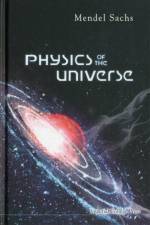
Presents a new approach to the subject of cosmology. This book exploits Einstein's theory of general relativity. It contains a brief discussion of black holes and pulsars. It delves into philosophical considerations such as the different types of 'truth', positivism versus realism and a discussion of the role of the Mach principle in physics.
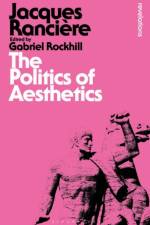
The Politics of Aesthetics rethinks the relationship between art and politics, reclaiming "aesthetics" from the narrow confines it is often reduced to. Jacques Rancière reveals its intrinsic link to politics by analysing what they both have in common: the delimitation of the visible and the invisible, the audible and the inaudible, the thinkable and the unthinkable, the possible and the impossible. Presented as a set of inter-linked interviews, The Politics of Aesthetics provides the most comprehensive introduction to Rancière's work to date, ranging across the history of art and politics from the Greek polis to the aesthetic revolution of the modern age. Available now in the Bloomsbury Revelations series 10 years after its original publication, The Politics of Aesthetics includes an afterword by Slavoj Zizek, an interview for the English edition, a glossary of technical terms and an extensive bibliography.
Rasante technologische Fortschritte bei Informations-, Rechen- und Fertigungsprozessen bieten auch Produktdesignern neue Wege der Problemlösung und enorme Chancen. Dieses Buch bietet einen umfassenden Einblick in die Forschungsmethoden für das Produktdesign, mit zahlreichen Fallstudien und Tutorials.
Chronicles Kierkegaard's intellectual and spiritual development through selected writings.
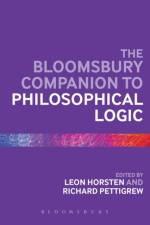
Logical methods are used in all area of philosophy. By introducing and advancing central to topics in the discipline, The Bloomsbury Companion to Philosophical Logic emphasizes the crucial role logic plays in understanding philosophical problems. Covering stages in the history of logic and of modern logic, this comprehensive Companion looks ahead to new areas of research and explores issues pertaining to classical logic and its rivals, semantics for parts of natural language, and the application of logic in the theory of rationality. Experts in the field provide a mix of technical chapters that offer excellent encyclopaedias of results in the area and chapters of philosophical discussions that survey a range of philosophical positions. To facilitate further study, this volumes also includes a series of research tools such as a detailed index, an up-to-date list of resources and an annotated bibliography. Balancing technical exposition with philosophical discussion, The Bloomsbury Companion to Philosophical Logic not only provides students and lecturers with the basis of a course in philosophical logic, it offers anyone working in this key area of contemporary philosophy a valuable research resource.
Identifying four themes in Wittgenstein's Investigations - reference and meaning, rules and their application, interiority of the mind and alleged uses of private languages, and necessity and grammar - this anthology features essays that explore these themes. It is intended for both the novice and experienced reader of Wittgenstein's classic work.
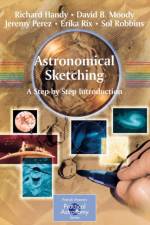
This book presents the amateur with fine examples of astronomical sketches and step-by-step tutorials in each medium, including pencil, pen and ink, chalks and pastels, painting and computer graphics programs.
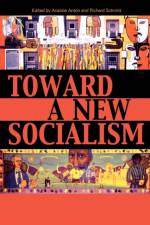
Offers a critical analysis of capitalism's failings and the imminent need for socialism as an alternative form of government. This book contains essays, which explore the benefits and consequences of a socialist system as an avenue of increased human solidarity and ethical principle.
"I'm getting something," says Shawn, assuming a look of intense concentration and pressing his fingertips to the sides of his head. Shawn Spencer uses lies, pretense, and distraction to get at the truth. But can pseudoscience and fakery really be so helpful? And if they can be, is it ethical to employ them?"Psych and Philosophy" takes an entertaining tour through the philosophical issues raised by a fake psychic. Can faulty logic get to the truth quicker than good logic? Are other people to blame for Shawn's deceptions, because they're more ready to credit him with supernatural powers than with superior natural powers? Is instinct more important than smart thinking--in police work and in life? Is it ethical to tell lies to promote the truth (and protect the public from criminals)? Almost every episode of "Psych" revolves around a grisly death, treated humorously by the repartee between Shawn and Gus. The show has much to tell us about human ways of coping with death, as well as about the problem of justified knowledge, the ethics of law enforcement, and the interaction of love, friendship, loyalty, and professionalism.
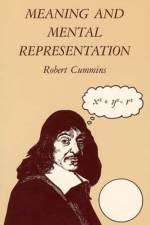
In this provocative study, Robert Cummins takes on philosophers, both old and new, who pursue the question of mental representation as an abstraction, apart from the constraints of any particular theory or framework.
Includes more than 600 fully solved problems, examples, and practice exercises to sharpen your problem-solving skills fluid mechanics and hydraulics.
The work of French philosopher Gilbert Simondon (1924-1989) has recently come to prominence in America and around the English-speaking world, having been of great importance in France for many years. This title offers an exploration of Gilbert Simondon's work.
The classic Buddhist text in three engaging new translations, with commentary from contemporary Zen masters. One of the greatest religious practitioners and philosophers of the East, Eihei Dogen Zenji (1200–1253) is today thought of as the founder of the Soto school of Zen. A deep thinker and writer, he was deeply involved in monastic methods and in integrating Zen realization into daily life. At times The Shobogenzo was profoundly difficult, and he worked on it over his entire life, revising and expanding, producing a book that is today thought to be one of the highest manifestations of Buddhist thought ever produced. Dogen’s Genjo Koan (Actualization of Reality) is the first chapter in that book, and for many followers it might be thought to contain the gist of Dogen’s work—it is one of the groundwork texts of Zen Buddhism, standing easily alongside The Diamond Sutra, The Heart Sutra, and a small handful of others. Our unique edition of Dogen’s Genjo Koan contains three separate translations and several commentaries by a wide variety of Zen masters. Nishiari Bokusan, Shohaku Okamura, Shunryu Suzuki, Kosho Uchiyama. Sojun Mel Weitsman, Kazuaki Tanahashi, and Dairyu Michael Wenger all have contributed to our presentation of this remarkable work. There can be no doubt that understanding and integrating this text will have a profound effect on anyone’s life and practice.
Terada revisits debates about appearance and reality in order to make a startling claim: that the purpose of such debates is to police feelings of dissatisfaction with the given world.
A manifesto against the concepts of growth and debt, and a call for a reinvestment in the social body.The Uprising is an Autonomist manifesto for today's precarious times, and a rallying cry in the face of the catastrophic and irreversible crisis that neoliberalism and the financial sphere have established over the globe. In his newest book, Franco "Bifo” Berardi argues that the notion of economic recovery is complete mythology. The coming years will inevitably see new surges of protest and violence, but the old models of resistance no longer apply. Society can either stick with the prescriptions and "rescues” that the economic and financial sectors have demanded at the expense of social happiness, culture, and the public good; or it can formulate an alternative. For Berardi, this alternative lies in understanding the current crisis as something more fundamental than an economic crisis: it is a crisis of the social imagination, and demands a new language by which to address it.This is a manifesto against the idea of growth, and against the concept of debt, the financial sector's two primary linguistic means of manipulating society. It is a call for exhaustion, and for resistance to the cult of energy on which today's economic free-floating market depends. To this end, Berardi introduces an unexpected linguistic political weapon—poetry: poetry as the insolvency of language, as the sensuous birth of meaning and desire, as that which cannot be reduced to information and exchanged like currency. If the protests now stirring about the world are to take shape and direction, then the revolution will be neither peaceful nor violent—it will be linguistic, or will not be at all.
Hannah Arendt is one of the most important political theorists of the twentieth century. This book focuses on how, against the professionalized discourses of theory, Arendt insists on the greater political importance of the ordinary activity of thinking.
Causation is at once familiar and mysterious-we can detect its presence in the world, but we cannot agree on the metaphysics of the causal relation. L. A. Paul and Ned Hall guide the reader through the most important philosophical treatments of causation, and develop a broad and sophisticated understanding of the issues under debate.
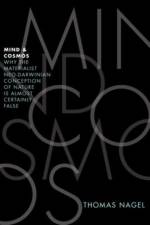
In Mind and Cosmos, Thomas Nagel argues that the widely accepted world view of materialist naturalism is untenable. The mind-body problem cannot be confined to the relation between animal minds and animal bodies. If materialism cannot accommodate consciousness and other mind-related aspects of reality, then we must abandon a purely materialist understanding of nature in general, extending to biology, evolutionary theory, and cosmology.
Abonner på vårt nyhetsbrev og få rabatter og inspirasjon til din neste leseopplevelse.
Ved å abonnere godtar du vår personvernerklæring.