








Gjør som tusenvis av andre bokelskere
Abonner på vårt nyhetsbrev og få rabatter og inspirasjon til din neste leseopplevelse.
Ved å abonnere godtar du vår personvernerklæring.Du kan når som helst melde deg av våre nyhetsbrev.

Particles are the building blocks of the universe, shaping our very existence, as long as we view them as particles and not nebulous quantum objects! For centuries, scientists have sought to discover and understand more about these particles, trying to unlock the secrets of how our universe was created and what will happen to it in the future, and thankfully we have now discovered a lot of answers in recent years. As an introduction to particle physics, which is aimed at physics undergraduates, this book discusses the range of quarks, leptons and bosons that we know or believe exist and the search for as yet undiscovered particles, including CERN's work on the Large Hadron Collider. The book also examines ways of testing whether or not an interaction would be possible or forbidden and also ways in which to identify unknown particles seen in a collision event. We also consider dark matter, what indicates that it exists and some possible candidates for it, and dark energy, the mysterious force that is actually causing the expansion of the universe to accelerate. David Chapple is a physicist who lectures in the OUDCE Department of the University of Oxford in particle physics, quantum physics and cosmology.
This book is about the central role of evolution in shaping the nature and diversity of the living world. It describes the processes of natural selection, how adaptations arise, and how new species form, as well as summarizing the evidence for evolution.
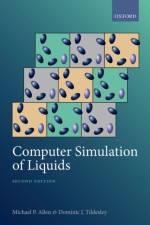
This is the second edition of a widely used practical guide to computer simulations of liquids. The technique uses a model for the way molecules interact, to predict how large numbers of them behave in liquid state. This essential introduction to this rapidly growing field is complete with illustrative computer code.
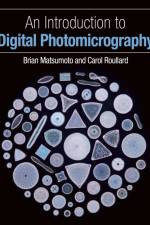
Includes a description of the parts of the microscope; how to use adjust lighting; types of digital cameras; controls for adjusting digital cameras; choosing a video camera and controls for videography.
Neuroscience has made astounding progress in the understanding of the brain. What should we make of its claims to go beyond the brain and explain consciousness, behaviour and culture? Where should we draw the line? In this brilliant critique Raymond Tallis dismantles "Neuromania", arising out of the idea that we are reducible to our brains and "Darwinitis" according to which, since the brain is an evolved organ, we are entirely explicable within an evolutionary framework. With precision and acuity he argues that the belief that human beings can be understood in biological terms is a serious obstacle to clear thinking about what we are and what we might become. Neuromania and Darwinitis deny human uniqueness, minimise the differences between us and our nearest animal kin and offer a grotesquely simplified account of humanity. We are, argues Tallis, infinitely more interesting and complex than we appear in the mirror of biology. Combative, fearless and thought-provoking, Aping Mankind is an important book and one that scientists, cultural commentators and policy-makers cannot ignore.This Routledge Classics edition includes a new preface by the Author.
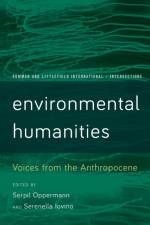
An international and interdisciplinary team of scholars offer innovative models of thinking about environmentality in the humanities and in Anthropocene discourse in the environmental sciences.
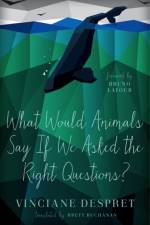
Vinciane Despret argues that behaviors weidentify as separating humans from animals do not actually properly belong tohumans. Combining serious scholarship with humor, this book poses twenty-sixquestions that stretch our preconceived ideas about what animals do, what theythink about, and what they want.
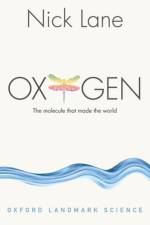
Oxygen is the engine of life and evolution. This book explores the impact that oxygen has had on Earth, and the history of life. Explaining the rise of animals and plants, the origin of two sexes, and the evolution of ageing and death, it offers fresh perspectives on our own lives, explaining why we age and what we can do about it.
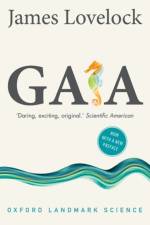
Gaia, in which James Lovelock puts forward his inspirational and controversial idea that the Earth functions as a single organism, with life influencing planetary processes to form a self-regulating system aiding its own survival, is now a classic work that continues to provoke heated scientific debate.
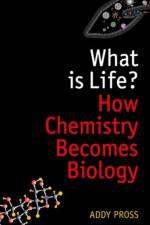
Seventy years ago, Erwin Schroedinger posed a profound question: 'What is life, and how did it emerge from non-life?' Scientists have puzzled over it ever since. Addy Pross uses insights from the new field of systems chemistry to show how chemistry can become biology, and that Darwinian evolution is the expression of a deeper physical principle.
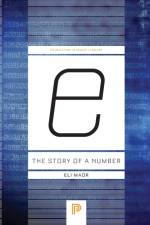
The interest earned on a bank account, the arrangement of seeds in a sunflower, and the shape of the Gateway Arch in St. Louis are all intimately connected with the mysterious number e. In this informal and engaging history, Eli Maor portrays the curious characters and the elegant mathematics that lie behind the number. Designed for a reader with only a modest mathematical background, this biography brings out the central importance of e to mathematics and illuminates a golden era in the age of science.
On August 10, 1632, five leading Jesuits convened in a sombre Roman palazzo to pass judgment on a simple idea: that a continuous line is composed of distinct and limitlessly tiny parts. The doctrine would become the foundation of calculus, but on that fateful day the judges ruled that it was forbidden. With the stroke of a pen they set off a war for the soul of the modern world. Amir Alexander takes us from the bloody religious strife of the sixteenth century to the battlefields of the English civil war and the fierce confrontations between leading thinkers like Galileo and Hobbes. The legitimacy of popes and kings, as well as our modern beliefs in human liberty and progressive science, hung in the balance; the answer hinged on the infinitesimal. Pulsing with drama and excitement, Infinitesimal will forever change the way you look at a simple line.
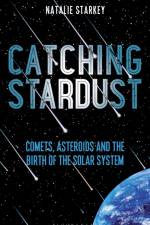
'A promising debut.' New ScientistIcy, rocky, sometimes dusty, always mysterious - comets and asteroids are among the Solar System's very oldest inhabitants, formed within a swirling cloud of gas and dust in the area of space that eventually hosted the Sun and its planets. Locked within each of these extra-terrestrial objects is the 4.6-billion-year wisdom of Solar System events, and by studying them at close quarters using spacecraft we can coerce them into revealing their closely-guarded secrets. This offers us the chance to answer some fundamental questions about our planet and its inhabitants.Exploring comets and asteroids also allows us to shape the story of Earth's future, enabling us to protect our precious planet from the threat of a catastrophic impact from space, and maybe to even recover valuable raw materials from them. This cosmic bounty could be as useful in space as it is on Earth, providing the necessary fuel and supplies for humans as they voyage into deep space to explore more distant locations within the Solar System. Catching Stardust tells the story of these enigmatic celestial objects, revealing how scientists are using them to help understand a crucial time in our history - the birth of the Solar System, and everything contained within it.
Though a well-regarded physicist Carl Sagan is best-known as a writer of popular nonfiction and science fiction and as the host of the series Cosmos. In interviews and profiles, Sagan discusses with verve a wide variety of topics - the environment, nuclear disarmament, religion, politics, extraterrestrial life, astronomy, physics, robotics.
This volume brings together essays by different generations of Italian thinkers which address, whether in affirmative, problematizing or genealogical registers, the entanglement of philosophical speculation and political proposition within recent Italian thought.
Dive into the world of spirituality and self-discovery with 'Science of Being in Twenty Seven Lessons' by Eugene A. Fersen. This enlightening book, published in 2008, takes you on a journey of understanding the essence of existence. The author, renowned for his profound wisdom, explores the science of being in twenty-seven insightful lessons. Each lesson is a step closer to understanding the ultimate reality of life. The book falls under the genre of self-help and spirituality, but it's much more than that. It's a guide to understanding yourself and the universe around you. Published by Ultimate Reality Publishing, this book is a gem that has enlightened many readers over the years. If you're on a journey of self-discovery or seeking answers about existence, 'Science of Being in Twenty Seven Lessons' is a must-read.
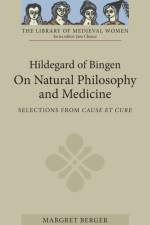
Medieval attitudes to health and treatment revealed in Hildegard's treatise.
Abonner på vårt nyhetsbrev og få rabatter og inspirasjon til din neste leseopplevelse.
Ved å abonnere godtar du vår personvernerklæring.