












Gjør som tusenvis av andre bokelskere
Abonner på vårt nyhetsbrev og få rabatter og inspirasjon til din neste leseopplevelse.
Ved å abonnere godtar du vår personvernerklæring.Du kan når som helst melde deg av våre nyhetsbrev.

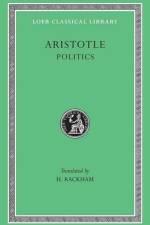
Nearly all the works Aristotle (384-322 BCE) prepared for publication are lost; the priceless ones extant are lecture-materials, notes, and memoranda (some are spurious). They can be categorized as practical; logical; physical; metaphysical; on art; other; fragments.
A short popular science book about how the brain works
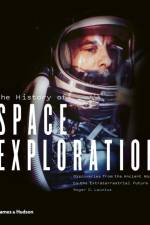
Written by the former chief historian of NASA, here is the first in-depth, fully illustrated history of space exploration.
Learn everything you need to know about the world of philosophy- from the key thinkers to modern concepts in a brand new portable size.To the complete novice learning about philosophy can be daunting - The Little Book of Philosophy changes all that. With the use of powerful and easy-to-follow images, famous quotations, and explanations that are easily understandable, this book cuts through any misunderstandings to demystify the subject.Each chapter is organised chronologically, and covers not only the big ideas, but the philosophers who first voiced them, as well as cross-referencing with earlier and later ideas and thinkers. The Little Book of Philosophy untangles knotty theories and sheds light on abstract concepts, and is perfect for anyone with a general interest in how our social, political, and ethical ideas are formed, as well as students of philosophy and politics.Covers major and niche topics, from moral ethics to philosophies of religion.
The difference between a status-quo, but revisable, "common sense" and new realities, new discoveries, and such, generates a tension. One of the places where philosophy spends its time is the border country between a new science and an old common sense. What sense can we make of new truths, new possibilities, in, reprogenetics, cloning, genetic engineering, artificial intelligence, artificial life, and such? How shall we think about them? Should they alter our view of the world, not merely additively, as in learning a new telephone number, but radically, as in taking seriously the hypothesis that wind is a meteorological phenomenon and not the breath of a god, that the earth moves, that humanity might be transformed, for example, biologically, by means of genetic engineering, and technologically, by means of electronic implants and enhancements? Our species, unique among known species, can control its own evolution. Will it do so? Should it do so? How might it do so? Philosophy has new things to do, and new places to go. This book begins the journey.
Daniel Simon leaves his job as a professor at a Midwestern medical school to work in the pharmaceutical industry because he wants to make a greater and more direct impact in his field. But he soon finds that in his new role, he must contend with petty crooks, fraudsters, and brilliant but money-hungry researchers. There's also the U.S. Food and Drug Administration, which seeks to put a regulatory death to what could be lifesaving antibiotics. Whether he's working at a large company, small company or biotechnology company, he sees how they make decisions, conduct research, and earn revenue. Sometimes, he gets caught in turf battles and must deal with inflated egos. With a career and family to think about, Daniel works hard to bring new antibiotics to the market, but he becomes increasingly frustrated by the hurdles that must be overcome. He has his work cut out for him in The Drug Makers.
Health Informatics (HI) focuses on the application of information technology (IT) in healthcare to improve individual and population health, education and research. The goal of the textbook is to stimulate and educate healthcare and IT professionals and students about the key topics in this rapidly changing field. This extensively updated sixth edition reflects the changes in technology, policies and innovations that have occurred recently. Topics include HI overview, electronic health records, healthcare data analytics, health information exchange, architecture of information systems, evidence based medicine, consumer health informatics, HI ethics, quality improvement strategies and more. The 22 chapters feature learning objectives, case studies, recommended reading, future trends, key points, conclusions and over 1800 references. It is available as a paperback and an eBook. Free Online Resources are available on the textbook companion website www.informaticseducation.org
what you'll learn: A greater understanding of how technologies build off and influence each otherA clearer picture of the how our modern world came to beA universal appreciation for the incredible time we're currently living in
As you master each chapter in Inorganic Chemistry, having detailed solutions handy allows you to confirm your answers and develop your ability to think through the problem-solving process.
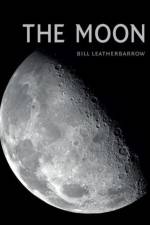
Extensively illustrated with images of the lunar surface, The Moon is an accessible introduction that will appeal to both amateur and professional astronomers and all those fascinated by Earth's natural satellite
From the bestselling editor of This Explains Everything, 206 of the world's most brilliant minds tackle Edge.org's 2017 question: What scientific term or concept ought to be more widely known?
How have we thought 'the body'? How can we think it anew? This title incorporates the body of mortal creatures, the body politic, the body of letters and of laws, and the 'mystical body of Christ'. It offers us an encyclopedia and a polemical program - reviewing classical takes on the "corpus" from Plato, Aristotle, and Saint Paul to Descartes.
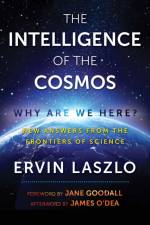
From the cutting edge of science and living spirituality: a guide to understanding our identity and purpose in the world
In this beautifully illustrated book, Peter Whitfield reveals some of the ways in which the structure of the universe has been conceived, explained and depicted. This new edition is updated to include a wider range of stunning maps of the skies in full colour, including imagery from the latest voyages of space exploration.
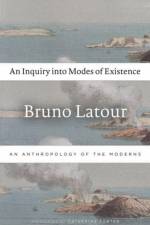
In a new approach to philosophical anthropology, Bruno Latour offers answers to questions raised in We Have Never Been Modern: If not modern, what have we been, and what values should we inherit? An Inquiry into Modes of Existence offers a new basis for diplomatic encounters with other societies at a time of ecological crisis.
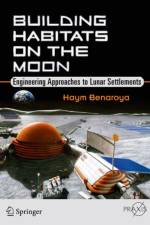
Designing a habitat for the lunar surface? All these must be considered when the habitat is sized, materials specified, and structure designed. This book provides an overview of various concepts for lunar habitats and structural designs and characterizes the lunar environment - the technical and the nontechnical.
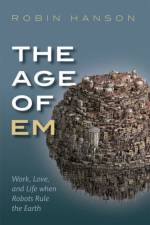
Robots may one day rule the world, but what is a robot-ruled Earth like? Many think that the first truly smart robots will be brain emulations or "ems." Robin Hanson draws on decades of expertise in economics, physics, and computer science to paint a detailed picture of this next great era in human (and machine) evolution - the age of em.
A Zen Buddhist perspective on the universal flow of cosmic energy and how to incorporate that energy into one's life and spiritual practice--from one of the most revered figures in American Zen.The universe is alive with a dynamic energy that creates and sustains our lives. It surrounds us, flows through us, and is available to us in every moment. Spiritual practice, according to Dainin Katagiri Roshi, is about aligning ourselves with this ever-present life force--sometimes referred to as chi, qi, or ki. This collection, edited from his talks, focuses on cosmic energy as it relates to all aspects of Zen practice. With references to classic texts and personal stories that bring the teachings to life, The Light That Shines through Infinity is also a powerful antidote to the notion that practice is in some way about transcending the world around us. It is in fact about nothing other than relating to it compassionately and whole-heartedly.
Incropera's Fundamentals of Heat and Mass Transfer has been the gold standard of heat transfer pedagogy for many decades, with a commitment to continuous improvement by four authors' with more than 150 years of combined experience in heat transfer education, research and practice. Applying the rigorous and systematic problem-solving methodology that this text pioneered an abundance of examples and problems reveal the richness and beauty of the discipline. This edition makes heat and mass transfer more approachable by giving additional emphasis to fundamental concepts, while highlighting the relevance of two of today's most critical issues: energy and the environment.
This work is based on Professor Marion's Gifford Lectures at the University of Glasgow.
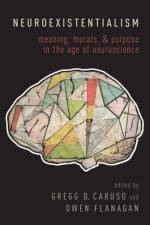
Neuroexistentialism brings together some of the world's leading philosophers, neuroscientists, cognitive scientists, and legal scholars to tackle our neuroexistentialist predicament and explore what the mind sciences can tell us about morality, love, emotion, autonomy, consciousness, selfhood, free will, moral responsibility, criminal punishment, meaning in life, and purpose.
Abonner på vårt nyhetsbrev og få rabatter og inspirasjon til din neste leseopplevelse.
Ved å abonnere godtar du vår personvernerklæring.