



Gjør som tusenvis av andre bokelskere
Abonner på vårt nyhetsbrev og få rabatter og inspirasjon til din neste leseopplevelse.
Ved å abonnere godtar du vår personvernerklæring.Du kan når som helst melde deg av våre nyhetsbrev.

Is philosophy a unique discipline, or are its methods more like those of other sciences than many philosophers think? Timothy Williamson explains clearly and concisely how contemporary philosophers think and work, and reflects on their powers and limitations.
A book that dares to propose answers to the existential questions that confound human beings in the course of a lifetime: Is there more to life than the physical universe? Is there a purpose for human life? What is God? What is the nature of the Soul? Why is life so unjust and dire to some? Is life-after-life a reality? Does evolution have a role for the spirit? Is Jesus truly the path of salvation? Is consciousness eternal?The Spirits' Book offers new ideas for the person unconvinced by the answers of formal religions or disheartened by the void of afterlife that arises from the conclusions of modern scienceThis third edition of The Spirits' Book is superb in quality, timelessly speaking directly to the modern heart and mind. Commitment to its French origin and stylish readability make this rendition better than any other English translation.
AESTHETICS A COMPREHENSIVE ANTHOLOGY The study of aesthetics is among the oldest areas of philosophical inquiry. Philosophers of all global traditions and historical eras have theorized about why we value art, the nature of beauty, and how we make aesthetic judgments and proclamations about works of art, artists, and artistic intent. Aesthetics: A Comprehensive Anthology offers a well-rounded and thorough introduction to Anglo-American analytic aesthetics and the philosophy of art, beginning with the foundations of aesthetic philosophy in ancient tradition and charting a course through to modern art criticism and aesthetic thought. This large collection of over 60 readings balances contemporary commentaries from a wide range of influential thinkers in analytic aesthetics with representative samples of classic primary texts from their historical predecessors, including Plato, Hume, Kant, Nietzsche, and others. Broad in scope, this anthology showcases recent scholarship on the value of art, excerpts from notable continental thinkers, and modern perspectives on feminist philosophy of art which contribute to an inclusive and balanced survey of the field. New to the second edition are contemporary essays which expand the volume's coverage to include the value of art, artistic worth and personal taste, questions of aesthetic experience, and contemporary debates on new theories of art. This edition also incorporates new and more standard translations of Kant's Critique of the Power of Judgment and Schopenhauer's The World as Will and Representation, as well as texts by Rousseau, Hegel, DuBois, Alain Locke, Budd, Robinson, Saito, Eaton and Levinson. Appropriate for both beginning and advanced students of philosophical aesthetics, this thoughtfully curated selection of essays initiates readers into the study of aesthetic thought.
Based on Damon Gameau's 2019 documentary, 2040, 2040: A Handbook for the Regeneration is a practical manual that provides you and your family with the tools and inspiration to live a more sustainable life - NOW.
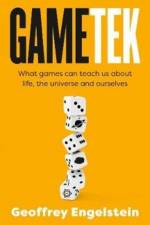
What games can teach us about life, the universe and ourselves. If you shuffle a deck of cards what are the odds that the sequence is unique? What is the connection between dice, platonic solids and Newton's theory of gravity? What is more random: a dice tower or a number generator? Can you actually employ a strategy for a game as basic as Rock-Paper-Scissors? These are all questions that are thrown up in games and life. Games involve chance, choice, competition, innovation, randomness, memory, stand-offs and paradoxes - aspects that designers manipulate to make a game interesting, fun and addictive, and players try to master for enjoyment and winning. But they also provide a fascinating way for us to explore our world; to understand how our minds tick, our numbers add up, and our laws of physics work. This is a book that tackles the big questions of life through the little questions of games. With short chapters on everything from memory games to the Prisoner's Dilemma, to Goedel's theorems, GameTek is fascinating reading anyone for who wants to explore the world from a new perspective - and a must-read book for serious designers and players.PRAISE'Math, physics, psychology and all the other stuff you didn't even realise you were using while playing board games! Dr E has opened the door to the game under the game in fascinating, fun detail. Now you have NO reason to ever lose again! Rock!' Tommy Dean, board-gamer and stand-up comic
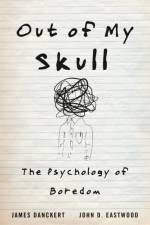
Usually when we're bored, we try to distract ourselves. But soon enough, boredom returns. James Danckert and John Eastwood argue that we can learn to handle boredom more effectively by recognizing what research shows: boredom indicates unmet psychological needs. Boredom, therefore, can motivate us to change what isn't working in our lives.
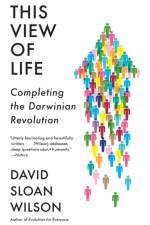
It is widely understood that Charles Darwin's theory of evolution completely revolutionized the study of biology. Yet, according to David Sloan Wilson, the Darwinian revolution won't be truly complete until it is applied more broadly-to everything associated with the words "human," "culture," and "policy."In a series of engaging and insightful examples-from the breeding of hens to the timing of cataract surgeries to the organization of an automobile plant-Wilson shows how an evolutionary worldview provides a practical tool kit for understanding not only genetic evolution but also the fast-paced changes that are having an impact on our world and ourselves. What emerges is an incredibly empowering argument: If we can become wise managers of evolutionary processes, we can solve the problems of our age at all scales-from the efficacy of our groups to our well-being as individuals to our stewardship of the planet Earth.
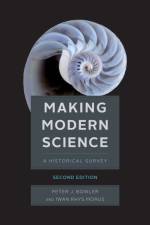
"Making Modern Science: A Historical Survey is a top selling coursebook designed for entry-level college classes in the history of science and as a single-volume introduction for the general reader. Exploring both the history of science and its influence on modern thought, this general survey chronicles all major developments in scientific thinking, from the revolutionary ideas of the seventeenth century to contemporary issues in genetics, physics, and more. First published fifteen years ago, this revised edition is not only updated to reflect the latest scholarship, it also contains two entirely new chapters: on computing, and empire"--
"The Mastery of Destiny" is a 1909 self-help book by British writer James Allen. Self-help books aim to help the reader with problems, offering them clear and effective guidance on how obstacles can be passed and solutions found, especially with regard to common issues and day-to-day life. Such books take their name from the 1859 best-selling "Self-Help" by Samuel Smiles, and are often also referred to as "self-improvement" books. Contents include: "Deeds, Characters, and Destiny", "The Science of Self-control", "Cause and Effect in Human Conduct", "Training of the Will", "Thoroughness", "Mind-building and Life-building", "Cultivation of Concentration", "Practice of Meditation", "The Power of Purpose", "The Joy of Accomplishment", etc. James Allen (1864-1912) was a British writer most famous for his inspirational poetry and being an early leader of the self-help movement. "As a Man Thinketh" (1903), his best known work, has been a significant source of inspiration for many self-help authors. Many vintage books such as this are becoming increasingly scarce and expensive. We are republishing this volume now in an affordable, modern, high-quality edition complete with an Essay from Within You is the Power by Henry Thomas Hamblin.
A deeply thoughtful, deeply irreverent look at the mythology of playGods and Games ties together Joseph Campbell's approach to myth and religion with Johan Huizinga's view of our species as Homo ludens — "Man the Game-player" — which suggests that play is a central aspect of the human spirit and human culture."A comprehensive and clear review.... loaded with quotations both pertinent and entertaining that may be eye-openers both to traditional religionists and readers who may never have thought about play in a philosophical or religious sense." —Publishers Weekly"The breadth of scholarship and the light-handedness of the author, Professor David L. Miller, make this book a movable, digestible and an enjoyable feast." — Robert Seidenberg, American Imago
Based on more than three decades of leading dharma sessions and retreats, Catherine Ingram celebrates seven qualities of awakened awareness that consistently emerge when we are in our right hearts and minds: tenderness, embodiment, genuineness, discernment, delight, wonder, and silence. Through stories and personal reflections, she encourages readers to recognize these traits within ourselves as a reminder of our inherent wisdom.
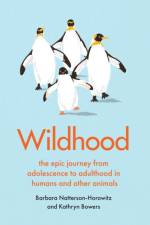
A revelatory investigation of human and animal adolescence from the New York Times bestselling authors of Zoobiquity. Teenagers: behind the banter, the tediously repetitive games and clicks, the moping and screaming, the fast living, and the jockeying and preening lie the rules of the entire animal kingdom. Based on their popular Harvard University course, latest research, and worldwide travels, Natterson-Horowitz and Bowers examine the four universal challenges that every adolescent on our planet must face on the journey to adulthood: how to be safe, how to navigate hierarchy, how to court potential mates, and how to leave the nest. Safety, status, sex, and survival. For parents and children, predators and prey alike, this is a powerfully revelatory book, entertainingly written. To become, as its reader does, for a while, a young penguin or a young humpback whale, or even an octopus tapping a shrimp on the shoulder or an orca silencing their victim, is a giddying experience. The authors open up horizons for their ordinary human readers as they go about their daily animal lives, and permit them to look afresh at the confusing and exhilarating experience of adolescence. Even your average teen will not get bored.
The definitive book on leadership in the digital era: why digital technologies call for leadership that emphasizes creativity, collaboration, and inclusivity.
Are we alone in the universe? If not, where is everybody? An engaging exploration of one of the most important unsolved problems in science.Everything we know about how planets form and how life arises suggests that human civilization on Earth should not be unique. We ought to see abundant evidence of extraterrestrial activity—but we don't. Where is everybody? In this volume in the MIT Press Essential Knowledge series, science and technology writer Wade Roush examines one of the great unsolved problems in science: is there life, intelligent or otherwise, on other planets? This paradox (they're bound to be out there; but where are they?), first formulated by the famed physicist Enrico Fermi, has fueled decades of debate, speculation, and, lately, some actual science. Roush lays out the problem in its historical and modern-day context and summarizes the latest thinking among astronomers and astrobiologists. He describes the long history of speculation about aliens (we've been debating the idea for thousands of years); the emergence of SETI (the Search for Extraterrestrial Intelligence) as a scientific discipline in the 1960s, and scientists' use of radio and optical techniques to scan for signals; and developments in astrobiology (the study of how life might arise in non-Earth like environments) and exoplanet research (the discovery of planets outside our solar system). Finally, he discusses possible solutions to the Fermi Paradox and suggests way to refocus SETI work that might increase the chances of resolving the paradox—and finding extraterrestrials.
What does it mean to believe in God? What passes as evidence for belief in God? What issues arise when considering the rationality of belief in God? Debating Christian Religious Epistemology introduces core questions in the philosophy of religion by bringing five competing viewpoints on the knowledge of God into critical dialogue with one another. Each chapter introduces an epistemic viewpoint, providing an overview of its main arguments and explaining why it justifies belief. The validity of that viewpoint is then explored and tested in a critical response from an expert in an opposing tradition. Featuring a wide range of different philosophical positions, traditions and methods, this introduction: - Covers classical evidentialism, phenomenal conservatism, proper functionalism, covenantal epistemology and traditions-based perspectivalism - Draws on MacIntyre's account of rationality and ideas from the Analytic and Conservatism traditions- Addresses issues in social epistemology- Considers the role of religious experience and religious texts Packed with lively debates, this is an ideal starting point for anyone interested in understanding the major positions in contemporary religious epistemology and how religious concepts and practices relate to belief and knowledge.
One may be getting dangerously close to the tipping point as a result of continued use of energy threatening our very survival. Sustaining meaningful existence and leading a productive life that contributes value, under the circumstances, has become a challenge for the majority of the world population that still suffers deprivation. The book by the eminent author and modern-day Solar reformist, Dr Chetan Singh Solanki, "Energy Swaraj - My Experiments with SOLAR truth" makes a compelling case for localised energy generation & consumption by communities and individuals for sustainability is based on his real-life experiments with Solar and the surrounding truth. - Anil Kakodkar, Former Chairman, Atomic Energy Commission, India
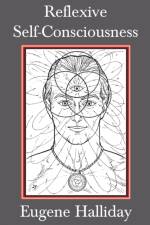
How can we deal with the increasing pace and complexity of life, a fear of terrorism, climate disaster, difficult relationships-without falling prey to stress, depression and illness? Halliday shows a way to respond to our situation so that we can live a whole, balanced life, by reconnecting with the true centre of our being, our consciousness.
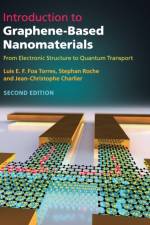
Beginning with an introduction to carbon-based nanomaterials, their electronic properties, and general concepts in quantum transport, this detailed primer describes the most effective theoretical and computational methods and tools for simulating the electronic structure and transport properties of graphene-based systems. Transport concepts are clearly presented through simple models, enabling comparison with analytical treatments, and multiscale quantum transport methodologies are introduced and developed in a straightforward way, demonstrating a range of methods for tackling the modelling of defects and impurities in more complex graphene-based materials. The authors also discuss the practical applications of this revolutionary nanomaterial, contemporary challenges in theory and simulation, and long-term perspectives. Containing numerous problems for solution, real-life examples of current research, and accompanied online by further exercises, solutions and computational codes, this is the perfect introductory resource for graduate students and researchers in nanoscience and nanotechnology, condensed matter physics, materials science and nanoelectronics.
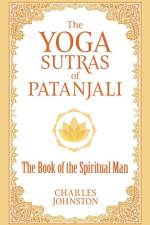
Straightforward, easy-to-follow interpretation of ancient guidelines for living a meaningful, purposeful life. Explains the eight limbs of yoga: restraint, observances, posture, breath control, withdrawal from the senses, attention, meditation, and stillness.
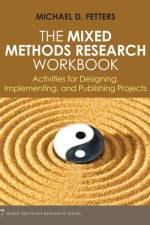
The Mixed Methods Research Workbook by Michael Fetters is the perfect tool for doctoral students and researchers who want support throughout their research project, as well as a practical way to apply the knowledge they have learned. With this text, students can tackle their mixed methods research project with confidence.
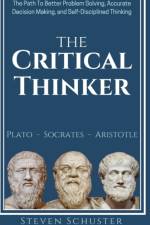
Do you want to be logical like Einstein, observant like Sherlock, and rational like Plato? These great names have something in common: they are all exceptional critical thinkers. What did they do differently that made them so recognizable for their intellects? •They thought slowly and deliberately before making a snap judgment or decision•They questioned every fact and opinion (including their own) •They took the time to study the subject or object of their decision making to gather information before jumping to conclusions•They accepted and expected that human nature is ultimately biased and prone to make cognitive errorsThe Critical Thinker gives you a thorough description of the rules and principles of critical thinking practiced by Einstein, Plato and every great thinker in history. You will learn about the most important critical thinking principles as well as shortcuts to make better decisions in specific situations. These critical thinking principles will help your personal life, career, and friendships.Improve your critical, logical, observational, and rational thinking skills with the timeless principles presented in this book. Critical thinking skills will improve your relationships and your financial life too. •Learn the main principles of critical thinking.•Train your cognitive muscles to think faster and jump to the best conclusions effortlessly. •Find the most rewarding options in any opportunity.•Don't just attack symptoms, solve your problems once and for all. Become a lie and cognitive bias detector. The Critical Thinker is a fitting read for everyone who wants to improve their critical thinking skills. Regardless of your stage of life or field of work (business, education, healthcare, or student) you'll find the book equally useful. •Become a more effective communicator with more impactful points.•Detect the thinking errors of larger groups or individuals. •Powerful questions to effectively self-assess. •Best practices to employ critical thinking principles in your life immediately. Improving your critical thinking skills will help you save time, filter out irrelevant information efficiently, and prioritize your resources to get the best results. It will help you identify better problem-solving approaches rather than relying on standard methods that don't suit your case. Critical thinking will enhance your communication skills, reasoning, and logic. You will also become more compassionate and understanding for the perspectives of others. Be solution-oriented, solve difficult tasks, and understand the world better.
A posthumous collection of writings by Deleuze, including letters, youthful essays, and an interview, many previously unpublished.
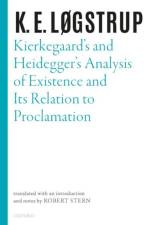
In Kierkegaard's and Heidegger's Analysis of Existence and its Relation to Proclamation (1950), Logstrup offers an original critique of these key thinkers. Arguing against their idea that 'life in the crowd' threatens individuality, he proposes an ethic beyond social rules: a requirement to care for a person whose life is placed in your hands.
Abonner på vårt nyhetsbrev og få rabatter og inspirasjon til din neste leseopplevelse.
Ved å abonnere godtar du vår personvernerklæring.