





Gjør som tusenvis av andre bokelskere
Abonner på vårt nyhetsbrev og få rabatter og inspirasjon til din neste leseopplevelse.
Ved å abonnere godtar du vår personvernerklæring.Du kan når som helst melde deg av våre nyhetsbrev.

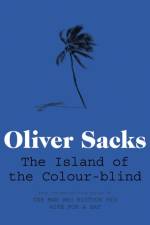
'Sacks is rightly renowned for his empathy . . . anyone with a taste for the exotic will find this beautifully written book highly engaging' Sunday Times Always fascinated by islands, Oliver Sacks is drawn to the Pacific by reports of the tiny atoll of Pingelap, with its isolated community of islanders born totally colour-blind; and to Guam, where he investigates a puzzling paralysis endemic there for a century. Along the way, he re-encounters the beautiful, primitive island cycad trees - and these become the starting point for a meditation on time and evolution, disease and adaptation, and islands both real and metaphorical in The Island of the Colour-Blind.
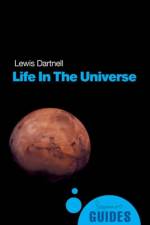
Astrobiology, the study of life and its existence in the universe, is one of the hottest areas of scientific research. Lewis Dartnell considers some of the fascinating questions facing researchers today. Could life exist anywhere else in the universe? What might aliens really look like? Dartnell explains why Earth is uniquely suited for life and reveals our profound connection to the cosmos.
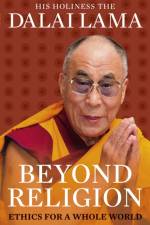
In 1999 His Holiness The Dalai Lama published the bestselling Ancient Wisdom: Modern World, which addressed the question of ethics for the new millennium. A decade later, His Holiness enters the contemporary debate about religion vs atheism, and returns to the theme of ethics with a major new work: Beyond Religion: ethics for a whole world.In this thought-provoking new book he argues that religion is not a necessity for pursuing a spiritual life. Rather, focusing on tolerance and understanding between religions, as well as tolerance and understanding between believers (of any faith) and non-believers is the way forward. The way to achieve such an approach, he proposes, is through a system of secular ethics grounded in a deep appreciation of our common humanity. Aimed particularly at the general reader, Beyond Religion: ethics for a whole world is a modern-day polemic which outlines those ethics he believes should be central to our lives.
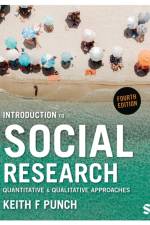
In the new edition of Introduction to Social Research, Keith Punch takes a fresh look at the entire research process, from formulating a research question to writing up your research. Covering qualitative, quantitative and mixed methods, the book focuses on matching research questions to appropriate methods. Offering concise, balanced coverage, this book clearly explains the underlying principles of social research and shows you how to put this understanding into practice. The third edition includes: A new chapter on literature searching and reviewing Expanded coverage of ethics A new section on using the internet in research A range of additional student learning features A brand new companion website including full-text journal articles, additional case studies and video tutorials. Using a range of examples from student research and published work, the book is an ideal introduction for any social science student taking a research methods course or embarking on their own undergraduate or postgraduate research project.
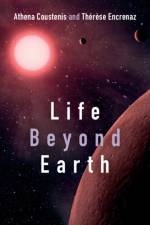
What is life and where can it exist? What searches are being made to identify conditions for life on other worlds? If extraterrestrial inhabited worlds are found, how can we explore them? In this book, two leading astrophysicists provide an engaging account of where we stand in our quest for habitable environments, in the Solar System and beyond. Starting from basic concepts, the narrative builds scientifically, including more in-depth material as boxed additions to the main text. The authors recount fascinating recent discoveries from space missions and observations using ground-based telescopes, of possible life-related artefacts in Martian meteorites, extrasolar planets, and subsurface oceans on Europa, Titan and Enceladus. They also provide a forward look to future missions. This is an exciting, informative read for anyone interested in the search for habitable and inhabited planets, and an excellent primer for students in astrobiology, habitability, planetary science and astronomy.
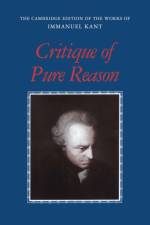
This entirely new translation of Critique of Pure Reason is the most accurate and informative English translation ever produced of this epochal philosophical text. Though its simple and direct style will make it suitable for all new readers of Kant, the translation displays an unprecedented philosophical and textual sophistication that will enlighten Kant scholars as well. This translation recreates as far as possible a text with the same interpretative nuances and richness as the original. The extensive editorial apparatus includes informative annotation, detailed glossaries, an index, and a large-scale general introduction in which two of the world's preeminent Kant scholars provide both a succinct summary of the structure and argument of the Critique and a detailed account of its long and complex genesis.
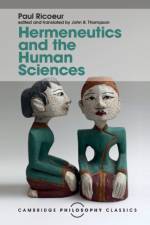
Collected and translated by John B. Thompson, this collection of essays by Paul Ricoeur includes many that had never appeared in English before the volume's publication in 1981. As comprehensive as it is illuminating, this lucid introduction to Ricoeur's prolific contributions to sociological theory features his more recent writings on the history of hermeneutics, its central themes and issues, his own constructive position and its implications for sociology, psychoanalysis and history. Presented in a fresh twenty-first-century series livery, and including a specially commissioned preface written by Charles Taylor, illuminating its enduring importance and relevance to philosophical enquiry, this classic work has been revived for a new generation of readers.
Isaac Newton was indisputably one of the greatest scientists in history. His achievements in mathematics and physics marked the culmination of the movement that brought modern science into being. Richard Westfall's biography captures in engaging detail both his private life and scientific career, presenting a complex picture of Newton the man, and as scientist, philosopher, theologian, alchemist, public figure, President of the Royal Society, and Warden of the Royal Mint. An abridged version of his magisterial study Never at Rest (Cambridge, 1980), this concise biography makes Westfall's highly acclaimed portrait of Newton newly accessible to general readers.
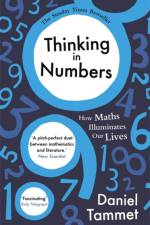
This is the book that Daniel Tammet, bestselling author and mathematical savant, was born to write. In Tammet's world, numbers are beautiful and mathematics illuminates our lives and minds. Using anecdotes and everyday examples, Tammet allows us to share his unique insights and delight in the way numbers, fractions and equations underpin all our lives.Inspired by the complexity of snowflakes, Anne Boleyn's sixth finger or his mother's unpredictable behaviour, Tammet explores questions such as why time seems to speed up as we age, whether there is such a thing as an average person and how we can make sense of those we love.Thinking in Numbers will change the way you think about maths and fire your imagination to see the world with fresh eyes.
Published in 1785, the Groundwork of the Metaphysics of Morals is one of the most powerful texts in the history of ethical thought. In this book, Immanuel Kant formulates and justifies a supreme principle of morality that issues universal and unconditional moral commands. These commands receive their normative force from the fact that rational agents autonomously impose the moral law upon themselves. As such, they are laws of freedom. This volume contains the first facing-page German-English edition of Kant's Groundwork. It presents an authentic edition of the German text and a carefully revised version of Mary Gregor's acclaimed English translation, as well as editorial notes and a full bilingual index. It will be the edition of choice for any student or scholar who is not content with reading this central contribution to modern moral philosophy through the veil of English translation.
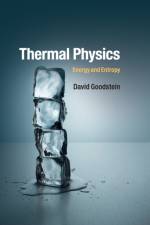
Written by distinguished physics educator David Goodstein, this fresh introduction to thermodynamics, statistical mechanics, and the study of matter is ideal for undergraduate courses. The textbook looks at the behavior of thermodynamic variables and examines partial derivatives - the essential language of thermodynamics. It also explores states of matter and the phase transitions between them, the ideal gas equation, and the behavior of the atmosphere. The origin and meaning of the laws of thermodynamics are then discussed, together with Carnot engines and refrigerators, and the notion of reversibility. Later chapters cover the partition function, the density of states, and energy functions, as well as more advanced topics such as the interactions between particles and equations for the states of gases of varying densities. Favoring intuitive and qualitative descriptions over exhaustive mathematical derivations, the textbook uses numerous problems and worked examples to help readers get to grips with the subject.
This fully revised and updated edition introduces the reader to sedimentology and stratigraphic principles, and provides tools for the interpretation of sediments and sedimentary rocks. The processes of formation, transport and deposition of sediment are considered and then applied to develop conceptual models for the full range of sedimentary environments, from deserts to deep seas and reefs to rivers. Different approaches to using stratigraphic principles to date and correlate strata are also considered, in order to provide a comprehensive introduction to all aspects of sedimentology and stratigraphy. The text and figures are designed to be accessible to anyone completely new to the subject, and all of the illustrative material is provided in an accompanying CD-ROM. High-resolution versions of these images can also be downloaded from the companion website for this book at: www.wiley.com/go/nicholssedimentology.
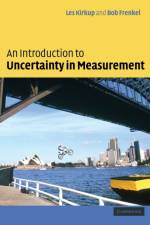
Measurement shapes scientific theories, characterises improvements in manufacturing processes and promotes efficient commerce. In concert with measurement is uncertainty, and students in science and engineering need to identify and quantify uncertainties in the measurements they make. This book introduces measurement and uncertainty to second and third year students of science and engineering. Its approach relies on the internationally recognised and recommended guidelines for calculating and expressing uncertainty (known by the acronym GUM). The statistics underpinning the methods are considered and worked examples and exercises are spread throughout the text. Detailed case studies based on typical undergraduate experiments are included to reinforce the principles described in the book. This guide is also useful to professionals in industry who are expected to know the contemporary methods in this increasingly important area. Additional online resources are available to support the book at www.cambridge.org/9780521605793.
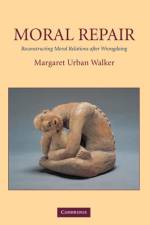
Moral Repair examines the ethics and moral psychology of responses to wrongdoing. Explaining the emotional bonds and normative expectations that keep human beings responsive to moral standards and responsible to each other, Margaret Urban Walker uses realistic examples of both personal betrayal and political violence to analyze how moral bonds are damaged by serious wrongs and what must be done to repair the damage. Focusing on victims of wrong, their right to validation, and their sense of justice, Walker presents a unified and detailed philosophical account of hope, trust, resentment, forgiveness, and making amends - the emotions and practices that sustain moral relations. Moral Repair joins a multidisciplinary literature concerned with transitional and restorative justice, reparations, and restoring individual dignity and mutual trust in the wake of serious wrongs.
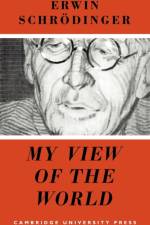
A Nobel prize winner, a great man and a great scientist, Erwin Schrodinger has made his mark in physics, but his eye scans a far wider horizon: here are two stimulating and discursive essays which summarize his philosophical views on the nature of the world. Schrodinger's world view, derived from the Indian writings of the Vedanta, is that there is only a single consciousness of which we are all different aspects. He admits that this view is mystical and metaphysical and incapable of logical deduction. But he also insists that this is true of the belief in an external world capable of influencing the mind and of being influenced by it. Schrodinger's world view leads naturally to a philosophy of reverence for life.
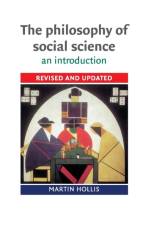
This textbook by Martin Hollis offers an exceptionally clear and concise introduction to the philosophy of social science. It examines questions which give rise to fundamental philosophical issues. Are social structures better conceived of as systems of laws and forces, or as webs of meanings and practices? Is social action better viewed as rational behaviour, or as self-expression? By exploring such questions, the reader is led to reflect upon the nature of scientific method in social science. Is the aim to explain the social world after a manner worked out for the natural world, or to understand the social world from within?
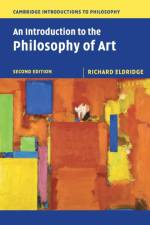
In this book Richard Eldridge presents a clear and compact survey of philosophical theories of the nature and significance of art. Drawing on materials from classical and contemporary philosophy as well as from literary theory and art criticism, he explores the representational, expressive, and formal dimensions of art, and he argues that works of art present their subject matter in ways that are of enduring cognitive, moral, and social interest. His discussion, illustrated with a wealth of examples, ranges over topics such as beauty, originality, imagination, imitation, the ways in which we respond emotionally to art, and why we argue about which works are good. His accessible study will be invaluable to students and to all readers who are interested in the relation between thought and art.
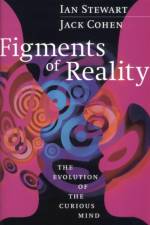
Is the universe around us a figment of our imagination? Or are our minds figments of reality? In this refreshing new look at the evolution of mind and culture, bestselling authors Ian Stewart and Jack Cohen eloquently argue that our minds necessarily evolved inextricably within the context of culture and language. They go beyond conventional reductionist ideas to look at how the mind is the response of an evolving brain trying to grapple with a complex environment. Along the way they develop new and intriguing insights into the nature of evolution, science and humanity.
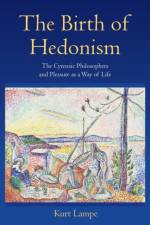
According to Xenophon, Socrates tried to persuade his associate Aristippus to moderate his excessive indulgence in wine, women, and food, arguing that only hard work can bring happiness. Aristippus wasn't convinced. Instead, he and his followers espoused the most radical form of hedonism in ancient Western philosophy. Before the rise of the better known but comparatively ascetic Epicureans, the Cyrenaics pursued a way of life in which moments of pleasure, particularly bodily pleasure, held the highest value. In The Birth of Hedonism, Kurt Lampe provides the most comprehensive account in any language of Cyrenaic ideas and behavior, revolutionizing the understanding of this neglected but important school of philosophy.The Birth of Hedonism thoroughly and sympathetically reconstructs the doctrines and practices of the Cyrenaics, who were active between the fourth and third centuries BCE. The book examines not only Aristippus and the mainstream Cyrenaics, but also Hegesias, Anniceris, and Theodorus. Contrary to recent scholarship, the book shows that the Cyrenaics, despite giving primary value to discrete pleasurable experiences, accepted the dominant Greek philosophical belief that life-long happiness and the virtues that sustain it are the principal concerns of ethics. The book also offers the first in-depth effort to understand Theodorus's atheism and Hegesias's pessimism, both of which are extremely unusual in ancient Greek philosophy and which raise the interesting question of hedonism's relationship to pessimism and atheism. Finally, the book explores the "e;new Cyrenaicism"e; of the nineteenth-century writer and classicist Walter Pater, who drew out the enduring philosophical interest of Cyrenaic hedonism more than any other modern thinker.
How the Radical Enlightenment inspired and shaped the French RevolutionHistorians of the French Revolution used to take for granted what was also obvious to its contemporary observers-that the Revolution was shaped by the radical ideas of the Enlightenment. Yet in recent decades, scholars have argued that the Revolution was brought about by social forces, politics, economics, or culture-almost anything but abstract notions like liberty or equality. In Revolutionary Ideas, one of the world's leading historians of the Enlightenment restores the Revolution's intellectual history to its rightful central role. Drawing widely on primary sources, Jonathan Israel shows how the Revolution was set in motion by radical eighteenth-century doctrines, how these ideas divided revolutionary leaders into vehemently opposed ideological blocs, and how these clashes drove the turning points of the Revolution.In this compelling account, the French Revolution stands once again as a culmination of the emancipatory and democratic ideals of the Enlightenment. That it ended in the Terror represented a betrayal of those ideas-not their fulfillment.
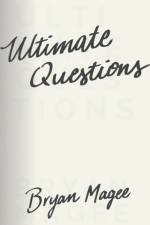
How to live meaningfully in the face of the unknowableWe human beings had no say in existing-we just opened our eyes and found ourselves here. We have a fundamental need to understand who we are and the world we live in. Reason takes us a long way, but mystery remains. When our minds and senses are baffled, faith can seem justified-but faith is not knowledge. In Ultimate Questions, acclaimed philosopher Bryan Magee provocatively argues that we have no way of fathoming our own natures or finding definitive answers to the big questions we all face.With eloquence and grace, Magee urges us to be the mapmakers of what is intelligible, and to identify the boundaries of meaningfulness. He traces this tradition of thought to his chief philosophical mentors-Locke, Hume, Kant, and Schopenhauer-and shows why this approach to the enigma of existence can enrich our lives and transform our understanding of the human predicament. As Magee puts it, "e;There is a world of difference between being lost in the daylight and being lost in the dark."e;The crowning achievement to a distinguished philosophical career, Ultimate Questions is a deeply personal meditation on the meaning of life and the ways we should live and face death.
Stages on Life's Way, the sequel to Either/Or, is an intensely poetic example of Kierkegaard's vision of the three stages, or spheres, of existence: the esthetic, the ethical, and the religious. With characteristic love for mystification, he presents the work as a bundle of documents fallen by chance into the hands of "e;Hilarius Bookbinder,"e; who prepared them for printing. The book begins with a banquet scene patterned on Plato's Symposium. (George Brandes maintained that "e;one must recognize with amazement that it holds its own in this comparison."e;) Next is a discourse by "e;Judge William"e; in praise of marriage "e;in answer to objections."e; The remainder of the volume, almost two-thirds of the whole, is the diary of a young man, discovered by "e;Frater Taciturnus,"e; who was deeply in love but felt compelled to break his engagement. The work closes with a letter to the reader from Taciturnus on the three "e;existence-spheres"e; represented by the three parts of the book. Stages on Life's Way not only repeats themes, characters, and pseudonymous authors of the earlier works but also goes beyond them and points to further development of central ideas in Concluding Unscientific Postscript. ?
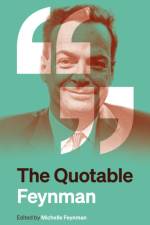
A treasure-trove of illuminating and entertaining quotations from beloved physicist Richard P. Feynman"e;Some people say, 'How can you live without knowing?' I do not know what they mean. I always live without knowing. That is easy. How you get to know is what I want to know."e;-Richard P. FeynmanNobel Prize-winning physicist Richard P. Feynman (1918-88) was that rarest of creatures-a towering scientific genius who could make himself understood by anyone and who became as famous for the wit and wisdom of his popular lectures and writings as for his fundamental contributions to science. The Quotable Feynman is a treasure-trove of this revered and beloved scientist's most profound, provocative, humorous, and memorable quotations on a wide range of subjects.Carefully selected by Richard Feynman's daughter, Michelle Feynman, from his spoken and written legacy, including interviews, lectures, letters, articles, and books, the quotations are arranged under two dozen topics-from art, childhood, discovery, family, imagination, and humor to mathematics, politics, science, religion, and uncertainty. These brief passages-about 500 in all-vividly demonstrate Feynman's astonishing yet playful intelligence, and his almost constitutional inability to be anything other than unconventional, engaging, and inspiring. The result is a unique, illuminating, and enjoyable portrait of Feynman's life and thought that will be cherished by his fans at the same time that it provides an ideal introduction to Feynman for readers new to this intriguing and important thinker.The book features a foreword in which physicist Brian Cox pays tribute to Feynman and describes how his words reveal his particular genius, a piece in which cellist Yo-Yo Ma shares his memories of Feynman and reflects on his enduring appeal, and a personal preface by Michelle Feynman. It also includes some previously unpublished quotations, a chronology of Richard Feynman's life, some twenty photos of Feynman, and a section of memorable quotations about Feynman from other notable figures.Features: Approximately 500 quotations, some of them previously unpublished, arranged by topicA foreword by Brian Cox, reflections by Yo-Yo Ma, and a preface by Michelle FeynmanA chronology of Feynman's lifeSome twenty photos of FeynmanA section of quotations about Feynman from other notable figuresSome notable quotations of Richard P. Feynman:"e;The thing that doesn't fit is the most interesting."e;"e;Thinking is nothing but talking to yourself inside."e;"e;It is wonderful if you can find something you love to do in your youth which is big enough to sustain your interest through all your adult life. Because, whatever it is, if you do it well enough (and you will, if you truly love it), people will pay you to do what you want to do anyway."e;"e;I'd hate to die twice. It's so boring."e;
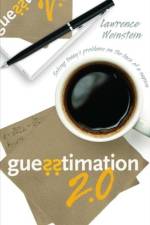
Guesstimation 2.0 reveals the simple and effective techniques needed to estimate virtually anything--quickly--and illustrates them using an eclectic array of problems. A stimulating follow-up to Guesstimation, this is the must-have book for anyone preparing for a job interview in technology or finance, where more and more leading businesses test applicants using estimation questions just like these. The ability to guesstimate on your feet is an essential skill to have in today's world, whether you're trying to distinguish between a billion-dollar subsidy and a trillion-dollar stimulus, a megawatt wind turbine and a gigawatt nuclear plant, or parts-per-million and parts-per-billion contaminants. Lawrence Weinstein begins with a concise tutorial on how to solve these kinds of order of magnitude problems, and then invites readers to have a go themselves. The book features dozens of problems along with helpful hints and easy-to-understand solutions. It also includes appendixes containing useful formulas and more. Guesstimation 2.0 shows how to estimate everything from how closely you can orbit a neutron star without being pulled apart by gravity, to the fuel used to transport your food from the farm to the store, to the total length of all toilet paper used in the United States. It also enables readers to answer, once and for all, the most asked environmental question of our day: paper or plastic?
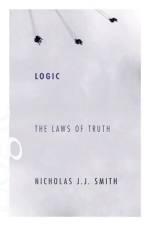
Logic is essential to correct reasoning and also has important theoretical applications in philosophy, computer science, linguistics, and mathematics. This book provides an exceptionally clear introduction to classical logic, with a unique approach that emphasizes both the hows and whys of logic. Here Nicholas Smith thoroughly covers the formal tools and techniques of logic while also imparting a deeper understanding of their underlying rationales and broader philosophical significance. In addition, this is the only introduction to logic available today that presents all the major forms of proof--trees, natural deduction in all its major variants, axiomatic proofs, and sequent calculus. The book also features numerous exercises, with solutions available on an accompanying website. Logic is the ideal textbook for undergraduates and graduate students seeking a comprehensive and accessible introduction to the subject. Provides an essential introduction to classical logic Emphasizes the how and why of logic Covers both formal and philosophical issues Presents all the major forms of proof--from trees to sequent calculus Features numerous exercises, with solutions available at http://www-personal.usyd.edu.au/~njjsmith/lawsoftruth The ideal textbook for undergraduates and graduate students
A compelling defense of the sacred from acclaimed philosopher Roger ScrutonIn The Soul of the World, renowned philosopher Roger Scruton defends the experience of the sacred against today's fashionable forms of atheism. He argues that our personal relationships, moral intuitions, and aesthetic judgments hint at a transcendent dimension that cannot be understood through the lens of science alone. To be fully alive-and to understand what we are-is to acknowledge the reality of sacred things. Rather than an argument for the existence of God, or a defense of the truth of religion, the book is an extended reflection on why a sense of the sacred is essential to human life-and what the final loss of the sacred would mean. In short, the book addresses the most important question of modernity: what is left of our aspirations after science has delivered its verdict about what we are?Drawing on art, architecture, music, and literature, Scruton suggests that the highest forms of human experience and expression tell the story of our religious need, and of our quest for the being who might answer it, and that this search for the sacred endows the world with a soul. Evolution cannot explain our conception of the sacred; neuroscience is irrelevant to our interpersonal relationships, which provide a model for our posture toward God; and scientific understanding has nothing to say about the experience of beauty, which provides a God's-eye perspective on reality.Ultimately, a world without the sacred would be a completely different world-one in which we humans are not truly at home. Yet despite the shrinking place for the sacred in today's world, Scruton says, the paths to transcendence remain open.
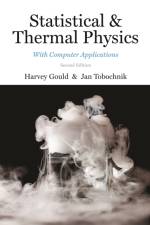
This textbook carefully develops the main ideas and techniques of statistical and thermal physics and is intended for upper-level undergraduate courses. The authors each have more than thirty years' experience in teaching, curriculum development, and research in statistical and computational physics. Statistical and Thermal Physics begins with a qualitative discussion of the relation between the macroscopic and microscopic worlds and incorporates computer simulations throughout the book to provide concrete examples of important conceptual ideas. Unlike many contemporary texts on thermal physics, this book presents thermodynamic reasoning as an independent way of thinking about macroscopic systems. Probability concepts and techniques are introduced, including topics that are useful for understanding how probability and statistics are used. Magnetism and the Ising model are considered in greater depth than in most undergraduate texts, and ideal quantum gases are treated within a uniform framework. Advanced chapters on fluids and critical phenomena are appropriate for motivated undergraduates and beginning graduate students. Integrates Monte Carlo and molecular dynamics simulations as well as other numerical techniques throughout the text Provides self-contained introductions to thermodynamics and statistical mechanics Discusses probability concepts and methods in detail Contains ideas and methods from contemporary research Includes advanced chapters that provide a natural bridge to graduate study Features more than 400 problems Programs are open source and available in an executable cross-platform format Solutions manual (available only to teachers)
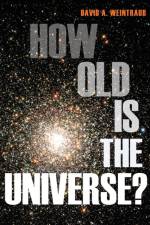
Astronomers have determined that our universe is 13.7 billion years old. How exactly did they come to this precise conclusion? How Old Is the Universe? tells the incredible story of how astronomers solved one of the most compelling mysteries in science and, along the way, introduces readers to fundamental concepts and cutting-edge advances in modern astronomy. The age of our universe poses a deceptively simple question, and its answer carries profound implications for science, religion, and philosophy. David Weintraub traces the centuries-old quest by astronomers to fathom the secrets of the nighttime sky. Describing the achievements of the visionaries whose discoveries collectively unveiled a fundamental mystery, he shows how many independent lines of inquiry and much painstakingly gathered evidence, when fitted together like pieces in a cosmic puzzle, led to the long-sought answer. Astronomers don't believe the universe is 13.7 billion years old--they know it. You will too after reading this book. By focusing on one of the most crucial questions about the universe and challenging readers to understand the answer, Weintraub familiarizes readers with the ideas and phenomena at the heart of modern astronomy, including red giants and white dwarfs, cepheid variable stars and supernovae, clusters of galaxies, gravitational lensing, dark matter, dark energy and the accelerating universe--and much more. Offering a unique historical approach to astronomy, How Old Is the Universe? sheds light on the inner workings of scientific inquiry and reveals how astronomers grapple with deep questions about the physical nature of our universe.
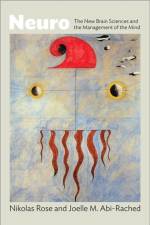
How the new brain sciences are transforming our understanding of what it means to be humanThe brain sciences are influencing our understanding of human behavior as never before, from neuropsychiatry and neuroeconomics to neurotheology and neuroaesthetics. Many now believe that the brain is what makes us human, and it seems that neuroscientists are poised to become the new experts in the management of human conduct. Neuro describes the key developments-theoretical, technological, economic, and biopolitical-that have enabled the neurosciences to gain such traction outside the laboratory. It explores the ways neurobiological conceptions of personhood are influencing everything from child rearing to criminal justice, and are transforming the ways we "e;know ourselves"e; as human beings. In this emerging neuro-ontology, we are not "e;determined"e; by our neurobiology: on the contrary, it appears that we can and should seek to improve ourselves by understanding and acting on our brains.Neuro examines the implications of this emerging trend, weighing the promises against the perils, and evaluating some widely held concerns about a neurobiological "e;colonization"e; of the social and human sciences. Despite identifying many exaggerated claims and premature promises, Neuro argues that the openness provided by the new styles of thought taking shape in neuroscience, with its contemporary conceptions of the neuromolecular, plastic, and social brain, could make possible a new and productive engagement between the social and brain sciences.Copyright note: Reproduction, including downloading of Joan Miro works is prohibited by copyright laws and international conventions without the express written permission of Artists Rights Society (ARS), New York.
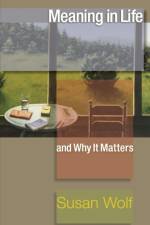
Most people, including philosophers, tend to classify human motives as falling into one of two categories: the egoistic or the altruistic, the self-interested or the moral. According to Susan Wolf, however, much of what motivates us does not comfortably fit into this scheme. Often we act neither for our own sake nor out of duty or an impersonal concern for the world. Rather, we act out of love for objects that we rightly perceive as worthy of love--and it is these actions that give meaning to our lives. Wolf makes a compelling case that, along with happiness and morality, this kind of meaningfulness constitutes a distinctive dimension of a good life. Written in a lively and engaging style, and full of provocative examples, Meaning in Life and Why It Matters is a profound and original reflection on a subject of permanent human concern.
Abonner på vårt nyhetsbrev og få rabatter og inspirasjon til din neste leseopplevelse.
Ved å abonnere godtar du vår personvernerklæring.