




















Gjør som tusenvis av andre bokelskere
Abonner på vårt nyhetsbrev og få rabatter og inspirasjon til din neste leseopplevelse.
Ved å abonnere godtar du vår personvernerklæring.Du kan når som helst melde deg av våre nyhetsbrev.

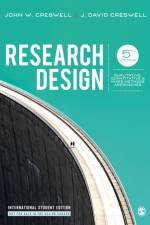
The bestseller that pioneered the comparison of qualitative, quantitative, and mixed methods research design continues in its Fourth Edition to help students and researchers prepare their plan or proposal for a scholarly journal article, dissertation or thesis
A lyrical meditation on listening, this work examines sound in relation to the human body. It also explores the mystery of music and of its effects on the listener.
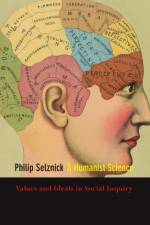
This illuminating book provides a reconstruction of social theory that emphasizes its humanist foundations and the centrality of values in social inquiry.
The latest work from B.K.S. Iyengar, the world's most respected yoga teacher. Foreword from His Holiness the Dalai Lama.
David Balme's major critical edition of Aristotle's largest and perhaps least studied treatise is based on a collation of the 26 known extant manuscripts and a study of the early Latin translations. After Balme's death, it was put into publishable form by Allan Gotthelf, Balme's friend and associate.
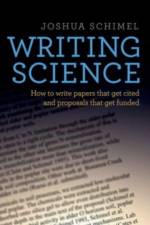
Writing Science is a much-needed guide to succeeding in modern science. It equips science students, scientists, and professionals across a wide range of scientific and technical fields with the tools needed to communicate effectively.
Places social movements in the broader arena of contentious politics in relation to states, political parties and other actors.
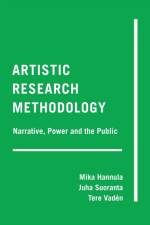
Artistic Research Methodology argues for artistic research as a context-aware and historical process that works inside-in, beginning and ending with acts committed within an artistic practice. This book is essential reading for university courses in art, art education, media and social sciences.
A study of the ethical dilemmas and moral issues surrounding the interaction of humans and technology. Drawing from Heidegger and Foucault, as well as from philosophers of technology such as Don Ihde and Bruno Latour, it locates morality not just in the human users of technology but in the interaction between us and our machines.
Here, philosopher and theologian Jean-Louis Chretien revisits a favourite theme: how human life is shaped by the experience of call and response, explored with art as the context. For Chretien, art is about acts in response to what the artist sees or hears and how these acts provoke responses from viewers.
* Carol Gilligan is one of the most well-known and influential feminist scholars in the world today. of her landmark book In A Different Voice sold over 800,000 copies and is one of the most widely read books every written on gender and human development.
David Wallace argues that we should take quantum theory seriously as an account of what the world is like-which means accepting the idea that the universe is constantly branching into new universes. He presents an accessible but rigorous account of the 'Everett interpretation', the best way to make coherent sense of quantum physics.
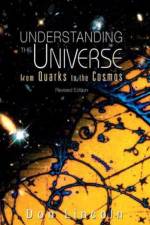
All of the matter of the universe was concentrated at a single point, with temperatures so high that even the familiar protons and neutrons of atoms did not yet exist, but rather were replaced by a swirling maelstrom of energy, matter and antimatter. This book explains the world of quarks and leptons and the forces that govern their behavior.
In this authoritative Very Short Introduction to The Periodic Table, Eric Scerri presents a modern and fresh exploration of this fundamental topic in the physical sciences, considering the deeper implications of the arrangements of the table to atomic physics and quantum mechanics.
Kant declared that philosophy began in 1781 with his Critique of Pure Reason. In 1806 Hegel announced that it had been completed. Forster assesses the steps that led from Kant's "beginning" to Hegel's "end" and concludes that both Kant and Hegel were indeed right. His study reveals Goethe's significant contribution to post-Kantian thinking.
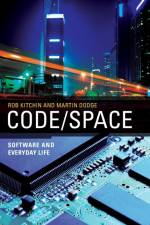
An analysis of the ways that software creates new spatialities in everyday life, from supermarket checkout lines to airline flight paths.
In this volume, four leading American scientists and humanists unfold the controversial potential of Schroedinger's thought.
This book introduces the main ideas of quantum mechanics in language familiar to mathematicians. Readers with little prior exposure to physics will enjoy the book's conversational tone as they delve into key topics.
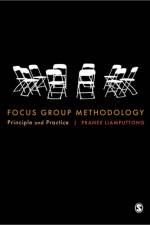
A friendly introduction to the basics of focus group methods with an international feel and an ethical sensibility.
In the fall of 1980, Genentech, Inc, a little-known California genetic engineering company, became the overnight darling of Wall Street, raising over $38 million in its initial public stock offering. This title offers portraits of the people significant to Genentech's science and business, including co-founders Herbert Boyer and Robert Swanson.
Written by two acknowledged authorities in the area, providing a unique overview of a developing and dynamic sector reflecting best current practice.
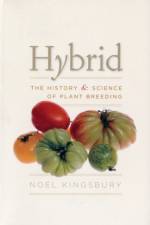
Drawing on historical and scientific accounts, as well as a rich trove of anecdotes, this title shows how scientists, amateur breeders, and countless anonymous farmers and gardeners slowly caused the evolutionary pressures of nature to be supplanted by those of human needs.
Robert Pasnau tells a continuous story about the development of philosophy from the late Middle Ages into the early modern era of the seventeenth century. The focus is questions in metaphysics concerning the nature of matter and the structure of the material world.
How the ancient wisdom of the Stoic philosophers can make you more resilient, more positive, more successful and more happy
Thorough, evenly paced, and intuitive, this friendly introduction to high-level covariant electrodynamics is a handy and helpful addition to any physicist's toolkit.
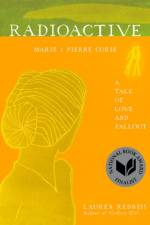
The name Marie Curie is enshrined in every schoolchild's mind as one of the earliest and most inspirational female pioneers in the history of science. This title walks readers through the story of Curie's own life, which was marked by both extraordinary scientific discovery and dramatic personal trauma.
Technics and Time, 3 furthers Stiegler's critique of technics, working (back) through Kant in order to examine the nature of "cinematic time" relative to phenomenology and hypertechnology.
Abonner på vårt nyhetsbrev og få rabatter og inspirasjon til din neste leseopplevelse.
Ved å abonnere godtar du vår personvernerklæring.