




Gjør som tusenvis av andre bokelskere
Abonner på vårt nyhetsbrev og få rabatter og inspirasjon til din neste leseopplevelse.
Ved å abonnere godtar du vår personvernerklæring.Du kan når som helst melde deg av våre nyhetsbrev.

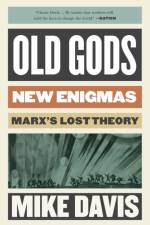
Is revolution possible in the age of the Anthropocene?Marx has returned, but which Marx? Recent biographies have proclaimed him to be an emphatically nineteenth-century figure, but in this book, Mike Davis's first directly about Marx and Marxism, a thinker comes to light who speaks to the present as much as the past. In a series of searching, propulsive essays, Davis, the bestselling author of City of Quartz and recipient of a MacArthur Fellowship, explores Marx's inquiries into two key questions of our time: Who can lead a revolutionary transformation of society? And what is the causeand solutionof the planetary environmental crisis?Davis consults a vast archive of labor history to illuminate new aspects of Marx's theoretical texts and political journalism. He offers a ';lost Marx,' whose analyses of historical agency, nationalism, and the ';middle landscape' of class struggle are crucial to the renewal of revolutionary thought in our darkening age. Davis presents a critique of the current fetishism of the ';anthropocene,' which suppresses the links between the global employment crisis and capitalism's failure to ensure human survival in a more extreme climate. In a finale, Old Gods, New Enigmas looks backward to the great forgotten debates on alternative socialist urbanism (18801934) to find the conceptual keys to a universal high quality of life in a sustainable environment.
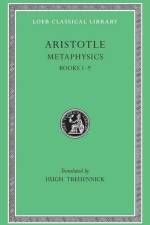
Nearly all the works Aristotle (384-322 BCE) prepared for publication are lost; the priceless ones extant are lecture-materials, notes, and memoranda (some are spurious). They can be categorized as practical; logical; physical; metaphysical; on art; other; fragments.
Leaves of Moryas Garden I (The Call) is the first book from the Agni Yoga Series which is composed of fourteen books. In them is found a synthesis of ancient Eastern beliefs and modern Western thought and a bridge between the spiritual and the scientific. Unlike previous yogas, Agni Yoga is a path not of physical disciplines, meditation, or asceticismbut of practice in daily life. It is the yoga of fiery energy, of consciousness, of responsible, directed thought. It teaches that the evolution of the planetary consciousness is a pressing necessity and that, through individual striving, it is an attainable aspiration for mankind. It affirms the existence of the Hierarchy of Light and the center of the Heart as the link with the Hierarchy and with the far-off worlds. Though not systematized in an ordinary sense, Agni Yoga is a Teaching that helps the discerning student to discover moral and spiritual guide-posts by which to learn to govern his or her life and thus contribute to the Common Good. For this reason Agni Yoga has been called a ';living ethics.'Agni Yoga Society
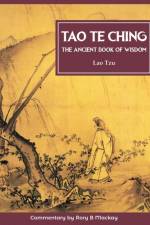
The Tao Te Ching is one of the worlds oldest and most treasured pieces of literature. Written around 2,500 years ago by the enigmatic Lao Tzu, its timeless wisdom and transformative message remain every bit as relevant today. The text, presented here in its entirety, includes commentary on all 81 verses. Through his subtle and poetic words, Lao Tzu explores the workings of the cosmos and the essential nature of mankind, offering a way of living that brings us back into the harmonious flow of the natural world.
Explains what the sciences have to say about planning and action, language, memory, attention, emotions and vision. This book traces the historical development of ideas about the brain and its function from antiquity to the age of neuro-imaging.
"An eccentric comic about the central mystery of quantum mechanics"--Amazon.
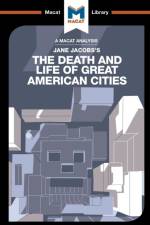
American author, journalist, and activist Jane Jacobs was born in 1916 in Scranton, Pennsylvania. She moved to New York City in 1934, where she became a journalist, writing for magazines including Architectural Forum and Fortune.
Published in 1994, The Bell Curve caused uproar. Herrnstein and Murray claim that intelligence is the key factor in determining success in life and that it is genetic and, more controversially still, that some ethnic groups are more intelligent than others.
The Selfish Gene is that rarest of things: an outstanding work of scholarship that has seeped into popular culture. Richard Dawkins's contentious notion that organisms are survival mechanisms for 'selfish genes' has helped shape the debate in evolutionary biology for almost 40 years.
A classic postcolonial studies text, Spivak's 1988 essay argues that a core problem for the poorest and most marginalized in society (the subalterns) is that they have no platform to express their concerns and no voice to affect policy debates or demand a fairer share of society's goods. The women among them, says Spivak, are doubly oppressed.
Homi K. Bhabha's 1994 The Location of Culture is one of the founding texts of the branch of literary theory called postcolonialism. While postcolonialism has many strands, at its heart lies the question of interpreting and understanding encounters between the western colonial powers and the nations across the globe that they colonized.
Abonner på vårt nyhetsbrev og få rabatter og inspirasjon til din neste leseopplevelse.
Ved å abonnere godtar du vår personvernerklæring.