












Gjør som tusenvis av andre bokelskere
Abonner på vårt nyhetsbrev og få rabatter og inspirasjon til din neste leseopplevelse.
Ved å abonnere godtar du vår personvernerklæring.Du kan når som helst melde deg av våre nyhetsbrev.

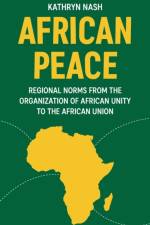
There was a profound shift in peace and security norms from the African Union (AU) to the Organization of African Unity (OAU). Prevailing explanations of this change focus on the post-Cold War period; whereas this book traces the emergence of norms from the OAU through to the AU arguing that they emerged from within Africa. -- .
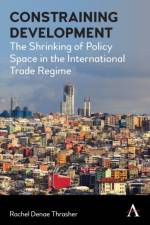
There is a fundamental mismatch between the global trade rules as they govern international economic behaviour and the political economic factors influencing domestic policy making. It comes as no surprise, therefore, that the multilateral trading system is in crisis. Countries are increasingly turning to bilateral and regional (and mega-regional) trade deals to push forward their trade agenda. There is far less consensus around these next-generation trade agreements which reach into every aspect of domestic policy-making. At this time, more than ever, policy-makers, treaty negotiators, and scholars and students of international law need to understand the ways in which this growing regime of international trade and investment impacts regulatory decisions. This book demonstrates how seemingly disparate spheres of legal theory and practice (investment incentives, patent protection, land reform, etc.) are all linked together through the lens of international trade and investment, while also offering solutions in the form of new negotiating texts and country examples as a way forward toward a new multilateral trade and investment regime. Furthermore, each chapter identifies the regulatory challenges facing countries.
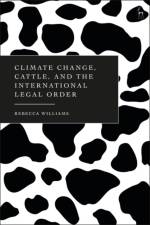
Livestock food systems need to be rapidly rethought to tackle the global climate crisis. This book examines how climate concerns for the livestock sector are governed in international law and addresses the sector's inclusion or (lack thereof) across the international governance of climate change, agriculture, forests and trade.The book provides a wide-ranging analysis of legal regimes on the international level that affect emissions from cattle (and where relevant, livestock more broadly). On this basis, tensions, interactions, and common themes for livestock emissions mitigation across the international climate change, forestry, agricultural and agri-trade regime are identified. This showcases where productive synergies and damaging tensions have emerged across the cross-cutting nature of livestock governance, enabling goals of fairer and more effective emissions mitigation for the sector to be achieved. In addition to addressing issues such as food security and public health, the book highlights the problem of affluence in reducing cattle emissions from meat consumption. This key insight is significant in terms of tackling future livestock emissions trajectories, particularly in relation to securing climate justice within the agricultural sector and securing equitable and effective livestock solutions. The book is a key text for all those with an interest in the legal governance of climate change and agriculture, adding to the timely debate on the future sustainability of the global diet and the relationship between affluence and climate change.
Abonner på vårt nyhetsbrev og få rabatter og inspirasjon til din neste leseopplevelse.
Ved å abonnere godtar du vår personvernerklæring.