











Gjør som tusenvis av andre bokelskere
Abonner på vårt nyhetsbrev og få rabatter og inspirasjon til din neste leseopplevelse.
Ved å abonnere godtar du vår personvernerklæring.Du kan når som helst melde deg av våre nyhetsbrev.

Anfisbena. Culebra ciega es un viaje por lo más entrañable de la vida, del sueño, de la muerte, del pensamiento, de la reflexión, de la filosofía, de la tradición, del lenguaje, de la música, de los saberes más íntimos de una cultura. Jonuel Brigue. (J. M.- Briceño Guerrero) nos lleva a través de esta extraordinaria forma de narrar a un mundo fascinante y misterioso. Es el llano venezolano y sus costumbres, pero además, es la vida misma de los hombres y su trasiego por el las horas desubicados existencia.
The human emotion of love has its own spectrum like the rainbow, with its two extremes-represented by two different neuro-chemicals: 'Dopamine' ('Smart Love' & 'Short-lived' or 'Short Love') and 'Oxytocin' ('Sustained Love'). In the ancient Indian 'NatyaShastra' of the great Bharata Muni, the essence or rasa of love is 'Sringara', having at its two poles 'Kama' (lust) and 'Prema' (pure love). As illustrations of the 'Sringara' rasa, the author has analysed a number of love song lyrics from different cultures. In this book, while the author has looked at and analysed 'love' from the angles of bio-medical, social, psychological and neurological sciences, one unique concept shared is that of the 'love pie'. A very special section deals with 'Futuristic Love' where the author has discussed the idea of having a love-relationship with 'AI' ('Artificial Intelligence'). Special contributions by the Stellar Maestro world-famous polymath musician-astrophysicist-philosopher-painter Dr Leonid Timoshenko of Russia and the top-ranking gynaecologist and obstetrician Dr Gouri Kumra from India are precious value-additions.
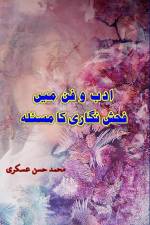
Muhammad Hasan Askari describes the issue of obscenity in art and literature in this book.
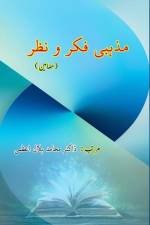
A few study papers on religious topics that were published in the Hyderabad, India-based monthly literary journal "Sada-e-Shibli" are included in this book.
Edith Wharton is renowned for her nonfiction work "The writing of Fiction" and provides classic guidance on Writing and reading. Wharton was the very first female to win, in fact, a Pulitzer Prize with this particular book becoming a rare nonfiction piece. It features a new introduction by Brandon Taylor and offers a rare look into Wharton's views on the arts of reading and writing.Wharton examines different issues with writing in this particular publication, which include character development, the art of crafting exquisite short stories, and the structure of a novel. Not simply a writing guide but a broad meditation by a great practitioner. Wharton draws on her great knowledge of being a renowned novelist renowned for her sharp critiques of upper-class culture in addition to her formal remarkable works.Edith Wharton's "The writing of Fiction" is a tremendous contribution to literary critique and Writing guidance. The very first female to win a Pulitizer Prize, this nonfiction book offers ageless guidance on reading and writing. Wharton, a author of books like "The Age of Innocence," "The House of Mirth," "The Custom of the Country," pertains her sharp critique and intimate understanding of upper class society to this novel.Wharton explores different facets in the literary craft in the book. She gives information on character development, short story writing and the bigger story structure of a novel. Her discussion goes beyond pure technical guidance ; Her observations and experiences as a renowned novelist serve as a meditation on writing.TAGS:The Writing of Fiction ebook; Wharton's writing philosophy; fiction writing essays; narrative structure; literary technique guide; writing advice from classic authors; Edith Wharton's methods; guide to short stories; novel development advice; insights from Pulitzer-winning author,The writing of fiction hardcover;The writing of fiction by Edith Wharton hardcover;Edith Wharton;Edith Wharton books;the wrtiting of fiction hardback book;writing fiction;the writing of fiction edith wharton;literature an introduction to fiction;poetry;drama;and writing;writing historical fiction;writing science fiction; author's approach to fiction; narrative development; creative writing resources
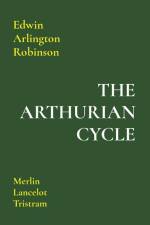
The Arthurian CycleMerlin | Lancelot | TristramEdwin Arlington RobinsonDuring the era of the First World War, and in the decade thereafter, the American poet Edwin Arlington Robinson composed a cycle of epic narrative poems, written in blank verse, that were arguably modern in style but drew upon classic themes in substance. With the unfolding tragedy of a world at war top of mind, Robinson began what would become a trilogy based on the legends of King Arthur and his Knights of the Round Table. Merlin, the first work in Robinson's Arthurian cycle, was published in 1917. Robinson's Merlin is no magician, certainly not as modern audiences have come to know him. Rather, he is a mortal man grappling with human experiences; his love for the lady Vivian and the prospect of a world going mad. Lancelot followed in 1920. At their core, Merlin and Lancelot are both war poems, with the gathering storm of the former foreshadowing the chaos and destruction of the latter, depicted in the tragic outcome of the relationship between Lancelot and Guinevere. An interval of seven years would pass before the publication of Tristram, the third work in Robinson's trilogy. During this interval, Edwin Arlington Robinson would win the Pulitzer Prize in Poetry twice; first for his Collected Poems (published in 1921), and again for The Man Who Died Twice (published in 1924). With Tristram (published in 1927), Edwin Arlington Robinson would at last reap hard-won financial rewards for his work. Tristram also won Robinson his third Pulitzer Prize. Edwin Arlington Robinson's Arthurian cycle reflects the poet's most mature work. With Merlin and Lancelot, Robinson recounts the human cost of war as seen through the eyes of those characters in the Arthurian legends. Robinson's Merlin, Lancelot, Guinevere, and King Arthur, as well as the supporting characters central to their portrayal, are all rendered in flesh and blood, their words and deeds rooted in the vicissitudes of mortal life. Where Merlin and Lancelot are war poems, Tristram is a poem about love. With Tristram, Robinson recounts the love story of Tristram, and his return, and of Isolt; "Isolt of the white hands, in Brittany." Theirs is a love as doomed in life as the inevitability of death.
Clarence Darrow has long been an icon for many lawyers-the "Attorney for the Damned," as he was dubbed by journalist Lincoln Steffens. But the Darrow legend doesn't square with the facts. Blowhard pulls back the curtain and exposes the real Darrow-the Darrow who believed the ends justified the means and that justice was nothing more than "a pattern according to our own personal conceptions." The Darrow who kidnapped and intimidated witnesses. The Darrow who bribed jurors. The Darrow who believed truth was expendable in pursuit of his own goals.You'll never be able to look at Clarence Darrow the same way again.
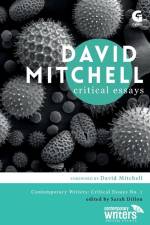
The outcome of the first international conference on David Mitchell's writing, this collection of critical essays, focuses on his first three novels - Ghostwritten (1999), number9dream (2001) and Cloud Atlas (2004) - to provide a sustained analysis of Mitchell's complex narrative techniques and the literary, political and cultural implications of his early work. The essays cover topics ranging from narrative structure, genre and the Bildungsroman to representations of Japan, postmodernism, the construction of identity, utopia, science fiction and postcolonialism. Contents Foreword David Mitchell 1. Introducing David Mitchell's Universe: A Twenty-First Century House of Fiction Sarah Dillon 2. The Novels in Nine Parts Peter Childs and James Green 3. 'Or something like that': Coming of Age in number9dream Kathryn Simpson 4. Remediations of 'Japan' in number9dream Baryon Tensor Posadas 5. The Stories We Tell: Discursive Identity Through Narrative Form in Cloud Atlas Courtney Hopf 6. Cloud Atlas: From Postmodernity to the Posthuman Hélène Machinal 7. Cloud Atlas and If on a winter's night a traveller: Fragmentation and Integrity in the Postmodern Novel Will McMorran 8. 'Strange Transactions': Utopia, Transmigration and Time in Ghostwritten and Cloud Atlas Caroline Edwards 9. Speculative Fiction as Postcolonial: Critique in Ghostwritten and Cloud Atlas Nicholas Dunlop 10. 'Moonlight bright as a UFO abduction': Science Fiction, Present-Future Alienation and Cognitive Mapping William Stephenson Notes on Contributors Index About the Editor Sarah Dillon is Lecturer in Contemporary Fiction in the School of English at the University of St Andrews. She is author of The Palimpsest: Literature, Criticism, Theory (2007) and has published essays on Jacques Derrida, Elizabeth Bowen, H.D., Michel Faber, Maggie Gee and David Mitchell.
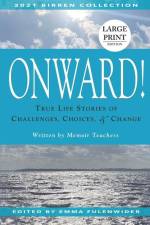
Onward! is a collection of personal stories about life-changing moments-moments when dreams and beliefs are threatened or shattered, when we're forced to make tough choices and challenged to learn and grow.Written by Guided Autobiography Instructors, these stories share the confusion, doubt, and sometimes the despair that accompany such moments. But they also share the strength and wisdom that ultimately moves us onward. In these stories you'll find: Hope for hard timesOpportunity in adversityAnd a reminder of your own strength and wisdom during life-changing moments.Guided Autobiography Instructors facilitate small groups writing and sharing life stories. Learn more at www.GuidedAutobiography.com
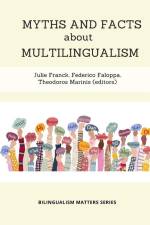
Drawing on groundbreaking research from the European Union's MultiMind project, this enlightening volume debunks common misconceptions surrounding multilingualism and illuminates its profound impact on our mind, brain, and society. With contributions from top researchers across 14 countries, the book expertly bridges linguistics, neuroscience, psychology, and more, offering insights not only into the cognitive and neural benefits of multilingualism but also its pivotal role in education, health, and therapeutic settings.
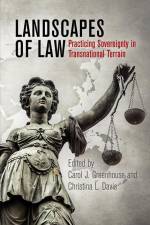
International scholars offer ethnographic analyses of the relations between transnationalism, law, and cultureThe recent surge of right-wing populism in Europe and the United States is widely perceived as evidence of ongoing challenges to the policies and institutions of globalization. But as editors Carol J. Greenhouse and Christina L. Davis observe in their introduction to Landscapes of Law, the appeal to national culture is not restricted to the ethno-nationalisms of the developing world outside of industrial democracies nor to insurgent groups within them. The essays they have collected in this volume reveal how claims of national culture emerge in the pursuit of transnationalism and, under some circumstances, become embedded within international law. The premise that there is inherent tension between nationalism and globalism is misleading. Whether asserted explicitly as state sovereignty or implicitly as cultural community, claims of national culture mediate how governments assert their interests and values when engaging with transnational law. Landscapes of Law demonstrates how nationalism operates in the contested zone between borderless capital and bordered states.Drawing from the fields of anthropology, international relations, law, political science, and sociology, the book's international contributors examine the ways in which claims of national differences are produced within transnational institutions. Insights from case studies across a wide range of topics reveal how such claims may be worked into policy prescriptions and legal arrangements or provide ad hoc bargaining chips. Together, they show that expressions of national culture outside of state boundaries consolidate claims of sovereignty. The contributors offer innovative frameworks for analyzing the relationships among transnationalism, law, and cultural claims at various levels and scales. They demonstrate how overlapping communities use law to define borders and shape relationships among actors rather than to generate a single social ordering.Landscapes of Law traces the theoretical implications generated by an understanding of transnational law that challenges the conventional separation of individual, community, society, national, and international spaces.Contributors: Katayoun Alidadi, Tugba Basaran, Rachel Brewster, Sandra Brunnegger, Christina L. Davis, Sara Dezalay, Marie-Claire Foblets, Henry Gao, Carol J. Greenhouse, David Leheny, Mark Fathi Massoud, Teresa Rodríguez-de-las-Heras Ballell, Gregory Shaffer, Mariana Valverde.
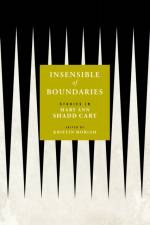
"Mary Ann Shadd Cary (1823-1893) was a trailblazing Black feminist, activist, journalist, and educator whose achievements can be traced across Canada and the United States. This volume focuses particularly on three main topics: Shadd Cary's relationship to immigration, nation, and colonization; the Black creative and nation-building work that Shadd Cary has inspired; and contemporary research methodologies like digital humanities as they can be used to better understand Shadd Cary's moment, impacts, and life. Through a multi- and interdisciplinary lens, the collection celebrates Shadd Cary's cultural significance and intellectual contributions, as well as their reverberations in her time and in ours"--Publisher's description.
Anthropologists and ethnographers examine the global garment industry's impact on workers' well-beingThe 2013 collapse of Rana Plaza, an eight-story garment factory in Savar, Bangladesh, killed over a thousand workers and injured hundreds more. This disaster exposed the brutal labor conditions of the global garment industry and revealed its failures as a competitive and self-regulating industry. Over the past thirty years, corporations have widely adopted labor codes on health and safety, yet too often in their working lives, garment workers across the globe encounter death, work-related injuries, and unhealthy factory environments. Disasters such as Rana Plaza notwithstanding, garment workers routinely work under conditions that not only escape public notice but also undermine workers' long-term physical health, mental well-being, and the very sustainability of their employment.Unmaking the Global Sweatshop gathers the work of leading anthropologists and ethnographers studying the global garment industry to examine the relationship between the politics of labor and initiatives to protect workers' health and safety. Contributors analyze both the labor processes required of garment workers as well as the global dynamics of outsourcing and subcontracting that produce such demands on workers' health. The accounts contained in Unmaking the Global Sweatshop trace the histories of labor standards for garment workers in the global South; explore recent partnerships between corporate, state, and civil society actors in pursuit of accountable corporate governance; analyze a breadth of initiatives that seek to improve workers' health standards, from ethical trade projects to human rights movements; and focus on the ways in which risk, health, and safety might be differently conceptualized and regulated. Unmaking the Global Sweatshop argues for an expansive understanding of garment workers' lived experiences that recognizes the politics of labor, human rights, the privatization and individualization of health-related responsibilities as well as the complexity of health and well-being.Contributors: Mark Anner, Hasan Ashraf, Jennifer Bair, Jeremy Blasi, Geert De Neve, Saydia Gulrukh, Ingrid Hagen-Keith, Sandya Hewamanne, Caitrin Lynch, Alessandra Mezzadri, Patrick Neveling, Florence Palpacuer, Rebecca Prentice, Kanchana N. Ruwanpura, Nazneen Shifa, Dina M. Siddiqi, Mahmudul H. Sumon.
Madame Ida Pfeiffer offers an enthralling account of her daring travels through Iceland and Scandinavia in the mid-19th century.
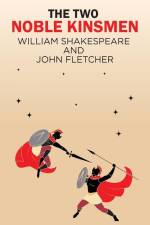
Set in ancient Greece, the story follows two cousins, Palamon and Arcite, whose close bond is tested by their mutual love for Emilia, a noblewoman.
Esta obra, coordinada por los profesores Allan R. Brewer-Carías, Luciano Parejo Alfonso y Víctor Hernández Medible, ha sido editada en Homenaje al profesor Libardo Rodríguez R, por Editorial Temis de Colombia, en coedición con Editorial Reus y Editorial Jurídica Venezolana International. Reúne 44 estudios sobre El derecho público y sus retos actuales, redactados con tal motivo por los profesores José Araujo-Juárez, Rodolfo C. Barra, Allan R. Brewer-Carías, Manuel Fermín Cabral, Tomás Cano Campos, Alejandro Canónico Sarabia, Juan Carlos Cassagne, Augusto Ramón Chávez Marín, Pedro José Jorge Coviello, Jorge Danós Ordóñez, Carlos E. Delpiazzo, Augusto Durán Martínez, Javier A. Echevarría Vargas, Tomás-Ramón Fernández, Germán Fernández Farreres, Fabrizio Fracchia, Giuseppe Franco Ferrari, Ciro Nolberto Güechá Medina, Víctor Rafael Hernández-Mendible, René Hostiou, Ernesto Jinesta Lobo, Fernando López Ramón, Andry Matilla Correa, Juan Carlos Medina Flores, Jacqueline Morand-Deviller, Juan Carlos Morón Urbina, Santiago Muñoz Machado, Luciano Parejo Alfonso, Efraín Pérez, Pablo Esteban Perrino, José-Luis Piñar Mañas, Gustavo Quintero Navas, Ricardo Rivero Ortega, María José Rodríguez, Jaime Rodríguez-Arana, Danilo Rojas Betancourth, Ramiro Saavedra Becerra, Guillermo Sánchez Luque, Jorge Enrique Santos Rodríguez, Pierre Subra de Bieusses, Aldo Travi, Miguel Ángel Torrealba Sánchez, Cristina Vázquez, José Luis Villegas Moreno,
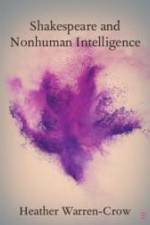
The Infinite Monkey Theorem is an idea frequently encountered in mass market science books, discourse on Intelligent Design, and debates on the merits of writing produced by chatbots. According to the Theorem, an infinite number of typing monkeys will eventually generate the works of Shakespeare. Shakespeare and Nonhuman Intelligence is a metaphysical analysis of the Bard's function in the Theorem in various contexts over the past century. Beginning with early-twentieth century astrophysics and ending with twenty-first century AI, it traces the emergence of Shakespeare as the embattled figure of writing in the age of machine learning, bioinformatics, and other alleged crimes against the human organism. In an argument that pays close attention to computer programs that instantiate the Theorem, including one by biologist Richard Dawkins, and to references in publications on Intelligent Design, it contends that Shakespeare performs as an interface between the human and our Others: animal, god, machine.
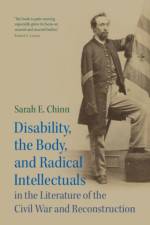
"The book is a study of the ways that white radicals deployed the physical and literary image of amputation during the Civil War and Reconstruction to argue for full Black citizenship and against a national reconciliation that reimposed white supremacy. It gives readers a new way to think about the Civil War and Reconstruction"--
This Element offers suggestions for how teachers might re-think the ways in which they present Shakespeare performed to their students particularly as a powerful way of building personal and critical responses to the plays.
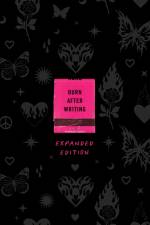
The national bestseller"This book has made me laugh and cry, filled me with joy, and inspired me." -TikTok user camrynbanksNow with thirty pages of new questions -- the phenomenally popular secret journal filled with private prompts for personal reflection, self-exploration, and fueling creativityWith more than three million copies sold, Burn After Writing is the must-have journal for teens, tweens, and TikTok fans that helps you discover who you really are – when no one else is looking. Through incisive questions and thought experiments, this self-discovery tool helps you learn new things while letting others go. Imagine instead of publicly declaring your feelings for others, you privately declared your feelings for yourself? Help your heart by turning off the comments and muting the accounts that drive you into jealousy for a few moments a night. Whether you are going through the ups and downs of growing up, or know a few young people who are, you will flourish by finding free expression—even if through a few tears! Push your limits, reflect on your past, present, and future, and create a secret book that's about you, and just for you. This is not a diary, and there is no posting required. And when you're finished, toss it, hide it, or Burn After Writing. Now expanded with thirty new pages of questions that probe even deeper into who you are when no one's looking.
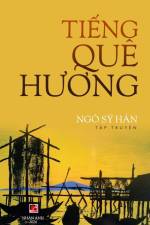
...Tuy¿n t¿p truy¿n ng¿n M¿t Góc Quê Nhà xüt b¿n ¿¿u n¿m 2003 ¿¿¿c tác gi¿ xem nh¿ là m¿t quy¿n "em t¿p làm v¿n" c¿a m¿t ng¿¿i m¿i mon men b¿¿c vào gi¿i v¿n ch¿¿ng ch¿ ngh¿a. M¿t s¿ v¿n thi h¿u ti¿n b¿i cho r¿ng l¿i hành v¿n bình d¿ không c¿n trình ¿¿ ¿¿i h¿c v¿n hi¿u, ¿¿ng th¿i sau khi ¿¿c c¿m th¿y th¿m thía cho thân ph¿n l¿u ¿ày! Nh¿ng phu nh¿n l¿i chê không lôi cün ng¿¿i ¿¿c. Vì tin l¿i hi¿n thê là th¿t tình nên tôi ph¿i c¿ g¿ng nhi¿u h¿n n¿a trong tác ph¿m th¿ hai Ti¿ng Quê H¿¿ng n¿y, mong có th¿ thay ¿¿i ph¿n nào nh¿n ¿¿nh c¿a phu nh¿n ch¿ng? Ti¿p theo quy¿n "em t¿p làm v¿n" tr¿¿c, t¿p truy¿n ng¿n th¿ hai, Ti¿ng Quê H¿¿ng, c¿ng ch¿ là quy¿n "làm v¿n nh¿p môn" hay "làm v¿n th¿c hành" v¿i s¿ c¿ g¿ng v¿¿t b¿c c¿a m¿t h¿c sanh chuyên c¿n. Tôi ngh¿, nh¿ m¿t sanh viên ¿ M¿, ch¿ c¿n siêng n¿ng là thi ¿¿u, không c¿n bình th¿ hay th¿, th¿m chí ¿¿u v¿t c¿ng ¿¿¿c! Nh¿ng mün tr¿ thành m¿t ng¿¿i tài gi¿i không ph¿i là d¿. Và tác gi¿ c¿ng không dám m¿ màng t¿i chuy¿n không t¿¿ng ¿y! Tuy nhiên, ni¿m hân h¿nh là có ng¿¿i - trong ¿ó có nh¿ng ¿àn anh ¿àn ch¿ ¿ã thành danh - g¿i tôi là nhà v¿n! Nh¿ng sao tôi v¿n ch¿a dám t¿ nh¿n vì ngh¿ mình còn tài hèn trí m¿n quá, ¿úng nh¿ có ng¿¿i ¿ã nh¿n xét tác gi¿ không có trình ¿¿! Vâng! Vì tác gi¿ kém trình ¿¿ nên v¿n phong bình d¿ trong Ti¿ng Quê H¿¿ng ph¿n ¿nh l¿i s¿ng quê mùa c¿a m¿t ng¿¿i sanh ra và l¿n lên t¿ mi¿n ¿¿t rüng, n¿i ¿ó ng¿¿i dân mi¿n Nam hi¿n hòa ch¿t phác quanh n¿m s¿ng v¿i con trâu cái cày, và v¿i mùi r¿ khô c¿ m¿c, cùng nh¿ng c¿t khói ¿¿t ¿¿ng. Tác gi¿ ch¿ g¿p, giao ti¿p, và bi¿t cüc s¿ng c¿a nh¿ng ng¿¿i dân hèn m¿n mua gánh bán b¿ng ngoài l¿ ¿¿¿ng, nh¿ng em bé bán vé s¿ và l¿¿m b¿ch ni-lông, nh¿ng con em c¿a s¿ quan ch¿ ¿¿ c¿ v¿t v¿¿ng tr¿ v¿ t¿ vùng kinh t¿ m¿i, nh¿ng ng¿¿i "ti¿u t¿ s¿n" b¿ ¿üi ra kh¿i nhà thân tàn ma d¿i, c¿ nh¿ng em bé quen mùi son ph¿n tr¿¿c th¿i con gái ph¿i nuôi em và nuôi ng¿¿i cha ¿ã ¿¿ l¿i m¿t ph¿n thân th¿ n¿i chi¿n tr¿¿ng x¿a! ...
The convergence of corporate social responsibility (CSR), corporate strategy, and public policy has emerged as a critical domain in contemporary business. The fundamental premise of corporate social responsibility is the obligation a company bears to simultaneously address and tend to the multifaceted needs of its clients, workforce, shareholders, communities, and the environment. The key to unlocking the dual potential of generating both positive social impact and corporate value is found in this delicate balance. Examining a wide array of empirical evidence, Strategies and Approaches of Corporate Social Responsibility Toward Multinational Enterprises establishes the tangible linkages between social responsibility initiatives and competitive advantages, offering invaluable insights for organizations aspiring to attract top-tier talent and bolster brand reputation. Delving into the nuances of corporate strategy, it elucidates the distinction between business strategy and corporate strategy, underscoring the significant influence of CEO decisions on stakeholders directly or indirectly associated with the organization. Designed to resonate with diverse audiences, including corporate sectors, private organizations, banks, universities' faculty and students, industrialists, and researchers, this book offers a roadmap for embracing and implementing novel approaches to CSR for multinational enterprises. Employing strategic business models that prioritize sustainability and responsive strategies, it heralds a new era of corporate excellence and organizational growth.
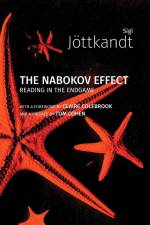
The Nabokov Effect attends to the 'lettrocalamity' that occurs when literature and cinema collide in Vladimir Nabokov's work. Sigi Jöttkandt suspends the long-held critical investment in Nabokov's authorial control to focus on another principle of representational agency making incursions into his books. Tracing the subterranean network of cross-lingual puns, homophonies, and technical overflows of writing to a cinaesthetic signature system, Jöttkandt recasts the vexed question of Nabokov's relation to psychoanalysis.A pioneer of too-close reading, Nabokov offers himself, Jöttkandt argues, as the tipping point of perceptual and epistemological systems that are in the process of devouring themselves. The ensuing 'Nabokov effect' is both an assault on teleological models and an opening onto other forms of reading and listening, which Jöttkandt argues was always latent in psychoanalysis. In this book, Nabokov emerges as the writer for humanity's endgame, architect of a post- interpretive complex that opens up broader questions concerning our ability to read him or, indeed any writer, today.
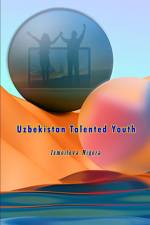
Ismoilova Nigora of Uzbekistan has put together a collection of poetry and prose titled "Uzbekistan Talented Youth". It contains many heartfelt, uplifting, and passionate poetry that explore human nature and love in all of its facets. It also includes numerous really thought-provoking articles written by young, gifted Uzbek writers.
In this study of the Hebrew alphabet, learn to sound out each letter, link letters to form a word, and finally read a full sentence, plus the art of writing and reading from right to left, the mysteries of numerical values, and more.
“Bad Medicine is a taut exploration of America’s deadly battle with opioid addiction—an unnerving and inspirational firecracker of a book.” —Karen Abbott, New York Times bestselling author For fans of Dopesick and Bad Blood, the shocking story of New York’s most infamous pill-pushing doctor, written by the prosecutor who brought him down.In 2010, a brave whistleblower alerted the police to Dr. Stan Li’s corrupt pain management clinic in Queens, New York. Li spent years supplying more than seventy patients a day with oxycodone and Xanax, trading prescriptions for cash. Emergency room doctors, psychiatrists, and desperate family members warned him that his patients were at risk of death but he would not stop. In Bad Medicine, former prosecutor Charlotte Bismuth meticulously recounts the jaw-dropping details of this criminal case that would span four years, culminating in a landmark trial. As a new assistant district attorney and single mother, Bismuth worked tirelessly with her team to bring Dr. Li to justice. Bad Medicine is a chilling story of corruption and greed and an important look at the role individual doctors play in America’s opioid epidemic.
Abonner på vårt nyhetsbrev og få rabatter og inspirasjon til din neste leseopplevelse.
Ved å abonnere godtar du vår personvernerklæring.