


















Gjør som tusenvis av andre bokelskere
Abonner på vårt nyhetsbrev og få rabatter og inspirasjon til din neste leseopplevelse.
Ved å abonnere godtar du vår personvernerklæring.Du kan når som helst melde deg av våre nyhetsbrev.

This book examines the impact of water-related subsidies on social, and distributive equity and environmental sustainability in groundwater access and regulation in India.This book argues that adopting a water justice framework is essential to ensure equitable and sustainable access to and regulation of groundwater by balancing anthropogenic and ecological water needs. The inherent inequity resulting from property rights-controlled groundwater access gets widened by the social, political, and economic factors determining the subsidy beneficiaries. Adopting a socio-legal approach, the book draws on two contrasting case studies in India: Kerala, a water-secure state, and Rajasthan, an arid state. Arguing for a shift to a new paradigm in water governance, it critically examines the feasibility of the public trust doctrine and rights of nature discourse to analyse the best suitable regulatory framework that can balance the human right to water and ecological sustainability in groundwater resources. It demonstrates the feasibility of adopting various environmental law principles that balance human rights to water and nature. It argues that the hitherto highlighted public trust doctrine cannot address these inequities due to its anthropogenic bias and property rights link. The book examines the applicability of the rights of nature discourse instead of these property rights-based regulations to incorporate and mainstream the concerns of aquifer protection in water governance.This book shall be of great interest to students, scholars and practitioners of water law and policy, environmental law, water and social justice, development studies and political ecology.
Classement thématique inédit des articles, pour faciliter la consultation.Code précédé d'une présentation du texte. Table des matières: LA LOI SACRÃELA SORCELLERIELE SERVICE FEODAL ET LES TENURESLES DROITS CIVILSLa propriété Droits personnels. DROIT DE LA FAMILLELa promesse de mariage (fiançailles) Le mariage Le divorce LE DROIT DE LA PERSONNEL'esclavage LE DROIT PENALLES ATTEINTES AUX BIENSL'incendie volontaire La dégradation des biens LE VOLLe maraudage agricole (vol de récolte) Le vol d'animaux de ferme Le vol d'autres animaux Les vols simples Les vols qualifiés graves en fonction de l'importance de la sanction Les vols qualifiés en fonction de leur nature: le cambriolage Les vols punis en fonction de la qualité de leur auteur LES ATTEINTES A LA PERSONNELes violences légèresLes atteintes sexuelles. Les homicides involontaires Les homicides volontaires LES DROITS SOCIAUXLE DROIT DU TRAVAILLe salaire de l'employé Le salaire de l'apprentiL'esclave LE DROIT MORALLe devoir de solidarité L'hygiène corporelleLes pratiques sexuelles Avec un animal Avec une personne LE DROIT RURALL'attribution d'un terrain L'entretien des champs L'entretien des vignes L'irrigation des champs L'apiculture LE DROIT DES ANIMAUXLA MALTRAITANCE ANIMALESur l'animal de compagnie Sur l'animal domestique DROIT DE PROPRIETE SUR L'ANIMALDROIT DE LA CONSOMMATIONLa protection des contractants lors d'une vente La réglementation des prix
The filing of a lawsuit under 42 USC 1983 in federal courts represents a critical avenue for individuals to seek redress for violations of their civil rights.The process of drafting a complaint that meets the jurisdictional and substantive requirements of the court is foundational to the pursuit of justice in these cases.Therefore, this thesis aims to provide a comprehensive analysis of the key elements necessary for a properly drafted complaint to be acknowledged and filed with the courts in 42 USC 1983 lawsuits, shedding light on the nuances and significance of each requirement.This thesis also Presenting an argument for just compensation that encapsulates the full scope of harm in a civil rights case. Identifying the parties an a "Sample Complaint" to guide you every step of the way. Discover the true differences between Tort Claims and 42 USC 1983 Lawsuits in this Comparative Analysis examining topics such as: Understanding Tort Claims, What Constitutes a Tort Claim 62 and The Legal Basis and Origin of Tort Claimsand 42 USC 1983 Lawsuits.
Political asylum is a form of humanitarian protection offered to a person and his or her family who leave their home country for their safety, providing them with legal status (asylee) rather than being removed (deported) to a country where they were persecuted or fear persecution or harm.The support of U.S. legislation is vitally important in the face of political asylum claims for compelling events of family abuse and mistreatment, especially where the victims are often women and children. In addition, there is a great lack of knowledge by victims and attorneys about the possibility of obtaining protection from the immigration system for these events.This new book compiles information on cases of political asylum for domestic violence throughout national and international history, which have been presented from different perspectives and with different results.There are many expectations regarding this situation, with changes in government administrations depending on the time, however, the competent authorities address this problem with great concern and interest, and each person, organization, guild or other entities that may be involved to add possible new solutions, could shorten the gaps of understanding.These small lines are a valuable exercise in the area of training, knowledge and professional preparation, extending the cycle of contributions that has derived from my performance as a foreign lawyer and in turn forced migrant to this country that seeks to vindicate the principles of freedom and equality of this great nation.
El asilo polÃtico es una forma de protección humanitaria que se ofrece a una persona y su familia que abandona su paÃs de origen por motivos de su seguridad, proporcionándole un estatus legal (asilado) en lugar de que sea removida (deportada) a un paÃs donde fue perseguido o teme ser perseguido o lastimado.Es de vital importancia el apoyo de la legislación de EE. UU., ante la solicitud de asilo polÃtico por eventos apremiantes de maltrato y abuso familiar, especialmente donde las vÃctimas suelen ser mujeres y niños. Aunado a ello, existe gran desconocimiento por las vÃctimas y abogados, sobre la posibilidad de obtener protección al sistema migratorio sobre estos hechos.En este nuevo libro se recopila información de casos de asilo polÃtico por violencia doméstica a lo largo de la historia nacional e internacional, los cuales han sido presentados bajo distintas ópticas y con resultados diferentes.Muchas son las expectativas frente a esta situación, con cambios en las administraciones del gobierno según la época, no obstante, las autoridades competentes abordan con gran preocupación e interés esta problemática, y cada persona, organización, gremio u otras cualesquiera entidades que puedan involucrarse para agregar posibles nuevas soluciones, podrÃan acortar las brechas de entendimiento.Estas pequeñas lÃneas son un valioso ejercicio dentro del área de la capacitación, conocimiento y preparación profesional, extendiendo el ciclo de aportes que ha derivado de mi desempeño como abogado extranjero y a su vez migrante forzado hacia éste paÃs que busca reivindicar los principios de la libertad y la igualdad de esta gran nación.
"EXTORTED" is a thought-provoking exploration of the power dynamics at play in high-profile cases and the devastating consequences of false accusations. It serves as a cautionary tale, reminding us of the importance of due process and the need to critically evaluate sensational claims in the age of instant information.
This book investigates the contemporary practices surrounding the international prosecution of sitting heads of states by the International Criminal Court (ICC). Through a specific focus on five contemporary case studies, the author reflects on the following: firstly, how the ICC itself has shaped the contemporary practices surrounding the prosecution of sitting heads of states; and secondly, the domestic and international "problematics" that have ensued from these practices. In doing so, Cacciatori argues that the international prosecution of sitting heads of states before the ICC constitutes "an imprudent exercise of Western humanitarianism". This, in turn, has not only worsened the domestic conditions of the countries subject to the ICC's investigations but in addition, it has also served to undermine the "very idea of cosmopolitan justice" in international politics.
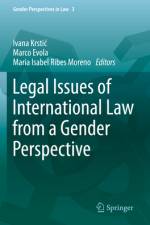
This book offers a new perspective on international law, which was, for centuries, male-dominant and gender-blind. However, this gender blindness has led to many injustices, the failure to recognize certain rights, and to impunity for serious crimes. The book examines the development of gender perspectives in various branches of international law, while also discussing and explaining certain universal standards. However, particular attention is paid to the European human rights system. Accordingly, the book provides detailed explanations of the EU's external policies in relation to sex, sexual orientation, and gender identity. Also, there is a special focus on the relevant jurisprudence of the European Court of Human Rights in relation to gender and sexual orientation, female reproduction, and sexuality. The authors explain not only the importance of an adequate legal framework for combating gender inequality but also the detrimental effects of deeply rooted gender stereotypes and prejudices. Subsequently, the development of particular branches is presented, such as a gender-sensitive approach to the prevention of war crimes, gender perspectives in refugee law, and the evolution of gender-sensitive environmental law. In addition, the problematic situation of discrimination in the workplace is addressed from various perspectives. Many discussions, especially among EU member states, are reserved for the issue of women's participation in managerial boards, while the growing awareness of gender equality in international trade agreements represents another interesting topic. Lastly, the book offers a historical perspective on the development of international law in the interwar period, with a particular focus on the situation in Yugoslavia.The book critically reconsiders the dominant molds of legal knowledge and presents innovative gender-sensitive and gender-competent insights on a variety of issues in international law, in order to introduce readers to new research topics relevant to gender equality and to stimulate the development of an international legal and institutional framework for achieving greater gender equality in practice. The collection of essays presented here will be of interest to all those working in the field of international law, as well as students and academics looking to broaden and deepen their research on a range of issues in international law from gender perspectives.
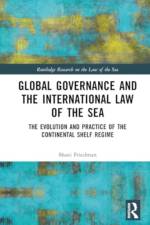
This book conducts an examination of the international legal regime of the continental shelf through the lens of international relations (IR), with a primary focus on global governance theory.Presenting a new perspective within the field of IR and international law, the book offers new insights into the rules, principles, practices, and actors that establish and govern social interactions and the management of common affairs at the transnational level. The governance framework within the continental shelf can encompass a wider scope than legal laws alone, incorporating informal rules or potentially disregarding formal "black letter" rules that may not be effectively applied in practice. To exemplify how governance theory and other IR theories contribute to the analysis of the legal regime concerning the continental shelf, the book conducts an in-depth examination of three significant issues: (i) the demarcation and delimitation of the continental shelf; (ii) the rights and obligations of coastal states in the continental shelf; and (iii) procedural matters related to the continental shelf and international maritime adjudication.This book will be of interest to students and scholars in the field of the law of the sea, international law, global governance and international relations.
This book provides a definitive account of the creation and rise of the international Indigenous Peoples' movement.In the late 1970s, motivated by their dire situation and local struggles, and inspired by worldwide movements for social justice and decolonization, including the American civil rights movement, Indigenous Peoples around the world got together and began to organize at the international level. Although each defined itself by its relation to a unique land, culture, and often language, Indigenous Peoples from around the world made an extraordinary leap, using a common conceptual vocabulary, and addressing international bodies that until then had barely recognized their existence. At the intersection of politics, law and culture, this book documents the visionary emergence of the international Indigenous movement, detailing its challenges and achievements, including the historic recognition of Indigenous rights through the adoption of the UN Declaration on the Rights of Indigenous Peoples in 2007. The winning by Indigenous Peoples of an unprecedented kind and degree of international participation - especially at the United Nations, an institution centered on states - meant overcoming enormous institutional and political resistance. The book shows how this participation became an increasingly assertive self-expression and even an exercise of self-determination by which Indigenous Peoples could both benefit from and contribute to the international community overall - now, crucially, by sharing their knowledge about climate change, their approaches to development and well-being, and their struggles against the impact of extractive industries on their lands and resources.Written by the former Chief of the Secretariat of the United Nations Permanent Forum on Indigenous Issues, this book will be of interest to researchers, teachers, students, advocates, practitioners and others with interests in Indigenous legal and political issues.
Written by an author team with over sixty years of combined teaching experience, the new edition of The Modern Law of Contract is the complete textbook for students of contract law, providing not only clear and authoritative commentary but also a selection of learning features to enable students to engage actively with the law.The 15th edition has been fully updated to address recent developments in contract law, including the Supreme Court judgments in Sara & Hossein Asset Holdings Ltd v Blacks Outdoor Retail Ltd [2023] UKSC 2, Triple Point Technology, Inc v PTT Public Company Ltd [2021] UKSC 29, Barton v Gwyn-Jones [2023] UKSC 3 and Pakistan International Airline Corp v Times Travel (UK) Ltd [2021] UKSC 40. It offers a carefully tailored overview of all key topics for LLB and GDL courses, and includes a number of learning features designed to enhance comprehension and aid exam preparation, including: -boxed chapter summaries that offer a useful checklist for students, and illustrative diagrams to clarify difficult concepts;-'Key cases' that highlight and contextualise the most significant cases;-'For thought' features that ask 'what if' scenarios;- 'In focus' features that provide critical commentary on the law.Also including further reading at the end of each chapter and digital learning resources, The Modern Law of Contract enables undergraduate and postgraduate students not only to fully understand the essential details of contract law but also to develop a profound and critical understanding of this fundamental area.
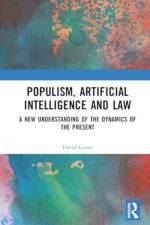
Political systems across much of the West are now subject to populist disruption, which often takes an anti-Constitutional form. This interdisciplinary book argues that the current analysis of anti-Constitutional populism, while often astute, is focused far too narrowly. It is held here that due to an obscured complex of dynamics that has shaped the history of the West since its inception and which remains active today, we do not understand the present. This complex not only explains the current disruptions across the fields of contemporary religion, politics, economics and emerging artificial intelligence but also how these disruptions derive each from originary sources. This work thereby explains not only the manner in which this complex has functioned across historical time but also why it is that its inherent, unresolvable flaws have triggered the shifts between these key fields as well as the intractability of these present disruptions. It is this flawed complex of factors that has led to current conflicts about abortion reform, political populism, the failure of neoliberalism and the imminent quantum shift in generative artificial intelligence. It is argued that in this, law is heavily implicated, especially at the constitutional level. Presenting a forensic examination of the root causes of all these disruptions, the study provides a toolbox of ideas with which to confront these challenges. This is a book of originality and significance, which will make fascinating reading for academics and researchers working in the areas of Socio-legal Studies, Legal Philosophy, Political Science, Theology, AI and Neuroscience.
This book offers a radical new understanding of law, beyond the confines of its formalization by the state.The book takes off from the late work of Gilles Deleuze and Michel Foucault, for whom law and its institutions came to be liberated from an ideological perspective that had treated them as sterile instruments for the reproduction of domination. Engaging its continental history, it addresses the concept of law, not merely as a 'command', but as the result of a much more complex legal operation aimed at dynamically stabilizing the social relations of a community. The book thus sidesteps the usual legal-political focus on those - from Hobbes to Schmitt - who have contributed to the categorical scheme of the modern state, and with it questions of political representation, sovereignty, the rigid distinction between public law and private law, and so on, as it pursues an alternative theoretical trajectory through Ravaisson, Tarde, and Hauriou. Politics, the book maintains, can be no longer be treated simply through the state form. And, relatedly, the law must be seen as a living law: a law that cannot be treated exclusively in formal terms, but must be taken as a grammar capable of articulating a politics of process, relationality, and innovation. Reconceived as such, law can then circumvent the aporias that arise when society is viewed as a private company, and the state seen as the bearer of the only possible means of formalizing its relationships.At the intersection of law and political theory, this book will speak to scholars and others with interests in both these areas, and especially those concerned with the limits of both conventional and critical approaches to law.
"Death Penalty Debates: Is Capital Punishment a Net Positive or a Net Negative" Out debate your opponents by understanding all sides of the death penalty debate! Find out where you stand by learning in depth about the considerations behind having a death penalty as a matter of public policy.Author is a death penalty insider who tells all. A Board Certified Trial Lawyer from Florida, Mr. Gosney currently practices in the Capital Division of the Public Defenders Office representing clients convicted of murder and sentenced to death. He is uniquely trained as both a death penalty prosecutor and a death penalty defender. Gosney discussed the strongest points on both sides of the debate, including most often used examples.The book attempts to present both sides of the death penalty debate fairly. Consider all the facets of the death penalty before making up your mind on this life or death issue.
Constitutional law is a branch of law that deals with the principles and rules governing the structure, functions, and powers of government institutions, as well as the relationships between the government and the individuals within a specific jurisdiction. It encompasses the study and interpretation of a country's constitution, which is typically a foundational legal document outlining the framework for government, the distribution of powers, and the protection of individual rights. Key aspects of constitutional law include: 1. **Constitutional Framework: ** Examining the organization of government, the separation of powers among different branches (executive, legislative, and judicial), and the allocation of authority. 2. **Individual Rights: ** Analyzing the rights and freedoms guaranteed to individuals by the constitution, such as freedom of speech, religion, and privacy. Constitutional law often involves balancing these rights with the government's need to maintain order and protect the public. 3. **Judicial Review: ** The power of the judiciary to review and, if necessary, invalidate government actions that are inconsistent with the constitution. This concept allows courts to ensure that government actions comply with constitutional provisions. 4. **Amendment Process: ** Understanding how a constitution can be amended or revised to adapt to changing societal needs and values. 5. **Federalism: ** Addressing the distribution of powers between a central government and subordinate units, such as states or provinces, in a federal system. 6. **Constitutional Interpretation: ** Examining how legal scholars and courts interpret the language and intent of constitutional provisions, often considering historical context, precedent, and evolving societal norms. Constitutional law varies from one jurisdiction to another, as each country typically has its own constitution or a set of fundamental laws. In some cases, constitutional principles may be derived from a combination of written and unwritten sources, including legal traditions, judicial decisions, and customary practices. The field is dynamic and evolves through constitutional amendments, court decisions, and societal changes.
Este libro contiene varios estudios sobre la psicologÃa de los delincuentes, desde varias perspectivas, comenzando por el psicoanálisis, por la psicologÃa individual, por la inteligencia emocional, por la teorÃa de la compulsión, donde cada una de dichas teorÃas busca darle explicación a la psiquis del delincuente, y su actuación.Este libro ingresa al sustento de cada una de las teorÃas y sus explicaciones sobre la conducta criminal, la forma en que se genera, las consecuencias que trae, y el posible tratamiento.Esta es una visión crÃtica del derecho penal, de cara a su función y sus efectos en el delincuente y la sociedad.
" A Rolling Stop" is a poignant narrative that takes readers on a transformational journey through the author's experience of going to jail, navigating fear, and ultimately discovering profound life lessons. The story unfolds in New Mexico, offering insights into the state's legal landscape. The protagonist's initial emotions of fear and uncertainty are palpable as they grapple with the challenges of being incarcerated. The narrative skillfully captures the raw emotions of this daunting experience, providing readers with a vivid portrayal of the authors internal struggles. As the story progresses, a central theme emerges- the realization that everything happens for us. The author undergoes a profound shift in perspective, learning to find silver linins in seemingly dire situations. This transformation becomes a guiding principle, shaping the protagonist outlook on life. The narrative delves into the intricacies of New Mexico law, shedding light on its nuances and implications. Readers gain valuable insights into the legal system which serves as a backdrop to the protagonist's personal journey . The story telling skillfully weaves together the legal aspects with the emotion and psychological facets of the protagonists experience. Amidst the challenges, the author discovers resilience and strength within themselves. The narrative serves as an inspirational beacon, encouraging readers to introspect and find positivity even in adversity. The author's journey becomes as source of empowerment, motivation others to navigate their challenges with courage and optimism. A notable aspect of the narrative is its exploration of the human spirit's capacity to adapt and evolve. The author not only overcomes the initial fear of incarceration but also grows into a beacon of hope for others. the story becomes a testament to transformative power of perspective ant he ability to find purpose in unexpected circumstances. Throughout the book, the reader is invited to reflect on their own lives and challenges drawing parallels between the author's experiences and their personal journey. The narrative subtly encourages introspection and reevaluation of one's outlook on life, fostering a osnce of empathy and connection. In Conclusion, "A Rolling Stop" is a compelling narrative that combines elements of personal growth, legal exploration, and inspiration. The author's journey form fear to resilience, coupled with insights into Ne Mexico law, creates a rich tapestry that engages readers on multiple levels. The overarching message- that everything happens for us -serves as a universal reminder to seek meaning and positivity even in the face adversity.
"Estate Planning Essentials: A Comprehensive Guide to Crafting Your Will"Discover the power of effective estate planning with "Estate Planning Essentials." This comprehensive guide empowers you to take control of your financial future and ensure your loved ones are protected. Whether you're new to estate planning or seeking to refine your strategy, this book is your essential roadmap to securing your legacy.Benefits of Reading This Book: Clarify Your Financial Picture: Learn how to assess your assets and liabilities, gaining a clear understanding of your financial situation. Designate Guardians: Ensure your children's future is safeguarded by selecting a guardian who shares your values and priorities. Maximize Your Bequests: Explore how to make specific bequests and gifts, leaving a lasting impact on those you care about most. Trust in Trusts: Gain insights into trusts and advanced estate planning measures, providing flexibility and protection for your estate. Valid Will, Peaceful Mind: Discover the importance of writing and signing your will correctly, avoiding potential disputes down the road.Overcome Misconceptions: - I Don't Have Enough Wealth: Estate planning isn't just for the wealthy. This book is valuable for anyone who wants to protect their assets and provide for their loved ones.- Estate Planning Is Too Complex: "Estate Planning Essentials" breaks down complex concepts into understandable terms, guiding you through the process step by step.Ready to secure your legacy and provide for your family's future? Click the link now to embark on your journey to effective estate planning with "Estate Planning Essentials."
Do you feel you can be a victim of a home burglary. Here are 5 no nonse tips that will keep you from being a victim.In "How to keep from being a victim of a home burglary", the author provides resources for individuals seeking to safeguard their homes from the threat of burglaries. This comprehensive guide is crafted to empower readers with practical strategies and insights to reduce the risk of becoming a victim of home burglaries. The book delves into five critical pillars of home security: Securing Your HouseWindow SecurityAlarm systemsCommunity InvolvementSocial Media Awareness "How to keep from being a victim of a home burglary" is not just a manual for securing physical spaces; it's a holistic approach to cultivating a safe and resilient living environment. Packed with actionable advice, and expert insights, this book empowers readers to proactively protect their homes and loved ones from the ever-present threat of home burglaries. Whether you're a homeowner, renter, or part of a community looking to enhance its security, this book is an indispensable companion on the journey to fortifying your home against potential intruders.
To the best of my knowledge, FATCA was a significant initiative led by the United States to improve the exchange of information and transparency in tax matters on a global basis. FATCA requires foreign financial institutions to report information about the financial accounts of U.S. persons to the U.S. IRS. In addition, various initiatives to promote transparency and combat tax evasion are being actively pursued by the EU and the OECD. The CRS requires participating jurisdictions to automatically exchange financial account information on an annual basis. DAC8, on the other hand, is part of the EU's efforts to extend the automatic exchange of information to digital platforms. It aims to address tax challenges in the digital economy. Nowadays, the world consists of countries that comply with the policy of exchanging information and those (not many) that fail to comply. The decisions of several countries to adapt to FATCA are in line with existing principles of greater information exchange and transparency, led by the EU and the OECD. Further developments are on the horizon.
You've just received the news that your patent has been granted. It's a moment of triumph, a feeling of accomplishment, and a stamp of validation from the patent office. But as you hold that patent, the obvious question would be "What next?" How do I turn this paper proof of my ingenuity into a stream of steady income?What the true potential of my patent is? How do I unlock its real value?Who would be interested in buying or licensing it?How do I approach and engage the right businesses or firms?How can I get appointments & meetings with key decision-makers?What should I include in my presentation, and how do I negotiate effectively?How to finalize terms of agreement or contract?How do I navigate the intricacies of legal, financial, and patent office procedures?Most inventors stop at the grant of patent. They hang it on their wall, a symbol of achievement, but they miss out on the real prize. That's where "How to Make Money with Your Patent" book comes in, a practical, no-nonsense guide crafted for inventors like you who are ready to take the next step.Transforming Patents into Profits: Every chapter in "How to Make Money with Your Patent" is an answer to your burning questions. With real-life case studies, practical examples, and easy-to-understand language: Understanding Your Patent: what your patent really signifies. What does your patent grant really mean? What are your rights, and how can you protect your invention?Evaluating Commercial Potential: Methodologies to value your patent, assess the market, and identify the distinctive edge your invention holds. Determining the commercial value of your invention.Identifying Your Market: The right audience can turn your patent from a piece of paper into a goldmine. Identify and understand your target market - who needs your invention and why.Choosing right businesses: build an ideal patent buyer or patent licensee avatar, aligning your patent with business strategy of licensee.Communicating Effectively: How do you reach out to potential partners or licensees? The book provides practical advice on call scripts, email templates for setting appointments, scheduling meetings, reaching right decision makers, making the first contact, and preparing for meetings.Creating a Value Proposition: Create a value proposition that highlights the unique benefits of your invention and resonate with the needs of the market. Learn to communicate the unique benefits of your invention compellingly.Negotiation, agreements and contracts: Preparing for negotiations, understanding licensing agreements, preparing for licensing meetings, handling objections, and steering towards successful outcomes.Other ways to make money: Beyond licensing, various strategies, including selling your patent or enforcing your rights in case of infringement.Legal and Financial Insights: legal and financial aspects of patent monetization, ensuring you're well-versed in compliance and smart financial planning.Real-World Insights and Practical Tools: What set this book apart are the real-life case studies, examples, and templates that provide a practical perspective. These resources are invaluable, offering a glimpse into the successes and challenges faced by others and teaching lessons that can be applied to your own journey.Don't let your patent just be a certificate on the wall. Turn it into a source of income and opportunity. Order your copy of "How to Make Money with Your Patent" now and take the first step towards realizing the financial potential of your innovative creation.
Aborda diversos aspectos referentes a la parroquia como institución jurÃdica y canónica. La figura del párroco como su representante legal y otros colaboradores en orden administrativo, asà como la normativa canónica y jurÃdica aplicable al ámbito parroquial.
Let ten of the greatest ancient generals in history mentor you. Their thinking reveals timeless truths applicable to today's challenges. Insights from actual conflicts offer wisdom for navigating modern complexities. Adapt their principles to gain a strategic edge in daily battles, whether in the workplace, personal decisions, or relationships.Delve into the dynamics of victory and defeat-understanding, not just knowing, the constants of strategic play.An ancient Carthaginian commander, Hanno applied Sun Tzu's strategic ideas to a tricky situation. Facing a rebellion among his troops, he used a cunning strategy to use one enemy to destroy another instead of fighting.Himilco, a Carthaginian general, demonstrated strategic brilliance by using the terrain and weather to his advantage in a problematic situation. Himilco's actions emphasise the importance of understanding the terrain, outmaneuvering adversaries, and creating opportunities in conflict.Through clever planning, understanding adversaries (his brothers), and embracing audacious decision-making, Cresphontes secured his desired outcome without direct conflict. Cresphontes' moves align with Sun Tzu's principles: control the enemy's will and nurture internal enterprise.Demophon and Diomedes' strategic brilliance in crafting a deceptive ploy against Agamemnon underscores the potency of intellect, cunning maneuvers, and artful perception manipulation for victories beyond physical conflicts.Cypselus, in a confrontation with the Heracleidae, highlight the significance of psychological warfare, where triumph originates in the victor's mind before manifesting in reality.Acuēs displayed strategic brilliance in securing the city of Tegea by introducing a unique silent protocol, replacing the conventional friend-or-foe identification method. Acuēs' ingenuity and adaptation of tactics exemplify the effectiveness of unorthodox strategies in warfare and conflict.In the strategic standoff between Spartans and Argives at Hesipeia, Cleomenes' triumph lay in understanding and adapting to the enemy's intentions. His shrewd analysis of Argives' behaviour enabled a tactical advantage, emphasising the significance of deep comprehension over surface-level awareness.Polydorus, the Spartan king, demonstrated the strategic wisdom of Sun Tzu: the decision to concentrate or divide forces hinges on situational specifics. His mastery lay in comprehending rules, leveraging circumstances, and using spies with sagacity. Polydorus' victory showcased the potency of strategic thinking, surpassing mere strength and knowledge.Ventidius's adept manipulation of Pharnaeus highlighted the critical distinction between knowledge and genuine comprehension. The principles of relativity and rapidity played a crucial role in Ventidius' success, highlighting the nuanced understanding of timing and maneuvering in warfare.Cato's strategic brilliance dismantled conquered cities' walls, aligning with the Five Levels of SunTzuDo. His approach emphasised proactive preparedness and breaking the adversary's will to fight through timely actions. His triumph highlighted the power of psychological warfare, demonstrating that victory extends beyond the battlefield to the minds of combatants.Unlock timeless wisdom from military strategists. Apply their insights to modern challenges in work, decisions, and relationships. Hanno's cunning handling of rebellion and Himilco's mastery of terrain reveal strategic brilliance. Cresphontes, Demophon, and Diomedes showcase intellect, audacity, and perception manipulation. Cypselus emphasises psychological warfare, while Acuēs' silent protocol and Cleomenes' deep analysis exemplify adaptability. Polydorus emphasises situational mastery, Ventidius showcases timing, and Cato's proactive approach aligns with SunTzuDo's levels. Learn, adapt, and conquer the battles beyond the physical.
這本書是有關民事法: 蓄意侵權,轉移意圖,襲擊,威嚇,擅闖私人土地,財產轉化,非法禁錮,滋擾,疏忽,專業失當,賠償,產品責任,保證,毀壞他人名譽,侵犯私隱,失實陳述等。舉例來說,業主對在自己物業上受傷的人有責任,但責任的級別是因人而異,要視乎訪客在物業上的功能。梁慧珊律師在2023年2月正式宣誓成為加州律師。她在三藩市一中文電視台服務近十七年,擔任新聞記者和主播;在離開傳媒工作之前三年,她已經開始攻讀法律,為她的律師生涯鋪路。成為律師之後,她也花不少時間對律師試考生進行個別指導,其中包括華裔和非華裔,並且成功幫助失敗多次的考生通過考試。她也寫了一本書,教導考生寫論文技巧。在該書出版之後,大獲好評,有不少在外地的準考生也踴躍訂閱,包括印度和英國。她第一份全職工作是在非牟利機構,為長者提供免費服務。在尚未完成法律博士學位之前,她曾做過多份兼職工作,保持收入,包括朱古力工廠,名牌手袋店,名牌服裝店。她親身經歷和體驗了僱主許多處於違規邊緣的行為,但員工們一般選擇啞忍,除了擔心可能會失掉工作之外,也有可能是基於他們缺乏法律常識,不知道僱主某些行為大有機會是觸犯法例。在讀法律學校時,梁慧珊最喜愛民事法,因為其法例對普羅大眾的日常生活也有影響。她希望把自己的法律知識,與英語有限的人分享。法律是保障每個人的權益,而這個權益不應該因為語言障礙而受到影響。
This book exists at the intersection of two complementary and conflicting perspectives, law and biology. From the vantage point of both disciplines, Juris Zoology provides a comprehensive and realistic framework to objectively assess the role and significance of animals in American civil and criminal law. Contrasting the views of animal rights activists, Duckler examines animals in terms of their prehistory, history, biology, social utility, economic effect, and aesthetic value. Focusing on animal captivity, control, use, and value, Duckler refutes the proposal of granting animals legal rights. The book offers a new and controversial voice to the national conversation on the propriety of animal rights, and would be of interest to lawyers, economists, sociologists, as well as scholars and professionals in animal-related fields.
This book analyses questions of platform bias, algorithmic filtering and ranking of Internet speech, and declining perceptions of online freedom.Courts have intervened against biased platforms in important cases, but they have deferred to private sector decisions in many others, particularly in the United States. The First Amendment, human rights law, competition law, section 230 of the Communications Decency Act, and an array of state and foreign laws address bad faith conduct by Internet platforms or other commercial actors. Arguing that the problem of platform neutrality is similar to the net neutrality problem, the book discusses the assault on freedom of speech that emerges from public-private partnerships. This volume draws parallels between U.S. constitutional and statutory doctrines relating to shared spaces and the teachings of international human rights bodies relating to the responsibilities of private actors. It also connects the dots between new rights to appeal account or post removals under the Digital Services Act of the European Union and a variety of fair treatment obligations of platforms under American and European competition laws, "public accommodations" laws, and public utilities laws. Discussing artificial intelligence (AI) regulation, the book explores overlaps between European and U.S. efforts to limit algorithmic censorship or "shadow-banning".The volume will be of interest to students and scholars in the field of cyberlaw, the law of emerging technologies and artificial intelligence.
This collection explores a variety of issues facing contemporary juries, bringing together innovative research from different disciplines and jurisdictions. The debate stems from a real concern that criticism of the jury may lead to a loss of public confidence in the institution, and that this may renew Government efforts to further restrict the role of the jury in criminal proceedings in England and Wales. This work offers an interdisciplinary approach presenting insights from legal, psychological and criminological perspectives, thus bypassing traditional borders and presenting a cohesive view. Issues discussed reflect the rapid advances in technology, changing dynamics and behaviours in society, and challenges that have been aggravated by the Covid-19 pandemic. Whilst the focus is primarily on juries in England, Wales, Scotland and across Ireland in terms of challenges and opportunities, the collection also invites a comparative perspective, drawing on experiences and related research in other jurisdictions. The book will be of interest to academics, researchers and policy-makers working in the areas of Criminal Law and Procedure, Criminal Justice, Criminology and Psychology.
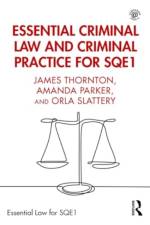
Essential Criminal Law and Criminal Practice for SQE1 explains the key principles of criminal law, criminal practice and ethics in a clear, concise and easy-to-follow style. Principles are introduced and illustrated with reference to practical examples. It is split into three parts: 1) the criminal laws 2) criminal practice and 3) useful/illustrative cases which have established or illustrated an important part of the criminal law.The book provides a clear and structured approach with opportunities to apply the relevant principles to the law. It also includes a range of interactive features, including: - Revision points: Each chapter concludes with a concise list of key revision points.- Key Terms to progressively build and consolidate your understanding.- Multiple Choice Questions: Each section of the book provides multiple choice questions following the SQE1 question format (with answers to enable you to test your knowledge). Further multiple choice questions and answers are also provided on the companion website.Part of a series of books aimed at those who are preparing for SQE1, this concise and accessible text provides a clear understanding of the Criminal Law and Criminal Practice elements of SQE1, including the standard of ethical and professional conduct that you will need to adhere to as a solicitor, and enables you to test your assessment skills
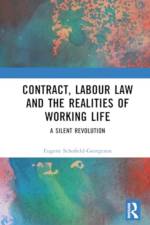
This book offers a critical and timely account of how labour law has become a means for protecting employers rather than workers.The past few decades have witnessed something of a 'silent revolution' in the traditional protective role that labour law has played in the lives of workers. While this transformation has been overt in the realm of the market and at the level of the legislature, the role of the judiciary in this process remains significantly under-studied. Focusing on Australia, but drawing also on material from New Zealand, the UK and Canada, this book investigates how the common law has intervened to shape labour law in the image of commercial contract, determining disputes and defining legal issues by ignoring the realities of working life. Under this new conception of labour law, industrial relations between workers and employers are rarely reciprocal or relational. Rather, they are determined by the legal meaning and purpose of the contract of employment, drafted by lawyers for the benefit of employers and their human resources departments. Having demonstrated how approaches to contractual formalist legal reasoning have redefined labour law, this book goes on to propose an array of innovative legal and policy strategies to restore the protective role of labour law to the employment relationship.Scholarly, but also accessible to students, this book will appeal to those with interests in labour law, contract law and sociolegal studies.
Abonner på vårt nyhetsbrev og få rabatter og inspirasjon til din neste leseopplevelse.
Ved å abonnere godtar du vår personvernerklæring.