






















Gjør som tusenvis av andre bokelskere
Abonner på vårt nyhetsbrev og få rabatter og inspirasjon til din neste leseopplevelse.
Ved å abonnere godtar du vår personvernerklæring.Du kan når som helst melde deg av våre nyhetsbrev.

Conquiste um entendimento profundo e prático sobre o Direito Administrativo! Este livro é uma ferramenta essencial para estudantes, para aqueles que se preparam para concurso público, para profissionais do direito, e cidadãos interessados em compreender os pilares da legislação brasileira e as nuances da administração pública. Se você está procurando um guia completo que cobre desde os Direitos e Garantias Fundamentais até os complexos meandros do Direito Administrativo, este livro é a escolha perfeita.O livro explora os Direitos e Garantias Fundamentais, detalhando os direitos individuais e coletivos e as garantias constitucionais. Também foca na Organização do Estado, oferecendo insights valiosos sobre a Administração Pública conforme a Constituição Federal de 1988. E aprofunda-se no Direito Administrativo, abordando temas como agentes públicos, poderes administrativos, atos administrativos, serviços públicos e muito mais.Direcionado para quem deseja entender o cerne do Direito Administrativo, Constitucional e da Administração Pública brasileira. à ideal para aqueles que se preparam para concursos públicos, estudantes em geral, advogados, servidores públicos e cidadãos engajados. A obra apresenta uma visão clara e estruturada do funcionamento do sistema legal e administrativo brasileiro. Então, comece hoje mesmo a aprimorar seu conhecimento e habilidades jurÃdicas e administrativas!Este livro é perfeito para estudantes, advogados, servidores públicos, acadêmicos e qualquer pessoa interessada em compreender melhor as leis e a administração pública do Brasil. Com uma linguagem clara e exemplos práticos, ele é uma ferramenta valiosa tanto para o aprendizado acadêmico quanto para a aplicação prática no dia a dia profissional.Esta obra não apenas ilumina os aspectos teóricos do direito, mas também oferece um olhar prático sobre como esses princÃpios são aplicados na administração pública. Seja você um estudante, um profissional da área jurÃdica, ou um cidadão interessado, este livro será um recurso inestimável em sua biblioteca. Aproveite a leitura e dê um passo adiante na compreensão do sistema legal e administrativo do Brasil!
Artificial intelligence (AI) has the potential to radically transform our society. It may lead to a massive increase in the capabilities of humankind and allow us to address some of our most intractable challenges. It may also entail profound disruption to structures and processes that have sustained our society over centuries. These developments present a unique challenge to the socio-economic constitutional arrangements which govern our world at national, regional and international level. The deployment of increasingly powerful AI systems, able to function with increasing degree of autonomy, has led to concerns over loss of human control of important societal processes, over the disruption of existing economic, social and legal relationships, and over the empowerment of some societal actors at the expense of others, together with the entrenchment of situations of domination or discrimination. It has also made increasingly clear how tremendous the potential benefits, that these technologies may bring, are to those who successfully develop and deploy them. There is therefore great pressure on governments, international institutions, public authorities, civil society organisations, industry bodies and individual firms to introduce or adapt mechanisms and structures that will avoid the potentially negative outcomes of AI and achieve the positive ones. These mechanisms and structures, which have been given the umbrella term 'AI governance', cover a wide range of approaches, from individual firms introducing ethical principles which they volunteer to abide by, to the European Union legislating an AI Act, which will prohibit certain types of AI applications and impose binding obligations on AI developers and deployers. The fast pace of innovation in the development of AI technologies is mirrored by the fast pace of development of the emerging field of AI governance, where traditional legislation by public bodies is complemented with more innovative approaches, such ashybrid and adaptive governance, ethical alignment, governance by design and the creation of regulatory sandboxes. The chapter "AI and Sensitive Personal Data Under the Law Enforcement Directive: Between Operational Efficiency and Legal Necessity" is available open access under a Creative Commons Attribution 4.0 International License via link.springer.com.
This book provides detailed insights into how space and popular culture intersect across a broad spectrum of examples, including cinema, music, art, arcade games, cartoons, comics, and advertisements. This is a pertinent topic since the use of space themes differs in different cultural contexts, and these themes can be used to explore various aspects of the human condition and provide a context for social commentary on politically sensitive issues. With the use of space imagery evolving over the past sixty years of the space age, this is a topic ripe for in-depth exploration. The book also discusses the contrasting visions of space from the late nineteenth and early twentieth centuries and the reality of today and analyzes space vehicles and habitats in popular depictions of space from an engineering perspective, exploring how many of those ideas have actually been implemented in practice and why or why not (a case of life imitating art and vice versa). As such, it covers a wide arrayof relevant and timely topics examining intersections between space and popular culture and offering accounts of space and its effect on culture, language, and storytelling from the southern regions of the world.
This book focuses on current frontier-related issues such as humanitarian crises, economic crises, discrimination of migrants in certain countries, different typologies of borders such as land, maritime, air, space, and even cyberspace borders, and environmental protection of water resources at borders. It addresses legal and theoretical considerations and presents empirical cases showing the manifestations of the concept in the real world and its dynamics. Without claiming to exhaust the debate on frontiers, especially given the breadth of the subject and the large number of viewpoints from which the phenomenon can be examined, this book intends to be a helpful source of insights for academics, university students, and others who wish to explore the complex and multifaceted worlds that emerge, particularly in a globalized society, from the interaction between the various actors and scenarios that shape the reality of frontiers.
Originally published in 1989, in this remarkable conjunction of constitutional theory, jurisprudence, literary theory, constitutional law, and political theory, William Conklin first tells us what a constitution is not: it is not a text, nor a compendium of judicial and legislative decisions interpreting a text, nor a set of doctrines, nor moral/political values, nor customs, nor a priori conceptions. A constitution, he argues, is an image which exists through the legal consciousness of a community.Using a wide range of Canadian judicial decisions as examples, Conklin shows that the classic cases have been those where the boundaries of two conflicting images clashed. In each instance, the subject-matter itself collapses into a search for a coherent image of what a constitution is all about.The dominant image of a constitution in Canadian judicial discourse has been a rationalist one emanating from the Enlightenment understanding of knowledge. Turning to academic writings on Canadian federalism law, Conklin goes on to identify clearly the boundaries of three versions of rationalism, and to show that Canadian scholars have shared with judges the dominant image of rationalism.In the third part of his essay, the author makes a prescriptive claim, namely that a text such as the Canadian Charter of Rights and Freedoms arguably raises issues which the rationalist image of a constitution precludes as legitimate inquiries. He identifies a further general image of a constitution in Canadian legal discourse, a teleological one which is rooted in the writings and judgments of Ivan Rand. Finally, he uses the contours of the Rand image to work out a further image of constitution, an image that allows lawyers to entertain issues of both theory and social/cultural practice, thereby placing them in a position to alleviate the pain and suffering of those in need.
This book takes a comprehensive approach to investigate how Sharia influences and manifests in the everyday lives of Muslims, aiming to unravel the meaning and relevance of Sharia-driven laws and practices in English-speaking Western societies. By focusing on the grassroots level, it provides a deeper understanding of the lived experiences of Muslims and their relationship with Sharia. The presence of Muslims in Western countries has a long history, with recent waves of migration and conversions contributing to their increasing numbers. This study recognizes the diverse nature of the Muslim community, comprising both migrants and local converts, who have become integral parts of the pluralistic fabric of multicultural societies. The research draws on in-depth interviews with 122 young Muslim individuals from diverse backgrounds, representing three different Western countries: Australia, the United States, and the United Kingdom. This deliberate selection of participants allows for a broader exploration of the Muslim community and showcases the inherent diversity of opinions, interpretations, and practices regarding Sharia. This approach moves beyond abstract discussions and theoretical debates, providing concrete insights into the practical implications of Sharia for young Muslims in their respective Western contexts. The book also sheds light on the evolving landscape of information and knowledge acquisition. It explores how young Muslims access and seek knowledge in the twenty-first century, recognizing the impact of changing sources and modes of information on their religious practices and beliefs. This aspect adds a valuable dimension to the study, capturing the dynamic nature of knowledge dissemination and acquisition among young Muslims in Western societies. The book will be fascinating reading for academics, researchers and policy-makers working in the areas of Law, Political Science, Minority Studies, Religious Studies and Islamic Studies.
This book is a response to the dangers posed to constitutional democracy by the continuous growth of executive power and the simultaneous decline of parliaments' role in policy formation. These phenomena are often manifested in the manipulation and even the violation of the rules of parliamentary law-making, called irregularities. If left without consequences, these irregularities can ultimately lead to the elimination of the procedural constraints imposed on the ruling political forces to prevent their arbitrary exercise of power. This work investigates the constitutional significance of the irregularities of parliamentary law-making and explores the role that courts play in the remedy of these flaws. The analysis is premised on the concept of equilibrium. This explanatory concept denotes an ideal state in which parliamentary law-making complies with the requirements of constitutionalism, and judicial review is conceptualized as a mechanism suitable to achieve this aim. The volume places the judicial review of the regulation and the practice of parliamentary law-making at its centre and discusses all the relevant legal concepts, institutions and doctrines. It combines theoretical analysis with case-law-centered comparative research covering a large number of decisions delivered by apex courts operating in various jurisdictions. Due to this methodological choice, the book aims to simultaneously contribute to the scholarly discourse and provide useful information to practicing lawyers and policy makers working in the areas of Constitutional Law and Politics and Comparative Law.
This book advocates for a novel doctrine of 'total lawfare' as part of a comprehensive approach to modern hybrid warfare.The book begins by introducing the military concept of 'limited lawfare' in the context of modern geopolitical conditions. It proceeds to set out a conceptual history of lawfare in the West, highlighting conceptual shortcomings and NATO's limited capabilities in this branch of hybrid warfare. It then provides a comparative case study and strategic threat assessment of the Chinese concept of 'unrestricted lawfare'. Against this, the book grounds an ethical doctrine of 'total lawfare' within the Western jurisprudential tradition and translates this into practice as a key pillar of modern defense strategy under the rule of law. The book concludes by advocating for a Thielian 'New Defense' industry centered upon 'total lawfare' as a legitimate and effective Western response to enemy aggression.The book will be of interest to academics, policy-makers and students working in the field of lawfare, jurisprudence and military law.
This book discusses the legal responsibility of UN peacekeepers for the protection of civilians under international legal regimes, particularly international human rights law, international humanitarian law, international refugee law, and occupation law. It considers both negative and positive obligations, that is, a duty to respect or not violate a particular right directly and a duty to take positive action to secure or protect a particular right, respectively. In addition, it describes the standards and methods, as well as their strengths and weaknesses, by which actors in UN peacekeeping operations, including the UN, troop contributing countries, and individual peacekeepers, can be held accountable for third-party claims and allegations of criminal misconduct against UN peacekeepers for violations of responsibility in peacekeeping operations. The work will be a valuable resource for academics, researchers and policy-makers working in the areas of International Law, International Humanitarian Law, International Human Rights Law and International Relations.
This book aims to analyse the legal tools that the legislatures of France, Germany and Italy adopted in order to regulate medical malpractice.In the mid-1970s, a reform movement started in the United States, where there was considerable concern about then ongoing medical malpractice crises. Since the beginning of the current century, France, Germany and Italy have passed statutes that aim to reform medical liability rules. Thus, it is first interesting to assess whether any medical malpractice crises have been identified in these systems and, second, how these have been faced through the passing of new statutes on the Continent. Accordingly, the first chapter explores the idea of medical malpractice crisis and its relationship with the insurance market, also considering the reflections of American scholars. It then reconstructs the French, German and Italian legal frameworks, as well as their insurance and litigation contexts, reviewing and commenting on the quantitative evidence that was collected before the reforms. The second chapter briefly summarises the debate on Medical Malpractice reforms in France, Germany and Italy. It then analyses the statutes that have been passed, distinguishing between reforms that consolidate case law and reforms that introduce innovative solutions, sometimes repealing court-developed doctrines. In particular, the chapter examines in a comparative perspective the different options adopted in these Civil Law countries with regard to the rules on liability, burden of proof, statute of limitations, and damages. Moreover, the chapter examines the reforms of insurance, procedural, and evidence law, to the extent they affect medical malpractice cases. The third chapter reviews and analyses the current available data related to medical malpractice litigation and insurance after the reforms adopted in France, Germany and Italy, in order to find out evidence of their effectiveness and efficiency. It also highlights some aspects of medical malpractice law that still belong to the domain of the judiciary. It finally points out which problems may be addressed by the legislatures and what further data should be collected in the future.This work may interest legal scholars, healthcare providers, insurers and policymakers.
This is a book about food, philosophy, and intellectual property rights.Taken separately, these are three well-known subjects; but it is uncommon to consider them together. Delivering a rich field of disputes, the book is comprised of 50 case studies, organized around eight themes: images; genericity and descriptiveness; language traps; procedures; menus, recipes, and creativity; boundaries; biotech; and empowerment. The introductory chapter frames the selection of cases and encourages readers to look beyond them, envisaging new lenses to look at food vis-Ã -vis intellectual property. The terrain encompassed is wide-ranging and reaches out to fine-grained aspects of food products, recipes, and cooking. Conceived for a wide scope of readers, the volume ultimately interrogates the links between food and cultural identity, bringing to the fore the ethical, political, aesthetic worth of culinary arts and gastronomic experiences. This accessible book will be of value to scholars, students, practitioners and others with interests in the areas of intellectual property, food law and food studies.
This handbook provides readers with coverage of the various interview and interrogation techniques used across the world with victims, witnesses, and suspected offenders. It includes exclusive coverage on countries rarely, if ever, previously reported upon in the literature to any substantive depth.Bringing together a collection of chapters from over 40 countries, this handbook advises and explains the practices used in crime interviewing and informs the reader of contemporary developments hitherto unreported in any current book on interviewing and interrogation. In doing so, the Routledge International Handbook of Investigative Interviewing and Interrogation showcases global exemplars of evidence-based practice informed by scientific research. Building on recent research, including protocols developed in a variety of countries, this book is particularly timely in the wake of the 'Mendez principles', a set of principles developed by the UN (i) to counter the ill-treatment of suspects during police questioning and (ii) to gather more reliable information.This handbook will be an essential reference text across criminology, criminal justice, policing and investigation studies, and law.
Ein Begleiter für das Grundstudium des internen Rechtssystems Das Völkerrecht (Public International Law, PIL) ist ein vielseitiger rechtlicher Rahmen, der die Interaktionen zwischen souveränen Staaten und internationalen Organisationen regelt. Es umfasst ein breites Spektrum von Grundsätzen, Normen und Regeln, die das Verhalten von Nationen in der globalen Arena regeln sollen. Die Quellen des Völkerrechts sind vielfältig und stammen aus Verträgen, Gewohnheitsrecht, allgemeinen Rechtsgrundsätzen und den Entscheidungen internationaler Organisationen und Gerichte. Es beruht auf der Zustimmung der Staaten und betont die freiwillige Ãbernahme von Verpflichtungen, die zur Aufrechterhaltung der Ordnung und zur Förderung der Zusammenarbeit auf der internationalen Bühne beitragen. Der Geltungsbereich des Völkerrechts ist weitreichend und entwickelt sich ständig weiter. Er umfasst Bereiche wie Menschenrechte, bewaffnete Konflikte, Umweltschutz, Handel und diplomatische Beziehungen. Sein Hauptziel ist es, die friedliche Koexistenz und Zusammenarbeit zwischen den Staaten zu erleichtern und gleichzeitig globale Herausforderungen zu bewältigen. Da die internationale Gemeinschaft mit neuen und komplexen Problemen konfrontiert ist, passt sich der Geltungsbereich des Völkerrechts ständig an und spiegelt die Dynamik unserer vernetzten Welt wider.
The purpose of the book, "Trust Funds Unveiled: How Regular People Can Secure Their Financial Future" is to provide a comprehensive guide that empowers regular individuals to set up and leverage trust funds for financial security and growth. Trust funds are often associated with the wealthy, but this book aims to demystify trust funds and show that they can be a valuable tool for anyone seeking financial stability and success. The book will break down the complexities of trust funds into simple, jargon-free language, making it accessible to readers with varying levels of financial knowledge. By offering step-by-step instructions, practical tips, and real-life examples, the book will guide readers through the process of establishing trust funds that align with their goals and circumstances. It will cover various types of trust funds and help readers choose the most suitable structure to meet their needs. The book will also highlight the benefits of trust funds, such as asset protection, tax advantages, and the ability to provide financial security for loved ones. It will provide strategies for minimizing risk, maximizing investment returns, and adapting trust funds to changing life circumstances. Additionally, the book will explore the power of trust funds in leaving a lasting legacy through charitable giving, encouraging readers to consider philanthropy as part of their financial planning. Overall, the purpose of the book is to empower regular individuals with the knowledge and tools they need to unlock the power of trust funds and achieve financial security and growth in their everyday lives.
Explore as nuances intricadas do sistema jurÃdico brasileiro com este livro envolvente e esclarecedor sobre Direito Administrativo. Da atuação dos órgãos públicos à responsabilidade civil do Estado, o autor conduz o leitor por uma análise abrangente dos fundamentos legais que regem a Administração Pública. Profundize-se nos princÃpios que orientam as ações do Estado e descubra como aplicá-los em situações práticas do cotidiano jurÃdico. Este livro oferece uma visão clara e acessÃvel, tornando o estudo do Direito Administrativo uma jornada fascinante para estudantes, profissionais e qualquer pessoa interessada em compreender o funcionamento da máquina estatal no Brasil.
Embark on an exhilarating journey into the intricate world of legal translation with "Achieving ISO 20771 Certification for Translation Agencies: Part One - Foundations of Excellence." Immerse yourself in a comprehensive exploration where every page unfolds a new facet of linguistic mastery and industry brilliance. Let the adventure begin as you delve into the following captivating elements: Foundational Principles Unveiled: Uncover the bedrock of legal translation, delving deep into the foundational principles that set the stage for excellence in language services.Insider Strategies for Success: Navigate the nuanced landscape of legal terminology with insider strategies that empower your agency to surpass industry standards.Practical Steps to Perfection: Learn actionable and practical steps to elevate your agency's translation standards, setting the stage for a transformative journey toward ISO 20771 certification.Understanding Legal Terminologies: Decode the intricacies of legal terminologies, demystifying the language of law and positioning your agency as a beacon of linguistic precision.Mastering Compliance Requirements: Gain mastery over compliance requirements as you sculpt your agency's approach to legal translation, ensuring alignment with ISO 20771 standards.This isn't just a book; it's a roadmap, a mentor, and a catalyst for change. Part One is your gateway to excellence, a comprehensive guide that takes you by the hand and leads you toward a future where legal translation is not just a service but an art form. The pursuit of ISO 20771 certification awaits-begin your transformative journey now!
The night before the second Carroll - Trump trial it was colder in Iowa than in New York. Still, the first snow in 700 days drifted down on Worth Street in front of the courthouse, where the NYPD barricades had already been set up. The circus was about to begin. And Kurt Wheelock began to get ready. Well before the 9:30 am kickoff Trump was at the defense table, whispering with Alina Habba all dressed in white. There was a third lawyer, not in the docket, and Judge Kaplan would soon shut him down. But for now it was a stand-off: E. Jean Carroll with Robbie Kaplan at the front table, E. Jean staring straight ahead, and Trump in his red tie two table behind, looking at the prospective jurors when they came in. The voir dire was proceeding routinely until Judge Kaplan asked, Does anyone here think the 2020 election was stolen? Yes, said one... At the end, did Ms. Carroll prove, by a preponderance of the evidence, that 1. Ms. Carroll suffered more than nominal damages as a result of Mr. Trump's publication of the June 21 and June 22, 2019 statements? Answer Yes.Andy (clerk): 7.3 million... 11 million... punitives: $65 millionJudge Kaplan: Any other business?Ms. Habba: I would just like to thank the court staff JudgeKaplan: You're welcome on their behalf. Adjourned Kurt Wheelock, still banned from the UN, was asked to comment on that day's International Court of Justice decision Kurt mused about how the two proceedings were similar... Kurt would go from the trial to the trail.
Were Harry and Dallas Hyams criminal masterminds who orchestrated one of Toronto's most bizarre murders? Or were they nincompoops whose bungling attempts to repair a rickety elevator created a perfect storm of circumstances leading to the accidental death of their employee? Everyone can agree that the Hyams brothers were scoundrels, but did their treachery extend to murder? Did a botched investigation doom a legitimate prosecution? Did malicious prosecutors victimize innocent fall guys? Or did the unlimited funds of the brothers' wealthy relatives buy a not guilty verdict? Whatever else is true about the case, it is true that the case was the most massive, most complex, most hotly contested murder trial in the history of Victorian Era Canada. This book will attempt to answer the question of the Hyams brothers' guilt or innocence as it describes how Willie Wells was killed, how the brothers profited from his death, and how the Crown decided to pursue charges two years after the death. It will describe the defense's pretrial jockeying for position, the Crown's presentation of the case, and the defense tactics which eventually got the brothers acquitted. It will discuss what the lawyers did right, what they did wrong, and how the actions and attitudes of the presiding judges influenced the eventual verdict. And finally, it will discuss whether justice was served in the case of Queen v. Dallas and Harry Hyams. Erle Stanley Gardner, with his immortal character Perry Mason, created the mystery subgenre known as the "courtroom procedural." Canada's Greatest Murder Case is a courtroom procedural in the genre of true crime.
Uncover the Darkest Secrets in 'Gilgo Beach Murders Unmasked: Unveiling Darkness - The Investigation and Capture of Rex Heuermann'!
Embark on a riveting journey through one of the most significant and complex chapters in modern Indian history with "The Ayodhya Chronicles: Faith, Law, and Unity in Modern India." This meticulously researched book unravels the intricate saga of the Ayodhya temple case, a dispute that has shaped the contours of Indian society, politics, and culture.Discover the historical and cultural significance of Ayodhya, a city revered in Hindu mythology as the birthplace of Lord Rama. Delve into the origins of a dispute that began centuries ago and escalated into one of the most polarizing issues in contemporary India. From the early legal battles in colonial courts to the landmark Supreme Court verdict, this book offers a comprehensive and nuanced exploration of the legal, religious, and political intricacies of the case.Witness the transformation of Ayodhya and the construction of the new Ram temple, a symbol of faith and a testament to India's rich heritage. Understand the profound impact of the Ayodhya case on communal harmony, the rise of Hindu nationalism, and the challenges faced by secular politics in a country as diverse as India."The Ayodhya Chronicles" is more than a recounting of a legal dispute; it is a narrative of faith, identity, and the quest for justice. Authored from the perspective of an ordinary citizen, this book offers a balanced and insightful analysis of an issue that continues to resonate in the hearts and minds of millions.Whether you are a history enthusiast, a student of politics, or simply someone intrigued by the complexities of Indian society, "The Ayodhya Chronicles" is an essential addition to your bookshelf. Join the author on this enlightening journey, and gain a deeper understanding of a landmark case that has defined and will continue to shape the future of one of the world's largest democracies.
At the head of a small but comparatively isolated community, traversing airspaces with various jurisdictions, the aircraft commander must have a defined legal status relating to rights, powers and duties to cope with all issues in international air navigation. This leading personality is responsible for maintaining good order and discipline on board but above all must protect the safety of the aircraft and its occupants during the flight. His or her rights and responsibilities are dealt with in many national laws and regulations. But no matter how substantively applicable such national legislation might be, its effect ends at the national border - and if regulations on the legal position of the aircraft commander should have any practical value, they must also be effective on an international scale. As yet, however, numerous public international law efforts have failed to reach consensus in this matter. In order to promote and encourage further international debate and the adoption of a codified comprehensive Legal Status of the Aircraft Commander, the author provides an in-depth study and evaluation of air law expert discussions, drafts and deliberations. His work will also be highly relevant to the current debate over plans for fully automated flights in the future - for passenger transportation even without an aircraft commander on board.
Emotions such as guilt and shame motivate us to keep our actions in line with normative expectations and are therefore essential in regulating our social and moral lives. Guilt, Shame and Juvenile Delinquency provides a compelling argument for the importance of considering guilt and shame as part of the etiological underpinnings of juvenile delinquency. It presents a comprehensive review of the criminological literature on the relationship between shame, guilt and offending, and it integrates both emotions into a symbolic interactionist theory of delinquency.. The book focuses in particular on the delinquency-inhibiting effects of forward-looking forms of guilt and shame, providing empirically-grounded insights into their gendered nature and social origins.Guilt, Shame and Juvenile Delinquency will provide valuable insights not only for researchers working in the field of juvenile delinquency, but for all social scientists interested in the influence of guilt and shame on normative behaviour.
China (the Mainland of PRC) trades with other states in trillions of USD every year, and about 95% of the cargoes are carried by ocean-going ships calling at hundreds of Chinese ports each singe day. Due to the enormous trade volume and shipping activities, foreign ships, companies and professionals are often caught in the Chinese maritime law and court. The foreign parties involved in Chinese litigation or dispute resolution and their lawyers are more and more enthusiastic to study Chinese maritime cases in order to deal with their own cases properly or, if possible, predicate the potential risks and avoid the disputes outright. However, to date, no Chinese series casebook has ever been published. Now, for the first time, the authors offer this series casebook of delicately selected Chinese maritime judgments. Each year, the book selects a number of leading, innovative and influential Chinese maritime judgments and presents full English translation of them, together with summary, to the readers so that they can have insights of how the Chinese maritime judges interpret, apply and develop Chinese maritime law in practice. The book will benefit the worldwide students, academics, practitioners and industrial people who may be engaged in international trade, shipping, insurance and other transactions concerning China. The book will also indemnify to certain extent the situation that there is lack of authoritative sources available to foreign personnel to look into how Chinese justice system functions and grows in real life.
This book explores the legal barriers to energy modernisation in Germany's residential building sector, especially when low-income tenants are involved. It also examines potential solutions to the landlord-tenant dilemma and how they may be applied within the German legal framework. The book conducts an in-depth examination of the regulations, economic factors, and social dynamics that impede progress in energy efficiency improvements. Drawing upon extensive research, comparative case studies, and insights from the Swedish experiences, this book provides a comprehensive analysis of the challenges and opportunities surrounding the decarbonization of dwellings occupied by low-income tenants in Germany. The book explores the concept of energy poverty in Germany and Sweden, and how these countries address it (or don't) within their legal frameworks. It delves the reader into the complexities of German and Swedish legal systems and how they impact the ability to address energy efficiency in low-income housing. The reader can explore the landlord-tenant dilemma and the hurdles faced when trying to invest in energy modernization, with a special focus on low-income tenants. This book takes an in-depth look at the legal landscape, exploring both EU policies and national regulations. Sweden's experience, especially its use of municipal green bonds to finance energy transition projects, offers a valuable lesson for Germany. Drawing on comparative insights from Sweden, which has made strides in addressing similar issues, the book aims to identify transferable legal strategies to facilitate energy transition in the rental housing market. By dissecting the intricacies of regulations and legal frameworks, this book offers innovative solutions that can bridge the gap between climate goals and the realities faced by low-income tenants. This book is intended for a diverse audience, including policymakers, legal professionals, researchers, academics, environmentalists, housing authorities, and advocates for social and climate justice. It serves as an essential resource for those seeking a deeper understanding of the legal complexities surrounding energy modernization in low-income tenant-occupied dwellings and the pathways to surmount these barriers. It serves as a comprehensive resource for those dedicated to dismantling legal barriers to energy efficiency and advancing social and environmental equity.
The aesthetics of law deals with the relationship between law and beauty by searching for aesthetic values in the law itself (an internal perspective), by finding material related to law in art and culture (an external perspective), and, lastly, by demonstrating the impact of legal norms on what can be broadly understood as beauty (law as a tool of aestheticization). Regarding all these phenomena, the aesthetics of law ultimately allows us to see the law more clearly and more profoundly. What is more, the law does not function, nor has it ever functioned, separately from its means of expression, which are incontrovertibly subject to aesthetic interpretation. If we think about law in this way, perceiving not only the message, but also the manner in which it is conveyed, the whole set of means and tools used, the perfection and beauty of the form, then we will see art in it. After all, the widely known and still applicable ancient maxim ius est ars boni et aequi equates law and art. This alone should be an argument for aesthetic reflection on the law, a field of endeavour that should never have been abandoned. The book's twenty-three chapters, written by scholars from various countries and three continents, are thematically diverse. In them we present the manifestations of the aesthetics of law from an external perspective. If we accept a definition of the concept of law that is as broad as possible, not only as a synonym of a certain formalized normative system, but also including the process of its creation (legislation), its application and interpretation (jurisprudence), and even teaching on and research into it (doctrine), we can identify a wealth of aesthetic references in the law. A broadly understood aesthetics of law, approached solely from an external perspective, covers such disciplines as law and literature, the aesthetics of legal rhetoric, the trial as performance, the aesthetics ofcourthouse architecture, law in the fine arts, law in film, law and music, pictorial law, symbols of the law and legal symbols, symbols of the state and power, legal archaeology etc. The field of research is, therefore, wide. In addition to topics traditionally and obviously associated with the aesthetics of law, such as law and literature, law in the fine arts, and court rhetoric, there are chapters on e.g. legal ethics and trademarks. All authors share the belief that beauty in law is important, even when it is hidden in a caricature. Further, they argue for restoring the aesthetics of law to its proper place in philosophical and legal discourse, as doing so would yield a host of benefits for the addressees of law.
This book aims to determine UNESCO's capability to facilitate heritage protection measures pre-conflict, emergency response measures during conflict and reconstruction efforts post-conflict. The book employs document analysis to ascertain UNESCO's legal obligations when it comes to facilitating cultural heritage protection in its Member States' territories in the condition of armed conflict, while drawing comparisons with the reality of the organisation's presence and involvement in Yemen, Syria and Iraq. This study maps shifts in UNESCO's level of communication with each country's respective government and civil authorities; allocation of financial, human and material resources; and implementation of heritage safeguarding and reconstruction initiatives. Both quantitative and qualitative data shows UNESCO to exhibit great inequity in engagement, at times, closing communications entirely with Syria, due to the political standpoints of other UNESCO Member States. This political gridlock is often shown to result in the organisation overstating its ability to safeguard or restore heritage, with promises not being followed up with action. Since 2015, UNESCO has expressed a stronger intent to be a key player in heritage protection during armed conflict, however as long as cultural heritage protection is not considered a humanitarian concern, UNESCO will not be able to circumvent much of the political and bureaucratic barriers facing intergovernmental organisations during conflict, which prevent emergency action from being implemented. In order to ensure heritage safeguarding is permitted during periods of significant unrest, regardless of political discord, it is crucial that UNESCO promote a people-centred approach to its cultural heritage protection initiatives. This book evidences that focusing on livelihoods and meaningful and practical connections between populations and their local heritage to be UNESCO's optimal methodological approach for justifying cultural heritage protection as a humanitarian necessity. The book's readership includes academics, researchers, and practitioners in the fields of political science, law and heritage studies.
As space continues to attract substantial public and private investment and has become ever more active, the third edition of this successful book has been fully updated to cover recent developments. This includes the legal bases of UN Resolution 76/3 The "Space3030" Agenda which envisages 'space as a driver of sustainable development' and sets out an extensive programme for the future. The work also takes account of adaptations and augmentations to basic space treaties. It examines the increasing commercialisation of space in areas such as space tourism and space mining for which four states have already adopted relevant legislation. The impact of new technologies such as the deployment of satellite constellations and micro-satellites are also scrutinised. At a time when space tourism is available to those who can afford it and when the Moon will shortly be revisited with a prospect of permanent bases, this third edition provides a firm base for the next generation of space lawyers. As with previous editions, the work draws from governmental, international organisational and other authoritative sources as well as the relevant literature in the field. The book will be an essential and comprehensive resource for students, academics and researchers as well as space agencies, governments and space-active companies. It will also be of value to technical operatives and managers who need to know the legal context within which they work.
This book examines how, in response to crises, law tends to construct singular 'events' that obscure the underlying structural causes that any adequate response needs to acknowledge and to address. Litigation is the main legal process that constructs events through a narrative that describes what happened, and prescribe what should happen. Courts are theatres with competing stories and intense controversies. The legal event is compelling. But, through the examination of several cases from a range of jurisdictions, this book argues that the ability to construct and reconstruct legal events is so strong, appealing and powerful that it limits our ability to engage in structural analyses. The difficulty of seeing beyond what is here called 'the event horizon of legality' interprets aspects of life as exceptional rather than structural, as it focuses attention on a limited range of possible causes, and so a limited range of possible interventions. So if issues like famine, obesity, poverty, a rising cost of living, and climate change are even partially produced through non-eventful modalities of power, like colonialism, imperialism, or global capitalism, then, as this book analyzes, the event horizon of legality can only ensure that those issues continue. The book therefore calls for a critical re-evaluation of the role of law in shaping our representation of, and response, to crises; and so for a rethinking of the power and promise of law. This original analysis of the operation of law will appeal to sociolegal scholars and legal theorists, as well as others working in relevant areas in critical and social theory.
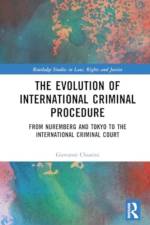
This book examines the evolution of international criminal procedure from the 1945-1946 Nuremberg and Tokyo trials to the present period. It is largely based on a normative-jurisprudential approach to the procedural rules, comparing both norms and case-law of the relevant courts and tribunals. The work shows the possibility of classifying "International Criminal Procedure" as an autonomous concept and field of study, which is constantly evolving due to the interaction of different legal cultures that characterize this subject matter and is derived from the varied procedures as established in both statutory law and jurisprudence. Far from being an autonomous entity, international criminal procedure now represents a great compromise between the legal traditions of different ICC member States. What emerges is the historical evolution of an international criminal procedure with a unique identity, a very real "third way" between the traditional dichotomy of Common Law and Civil Law, between the Anglo-Saxon and the European Roman-Law-oriented legal traditions. The book will be of interest to academics, scholars and researchers working in the areas of International Criminal Law, Comparative Law, Criminal Procedure and Legal History, as well as judges and international legal professionals.
This book explores the distinction between private and public aspects in competition law and focuses on how the concept of competition is incorporated into the legal framework.Distinguishing between antitrust regulations and competition-related legal rules in private law, such as unfair competition and contract laws, the book also differentiates between the utilitarian and deontological principles that underpin competition regulation. This historical and philosophical approach is used to compare two influential jurisdictions: England and Spain. These legal systems have had a significant impact on the development of legal rules in Common law and Civilian (Latin American) countries, respectively. Through this lens, the book further analyses the concept of "competition" and its value in each legal tradition. This understanding, in turn, helps clarify the scope of competition regulation within antitrust and private law, and how the two fields coexist. Additionally, the book examines the role of property law theory within the context of competition regulation.The book will be of interest to students and scholars in the field of competition law, tort law and legal history.
Abonner på vårt nyhetsbrev og få rabatter og inspirasjon til din neste leseopplevelse.
Ved å abonnere godtar du vår personvernerklæring.