


















Gjør som tusenvis av andre bokelskere
Abonner på vårt nyhetsbrev og få rabatter og inspirasjon til din neste leseopplevelse.
Ved å abonnere godtar du vår personvernerklæring.Du kan når som helst melde deg av våre nyhetsbrev.

This book analyses and reconstructs the European Convention on Human Rights standard of application and execution of preventive deprivation of liberty. Acts of international law were drafted at a time when guarantees for the protection of the personal liberty of individuals were primarily associated with custodial sentences. However, the essence, nature and purpose of preventive deprivation of liberty, which are fundamentally different from those of imprisonment, also require a different approach to the assessment of the minimum standard and guarantees for the protection of personal liberty and other rights and freedoms. This work determines the minimum guarantees for the protection of liberty and other rights and freedoms of a person in determining the legal basis and procedure for the application and execution of this measure. It presents guidelines on how the substantive prerequisites for preventive deprivation of liberty and the procedure for its application should be constructed in order to meet the European Convention on Human Rights standards. It also provides guidance on how the conditions and rules for preventive deprivation of liberty should be organised in order to protect individuals from inhuman or degrading treatment, or disproportionate restriction of their rights or freedoms. Finally, the work also discusses how the lawfulness of the imposition or continuation of a measure of preventive deprivation of liberty should be reviewed. The book will be of interest to academics, researchers and policy-makers working in the areas of Constitutional, Criminal, Medical and Human Rights Law.
This edited collection sheds light on the evolution of corporate financial crime, exploring a myriad of offenses ranging from money laundering and fraud to market manipulation and bribery.Considering and assessing the models used in national law to determine the culpability of corporations, this book compares the different schemes used to address financial and other organisational crimes committed by same. Through a combination of history, law, and global perspectives, its chapters dissect landmark cases and provide detailed analyses of money laundering, fraud, market manipulation, manslaughter, and legislative responses in various locations around the world. This comparative approach offers a unique lens, exploring diverse jurisdictions and shedding light on global patterns of corporate wrongdoing. By critically assessing the challenges of prosecuting economic crimes on a large scale, the collection proposes innovative solutions, including the introduction of 'failure to prevent' offences.Corporate Criminal Liability and Sanctions: Current Trends and Policy Changes is a valuable resource for academics, professionals, and anyone intrigued by the ever-evolving realm of white-collar and corporate wrongdoing. It will appeal to scholars across the fields of law, criminology, sociology, and economics, as well as those professionally engaged in corruption and regulation such as solicitors, barristers, businessmen and public servants.
First published in 1992, Crime, Criminal Justice and the Probation Service is a thought-provoking analysis of the role of the probation service in developing an integrated system of criminal justice. Robert Harris provides readable information about our knowledge of such areas as criminal statistics, victims, fear of crime and crime prevention. He also explores the treatment of women and ethnic minorities by the criminal justice system, the question of a sentencing council and the future of community corrections. A central theme is that all the professionals involved in the criminal justice system must work more closely together so that the mistakes of the past can be avoided in the future. The book therefore has a wide appeal not only to probation officers and social workers, but also to criminal justice professionals and administrators, including the police and the legal profession.
To what extent can an animal constitute a 'juridical species'? This highly original book considers how animals have been integral to law and to legal thinking.Going beyond the traditional approaches to animal rights and the question of whether non-human animals may be considered legal 'subjects', this book follows two types of animal - bears and bees - and asks what existence these species have maintained in juridical thought. Uncovering surprising roles that the animals play in the imagination of and solution to jurisprudential problems, the book offers a counter-argument to the view that juridical thought reduces one's appreciation for the singularity and independence of their lives. It shows, rather, that the animals exert a remarkable influence on the creative dimensions of law, offering a liveliness to it that is worthy of close attention.Contributing to new directions at the intersection of jurisprudence and human-animal studies, this book will appeal to those with interests in either of these areas.
This book takes as its starting point recent debates over the dematerialisation of subject matter which have arisen because of changes in information technology, molecular biology, and related fields that produced a subject matter with no obvious material form or trace. Arguing against the idea that dematerialisation is a uniquely twenty-first century problem, this book looks at three situations where US patent law has already dealt with a dematerialised subject matter: nineteenth century chemical inventions, computer-related inventions in the 1970s, and biological subject matter across the twentieth century. In looking at what we can learn from these historical accounts about how the law responded to a dematerialised subject matter and the role that science and technology played in that process, this book provides a history of patentable subject matter in the United States. This title is available as Open Access on Cambridge Core.
International Counterterrorism Law is the first book to consider national terrorism legislation in every one of the 197 States worldwide. It explains how international counterterrorism law has become a distinct branch of international law, and what the different components are in both peacetime and armed conflict. The relevance and contribution of international humanitarian law, international criminal law, national criminal law, and international human rights law are examined in combination with global sectoral terrorism treaties and regional instruments to provide a thorough yet manageable account of the law's application. Real-life examples are used to inform the material, from Ukraine to Syria, to Iran and the unlawful actions of the Global War on Terror, so that the reader can understand how domestic and international terrorism has historically been treated by prosecutors and the courts.
"Wise and illuminating...Merrill's treatment of the rise of Chevron, and its various twists and turns over the decades, is keenly insightful." --Cass R. Sunstein, New York Review of Books "Merrill is one of the brightest and best scholars of administrative law in his generation. This book...is must-reading for any citizen who has an interest in the constitutionality of the administrative state." --Steven G. Calabresi, Northwestern University Pritzker School of Law "A model of how to conduct rigorous, level-headed, and fair-minded analysis of a subject that has generated enormous legal controversy. There is no more judicious mind among American legal scholars than Thomas Merrill's."--Nicholas Parrillo, Yale Law School "A must-read for practicing or prospective administrative lawyers. They, as well as a broader audience, will find much good sense in the author's judicious treatment of perennial questions of lawful government."--Michael S. Greve, Claremont Review of Books The Constitution makes Congress the principal federal lawmaker. But for a variety of reasons, including partisan gridlock, Congress increasingly fails to keep up with the challenges facing our society. Power has shifted to the executive branch agencies that interpret laws and to the courts that review their interpretations. Since the Supreme Court's 1984 decision in Chevron v. Natural Resources Defense Council, this judicial review has been highly deferential: courts must uphold agency interpretations of unclear laws so long as these are "reasonable." But the Chevron doctrine faces backlash from constitutional scholars and, now, from Supreme Court justices who insist that courts, not administrative agencies, have the authority to say what the law is. Critics of the administrative state charge that Chevron deference enables unaccountable bureaucratic power. In this groundbreaking book, Thomas Merrill reviews the history and consequences of the Chevron doctrine and suggests a way forward.
"Essential reading for all who have a vested interest in the rise of AI." --Daryl Li, AI & Society "Thought-provoking...Explores how we can best try to ensure that robots work for us, rather than against us, and proposes a new set of laws to provide a conceptual framework for our thinking on the subject." --Financial Times "Pasquale calls for a society-wide reengineering of policy, politics, economics, and labor relations to set technology on a more regulated and egalitarian path...Makes a good case for injecting more bureaucracy into our techno-dreams, if we really want to make the world a better place." --Wired "Pasquale is one of the leading voices on the uneven and often unfair consequences of AI in our society...Every policymaker should read this book and seek his counsel." --Safiya Noble, author of Algorithms of Oppression Too many CEOs tell a simple story about the future of work: if a machine can do what you do, your job will be automated, and you will be replaced. They envision everyone from doctors to soldiers rendered superfluous by ever-more-powerful AI. Another story is possible. In virtually every walk of life, robotic systems can make labor more valuable, not less. Frank Pasquale tells the story of nurses, teachers, designers, and others who partner with technologists, rather than meekly serving as data sources for their computerized replacements. This cooperation reveals the kind of technological advance that could bring us all better health care, education, and more, while maintaining meaningful work. These partnerships also show how law and regulation can promote prosperity for all, rather than a zero-sum race of humans against machines. Policymakers must not allow corporations or engineers alone to answer questions about how far AI should be entrusted to assume tasks once performed by humans, or about the optimal mix of robotic and human interaction. The kind of automation we get--and who it benefits--will depend on myriad small decisions about how to develop AI. Pasquale proposes ways to democratize that decision-making, rather than centralize it in unaccountable firms. Sober yet optimistic, New Laws of Robotics offers an inspiring vision of technological progress, in which human capacities and expertise are the irreplaceable center of an inclusive economy.
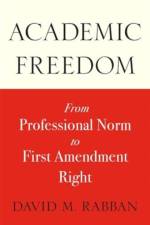
A definitive interpretation of academic freedom as a First Amendment right, drawing on a comprehensive survey of legal cases. Is academic freedom a First Amendment right? Many think so, yet its relationship to free speech as guaranteed by the Constitution is anything but straightforward. David Rabban examines the extensive case law addressing academic freedom and free speech at American universities, developing a robust theory of academic freedom as a distinctive subset of First Amendment law. In subsuming academic freedom under the First Amendment, Rabban emphasizes the societal value of the contribution to knowledge made by the expert speech of professors, the classic justification for academic freedom in the influential 1915 Declaration of the American Association of University Professors (AAUP). Any indication that professors might be disciplined because people without academic training disagree with their scholarly views would undermine confidence in the integrity of their work and therefore their ability to perform this vital function on behalf of the public. Rabban argues that academic freedom fosters two central First Amendment values recognized by courts in a wide range of contexts: the production and dissemination of knowledge and the contribution of free expression to democratic citizenship. The First Amendment right of academic freedom applies most directly to professors, but it also plausibly extends to the educational decisions of universities and to students' learning interests. More broadly, this vision of academic freedom can guide in developing additional distinctive First Amendment rights to protect the expert expression of journalists, librarians, museum curators, and other professionals. At a time when academic freedom is under attack from many directions, Academic Freedom proposes a theoretically satisfying and practically useful guide to its meaning as a First Amendment right.
A new interpretation of the constitutional law of foreign affairs, as it has been developed throughout its history by presidents and by Congress. In the more than 230 years since the Constitution took effect, the constitutional law governing the conduct of foreign affairs has evolved significantly. But that evolution did not come through formal amendments or Supreme Court rulings. Rather, the law has been defined by the practices of Congress and the executive branch, also known as "historical gloss." Curtis A. Bradley documents this process in action. He shows that expansions in presidential power over foreign affairs have often been justified by reference to historical gloss, but that Congress has not merely stepped aside. Belying conventional accounts of the "imperial presidency" in foreign affairs, Congress has also benefited from gloss, claiming powers for itself in the international arena not clearly addressed in the constitutional text and disrupting claims of exclusive presidential authority. Historical Gloss and Foreign Affairs proposes a constitutional theory that can make sense of these legal changes. In contrast, originalist theories of constitutional interpretation often ignore influential post-Founding developments, while nonoriginalist theories tend to focus on judicial decisions rather than the actions and reasoning of Congress and the executive branch. Moreover, the constitutional theories that do focus on practice have typically emphasized changes at particular moments in time. What we see in the constitutional law of foreign affairs, however, is the long-term accumulation of nonjudicial precedents that is characteristic of historical gloss. With gloss confirmed as a prime mover in the development of foreign affairs law, we can begin to recognize its broader status as an important and longstanding form of constitutional reasoning.
Now in its sixth edition, Delay and Disruption in Construction Contracts retains its position as foremost guide to the complex issues arising in the course of construction, with robustly-updated content throughout and the addition of several new chapters with focus on such topics as standard form provisions for recovery of loss or expense, and Chinese and Peruvian construction law.Expertly covering the manner in which delay and disruption should be considered at each stage of a construction project, from inception to completion and beyond, this book includes: Insight from an international team of specialist advisory editors Comparative analysis of the law in this field in Australia, Canada, England and Wales, Hong Kong, Ireland, New Zealand, the United States and in civil law jurisdictions Commentary upon, and comparison of, standard forms from Australia, Ireland, New Zealand, the United Kingdom, USA and elsewhere, including two major new forms Chapters on adjudication, dispute boards and the civil law dynamic Extensive coverage of Building Information Modelling New chapters on Chinese, Nordic, Peruvian, Singaporean and Malaysian construction law New in-depth discussion of the JCT 2016 suite Updated case law, linked directly to the principles explained in the text. This book is an essential reference for any lawyer, dispute resolver, project manager, architect, engineer, contractor, or academic involved in the construction industry.
Learn to become a great writer and master modern grammar rules with the U.S. Supreme Court justices as your guide. In The Supreme Guide to Writing, law professor Jill Barton cuts through competing advice to detail definitive grammar rules based on the nation's unequivocal authority: the U.S. Supreme Court. The book details a revolution in legal writing, with the justices progressing beyond the drab and technical for the deft and lyrical. With the first-ever analysis of 10,000 pages of Court opinions, the book pinpoints grammar and style rules that the justices follow--and describes the outdated rules they leave behind. Today's Court casts aside formality in favor of pop-culture references, contractions, and approachable language. In addition to establishing grammar and style rules, the book illustrates best practices with hundreds of examples of the justices' most brilliant sentences from the past several years. With step-by-step instructions, the book describes how to emulate the justices' writing styles by breaking down their strategies and techniques. It shows how Justice Elena Kagan lands amusing quips and weaves together down-to-earth analogies, how Justice Neil Gorsuch executes witty retorts, and how Chief Justice John Roberts pens unforgettable lines with understated style and humor. The best writing appears effortless, but it also takes tremendous effort. Legal writing even more so. The Supreme Guide to Writing provides a nonpartisan look at how the justices present their words to the world.
Welcome to Personal Injury Primer, where we break down the law into simple terms, provide legal tips, and discuss topics related to personal injury law.This book (Vol 5) is a compilation of the next 52 episodes of our popular podcast, and is assembled to make it easier for you, the reader, to access the information you need when and if you or a loved one is injured.What started out as a few podcast episodes five years ago, has morphed into a resource that colleagues, clients and, dare we say, even insurance agents can use.Our primary goal is to educate the reader into learning more about personal injury law, how they can protect their rights and what to do if they find themselves the victim of negligence.Some of the many subjects we cover in this book include...Why More Bad Drivers Are Hitting The HighwaysWhat To Do When A Drunk Driver Has No InsuranceThe Safety Rules For Commercial Vehicle OperationWho Is Liable For A Slip and Fall On A Dangerous SidewalkWhy CRPS Is Difficult For Jurors To UnderstandDiagnosing and Treating Traumatic Brain InjuriesWhat Is A Never EventBeing Injured By Blood-borne PathogensThe Consequences Of Breaching FDA RegulationsThe Importance Of Checking Car and Truck RecallsWhy Medical Records Are Not Really Privateand many more.Join David W. Holub and Katelyn C. V. Holub as they share with you this insightful book that will answer a great many of your questions regarding negligence and your personal injury claim.
Filing taxes can be confusing and stressful, especially if you do not know which forms to use or how to fill them out.Fear of not knowing if you've done things correctly may leave you afraid of how much money you owe the IRS. The task of gathering piles is a hassle. The tax maze is a confusing place for those who work with W2. This doesn't have to be the case. This book will guide you through the stressful path of tax preparation and will make the intimidating task of tax filing easy. No more IRS correspondence or tax worries on how to prepare for your W2 taxes!
A dissertação apresentada ao programa de mestrado em Direito da Sociedade da Informação, vinculado a linha pesquisa: Teoria da Relação JurÃdica na Sociedade da Informação, e orientado pelo Prof. Dr. Jorge Shiguemitsu Fujita, originou este livro. Estruturalmente, é importante esclarecer ao leitor que a sociedade da informação é desenvolvida na perspectiva de transformação dos avanços tecnológicos que modulam as relações desenvolvidas pela humanidade. Consequentemente, impactos também foram experimentados no âmbito jurÃdico, especificamente na operacionalização das relações contratuais. Portanto, os contratos eletrônicos passam a fazer parte das interações negociais e, especialmente, alcançam o escopo de serem operacionalizados no metaverso. Assim, esse ambiente que interconecta o mundo fÃsico e o digital, fluindo entre eles e utilizando recursos para possibilitar experiências personalizadas aos usuários, passa a ser essencial para a desenvoltura dos estudos jurÃdicos. Em verdade, pensando que este ambiente possui caracterÃsticas próprias e pode apresentar fragilidades na formalização dos contratos eletrônicos, o presente estudo busca analisar estes novos aspectos contratuais. De modo especÃfico, objetiva-se investigar como as contratações eletrônicas formalizadas no metaverso podem impactar em relação à capacidade das partes envolvidas no negócio jurÃdico. Ainda, objetiva-se analisar a importância da aplicabilidade do compliance contratual para buscar mecanismos práticos de efetivação da validação da capacidade das partes na formalização das contratações eletrônicas no metaverso. Desta forma, buscando uma abordagem qualitativa, com uma investigação jurÃdico-descritiva, utilizar-se-á a linha metodológica jurÃdico-sociológica. Destarte, buscar-se-á compreender como o compliance contratual pode ser importante para permitir que os contratos eletrônicos estejam em conformidade com os ditames legais e alcancem a tutela da segurança jurÃdica das partes envolvidas no ambiente do metaverso.
Il rispetto reciproco è il fondamento della vera armonia. IMPARATE AD AFFERMARVI E A REAGIRE A TUTTE LE FORME DI MANCANZA DI RISPETTO GRAZIE AL LIBRO PIà COMPLETO SUL TEMA! Ognuno di noi si trova prima o poi, talvolta più volte al giorno, di fronte a diverse forme di mancanza di rispetto, dalla semplice provocazione all'intimidazione, passando per gli insulti, il disprezzo o le richieste insistenti. Questi sono sfide per far valere i propri diritti, esprimere i propri limiti e bisogni, e essere trattati con la dignità e il rispetto che meritiamo. Fuggire dalla confrontazione quando si presenta non è mai la soluzione. Ciò comporta ripercussioni molto negative sulla vostra salute mentale e sulle vostre relazioni, poiché vi lasciate letteralmente calpestare quotidianamente, sia nel contesto lavorativo che nella vita personale. Se non sapete imporvi, il che include saper dire no con fermezza quando è necessario, potreste fare esperienza di molti disagi, a cominciare dal mantenere relazioni tossiche e essere oggetto di manipolazioni da parte delle persone che frequentate. A lungo termine, non saper farsi rispettare comporta persino numerosi svantaggi gravi e dannosi: uno stress e un'ansia aumentati, una diminuzione dell'autostima, conflitti irrisolti, problemi di salute mentale legati a sentimenti di frustrazione, rancore e rabbia repressa, la perdita di controllo sulla propria vita e la sensazione di essere sfruttati. IMPARARE A FARSI RISPETTARE à QUINDI INDISPENSABILE PER CONDURRE UN'ESISTENZA APPAGANTE, EQUILIBRATA E ARMONIOSA! Dovete essere capaci di riconoscere tutti i segnali di allarme della mancanza di rispetto quando si presentano, anche quelli apparentemente lievi, per reagire in modo appropriato e preservare la vostra dignità e il vostro benessere. Questo libro sarà la vostra guida verso una profonda evoluzione personale. Cosa troverete: - Trasformate le vostre relazioni: scoprite come stabilire limiti chiari e comunicarli con sicurezza per guadagnare il rispetto degli altri e rafforzare i vostri legami personali e professionali. - Aumentate la fiducia: imparate a dire no in modo compassionevole, a gestire la colpa e a resistere alle manipolazioni, rafforzando così la vostra autostima e sicurezza. - Reagite con eleganza: padroneggiate le tecniche per rispondere in modo appropriato all'intimidazione, agli insulti e alla provocazione, preservando la vostra dignità e mantenendo relazioni armoniose. - Studi di caso reali: immergetevi in situazioni di vita quotidiana e imparate come applicare le strategie e le competenze insegnate in questo libro per risolvere i conflitti e coltivare relazioni rispettose. - Grande accessibilità che siate principianti nel campo dello sviluppo personale o esperti navigati, questo libro è progettato per tutti i livelli di comprensione ed esperienza. Questo libro è una miniera di informazioni pratiche. Grazie ad esso, svilupperete competenze essenziali per farsi rispettare in tutti gli aspetti della vostra esistenza, che sia sul lavoro, nella vostra vita personale o nelle interazioni sociali. IL RISPETTO CHE MERITATE INIZIA QUI. NON ASPETTATE CHE GLI ALTRI DICTINO I TERMINI DELLE VOSTRE INTERAZIONI, PRENDETE IL CONTROLLO DELLA VOSTRA VITA E NON LASCIATEVI PIà CALPESTARE!
A global legal compendium of the laws related to advertising & marketing in 75+ countries around the globe. Written by members of the Global Advertising Lawyers Alliance (GALA) a network of the leading advertising lawyers in the world.
A global legal compendium of the laws related to advertising & marketing in 75+ countries around the globe. Written by members of the Global Advertising Lawyers Alliance (GALA) a network of the leading advertising lawyers in the world.
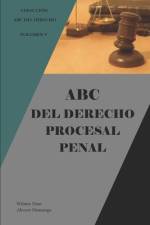
El Volumen V versa sobre el "ABC del Derecho Procesal Penal", el cual se refiere a los conceptos fundamentales y básicos que constituyen el sistema legal y procedimientos relacionados con el ámbito penal. Esto incluye los principios, procedimientos, instituciones y normativas que regulan la actuación de los órganos jurisdiccionales, los sujetos procesales y los derechos fundamentales en el ámbito de la investigación y juzgamiento de los delitos.El derecho procesal penal se encarga de regular la manera en que el Estado investiga, juzga y sanciona los delitos, asà como de proteger los derechos fundamentales de las personas involucradas en un proceso penal, tanto del acusado como de la vÃctima. Por lo tanto, el ABC del derecho procesal penal abarca una amplia gama de temas.
Adéntrate en "MitologÃa JurÃdica", un libro donde se desmitifican los conceptos arraigados en los principios generales del derecho. Este libro ofrece una profunda reflexión intelectual sobre cómo los mitos judiciales y las falacias argumentativas han influido en la aplicación e interpretación de estos principios en el contexto del Sistema JurÃdico Mexicano. Desde la perspectiva de un análisis crÃtico, el autor examina y cuestiona las creencias arraigadas que han permeado el ámbito legal. Descubre cómo ciertos mitos han moldeado las decisiones judiciales y cómo las falacias argumentativas han afectado la comprensión precisa de los principios fundamentales del derecho. La obra no solo desmantela estas concepciones erróneas, sino que también propone nuevas formas de abordar y entender los principios del derecho en el contexto jurÃdico mexicano actual. Esta es una obra esencial para profesionales del derecho, académicos y estudiantes que buscan desafiar sus propias percepciones, fomentar el pensamiento crÃtico y contribuir a una interpretación más clara y justa de los principios legales fundamentales en México. Este libro invita a la reflexión profunda sobre el sistema judicial y su evolución, proporcionando una base sólida para el diálogo y la reforma jurÃdica en busca de una justicia más equitativa y transparente.
O livro "Concurso Público Nacional Unificado - ÃTICA e INTEGRIDADE" é um guia abrangente de estudos, acompanhado por um QUIZ com 73 perguntas e respostas, focado na preparação para concursos públicos. Explore os fundamentos éticos do serviço público, abordando princÃpios e valores à luz da Constituição Federal de 1988 e do Código de Ãtica Profissional do Servidor Público Civil do Poder Executivo Federal. A obra aprofunda-se em temas como governança pública, gestão de riscos, integridade pública, transparência, qualidade na gestão pública, governo eletrônico, acesso à informação e o papel da inteligência artificial no âmbito do serviço público. Prepare-se de forma sólida e eficaz para enfrentar as exigências éticas e integradas dos concursos públicos, com este guia completo e interativo.Recomendação de Repetição Espaçada: Reforçando o Seu AprendizadoCaro leitor, entender a importância da repetição espaçada é como ter uma chave mestra para o sucesso nos seus estudos. Essa técnica, fundamentada em princÃpios cientÃficos da psicologia cognitiva, tem o poder de maximizar a retenção do conhecimento ao longo do tempo.Por que a Repetição Espaçada Funciona?A repetição espaçada aproveita o fenômeno conhecido como Curva do Esquecimento, que mostra que tendemos a esquecer as informações ao longo do tempo se não as revisarmos. Ao revisitar o conteúdo em intervalos especÃficos, você fortalece as conexões neurais e consolida o aprendizado.Como Implementar a Repetição Espaçada no Seu Estudo?Recomendamos um cronograma de repetição espaçada que compreende os seguintes intervalos: **7 Dias: **- Após a primeira leitura, reserve um tempo para revisar o conteúdo após sete dias. Isso fortalecerá sua retenção inicial.**15 Dias: **- Duas semanas depois, faça outra revisão. Esse intervalo ampliado ajuda a consolidar o conhecimento e a identificar áreas que podem precisar de mais atenção.**30 Dias: **- Após um mês, revise novamente. Esse é um ponto crucial para reforçar a memória de longo prazo.**60 Dias: **- Passados dois meses, faça uma revisão abrangente. Nesse ponto, você estará solidificando o conhecimento de forma mais duradoura.**120 Dias: **- Após quatro meses, realize outra revisão. Esse intervalo ajuda a manter o conteúdo fresco na sua mente.**240 Dias: **- Com oito meses de intervalo, revisite o material. Essa prática prolongada contribui para uma compreensão mais profunda.**480 Dias: **- Após um ano e meio, faça uma última revisão. Isso consolida o conhecimento a longo prazo e ajuda a fixar conceitos essenciais.Compromisso com a Excelência: Ao incorporar a repetição espaçada em seu plano de estudos, você não apenas absorve o conteúdo de maneira mais eficaz, mas também constrói uma base sólida para o seu sucesso acadêmico. Lembre-se, a consistência é a chave. Mantenha o foco, siga o cronograma de revisão e veja como seu conhecimento se fortalece ao longo do tempo.Aproveite essa poderosa ferramenta e alcance novos patamares em sua jornada de aprendizado. Estamos aqui torcendo por você!**Vamos Rumo à Aprovação!**Ãtica e Integridade na Administração Pública: Ãtica profissional no serviço públicoCódigo de Conduta da Administração PúblicaPrincÃpios da AdministraçãoConcurso Público Nacional Unificado: Edital do concursoConteúdo programático: ética e integridadeConcurso Público Nacional Unificado: Ãtica e Integridade no edital do concursoConteúdo cobrado na prova de Ãtica e IntegridadeQuestões anteriores sobre Ãtica e Integridade
Neste livro, um luso-francês em Espanha partilha a sua experiência única na implementação de processos e competências em vários domÃnios de uma empresa multinacional do sector aeroespacial. Desde o inÃcio, questiona os valores reais apresentados por esta empresa global. Através da sua perspicácia, destaca o impacto dos valores fundamentais em todos os nÃveis operacionais. Descobre as ligações intrincadas entre os valores empresariais e o sucesso organizacional. Este relato Ãntimo e ponderado revela a importância dos valores genuÃnos na tomada de decisões e na cultura empresarial. Uma viagem reveladora através da intersecção da experiência luso-francesa e da complexidade dos valores empresariais no contexto empresarial atual em Espanha.
In this book, a Portuguese-French man in Spain shares his unique experience in implementing processes and expertise in various domains of a multinational dedicated to aerospace. From the outset, he questions the real values presented by this global corporation. Through his insight, he highlights how core values impact every operational level. He uncovers the intricate links between corporate values and organizational success. This intimate and thoughtful account reveals the importance of genuine values in decision-making and corporate culture. A revealing journey through the intersection of the Portuguese-French experience and the complexity of corporate values in today's business context in Spain.
Dans ce livre, un franco-portugais installé en Espagne partage son expérience unique de mise en oeuvre de processus et d'expertise dans différents domaines d'une multinationale de l'aérospatiale. Dès le départ, il s'interroge sur les valeurs réelles présentées par cette entreprise mondiale. Grâce à sa perspicacité, il met en évidence l'impact des valeurs fondamentales sur chaque niveau opérationnel. Il découvre les liens complexes entre les valeurs de l'entreprise et le succès de l'organisation. Ce récit intime et réfléchi révèle l'importance des valeurs authentiques dans la prise de décision et la culture d'entreprise. Un voyage révélateur à la croisée de l'expérience franco-portugaise et de la complexité des valeurs d'entreprise dans le contexte commercial actuel en Espagne.
Lo chiamavano The Ice Man, "L'Uomo di Ghiaccio", "Il Campione" di Cosa Nostra italo-americana, il più sinistro eliminatore di topi sulla faccia della Terra. Il volume propone un'inedita analisi clinica sull'excursus psico-omicidiario di Richard Leonard Kuklinski, da spietato e anonimo serial killer a blasfemo e ricercatissimo contract killer; ricostruendo, altresì, mediante le sue interviste e confessioni, le trame e le dinamiche storico-criminologiche della mano invisibile della Mafia del XX secolo, mandante prediletta dei suoi più truculenti delitti su commissione.
Attorney Preston Sterling never killed one of his clients, but he is willing to make an exception. Preston Sterling rises from the ashes of his dramatic fall. Just a year ago he lost his girlfriend. In a related matter his wife divorced him. They both testified against him a court-martial trail at Ft. Knox, Kentucky. The Army Reserves kicked him out for adultery and stripped him of his commission as an officer. He lost his job as a civilian prosecutor. Just a year later, Sterling finds himself employed as corporate counsel for the Hilltop Crips in Tacoma, WA. The Hilltop Crips are notoriously violent gang. He gets paid in cash and finds himself able to attain the material possessions he craved. His new G-Wagon and his new home on a hill provide with the validation he needs to satisfy his ego. He finds himself on the verge of falling into the abyss of rampant narcissism and runaway arrogance. Then he falls in love with Taylor. She is a young, beautiful lawyer who makes Sterling want to be a better man.. Can he be that man, or will Susan help him to explore his sociopathic gifts working for the gang?
The book is a tour de force by a world renowned legal expert and senior diplomat. Its main feature is a well-balanced integration of diplomatic thinking and legal analysis, based on the 70-year diplomatic theory and practice in China. Rich in content and thought provoking, it systematically discusses the international law issues faced by China in the development of major country diplomacy with Chinese characteristics. The author creatively develops the concepts of Blue Diplomacy to refer to global ocean governance, Green Diplomacy to deal with climate change, Red Diplomacy to cope with anti-corruption, Digital Diplomacy for cyberspace governance, each with amplified amount of cases and materials. The author also deliberates the "one country, two systems" policy and the building of "community with shared future of mankind". The book helps the readers to better understand the fundamental principles and policies of China's diplomacy. For students, it is a key that opensup the door to international law studies; for researchers, it is a rich mine of international legal issues; for diplomats, it is a valuable guidance to master the art and science of legal diplomacy.
This book investigates the role of cloud seeding laws in governing regional solar radiation management (SRM) activities. It challenges the prevailing belief that cloud seeding laws are irrelevant to regional SRM governance and argues for their applicability. Through case studies in Australia, Canada, and the United States, the book highlights the need for legal frameworks that promote cross-scale interactions, stakeholder participation, flexible decision-making, and conflict resolution. It advocates for adopting adaptive governance principles to effectively manage the risks and uncertainties associated with regional SRM interventions. By filling a gap in the existing literature, this book offers valuable insights and recommendations for the governance of regional SRM, shedding light on the potential of cloud seeding laws to inform and shape SRM governance frameworks. It provides a comprehensive analysis of the legal and normative aspects, offering practical guidance for policymakers, researchers, and stakeholders involved in regional SRM initiatives.
Abonner på vårt nyhetsbrev og få rabatter og inspirasjon til din neste leseopplevelse.
Ved å abonnere godtar du vår personvernerklæring.