























Gjør som tusenvis av andre bokelskere
Abonner på vårt nyhetsbrev og få rabatter og inspirasjon til din neste leseopplevelse.
Ved å abonnere godtar du vår personvernerklæring.Du kan når som helst melde deg av våre nyhetsbrev.

This book fills a critical gap in understanding statelessness in Asia, offering a unique interdisciplinary and comprehensive set of perspectives. This book brings case studies and expertise together to explore this important issue and offers new insights as to what it means to be, de facto and de jure, stateless.
Oxford Studies in the Philosophy of Law is a forum for new philosophical work on law. The essays range widely over general jurisprudence (the nature of law, adjudication, and legal reasoning), philosophical foundations of specific areas of law (from criminal to international law), and other philosophical topics relating to legal theory.
This book offers an innovative and comprehensive theory of private law as the law governing our relationships with one another in our capacity as private individuals rather than as citizens
The Internal Market Ideal is an essay collection honouring Professor Stephen Weatherill. A reference to his seminal work The Internal Market as a Legal Concept (OUP, 2016), this volume celebrates Weatherill's scholarship and examines the legal issues surrounding the semi-integrated market of the European Union.
Funding International Arbitration, edited by leading experts Sherina Petit and Nosherwan Vakil, is your essential guide to navigating funding in international arbitration. Written by eminent funders, brokers and practitioners, most of whom deal with third party funding on a day-to-day basis, this new title provides step by step guidance on the following: How to demystify each stage of the process from initial assessment to final resolution.The steps involved in considering, advising on and structuring funding.The proven strategies on approaching funders and maximising your chances of success.How to manage the ongoing relationships with the third parties involved in the funding lifetime, including around settlement.Understand the critical importance of accuracy and careful planning throughout the process.Key topics covered include: Market trends: gain insights into the evolving landscape of third-party funding.Regulatory landscape: navigate the complex legal and regulatory considerations.Cost management: develop effective strategies to optimise your financial position.Enforcement mechanisms: ensure you understand your rights and obligations.Dispute avoidance: learn how to minimise potential friction.This new Special Report provides a practical and accessible guide to funding international arbitration and is geared towards both individuals who wish to further their understanding of the area and those approaching funding issues for the first time.
During armed conflict, non-State armed groups deprive individuals of their liberty. While this is not a new phenomenon, its pervasiveness is reflected by recent examples in Colombia, Libya, Syria, Ukraine, Mali and the Democratic Republic of the Congo. Yet, examining these activities goes beyond its mere acknowledgment. It involves questions concerning their legality and the non-State armed groups' motivations when depriving individuals of their liberty. Drawing on his personal experiences while working for various humanitarian organizations, Ezequiel Heffes aims at elucidating how international law can be used as a protective tool in relation to individuals placed in detention by non-State armed groups. Based on case studies of selected groups and a normative and doctrinal analysis, he proposes minimum humanitarian principles applicable to those situations. By addressing a contemporary issue that touches upon a number of legal regimes, this study makes a valuable contribution to the law applicable in armed conflict.
Provides an account of the European legislative process that does justice to the democratic potential inherent in trilogues. In particular, the book offers a systematic appreciation of the relevant legal sources and draws on the insights of legal and political scholarship.
This engaging study examines the duality of state responsibility for violations of international law and provides the first in-depth, extensive history of this modern doctrine. Will enrich researchers, practitioners and students interested in diplomacy, international law, legal history and the regulation of international enforcement actions.
The first substantial collection of anthropological work on tax, this book uses ethnographic data from around the world to elucidate how tax systems shape not just our economic lives, but our social relationships and our values, and how they categorise people and things. It reconceptualises what taxes do in society.
Drawing upon original manuscripts and The Collected Works of Jeremy Bentham, this collection represents the latest scholarship on Bentham's late and mature thought on constitutional law. The contributions cover a diverse range of major topics, from official aptitude or competency to the interests of women, and explore Bentham's writings on courts, codification, and cosmopolitanism. Together, its chapters challenge the received notion, based on early jurisprudential writings, that Bentham's constitutional thought is authoritarian, and show that Bentham, as a constitutional theorist, offers a distinctive liberal perspective. Freeing Bentham's theories from their long sentences and unfamiliar terminology, these essays make accessible Bentham's subtle and important ideas on liberal democracy. By shining a light on Bentham's mature thought, this volume offers a refreshingly comprehensive, detailed, and authentic account of Bentham's theory of democracy.
Weaving together theory and practice, the chapters in this volume provide a comprehensive assessment of sustainable development provisions in international trade agreements. The volume offers important reflections upon the real extent and the foreseeable consequences of this sustainability revolution.
Focused on the relationship between individual and interstate claims under international law, this volume provides a comprehensive survey of the potential for such overlapping claims to arise and explores, through a rigorous analysis of the law of State responsibility, how public international law regulates that overlap.
Administrative law permeates all areas of law, and this series focuses on its role both regionally and globally. This volume explores the importance of general principles and sector-specific rules in European administrative law.
This edited collection asks what texts are key to our understanding of the shared values of constitutional democracy and human rights from a comparative law perspective. The volume explores this idea of 'canonical' texts as part of a broader conversation about the field and the future of comparative constitutionalism.
A comprehensive and practical guide for advisers and practitioners covering civil actions, the police complaints procedure and other remedies such as judicial review, inquests and human rights law. This book equips the reader with the essentials for advising on the full range of procedures, strategies and tactics available.
Mitiblende reads like the story of a Black American family in its questto sell or partition an heir's property legacy of 56 acres of undividedinterest. The term Mitiblende (translation, make the brains growsmarter) was coined by Robert M. Pittman. The late Mr. Pittman wasJoe Harris' uncle. Joe Harris is the novel's protagonist. The storylineis cast around property located in a small town rural Texas setting.Heirs property essentially represents generational wealth that hasbeen transferred to multiple family members by inheritance, usuallywithout a will. The deed to the property was dated August 2, 1898, from Sallie Simpson to Rosie Burse Edwards (Joe Harris' greatgrandmother).The granting of the land was instead of monetarycompensation and represented repayment for services rendered byJoe Harris' ancestors.In many ways, the Mitiblende story can be characterized assemi-autobiographical. Several aspects of Joe Harris' childhood toadolescence to adulthood passage (such as names, places, and otheridentifying descriptors) may be fictional. However, many aspectsof the journey, such as his efforts in structuring the Harris FamilyTree, are factual and historical. Intertwined between the story is anevolving collage of clues presented in the form of letters, emails, teleconferences, and dialogue. For example, a letter written in 1986by Joe Harris' Aunt Maude (the late Maudell Williams) providedclues that highlighted issues such as (a) the landlocked perimeterand (b) the lack of easement rights.
Este libro, editado bajo la coordinación de Belén RamÃrez Landaeta y MarÃa Amparo Grau, reúne un conjunto de estudios en homenaje a la Dra. Josefina Calcaño de Temeltas, quien fue Individuo de Número de la Academia de Ciencias PolÃticas y Sociales, en los cuales se analiza su extraordinaria contribución al derecho público en Venezuela, como Magistrada tanto de la Sala PolÃtico-Administrativa de la Corte Suprema de Justicia, como antes, de la Corte Primera de lo Contencioso Administrativo a través de su magnÃfica y abultada lÃnea jurisprudencial en derecho constitucional y administrativo, mediante sentencias que significaron importantÃsimos y emblemáticos avances jurisprudenciales sobre temas como los actos administrativos, el silencio administrativo, el amparo constitucional, el control de constitucionalidad, el contencioso administrativo y de interpretación de normas tributarias. Escriben en el libro los profesores Rafael Badell Madrid, Allan R. Brewer-CarÃas, Cecilia Sosa Gómez, Ramón Escovar León, Gabriel Ruan Santos, MarÃa Amparo Grau, Rosibel Grisanti de Montero, Miguel Ãngel Torrealba Sánchez, Pier Paolo Pasceri Scaramuzza, Humberto Briceño León, MarÃa Elena Toro Dupouy, VÃctor Rafael Hernández-Mendible, José Ignacio Hernández G., Jose Antonio Muci Borjas, Juan Carlos Oliveira Bonomi, Ana MarÃa Ruggeri Cova, Ramsis Ghazzaoui, Luis Fraga-Pittaluga y Leonardo Palacios Márquez.El libro ha sido editado por la Academia de Ciencias PolÃticas y Sociales de Venezuela, la Asociación Venezolana de Derecho Administrativo (AVEDA), la Fundación de Estudios de Derecho Administrativo (FUNEDA) y la Editorial JurÃdica venezolana
Es este libro del profesor Asdrúbal Aguiar se recogen dos ensayos u opúsculo con fines didácticos, uno, el artÃculo de Papel Literario "Asà perdimos el Esequibo, publicado a propósito de nuestro libro sobre La cuestión del Esequibo (EJV, 2024), que es un brevis coloquial del tormentoso siglo XIX venezolano, hasta cuando el Laudo Arbitral de ParÃs le arrebata a Venezuela el costado oriental esequibo de su territorio. El otro, es una exégesis detallada sobre el Acuerdo de Ginebra de 1966 para resolver la controversia territorial entre Venezuela y Guayana Británica, cuyo propósito es demostrar el falso dilema entre la solución práctica y amigable y la solución judicial hoy planteada ante la Corte Internacional de Justicia. Se añaden tres documentos relacionados con lo anterior: el texto del laudo del despojo antes mencionado; el texto del acuerdo ginebrino que permite controvertir sobre la nulidad o no de aquél y a la luz de su circunstancia histórica; y una sÃntesis que hemos elaborado sobre el fondo de la cuestión que se desarrolla ante la Corte de La Haya, tomado de sus resúmenes, editado y traducidos del francés bajo nuestra responsabilidad, para una más fácil comprensión por el lector acerca del tema y sus perspectivas
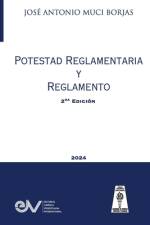
Esta obra del profesor José Antonio Muci Borjas, elaborada como trabajo de incorporación a la Academia de Ciencias PolÃticas y Sociales venezolana, versa sobre un tema siempre actual: la potestad reglamentaria y el reglamento. Ciertamente, aunque los distintos ordenamientos jurÃdicos estatales le reconocen a la Administración Pública potestad reglamentaria, y el ordenamiento venezolano no es una excepción, no es menos cierto que la Administración -hacemos nuestras las palabras de don Eduardo GarcÃa de EnterrÃa- es un pésimo legislador. Pésimo porque la Administración Pública es una organización creada para el tratamiento de lo inmediato e implicada en un sinnúmero de gestiones concretas; una organización diseñada para actuar o incidir sobre materias cambiantes y pasajeras por definición; y, por lo tanto, una organización a la que le falta esa serenidad de juicio, esa superioridad de posición y esa ajenidad frente a los supuestos de hecho que demandan regulación, sin los cuales no resulta posible acometer la definición abstracta de un orden jurÃdico justo. Ese cúmulo de circunstancias justifica el acabado estudio de la potestad reglamentaria y de los reglamentos, pues el control de legalidad presupone la cabal comprensión de esa potestad estatal y del producto normativo resultante de su ejercicio.
Esta obra sobre Derecho Administrativo del profesor Allan R. Brewer-CarÃas fue originalmente terminada de escribir en 2005, y fundamentalmente trabajada en Caracas en su oficina de Baumeister & Brewer. De la misma solo se publicaron en ese año en Bogotá los dos primeros tomos, por la Universidad Externado de Colombia. El volumen que ahora se publica (1.156 páginas) por la Universidad Católica del Táchira, y los auspicios de Baumeister & Brewer es, por tanto, la reimpresión, en 2024, de aquellos dos tomos, ahora en uno solo, pero con el agregado de los manuscritos que en 2005 quedaron inéditos y que conformaban los Tomos III y IV de la obra inicialmente proyectada. En este volumen, por tanto, el autor ha conservado los textos originales de 2005, sin actualizaciones, y asà mostrar ahora, casi veinte años después, lo que entonces era el derecho administrativo en Venezuela, cuyas bases esenciales venÃan desde la época del régimen democrático (1958-1999), antes de que comenzara la destrucción sistemática del Estado de derecho y del propio derecho administrativo, lo que ocurrió precisamente a partir de 2006. El libro, por tanto, es el testimonio vivo de las bases generales del derecho administrativo que Brewer-CarÃas siempre enseñó, y las cuales habrá que rescatar y reconstruir cuando el paÃs logre zafarse del autoritarismo.
Este libro de Leonel Salazar Reyes Zumeta tiene por objeto analizar la situación actual de la tutela de los signos distintivos notoriamente conocidos (SDNC), conforme la legislación venezolana y el derecho internacional convencional aplicable, y pretende brindar un aporte para la comprensión de esta importante institución del derecho de propiedad industrial.La evolución normativa venezolana en materia de propiedad industrial (1877-1955), al regular las marcas, como signos distintivos, no contempló la regulación especÃfica de los signos distintivos notoriamente conocidos (SDNC). La sentencia Galleries Lafayette consagró por vez primera la tutela ultraterritorial de los SDNC (Sala PolÃtico-Administrativa, Corte Suprema de Justicia, 1993). La protección de los SDNC sucede con la adopción plena por parte de Venezuela de las normas comunitarias del Pacto Andino (1971), hoy Comunidad Andina de Naciones (CAN), a partir de la aprobación de la Decisión 311 sobre el Régimen Común de Propiedad Industrial (1991), y sus sucesoras (D313, D344 y D486). Sin embargo, la D85 (1974), instrumento legal fundante del régimen de propiedad intelectual comunitario, nunca fue aplicada en nuestro paÃs, por la reserva legal (1973) al tratado de adhesión en materia de aplicación directa y preferente de las normas comunitarias. Desde 1994, Venezuela se adhiere a diferentes tratados internacionales que brindan protección explÃcita a los SDNC (OMC-ADPIC, 1994; Convenio de ParÃs, 1995; MERCOSUR, 2012). Pero, por el retiro de Venezuela de la CAN (abril 21, 2006), y su suspensión del MERCOSUR (2017), la regulación, protección y prueba de los SDNC quedó al amparo de la Ley de Propiedad Industrial (1955) y los tratados internacionales vigentes.
Introducing "Financial Surveillance: A Living Nightmare" - a compelling exploration of the hidden world of financial surveillance that will captivate readers and challenge their perceptions of privacy, freedom, and democracy in the digital age.In this groundbreaking book, author [Author's Name] takes you on a gripping journey into the heart of pervasive monitoring in the financial realm, uncovering the unsettling realities of surveillance practices that lurk beneath the surface of our everyday transactions. From the historical roots of surveillance to the cutting-edge technologies reshaping the landscape, "Financial Surveillance: A Living Nightmare" sheds light on the profound implications of surveillance for individuals, organizations, and society as a whole.Through real-life case studies, thought-provoking analysis, and insightful commentary, [Author's Name] exposes the erosion of privacy and civil liberties in the face of relentless surveillance pressures. From political dissidents and journalists to marginalized communities and digital rights advocates, no one is immune from the reach of surveillance, as our financial activities are subjected to unprecedented levels of scrutiny and suspicion.But "Financial Surveillance: A Living Nightmare" is more than just a sobering exposé - it's a call to action for individuals, organizations, and society to confront the challenges posed by surveillance and reclaim our right to financial privacy and freedom. With compelling narratives and actionable insights, this book empowers readers to advocate for greater transparency, accountability, and respect for fundamental rights in financial surveillance practices.Whether you're a concerned citizen, a privacy advocate, or a policymaker grappling with the complexities of surveillance in the digital age, "Financial Surveillance: A Living Nightmare" offers invaluable perspectives and solutions to navigate the labyrinth of financial surveillance and build a future where privacy, freedom, and democracy prevail.Don't miss your chance to delve into this timely and thought-provoking exploration of financial surveillance - order your copy of "Financial Surveillance: A Living Nightmare" today and join the conversation on the future of privacy and freedom in an increasingly surveilled world.Top of Form
Abonner på vårt nyhetsbrev og få rabatter og inspirasjon til din neste leseopplevelse.
Ved å abonnere godtar du vår personvernerklæring.