




















Gjør som tusenvis av andre bokelskere
Abonner på vårt nyhetsbrev og få rabatter og inspirasjon til din neste leseopplevelse.
Ved å abonnere godtar du vår personvernerklæring.Du kan når som helst melde deg av våre nyhetsbrev.

Agency theory is ubiquitous in company law. This book explores (a) the limits of such deployment, and (b) the logic of how to deploy it. This book will be of interest to academics, students and researchers of corporate and company law.
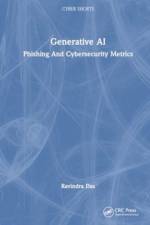
This book aims to serve as a beacon for practitioners, researchers, and students who are navigating the intricate world of digital forensics and cyber security.
Have you ever wanted to start or grow your own business, but found that life keeps getting in the way?Sara Davies is known for her no-nonsense, down-to-earth entrepreneurship, and this book reveals her secrets to success in just six minutes a week.Filled with stories from Sara's own career, her 52 invaluable lessons span the year, teaching you everything you need to know to launch, run and grow your business.From developing ideas and finding mentors, to overcoming hurdles and mastering time management, her quick tips and hacks are balanced with deeper actions to practise over the coming week.No matter where you are on your entrepreneurial journey, you can turn your dream into reality, at a pace that works for you.
This book provides a distinctive and critical analysis of the anti-money laundering (AML) measures that have been put in place in Turkey and the United Kingdom.
This book explores how information and communications technologies are adapted, governed, and reinterpreted in areas where the state has limited reach.This book will be of great interest to students of Socio-Legal Studies, Science and Technology Studies, (Critical) Security Studies and International Relations.
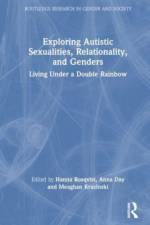
This edited collection of contributions explores non-normative genders, sexualities and relationality among Autistic people.
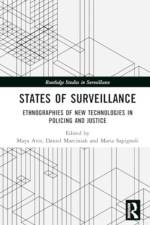
Drawing on ethnographic research in contexts from across the globe, the contributions to this volume engage with technology's promises of transformation, considering the dynamics that shape the political economy driving the expansion of security technologies, and examine how those at the margins navigate experiences of surveillance.
This book presents case studies on the human rights performance of state-owned enterprises from four Latin American and three European countries. It examines whether companies implement the UN Guiding Principles on Business and Human Rights and how their state owners regulate or incentivize their human rights compliance.
'Ground Improvement in Underground Constructions' is a valuable reference text for tunnelling specialists, owners, engineers, archaeologists, architects, artists and others involved in underground planning, design and building around the world, and for academics who are interested in underground constructions and geotechnics.
Constitutional Intolerance offers a deeper reflection on intolerance in politics and society today, explaining why minorities face the contestation of their public visibility, and how the law could protect them. Van der Tol refers to historical practices of toleration, distilling from it the category of 'the other' to the political community, whose presence, representation, and visibility is not self-evident and is often subject to regulation. The book considers 'the other' in the context of modern constitutions, with reference to (ethno)religious, ethnic, and sexual groups. Theoretical chapters engage questions about the time and temporality of otherness, and their ambivalent relationship with (public) space. It offers examples from across the liberal-illiberal divide: France, the Netherlands, Hungary, and Poland. It highlights that vulnerability towards intolerance is inscribed in the structures of the law, and is not merely inherent to either liberalism or illiberalism, as is often inferred.
Challenge your understanding of corporate, securities, and financial law and regulation with this ground-breaking book.Featuring incisive research from preeminent scholars in the field, this seminal work interrogates long-standing assumptions and beliefs that have remained unexamined for decades.Taking a novel approach, the book serves as both a conceptual "deconstruction" and a foundation for future research directions. Each chapter delves deep into the often-overlooked origins, mechanics, and implications of outdated or misleading concepts (termed "fallacies") that form the backbone of contemporary corporate and securities laws, financial regulations, and related domains.Beyond simply identifying these fallacies, the authors illustrate the profound implications of recalibrating our analytic perspectives. By expanding the spectrum of inquiry and moving along multiple continuums - such as public to private, micro to macro, transactional to structural, individual to systemic, and static to dynamic - this volume underscores the transformative potential of re-envisioning the fundamentals of these fields. An essential read, this book promises to be a catalyst for change and a must-have for anyone committed to staying at the forefront of law and policy.
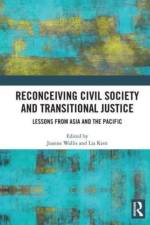
Reconceiving Civil Society and Transitional Justice examines the role of civil society in transitional justice, exploring the forms of civil society that are enabled or disabled by transitional justice processes and the forms of transitional justice activity that are enabled and disabled by civil society actors.
In this book, four authors reflect on whether the US Constitution embodies certain "principles." They conclude that it does not, at least not directly, and that it's a good thing that it and other constitutions do not.
In a society of strangers, there develops what can be called crimes of mobility -- forms of criminality rare in traditional societies: bigamy, the confidence game, and blackmail, for example. What they have in common is a kind of fraudulent role-playing, which the new society makes possible.
This work addresses the shift from the monolithic influence of major world religions in the past towards religious pluralism coupled with the increased secularism of society. Contributors explore how the deployment of a nuanced understanding of human dignity can provide a way to maximise religious liberty for all within liberal democracies.
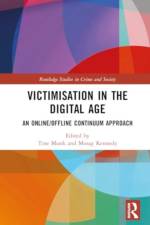
Examining how victimisation can occur across the online-offline continuum while emphasising the need for a holistic approach to understanding and addressing contemporary harms, this book covers various themes of victimisation in the digital age linked to the interconnectedness and blurred boundaries between online and offline experiences.
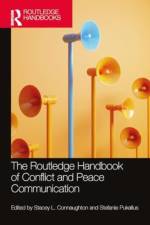
This handbook provides a comprehensive review of research in conflict and peace communication and offers readers a range of insights into foundational, ongoing, and emerging discussions in this field.
Abonner på vårt nyhetsbrev og få rabatter og inspirasjon til din neste leseopplevelse.
Ved å abonnere godtar du vår personvernerklæring.