














Gjør som tusenvis av andre bokelskere
Abonner på vårt nyhetsbrev og få rabatter og inspirasjon til din neste leseopplevelse.
Ved å abonnere godtar du vår personvernerklæring.Du kan når som helst melde deg av våre nyhetsbrev.

This book examines the European Court of Justice's principles relating to composite decision-making. Through rigorous case law analysis, it shows how these rely on national and Union observance of rule of law requirements, under what the book calls the 'Unitary Protection' doctrine. It explores the theoretical dimension of this doctrine, illustrating how it represents a departure from the EU's foundational federalist approach to administrative law. This fills a longstanding gap in the literature and in our full understanding of composite decision-making, a key tenet of EU law. EU constitutional and administrative law scholars will be fascinated by this compelling study.
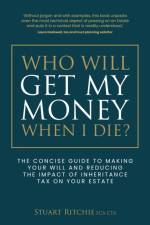
This book is a clear and comprehensive guide to Inheritance Tax and legacy planning that will allow you to enjoy life to the fullest, knowing your affairs are in order
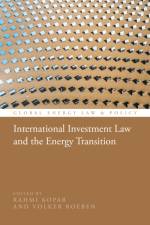
The global energy sector is in flux, transitioning from reliance on fossil fuels to clean energy sources at an unprecedented pace. This book explores the complex interplay between this transition and international investment law. The book navigates the tension between attracting crucial and expensive investments in clean energy and protecting a state's right to regulate its energy sector for environmental and other reasons. It analyses how international treaties and investment arbitration tribunals are evolving to address these challenges, examining how the scope of investment protection is being redefined and the delicate balance between stability and regulatory flexibility is being recalibrated. The book delves into this complex landscape, exploring how established legal frameworks, especially international investment law, grapple with the unique characteristics of renewable energy, critical minerals, and rapidly evolving technologies. While offering a roadmap for the current energy transition, the book also identifies unanswered questions. It paves the way for further discussion on critical mineral supply chains and the future of international investment law in a transformed energy landscape.
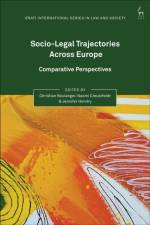
This collection explores the development of socio-legal/law and society approaches within and across Europe, focusing self-reflexively on academic and legal cultures, institutions, kinship, and scholarly agency.What makes a socio-legal approach socio-legal? How does it differ across legal cultures, countries, or regions? How do scholarly identities develop and change in academia's places, spaces, and contexts? This collection features contributions from socio-legal scholars who engage in a critical examination of their own work. They delve into the underlying motivations behind their research questions, as well as the methods and theories they employ. This process involves reflecting on these aspects within the broader legal and academic landscape in which they operate, taking into account their personal journeys and the historical trajectories of their research fields. The chapters not only contextualise individual socio-legal research within intellectual, institutional, and political frameworks but also explore national and transnational developments, influences, networks, and conversations.With an emphasis on exploring the link between contextual structures and scholarly agency, underpinned by self-reflection, the contributions provide a fresh and fascinating comparative perspective on contemporary socio-legal studies.
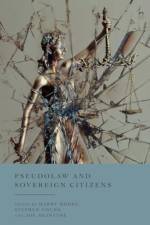
This is the first-ever edited volume solely dedicated to examining pseudolaw, offering in-depth insights into its global growth and alarming adaptability to local legal contexts.Can you avoid any law you do not consent to? Can you avoid paying taxes by declaring yourself sovereign? Do courts operate under Admiralty or Maritime law? No. But welcome to the strange world of pseudolaw. This book examines the perplexing and demanding growth of this phenomenon. While it might be tempting to laugh at the ridiculousness of pseudolaw, it is a serious matter. People who make these claims rob themselves of meaningful legal opportunities and impose great costs to themselves and the community. It is also linked to violent extremism and indicative of growing social insecurity.Part I offers ways to analyse and differentiate pseudolaw from other forms of conspiracy ideation and fringe legal interpretation. Part II examines the history of pseudolegal thinking and surveys contemporary manifestations and practices of pseudolaw, including that of sovereign citizens. Part III explores the rise of far-right extremism, lay-persons in judicial proceedings, fraudulent "get out of jail" schemes, and responses to this phenomenon.
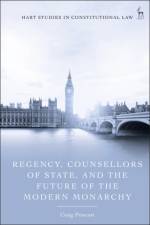
This book provides the most complete history of the Regency Acts and Counsellors of State ever undertaken. Using documents from the National Archives, the book outlines why the position was created in the early 20th century, how the question of a regency and Counsellors of State became entangled with the abdication of Edward VIII, and how the position became a crucial feature of the reign of Elizabeth II.Counsellors of State were a little-known part of the constitutional monarchy. Yet, recently, the role has attracted public scrutiny as Princes Harry and Andrew remain Counsellors despite their withdrawal from public life. Counsellors can deputise for the monarch when they are overseas or unwell, ensuring that the monarchy can continue to fulfil its constitutional functions. The book explains the role of Counsellors and the legal and practical problems surrounding their functions. It also discusses the problems with how the Regency Acts provide for a regent. The reign of Charles III raises important questions both for the present and the future. The King is known to favour a "slimmed down", more flexible, modern monarchy. Reforming the positions of Counsellors of State and regent could be part of this. Should the position be used to smooth the transition to William V? Should the British monarchy follow examples from other monarchies in Europe and allow a monarch to retire with the heir to the throne acting as regent? The book concludes with suggested reforms to ensure that the modern monarchy continues to fulfil its constitutional duties.
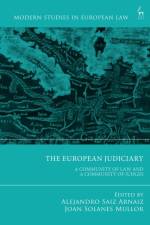
This book offers a thought-provoking reappraisal of the EU judiciary (the European Court of Justice, the European Court of Human Rights, and the constitutional courts) by leading scholars from the Spanish academy.This open access book is divided into 3 substantive parts. It firstly looks at institutional dimension and the role of the European Court of Human Rights. It then goes on to examine the institutional challenges for the Court of Justice of the European Union. Finally it looks at the evolution and reaction of constitutional courts in the aftermath of the European integration process.The ebook editions of this book are available open access under a CC BY-NC-ND 4.0 licence on bloomsburycollections.com.
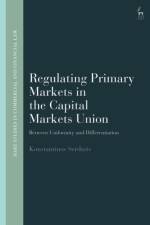
Stay ahead of the curve with this essential book, offering a concise, comprehensive and up-to-date analysis of the Prospectus Regulation (including its recent amendment by the EU Listing Act) and the pathbreaking Regulation on European Crowdfunding Service Providers (ECSPR). Placing the discussion in the context of the Capital Markets Union (CMU), this book provides a fresh and insightful perspective on the ever-evolving regulatory landscape of EU primary capital markets, setting out a practical roadmap for achieving effective and inclusive regulation. With a keen focus on the dynamic relationship between legal uniformity and differentiation, the book addresses 2 pivotal questions: how can the imperative of investor protection be balanced with the goal of providing businesses with improved and cost-effective access to EU primary securities markets? How can the pursuit for greater unification be practically reconciled with the growing demand for regional solutions in a post-Brexit era?Unveiling a unique normative framework, the book provides a holistic perspective; it explores the underlying objectives and intricate complexities of the CMU, critically evaluates the transformative potential of regulatory actions, sheds light on potential inconsistencies, and offers insightful suggestions for future reforms.A must-read for policymakers, scholars, legal practitioners and anyone seeking to comprehend the current and emerging challenges in the regulation of EU primary capital markets.
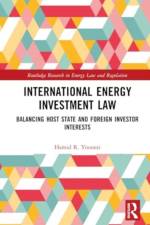
This book analyses relational contract theory within the context of international energy investment agreements, providing a pragmatic resolution to the challenges inherent in the relationship between host states and foreign investors. It will be of interest to researchers of energy law, international investment law and contract law.
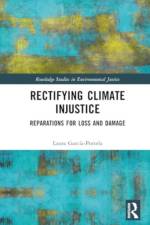
This book provides an account of how rectificatory justice for climate change loss and damage is possible and provides an extensive response to its challenges.
First published in 1978, Crime and Penal Policy is primarily addressed to non-professional people interested in criminal law and the penal system, such as magistrates, prison visitors, and anyone accused or convicted of criminal offences.
The second edition of this accessible book is a single up-to-date reference work which discusses a broad range of public and private law topics which directly impact on the use and development of land.
"A very thorough and extremely well-researched study of the making of U.S. policy on married women's citizenship between 1855 and 1934, including a focus on the women's groups that campaigned to move the policy from dependency for the wife to independent citizenship. . . . This is a more detailed history of policy-making in this area than has been done for decades."--Nancy F. Cott, Yale University"This is a growing and important aspect of the history of feminism; the differences of opinion and strategy over these policies serve as an excellent case study of the politics of the women's movement of the early part of this century."--Virginia Sapiro, University of Wisconsin, Madison
In diesem Buch wird untersucht, welche Möglichkeiten die Gestaltung letztwilliger Verfügungen mit Supervermächtnis bietet. Das Augenmerk ist auf die Optimierung des Berliner Testaments gerichtet, welches durch eine entsprechende Kombination von Vermächtnisarten ein immenses Einsparpotential bei der Erbschaftsteuer ermöglicht. Die praxisnahe Darstellung umfasst eine steuerliche Einordnung des Supervermächtnisses, eine Auseinandersetzung mit der Rechtsprechung, ausführliche Anwendungsmöglichkeiten desselbigen und bietet konkrete Formulierungsvorschläge an.
Originally published in 1939, The Diary of Dudley Ryder 1715-1716, comprises an early diary and a few related notes by Sir Dudley Ryder when he was a student at the Middle Temple. The diary is a fascinating record of the character and life of a moderately well-to-do student of Nonconformist leanings.
This book examines both how and why non-violent civil resistance campaigns fail, and the diverse category of campaigns that fall short.
This book analyses over twenty years of rights-based litigation in the areas of climate change and plastic pollution in order to assess the value of rights in confronting and overcoming planetary crises.
The Routledge Handbook of Causality and Causal Methods adopts a pluralistic, interdisciplinary approach to causality. It formulates distinct questions and problems of causality as they arise across scientific and policy fields.
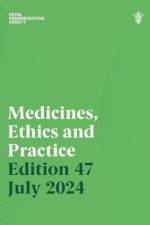
Medicines, Ethics and Practice, 47th edition is a revised practical resource which helps pharmacists practice confidently and professionally. Medicines, Ethics and Practice is the Royal Pharmaceutical Society's established professional guide for pharmacists. It embeds professionalism at the heart of decision-making processes and provides essential information, supporting the pharmacist in their day-to-day practice.
Lying is a familiar and morally important phenomenon. No matter if it is in election battles, in personal relationships or in the form of fake news - lying affects us almost every day. Showcasing cutting-edge research on the concept of lying, including work on blatant falsehoods, children's concept of lying and deception in the courtroom, this interdisciplinary collection examines what it means to lie and how lying should be defined.Bringing together leading and rising scholars from philosophy, psychology, linguistics and anthropology, chapters present novel empirical findings using a variety of methods including experiments, armchair methods, corpus studies and fMRI. Advancing our understanding of the concept of lying, it also focuses on related concepts such as "fake news" and "bullshit", as well as fundamental questions such as whether lying is morally worse than misleading. It is an essential resource for any student or scholar looking to stay ahead of the latest developments in the philosophy of lying and related fields in philosophy of language, ethics and moral philosophy, philosophy of law, moral psychology, linguistics and cognitive science.
Analyses how bankruptcy was litigated within the court to gain a more nuanced understanding of early modern bankruptcy.
This collection explores the relationship between the state and private law. It does this by addressing four overlapping questions; opening by asking why states recognise and enforce private law obligations and liabilities. It goes on to ask how the state as a legal actor is subject to private law. The third question explored relates to the relationship between private law and public law. Finally, it examines what the role of the public interest is in private law. With the perspective of world-leading commentators, from both academia and the judiciary, this book provides a fascinating assessment of a crucial but complex relationship.
Abonner på vårt nyhetsbrev og få rabatter og inspirasjon til din neste leseopplevelse.
Ved å abonnere godtar du vår personvernerklæring.