























Gjør som tusenvis av andre bokelskere
Abonner på vårt nyhetsbrev og få rabatter og inspirasjon til din neste leseopplevelse.
Ved å abonnere godtar du vår personvernerklæring.Du kan når som helst melde deg av våre nyhetsbrev.

This volume explores ethical aspects relating to claims for mitigation arising from culpable state action (or inaction). It answers the important and controversial question: to what extent should the state mitigate sentencing for defendants who have been victims of state misconduct? The volume explores the normative justifications for mitigation and answers many intriguing questions. For example, in terms of the procedural challenges, should the offender have to prove a causal link between state wrongdoing or neglect and the offending? Can a court take judicial notice of state-induced social adversity and apply this consideration to all affected offenders? Other questions relate to the implications for courts and sentencing commissions which issue guidance to courts regarding mitigation at sentencing. To what extent is the offender less culpable as a result of state misconduct, and what are the limits of any resulting sentence reductions? Do sentence reductions for state misconduct undermine proportionality, or deprecate the seriousness of the impact on the victim of crime? Should this factor be included in any sentencing guidelines or possibly even as a statutory mitigating factor? Each contribution explores a distinct, cross-jurisdictional claim for mitigation on the basis of State negligence or misconduct towards the offender. The chapters all address the appropriate response of courts at sentencing.
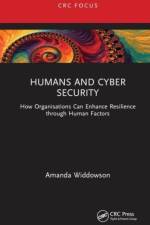
Humans and Cyber Security: How Organisations Can Enhance Resilience through Human Factors delivers an applied approach to capturing and mitigating the risk of the human element in cybersecurity and proposes that it is easier to change organisational practices than it is individual behaviour.
In applying an intersectional feminist legal analysis of the European Court of Human Rights' case law in a variety of human rights issues, this book reveals a different and nuanced understanding of the gender issues. This book will be of interest to researchers in the field of European human rights law, gender and intersectional issues.
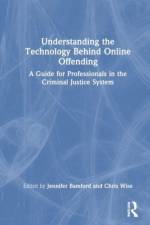
Understanding the Technology Behind Online Offending: A Guide for Professionals in the Criminal Justice System is a non-technical explanation of online offences by a cybersecurity expert, bridging the gap between the high-tech world of cybercrime and the non-technical professionals working within it.
This book traces the emergence of secularism as a way of ordering religion-state relations in colonial and post-colonial Northern Nigeria. The book draws on extensive research in six archival repositories on two continents to provide a novel and comprehensive historiography.
Biotechnology, Gestation, and the Law presents the first comprehensive ethico-legal analysis of the nature of gestation and of technologies enabling gestation, offering a concept analysis grounded in ontology, phenomenology, politics, and law.
This book highlights the intersection between international investment law and sustainable development, particularly in the context of the right to regulate for public interest related to sustainable development. It will be of interest to students and scholars of international investment law, economic law and sustainable development.
This book provides a comprehensive guide to consumer Alternative Dispute Resolution (ADRs) and the unconventional challenges they pose for emerging economies, aiming to advance their growth within developing nations. It will be of interest to researchers in the field of dispute resolution, consumer law and technology.
This book examines the role that intellectual property plays in fostering innovation within knowledge societies, with a focus on the role of emerging technologies such as Artificial Intelligence tools. It will appeal to researchers in the field of Intellectual Property Law, international law, business law and emerging technologies like AI.
This book examines the challenge of negotiating and implementing new legal regimes addressing contemporary oceans challenges in the context of uncertain planetary futures.
Originally published in 1988, Gangland evokes the high drama of the weeks in the autumn of 1952 when PC Sidney Miles was shot and the subsequent trial of Bentley and Craig. Now a proven miscarriage of justice this account lays out the facts of the case including the public hysteria and media frenzy at the time.
Originally published in 1988, Rotten to the Core? asks who was the real Neville Heath? The author deals with Heath the psychopath, but it also depicts the curious post-war society which allowed him to take root and to flourish, showing that Heath the confidence trickster - and murderer - was a man of his time.
Originally published in 1987, in this new approach to the case of William Joyce (Lord Haw-Haw), Francis Selwyn looks both at the career of Joyce, the Irish-American-cum-Fascist bully-boy, and the changing nature of treason, altered by the events of the Second World War.
Understanding the Technology Behind Online Offending: A Guide for Professionals in the Criminal Justice System is a non-technical explanation of online offences by a cybersecurity expert, bridging the gap between the high-tech world of cybercrime and the non-technical professionals working within it.
This book introduces a general theory of intellectual property (IP) law, highlighting its importance and relevance in addressing complex IP issues in the digital economy, which often intersect with competition law.
Abonner på vårt nyhetsbrev og få rabatter og inspirasjon til din neste leseopplevelse.
Ved å abonnere godtar du vår personvernerklæring.