





Gjør som tusenvis av andre bokelskere
Abonner på vårt nyhetsbrev og få rabatter og inspirasjon til din neste leseopplevelse.
Ved å abonnere godtar du vår personvernerklæring.Du kan når som helst melde deg av våre nyhetsbrev.

Volume 209 contains 2022 judgment on reparations of the International Court of Justice in Armed Activities on the Territory of the Congo (Democratic Republic of the Congo v. Uganda), decision of Philippines Supreme Court in Ocampo v. Enriquez, and judgment of the English High Court in Dynasty Company v. Kurdistan Regional Government of Iraq.
Professors Speak Out showcases the powerful stories of eighteen university professors from various fields and backgrounds, all of whom have been investigated by their academic institutions. These shocking narratives reflect the rising frequency and increasing absurdity of campus investigations, which often result from the expression of disfavored opinions that should be protected by inalienable free speech rights and longstanding principles of academic freedom. As the reader will learn, the investigation itself is often the punishment, though the process can inflict serious additional sanctions. Some contributors lost their jobs, while others have faced a variety of other unwarranted consequences. By providing a badly needed platform for persecuted voices in contemporary academia, this unique volume exposes the grave injustice that menaces faculty members today and calls into serious question the reprehensible bureaucratic processes that allow for such investigations. Taken together, the eighteen contributors show how a new campus McCarthyism is brutally assaulting academic freedom.
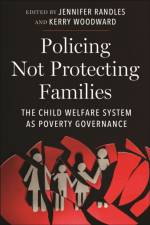
"Policing Not Providing: The Child Welfare System as Poverty Governance critically analyzes how the U.S. child welfare system surveils and polices poor families, especially poor Black and Native families, rather than meeting families' basic needs or protecting children from harm"--
Millets are highly nutrient-dense and are regarded as healthy foods, especially for the control of diabetes and mineral deficiencies. The lack of knowledge about millets nutritional importance and the difficulties of their preparation is one of the main causes of their decreasing demand. This book covers millet production, novel processing technologies, nutritional aspects, chemistry, product formulations and other more. It provides an overview of the most recent data on millets, including genome-editing techniques to improve millets potential and productivity, AI based smart breeding in unexplored millets for global food security.
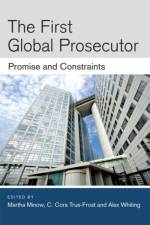
The establishment of the International Criminal Court (ICC) gave rise to the first permanent Office of the Prosecutor (OTP), with independent powers of investigation and prosecution. This volume of essays presents the first sustained examination of this unique office and offers a rare look into international justice.
The updated edition of this annual title remains the essential publication that no court practitioner can afford to be without. It includes straightforward coverage of new case law, current court procedure, criminal offences, sentencing and more to ensure you have a complete picture of the law.
Temporary Works Part Two: Further Principles of Design and Construction provides authoritative and comprehensive guidance on key areas of temporary works for practising engineers. Building on the successful format of Temporary Works: Principles of Design and Construction, the book provides 18 entirely new chapters.
Invoking Empire analyses local perceptions and impacts of imperial governance in Britain's settler colonies to explore the entanglement of imperialism and settler colonialism in the late nineteenth century. The book brings together nine case studies from settler and Indigenous communities across Canada, Australia, New Zealand, and South Africa to demonstrate the multiplicity of ways colonial subjects leveraged imperial authority in their everyday lives. Asking how and why colonial inhabitants attempted to co-opt imperial authority in diverse contexts ranging from an 1868 smallpox outbreak in British Columbia to the Bechuanaland Wars of 1882-85, Invoking Empire provides valuable microhistorical and comparative insights into the lived experiences of imperial political subjecthood during the transition to self-government in the settler colonies. Moreover, by critically assessing the failures of imperial citizenship to achieve tangible results, the book offers crucial insights into the complicity of British governments and publics in settler colonialism. Adopting an integrative approach that brings Indigenous and settler experiences together, Invoking Empire contributes a novel approach to imperial citizenship that captures the diverse cultural and political connotations of imperial connectivity. Additionally, the book's approach to settler colonialism as deeply entangled in imperial continuities contributes to ongoing efforts to reconceptualize national settler histories through a transnational lens. Through its deliberate attention to the complexity and indeterminacy of the late nineteenth century, Invoking Empire provides an essential window into to the messiness, the hopefulness, and the often times paradoxical nature of imperial subjecthood during a period of massive and consequential political changes.
Contemporary narratives of humanitarianism portray this field as distinct in its value-orientation and, subsequently, as cohesive and egalitarian. Although very diverse in their practices and mandates, all humanitarian actors position themselves as "do-gooders" who alleviate the suffering that others - the "bad" ones - have caused. Recent calls to decolonialise humanitarianism and scandals about racist and sexual abuses however reveal a more disturbing story: the one of a sector shaped by hierarchies, dominance patterns and power relationships. The many types of hierarchical relations in the humanitarian arena, leading to the inclusion of some actors into powerful circles and the exclusion of others from such circles, form the point of departure of this edited volume. The goal of this edited volume is to move away from the glossy images of the humanitarian gesture to analyse how hierarchies, power asymmetries and exclusion emerge, are maintained and can be ultimately challenged in the humanitarian arena. It does so by gathering leading scholars on humanitarianism coming from a variety of disciplinary fields such as international relations, philosophy, organizational science and management, and sociology. Contributors analyse exclusion dynamics at the individual, organizational and structural levels combining data from ethnography, historical analysis interviews, survey and statistical analysis. Hierarchies and exclusion not only analyses hierarchies in global governance but also inform current efforts to strengthen inclusiveness and equity in humanitarianism.
This book applies perspectives of hope to understand the precariousness, suffering and agency of people seeking asylum.
“A splendid narrative about political power and mercy.” —David Grann, #1 best-selling author of The Wager The power of the presidential pardon has our national attention now more than ever before. In The Pardon, New York Times bestselling author and CNN legal commentator Jeffrey Toobin provides a timely and compelling narrative of the most controversial presidential pardon in American history—Gerald Ford’s pardon of Richard Nixon, revealing the profound implications for our current political landscape, and how it is already affecting the legacies of both Presidents Biden and Trump.In this deeply reported book, Toobin explores why the Founding Fathers gave the power of pardon to the President and recreates the behind-the-scenes political melodrama during the tumultuous period around Nixon’s resignation. The story features a rich cast of characters, including Alexander Haig, Nixon’s last chief of staff, who pushed for the pardon, and a young Justice Department lawyer named Antonin Scalia, who provided the legal justification. Ford’s shocking decision to pardon Nixon was widely criticized at the time, yet it has since been reevaluated as a healing gesture for a divided country. But Toobin argues that Ford’s pardon was an unwise gift to an undeserving recipient and an unsettling political precedent. The Pardon explores those that followed: Jimmy Carter’s amnesty for Vietnam draft resisters, Bill Clinton’s pardon of Marc Rich, and the extraordinary story of Trump’s unprecedented pardons at the end of his first term. The Pardon is a must-read for anyone interested in American history, the complex dynamics of power within the highest office in the nation, and the implications of presidential mercy.
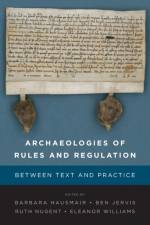
How can we study the impact of rules on the lives of past people using archaeological evidence? To answer this question, Archaeologies of Rules and Regulation presents case studies drawn from across Europe and the United States. Covering areas as diverse as the use of space in a nineteenth-century U.S. Army camp, the deposition of waste in medieval towns, the experiences of Swedish migrants to North America, the relationship between people and animals in Anglo-Saxon England, these case studies explore the use of archaeological evidence in understanding the relationship between rules, lived experience, and social identity.
Examines delisting - and the difficult questions it raises around investor protection - from the perspectives of the company, shareholders, trading venues, and supervisory authorities.
Insights and Practical Implications for Contracting Authorities and Suppliers]]>
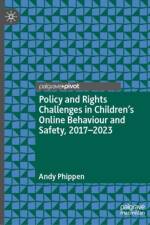
This book evidences the cyclical failures of online safety policy and challenge conventional policy and educational approaches to tackling online harms, and provide a robust argument for a critical, evidence-based approaches which align with the needs of those we claim to wish to protect. It argues for a move away from knee jerk, headline grabbing and subjective policy development. In drawing parallels from the drug policy world, contrasting the increasingly progressive and evidence based policy making in this space compared to prejudiced, emotive developments in online harms.Andy Phippen is Professor of Digital Rights at Bournemouth University, UK.
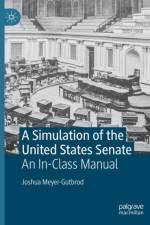
This book serves as a manual for students enrolled in semester-long US Senate simulations. The simulation tasks students with representing a particular state while inheriting a particular Senator's voting history. Students then engage with their peers to write, introduce, mark up, debate, and adopt legislation, within an environment where the instructional staff play the key roles of the House of Representatives, the President, the Press, and public interest groups. The manual and simulation experience are designed to supplement classes on Congress and the Presidency and the political process. Building on the innovation of experiential learning opportunities, this book facilitates the connection of complex theoretical concepts to real-world applications through student reflection.Joshua Meyer-Gutbrod is Teaching Faculty at the University of South Carolina.Meyer-Gutbrod makes a valuable contribution to political science pedagogy. This text will guide students through an open-ended simulation of the U.S. Senate. Meyer-Gutbrod's approach inspired my first attempt at incorporating simulation-based learning into my legislative politics course, and the result received rave reviews. I highly recommend to other instructors of legislative politics courses. - Frances Lee, Professor of Politics and Public Affairs, Princeton University
The first comprehensive account of the Trump administrations efforts to destroy our government institutions, by the man Ralph Nader says writes authoritatively and with revealing detail about important topics that few others coverTom McGarity writes authoritatively and with revealing detail about important topics that few others cover. Ralph NaderKoch Industries spent $3.1 million in the first three months of the Trump administration, largely to ensure confirmation of Scott Pruitt as head of the EPA. By July 2018, more than sixteen federal inquiries were pending into Pruitts mismanagement and corruption. But Pruitt was just the first in a long line of industry-friendly, incompetent, and destructive agency heads put in place by the Trump administration in its effort to dismantle the federal governments protective edifice.Remember Secretary of the Interior Ryan Zinke, who, before he faced eighteen separate federal inquiries and was fired, made a deal with Halliburton to build a brewery on land that Zinke owned in Montana? Or how about Transportation Secretary Elaine Chao, who rescinded requirements that high-hazard trains install special braking systems, weakened standards for storing natural gas, and lengthened the hours that truck drivers could be on the road without a break, even as she failed for two years to divest her interest in a road materials manufacturer? And then there were Rick Perry, Betsy DeVos, Sonny Perdue, Andrew Puzder . . . the list goes on.In an original and compelling argument, Thomas McGarity shows how adding populists to the Republicans traditional base of free market ideologues and establishment Republicans allowed Trump to come dangerously close to achieving his goal of demolishing the programs that Congress put in place over the course of many decades to protect consumers, workers, communities, children, and the environment. Finally, McGarity offers a blueprint for rebuilding the protective edifice and restoring the power of the American government to offer all Americans better lives.
Abonner på vårt nyhetsbrev og få rabatter og inspirasjon til din neste leseopplevelse.
Ved å abonnere godtar du vår personvernerklæring.