















Gjør som tusenvis av andre bokelskere
Abonner på vårt nyhetsbrev og få rabatter og inspirasjon til din neste leseopplevelse.
Ved å abonnere godtar du vår personvernerklæring.Du kan når som helst melde deg av våre nyhetsbrev.

A comprehensive resource that advances qualitative research in sport and physical culture, featuring global perspectives and cutting-edge methodologies.
Richard Lila Johnson, born November 7, 1928, was the sixth of the nine children of Rise Louis and Ellie Joanne Regions Johnson. Richard's siblings in the order of their birth were Julia Harvelia, Isobel, Willie Mae (she died at the age of five from pneumonia), Nettie, Mozelle, Louisa Lena, Jerry Willard and Marion Leslie.
This is an illustrated edition that includes illustrations, a summary, the author's biography, and a comprehensive list of characters.Dive into the groundbreaking world of psychoanalysis with Dream Psychology by Sigmund Freud. This classic work unravels the mysteries of the human subconscious, exploring how dreams reflect our deepest desires, fears, and thoughts. Freud, widely regarded as the father of psychoanalysis, provides profound insights into the interpretation of dreams, revealing their connection to our everyday lives and unconscious mind.This illustrated edition enriches your reading experience with visual aids that illuminate Freud's concepts, a concise summary for quick understanding, a detailed biography of Sigmund Freud, and a curated list of characters to guide you through his revolutionary theories.Perfect for students, enthusiasts of psychology, or anyone intrigued by the workings of the mind, this edition of Dream Psychology is a must-have for your collection. Unlock the secrets of your dreams and explore the depths of human consciousness like never before!
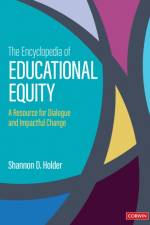
Unlock the language of educational equity to create meaningful change in schools.As educators, professors, policymakers, and advocates work to dismantle systemic barriers and advance equity in education, they must begin with a common understanding of the words that shape their actions. The Encyclopedia of Educational Equity offers over 650 carefully curated terms, concepts, and strategies essential for productive conversations about equity. This powerful tool will provide readers with a deep understanding of fundamental concepts in equity-like "color blindness," "gender expansive," and "meritocracy"-enabling them to identify challenges and craft solutions to improve educational outcomes for all. Key features include: Micro-Checks to reflect and interrogate personal beliefs Equity timeline notes embedded throughout, which provide essential historical context for many terms Supplemental resources including tips for bias-free language, a list of frequently misused terms, critical thinking prompts for professional learning communities (PLCs), and a guide to further reading Evidence-based strategies and best practices for achieving equity in education, interwoven throughout the text Whether you are a novice or a veteran, this encyclopedia is user-friendly and accessible to anyone working toward equity-from educators and students to administrators, researchers, and community advocates.
We have a glut of text and trade books on American history. But what we don't have is a compact, inexpensive, authoritative, and compulsively readable book that will offer to intelligent young Americans a coherent, persuasive, and inspiring narrative of their own country. Such an account will shape and deepen their sense of the land they inhabit, and by making them understand that land's roots, will equip them for the privileges and responsibilities of citizenship in American society, and provide them with a vivid and enduring sense of membership in one of the greatest enterprises in human history: the exciting, perilous, and immensely consequential story of their own country. The existing texts simply fail to tell that story with energy and conviction. They are more likely to reflect the skeptical outlook of specialized professional academic historians, an outlook that supports a fragmented and fractured view of modern American society, and that fails to convey to young people the greater arc of that history. Or they reflect the outlook of radical critics of American society, who seek to debunk the standard American narrative, and has an enormous, and largely negative, effect upon the teaching of American history in American high schools and colleges. This state of affairs cannot continue for long without producing serious consequences. A great nation needs and deserves a great and coherent narrative, as an expression of its own self-understanding: and it needs to convey that narrative to its young effectively. It perhaps goes without saying that such a narrative cannot be a fairy tale or a whitewash of the past; it will not be convincing if it is not truthful. But there is no necessary contradiction between an honest account and an inspiring one. This account seeks to provide both.
Abonner på vårt nyhetsbrev og få rabatter og inspirasjon til din neste leseopplevelse.
Ved å abonnere godtar du vår personvernerklæring.