







Gjør som tusenvis av andre bokelskere
Abonner på vårt nyhetsbrev og få rabatter og inspirasjon til din neste leseopplevelse.
Ved å abonnere godtar du vår personvernerklæring.Du kan når som helst melde deg av våre nyhetsbrev.

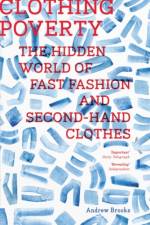
A gripping expose on the hidden global trade networks of the fast-fashion and clothing recycling industry.
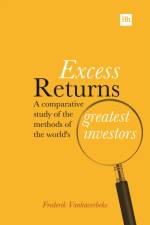
An analysis of the investment approach of the world's top investors, showing how to achieve market-beating returns. It is possible to beat the market. Taking this as a starting point, this book sets out to explore how exactly the most famous investors in the world have done it, year after year, sometimes by huge margins.
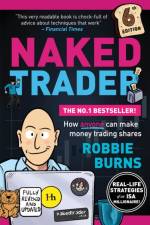
Suitable for anyone who wants to make money in the markets, this book focuses on stock market investing that you can actually enjoy, packed with real-life trading examples and full of candid advice. It gives you the lowdown on what you need to make money from markets without having to sit at a screen all day or swallow a financial dictionary.
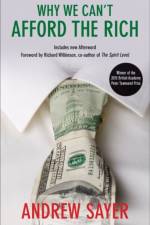
Why we can't afford the rich exposes the unjust and dysfunctional mechanisms that allow the top 1% to siphon off wealth produced by others. With an updated Afterword, Andrew Sayer shows how the rich worldwide have increased their ability to hide their wealth, create indebtedness and expand their political influence.
Is it a coincidence that the US witnessed a dramatic rise in household debt in the years before the recession - that the total amount of debt for American households doubled between 2000 and 2007 to $14 trillion? Definitely not. The authors reveal that excessive household debt leads to foreclosures and makes people spend less and save more.
Work: love it or hate it, it's an all-consuming part of our society, it's changing fast, and the impact on our working lives will be extraordinary.
Providing the necessary background information and hands-on tools to build compelling business cases, this book will increase the reader's capability to champion new business development ideas, take them to senior management, and facilitate the decision process by understanding the key theories and practices of finance and corporate investments.
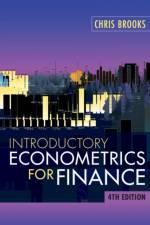
The only econometrics textbook written specifically for finance students with no prior knowledge of econometrics, including extensive online student support.
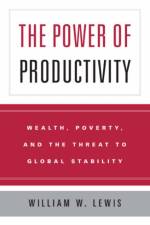
The disparity between rich and poor countries is the most serious, intractable problem facing the world. The author in this book draws on extensive microeconomic studies of thirteen nations - conducted over twelve years by the Institute itself - to counter virtually all prevailing wisdom about how best to ameliorate economic disparity.
Why do Ghanaians suppress the history of enslavement? And why is this history expressed so differently on the other side of the Atlantic? This book tackles these questions by analyzing the slave trade's absence from public versions of coastal Ghanaian family and community histories, and its troubled presentation in the country's classrooms.
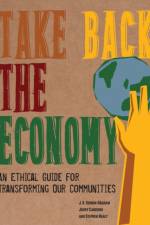
Take Back the Economy dismantles the idea that the economy is separate from us and best comprehended by experts, demonstrating that the economy is the outcome of the decisions and efforts we make every day. Full of exercises and inspiring examples from around the world, it shows how people can implement small-scale changes in their own lives to create ethical economies.
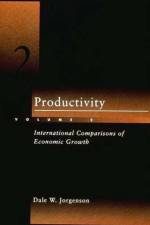
This second volume of "Productivity" focuses on comparisons among industrialized countries. Although Germany and Japan are often portrayed as economic adversaries of the US, post-war experiences in these countries support policies that give priority to stimulating and rewarding capital formation.
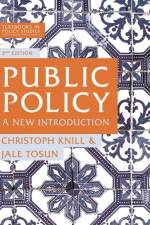
In this major new text, Christoph Knill and Jale Tosun provide an engaging introduction to the theory and practice of public policy analysis and to the changing nature of the policy process. The book examines the key approaches and methods of public policy analysis and shows how these can inform public policy choices.
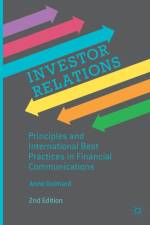
This practical guide on the theory and practice of Investor Relations combines the art and science of marketing, financial analysis, and financial communications in a single source. It offers expert advice and helpful tips to be used in real business life by corporate executives, financial analysts, students, and anyone competing for capital.
The book provides an ideal introduction to the subject of environmental economics. Part one explains the fundamental economic concepts, using examples from all over the world. Part two uses these concepts in understanding and developing policy responses to some of the major environmental issues of our time.
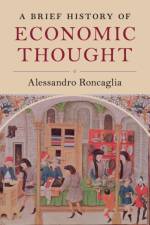
This book is a clear and concise introduction to the history of economic thought. An updated adaption of the author's award-winning book, The Wealth of Ideas, it is suited both to undergraduate and graduate students studying the history of economic thought, and to general readers interested in economics.
This volume explores how contemporary governments, particularly in settler nations such as Australia and the United States, deflect social responsibility for the crushing harms experienced by communities living at the margins.
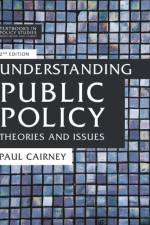
A major new introduction to theories of public policy. The author provides an accessible assessment of a wide range of theories and models from policy cycles, policy transfer, rational choice and socio-economic explanations to multi-level governance, advocacy coalitions and punctuated equilibrium and of their value to policy analysis.
An engaging, thought-provoking and accessible look at economics, equality and the mess we're in now
Suitable for exams from September 2017 until August 2018
The big economic story of our times is not the Great Recession. It is how China and India began to embrace neoliberal ideas of economics and attributed a sense of dignity and liberty to the bourgeoisie they had denied for so long. This book discusses seventeenth- and eighteenth-century Europe to reconsider the birth of the Industrial Revolution.
Using an economic toolkit, Doing Bad by Doing Good explains why humanitarian efforts that intend to alleviate human suffering fail to succeed, and often cause more harm than good.
The second edition of this acclaimed book has been brought completely up to date to reflect the rapid movement of events related to climate change. It provides an integrated treatment of the science, economics, policy, and politics of climate change, for the educated non-specialist, and courses in environmental policy or climate change.
Present economics as an objective science free from value judgements; that settles disputes by testing hypotheses; that applies a pre-determined body of principles; and contains policy prescriptions supported by a consensus of professional opinion. It shows how real economics is much more interesting than most economists are willing to let on.
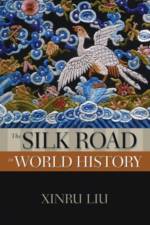
The ancient trade routes that made up the Silk Road were some of the great conduits of cultural and material exchange in world history. In this intriguing book, Xinru Liu reveals both why and how this long-distance trade in luxury goods emerged in the late third century BCE, following its story through to the Mongol conquest.
Payment systems are changing profoundly through regulation, technology and competition from new entrants. This is a comprehensive introduction and reference on payment systems, covering their structure, international systems and settlements, and focusing on electronic transfers. Concludes with the future of the payments business.
This book integrates violence into a larger framework, showing how economic and political behavior are closely linked. In most societies, which we call natural states, the polity limits violence by manipulating the economy, creating privileges. In contrast, modern societies create open access to economic and political organizations, fostering political and economic competition.
In this dramatic narrative of Europe's economic rise and spectacular fall, Yanis Varoufakis, former finance minister of Greece, `the emerging rock star of Europe's anti-austerity uprising' (Telegraph), shows that the origins of the collapse go far deeper than our leaders are prepared to admit - and that we have done nothing so far to fix them.
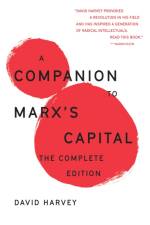
Offers interpretations of Marx's most famous work, "Capital".
Abonner på vårt nyhetsbrev og få rabatter og inspirasjon til din neste leseopplevelse.
Ved å abonnere godtar du vår personvernerklæring.