



















Gjør som tusenvis av andre bokelskere
Abonner på vårt nyhetsbrev og få rabatter og inspirasjon til din neste leseopplevelse.
Ved å abonnere godtar du vår personvernerklæring.Du kan når som helst melde deg av våre nyhetsbrev.

This book sheds light on the status of tribal communities in Central India with respect to livelihoods, agriculture, natural resources, economy, and migration.
How the UK's immigration detention and deportation system turns people into monetized, measurable units on a supply chain In the UK's fully outsourced "immigration detainee escorting system," private sector security employees detain, circulate and deport foreign national citizens. Run and organized like a supply chain, this system dehumanises those who are detained and deported, treating them as if they were packages to be moved from place to place and relying on poorly paid, minimally trained staff to do so. In Supply Chain Justice, Mary Bosworth offers the first empirically grounded, scholarly analysis of the British detention and deportation system. Drawing on four years of extensive ethnographic research, Bosworth examines what keeps the system in place and whether it might be effectively challenged. Told by a senior manager that "this is a logistics business," Bosworth documents how the public and private sectors have built a supply chain in which people's humanity is transformed both symbolically and tangibly through administrative processes and bureaucracy into monetized, measurable units. Like all logistics, the system has failure built into it. The contract does not seek to eradicate risk but rather to manage it, determining responsibility and apportioning a financial value to such "failures" as delay, escape, aborted flight or death in custody. Front-line workers and managers depoliticise and normalise their efforts by casting their duties in familiar bureaucratic terms, with targets, "service level agreements" and "key performance indicators." Focusing on first-hand accounts from workers and lengthy observation and document analysis, Bosworth explores the impact of border logistics in order to ask what it would it take to build inclusive infrastructures rather than those designed to exclude.
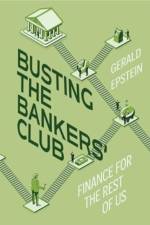
An eye-opening account of the failures of our financial system, the sources of its staying power, and the path to meaningful economic reform. Bankers brought the global economic system to its knees in 2007 and nearly did the same in 2020. Both times, the US government bailed out the banks and left them in control. How can we end this cycle of trillion-dollar bailouts and make finance work for the rest of us? Busting the Bankers' Club confronts the powerful people and institutions that benefit from our broken financial system-and the struggle to create an alternative. Drawing from decades of research on the history, economics, and politics of banking, economist Gerald Epstein shows that any meaningful reform will require breaking up this club of politicians, economists, lawyers, and CEOs who sustain the status quo. Thankfully, there are thousands of activists, experts, and public officials who are working to do just that. Clear-eyed and hopeful, Busting the Bankers' Club centers the individuals and groups fighting for a financial system that will better serve the needs of the marginalized and support important transitions to a greener, fairer economy.
This groundbreaking resource moves us from theory to action with a practical plan for reparations. A surge in interest in black reparations is taking place in America on a scale not seen since the Reconstruction Era. The Black Reparations Project gathers an accomplished interdisciplinary team of scholars-members of the Reparations Planning Committee-who have considered the issues pertinent to making reparations happen. This book will be an essential resource in the national conversation going forward. The first section of The Black Reparations Project crystallizes the rationale for reparations, cataloguing centuries of racial repression, discrimination, violence, mass incarceration, and the immense black-white wealth gap. Drawing on the contributors' expertise in economics, history, law, public policy, public health, and education, the second section unfurls direct guidance for building and implementing a reparations program, including draft legislation that addresses how the program should be financed and how claimants can be identified and compensated. Rigorous and comprehensive, The Black Reparations Project will motivate, guide, and speed the final leg of the journey for justice.
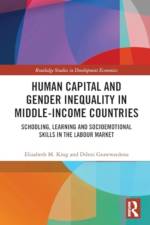
Using comparable survey data on these schooling, skills, and labour market outcomes from 13 developing and emerging economies worldwide, this book revisits human capital and gender inequality models. It presents new estimates of the returns to different levels of schooling as well as the cognitive and socioemotional skills for women and men.
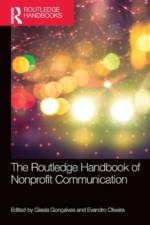
This handbook brings together multidisciplinary and internationally diverse contributors to provide an overview of theory, research, and practice in the nonprofit and nongovernmental organization (NGO) communication field.
This book investigates how borders in former Soviet Union territories have evolved and shifted in the thirty years since the end of the Cold War. It will be of interest to researchers across border studies, politics, geography, social anthropology, history, Eastern European Studies, Central Asian Studies, and Caucasian Studies.
Organizational Cognition takes the perspective of cognition as distributed in the sense that it needs tools, artifacts, objects, and other external entities to allow the brain to operate properly and applies it to the organization by introducing a model that defines the elements that allow cognition to work.
This book examines the progress and reception of China's Belt and Road Initiative (BRI) in key subregions of Asia, Africa and Europe.
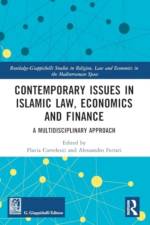
This book explores how Islam can impact the structures and performance of firms, financial institutions and capital markets across various countries and industries. A multidisciplinary approach, including the theological, legal and geopolitical framework, offers a comprehensive view of Islamic financial tools, contracts and business opportunities.
Patients have always been encouraged to be active participants in managing their health. New technologies, cultural shifts, trends in healthcare delivery, and policies have brought the patients' role in healthcare to the forefront. This volume provides a theoretical and methodological foundation for the emerging discipline of Patient Ergonomics.
Patients have always been encouraged to be active participants in managing their health. New technologies, cultural shifts, trends in healthcare delivery, and policies have brought the patients' role in health care to the forefront. This volume closely examines notable application areas for the emerging discipline of Patient Ergonomics.
This book examines urban planning and infrastructure development in Japanese cities after the second world war as a way to mitigate the risks of disasters while pursuing sustainable development. It will be of interest to scholars in city development and planning, urban studies and human geography.
This handbook brings together diverse perspectives, major topics and multiple approaches to one of the biggest legal institutions in society: property.
This book analyses how the users of these social networks, especially those of YouTube and Instagram, become content prescribers, opinion leaders and, by extension, people of influence.
Taxes. Why do we pay them? What benefits do they bring? What damage do they cause? And how could they work better? Here, author Eamonn Butler provides a jargon-free guide to taxation, its history, its aims and purposes, and its impact on individuals and economies.
In this book, he has collected his writings from 1989 to the present day to provide an overview of the Indian economy from when liberalization started to where it has reached.
A bold plan for the United States to regain the lead in infrastructure development through privatization and public-private partnershipsAmerica's infrastructure-its essential roads, bridges, ports, airports, power grids, and telecommunications systems-were once the pride of the nation and an example for the world. But now, after years of neglect and oversight, this infrastructure is crumbling and causing catastrophic changes in the US quality of life. Build seeks to explain how American infrastructure collapsed and what can be done to repair it. In a series of colorful, rarely told cases, Build takes readers on a revealing tour behind the scenes of the successes and debacles of key infrastructure projects to show what works, why the United States has failed in recent decades to invest in infrastructure, and how the private sector can help revitalize the sector, spur job growth, and contribute to climate resilience. Sadek Wahba examines the private origins of US infrastructure and the federally funded megaprojects that came after the New Deal, investigating the role the private sector can and should play in building infrastructure. By drawing comparisons with systems in the United Kingdom, France, India, and China, Wahba shows that while privatization and public-private partnerships cannot solve all infrastructure challenges, they are essential for closing funding gaps, overcoming political paralysis, and driving major infrastructure advances. Build will appeal to readers interested in public finance, domestic policy, the role of the federal government, tax policy, and urban affairs.
This book shows that there were key points of convergence and divergence in the past between the United States and Canada that explain current differences in labor-management conflict and interaction in the two countries.
Postcolonial Transition and Global Business History is the first in-depth historical study on how British firms sought to adapt over several decades to rapid political and economic transformation in West Africa.
In light of the increasing levels of innovation being experienced in society around us, Creativity, Innovation and the Fourth Industrial Revolution: The da Vinci Strategy offers an organizational theory that can be applied in the Fourth Industrial Revolution.
Abonner på vårt nyhetsbrev og få rabatter og inspirasjon til din neste leseopplevelse.
Ved å abonnere godtar du vår personvernerklæring.