

























Gjør som tusenvis av andre bokelskere
Abonner på vårt nyhetsbrev og få rabatter og inspirasjon til din neste leseopplevelse.
Ved å abonnere godtar du vår personvernerklæring.Du kan når som helst melde deg av våre nyhetsbrev.

The book examines the role of market and technical knowledge integration in creating innovation and superior business performance of R&D intensive companies. Providing a new approach to this topic, it considers current R&D intensive companies' ways of functioning based on qualitative and quantitative research.
This textbook provides the foundation for a course that takes PhD students in empirical accounting research from the very basics of statistics, data analysis, and causal inference up to the point at which they conduct their own research.
This book develops a theory of direct contestation that explains the varying distributive consequences of the conflicts that entangle many firms.
This book discusses the impact of the Covid-19 pandemic and the Russian invasion of Ukraine on the European Union's climate and energy policy.
Experts from the natural and social sciences examine the coexistence of productive and exploitative behavior strategies observable in many species at many levels. In the natural world, some agents (investors) employ strategies that provide resources, services, or information, while others (exploiters) gain advantages through these efforts. This behavior coexists and can be observed in many species and at many levels. For example, bacteria depend on the existence of biofilms to synthesize constituent proteins; cancerous cells employ angiogenesis to feed a tumor; and parents forgo vaccinating their children yet benefit from herd immunity. Two independent research traditions have developed to analyze this behavior--one couched in evolutionary theory championed by behavioral ecologists, the other in social science concepts advocated by economists. In this book experts from economics, evolutionary biology, behavioral ecology, public health, and anthropology look for commonalities in understanding and approach. The contributors consider parasitic strategies in ecological and economic terms; the governance of natural resources, with insights from "producer-scrounger models," forest management, and game theory; human health, discussing therapeutic opportunities, public health economics, and the integration of perspectives; and behavioral, social, and institutional consequences of exploitation strategies. Contributors Michal Arbilly, Zoltán Barta, Jan Börner, Sam P. Brown, Max Burton-Chellew, Juan Camilo Cardenas, Sasha R. X. Dall, Miguel dos Santos, Frédérique Dubois, Paul W. Ewald, Gigi Foster, Paul Frijters, Luc-Alain Giraldeau, Ben Greiner, Reem Hajjar, Philipp Heeb, Markus Herrmann, Tatsuya Kameda, Alex Kacelnik, Kiryl Khalmetski, Andrew J. King, Hanna Kokko, Michael Kosfeld, Wolfgang Leininger, Arnem Lotem, Kimberley J. Mathot, John M. McNamara, Friederike Mengel, Johan A. Oldekop, Daniel Pauly, Benjamin Roche, Devesh Rustagi, William J. Sutherland, Frédéric Thomas, Thomas J. Valone, Joël van der Weele, Björn Vollan, Claus Wedekind, Bruce Winterhalder
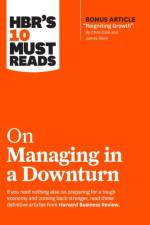
A collection of 10 practical, direct HBR magazine articles giving leaders and managers the ideas and inspiration they need to lead their companies (and themselves) through a downturn, recession, or crisis.Get your company ready before a recession strikes.Stay resilient.Learn the right lessons from previous recessions.Minimize pain while cutting costs and jobs.Pull off big deals in a down market.Avoid a culture of pessimism.Protect your own job.Seize the opportunity to innovate and reinvent your business.Lead the turnaround and return to growth.Audience: Leaders and managers at all level looking for ideas, inspiration, and tools to lead their companies--and themselves--through a downturn.
Reconstructs coastal trading patterns and the lives of the merchants, mariners and craftspeople that underpinned them.
This volume examines sustainable finance, green tourism, green marketing as a tributary towards sustainable development. The multidisciplinary chapters traverse the power of economic as well as financial policy, green investment, green insurance as well as green infrastructural development to ensure sustainable development.
Charles Chatterjee delves into the multifaceted realm of rural marketing and its impact on national advancement.
Takes a unique approach to exploring the efficient management of resources in the era of resource depletion due to climate changes and business expansion, in conjunction with considering the multiple dimensions of India-European Union cooperation.
Provides an introduction to and overview of cyber security in e-services and e-governance systems. The volume presents and discusses the most recent innovations, trends, and concerns as well as the practical challenges encountered and solutions adopted in the fields of security and e-services.
Explores how companies integrate social and environmental concerns in their business operations and in their interactions with their stakeholders. It discusses employee quality of life, globalization, industry sustainability, environmental accountability, education, empowerment of women, more.
This book is highly recommended for use by postgraduate-level students and researchers in the socioeconomic and socio-behavioral fields. The book introduces novice researchers to commonly used econometric and statistical methods of data analysis. The methods covered in the book are commonly used for performing quantitative and qualitative data analyses in socioeconomic, demographic, public-health and socio-behavioral studies. The book is especially helpful to learners who wish to acquire basic skills in quantitative and qualitative data analysis by using statistical packages such as SPSS and STATA. Theoretical principles are outlined, followed by easy numerical examples, along with steps that need to be followed for performing data analyses and interpreting results obtained from data analyses. The book has two aspects (quantitative and qualitative data analyses). As part of the quantitative aspect, the book stipulates theoretical principles, steps needed for data analysis, and the interpretation of results of data analyses. The book provides easy examples to follow on how to use the American Psychological Association (APA) citation-and-referencing style. Examples are provided for journal articles, books, and Internet-based reports and sources of information. A sample proposal, a questionnaire of study, and a list of interview questions are provided for learners to follow. These documents are custom-made to requirements that apply to postgraduate-level studies at Tshwane University of Technology. The book also provides steps on how to use appropriate goodness-of-fit tests for all procedures of quantitative and qualitative data analysis. Such tests are required for assessing the theoretical reliability of fitted models. As part of the qualitative aspect, the book provides learners a practical example of thematic analysis, which is a commonly used method of qualitative data analysis. The book enables learners to write research proposals and perform quantitative and qualitative methods of data analysis. Raw data sets are used for illustrating theoretical principles. The book performs the analyses of raw data sets in the statistical packages SPSS and STATA. Easy steps that need to be followed by learners are outlined and provided in all parts of the book.
Abonner på vårt nyhetsbrev og få rabatter og inspirasjon til din neste leseopplevelse.
Ved å abonnere godtar du vår personvernerklæring.