











Gjør som tusenvis av andre bokelskere
Abonner på vårt nyhetsbrev og få rabatter og inspirasjon til din neste leseopplevelse.
Ved å abonnere godtar du vår personvernerklæring.Du kan når som helst melde deg av våre nyhetsbrev.

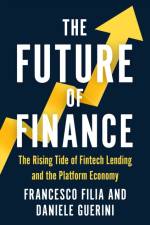
Over the past thirty years, technology has dramatically and irreversibly changed the world. The Future of Finance looks ahead to discover how this revolution is changing fintech and the face of finance forever.
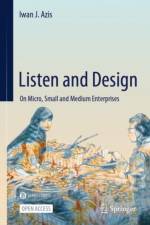
This open access book thoroughly investigates the domain of policy design tailored specifically for micro, small, and medium enterprises (MSMEs) with a central emphasis on harmonizing these policies with the preexisting social capital inherent to these enterprises, consistent with the mandate of Bank Indonesia to guard price stability and to promote financial stability, inclusive, and sustainable growth."Professor Iwan Jaya Azis has made yet another substantial and original contribution to the literature on economic development ... This study, on micro, small and medium enterprises (MSMEs), is a continuation of his life-long professional career, to focus on key development and policy issues. ... advocates an approach to listen, that is, to talk to the actors in a variety of economic and ecological settings, and to design policies accordingly. All too often, this seemingly obvious methodology has been ignored in favor of a top-down approach." (Hal Hill, H.W. Arndt Professor Emeritus of the Southeast Asian Economies, Crawford School, Australian National University)"Iwan Azis's "Listen and Design" is another great new book of his ... building on its predecessor "Periphery and Small Ones Matter", it shows that the success of policy programs requires understanding the prevailing social capital ... To do this requires listening to MSMEs so as to "align the preferences of enterprises and policy makers." ... This is the third, great contribution of Iwan Azis book for all development economists and policy makers." (Ludger Schuknecht, Former German Federal Ministry of Finance, ex-OECD Deputy Secretary-General, and currently Vice President and Corporate Secretary of the Asian Infrastructure Investment Bank (AIIB))"The role of micro, small, and medium enterprises is crucial in contributing to the development process. Early in the structural transformation, these enterprises are in the informal sector and gradually move into the formal sector as they learn more efficient business practices. The important contribution of this book is that it successfully searches for policies that can speed up this process and make these enterprises more efficient and productive. The methodology used by the author is original. ... This book deserves to be read by researchers and policymakers interested in micro enterprises." (Erik Thorbecke, H.E. Babcock Professor of Economics (Emeritus), Cornell University)"There have been many analyses and studies on MSMEs, but Iwan Azis' book tops them all in terms of evidence base, innovative approach with the AHP and ANP methodology something the author has worked for decades, and most of all written with the heart by recognizing that people are at the center of development and the importance of social capital ... This is an incredible reference for all stakeholders from governments, networks of MSMEs, facilitators, and all those who care about people and community centered development." (Mari E Pangestu, Former Trade Minister of Indonesia and Managing Director of Development Policy and Partnerships, World Bank)
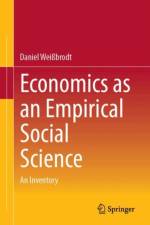
Economics still adheres entirely unreflectively to a mechanistic worldview and machine thinking. Epistemologically, it thus remains in the 19th century, and its assumptions and theories, methods, and models therefore stand in stark contradiction to the findings of all other social and natural sciences as well as a multitude of empirical facts.Through a discourse-analytical examination of sixteen basic concepts in economics, based on twelve standard economics textbooks, their ideahistorical origin and use are worked out and compared and related to the current state of knowledge of other disciplines. This reveals the structural, methodological, and content errors of economics in a clear manner.Especially for critical students, who have long been demanding an economics that is in line with the current state of research and faces the challenges of the 21st century, this opens up the possibility of a new approach to economics.The Content Discourse-analytical examination of fundamental assumptions and concepts of economics from "labor" to "wealth" Structural, methodological, and content critique of economic thinking from an epistemological perspective Critical examination of the use of empirical and statistical data, the method of gaining knowledge, and the model thinking in economics
"Carl Strikwerda's searching account of the collapse of the informal global order before the Great War and the reconstruction of a rules-based order after 1945 is of great importance in understanding how we have arrived at the present, and how we might respond in the future." -Martin Daunton, Emeritus Professor of Economic History, University of Cambridge"A perfect mastery of historical detail side-by-side with thorough familiarity of political theory have shaped this book into what will no doubt become a modern classic."-Gerd-Rainer Horn, Professor of Political History, Ecole des Sciences Politiques" A persuasive and timely reconsideration of the most important events of the last century." -Craig N. Murphy, Betty Freyhof Johnson '44 Professor Emeritus, Wellesley College"Carl Strikwerda reminds us brilliantly of the epochal impact of the First World War on the formation of the global order in the second half of the twentieth century."-Guy Vanthemsche, Professor of History Emeritus, Free University Brussels (VUB)This book offers a new interpretation of the origins of the contemporary global order - the set of institutions and international practices created by the USA and its allies after the Second World War. Previous interpretations have argued that the USA played the predominant role in creating the global order to fight the Cold War against the Soviet Union. The author argues that a broader perspective is necessary to understand both the origins of the global order, and its ongoing tensions up until today, a perspective that includes the legacy of both world wars, the role of imperialism, and the alternative strategy of globally oriented economic blocs. The cooperative tradition in the founding of the global order and the contributions of nations besides the USA provides useful insights for those interested in the current global order and the challenges it faces from Russia and China.Carl J. Strikwerda has served as a historical consultant to the National World War One Museum in the USA, taught at the University of California, Riverside; the University of Kansas; and the College of William and Mary, and served as both President and Professor of History at Elizabethtown College.
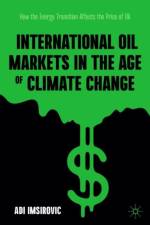
The oil industry is set to change dramatically over the next decade with oil consumption needing to drop substantially to achieve the goals of the Paris Agreement. Yet oil will be needed for many more years and oil markets will continue to be important.This book explores the impact of the energy transition on oil markets and the ways in which the producing countries, companies, crude oil values and benchmarks may change. It sets out the ways in which changes to the oil markets and prices resulting from the energy transition can be mitigated and managed, and will be relevant to professionals working within oil markets and policymakers interested in the energy transition.
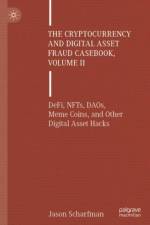
Cryptocurrencies and digital assets have continued to gain widespread acceptance from both retail and institutional investors. As part of this continued growth, there has been an unfortunate series of ongoing and increasingly sophisticated frauds, Ponzi schemes, and hacks that have cost investors billions of dollars. Since the publication of the original Cryptocurrency and Digital Asset Fraud Casebook, conservative estimates indicate that there have been thousands of new digital asset fraud cases that have contributed to billions in broadening losses in space. Beyond the digital asset space, cryptocurrency-related scams also continue to present increasingly meaningful threats to traditional finance institutions, the global economy, and national security, as well.These new challenges, combined with the ongoing evolving regulatory environment for digital assets, create an environment where there is a continued need for the up-to-date information and analysis of real-world case studies. It includes an up-to-date analysis of recent case studies in cryptocurrency and digital asset fraud alongside an analysis of recent decentralized finance (DeFi) hacks, smart contract attacks, and rug pulls. This book reviews the impact of digital asset bankruptcies, the FTX fraud, and the industry-wide post-FTX fallout on the growth of cryptocurrency fraud. It also examines the explosive growth of cryptocurrency romance scams, pig butchering, and related organized crime money laundering efforts and includes a related exclusive case study. Offering an in-depth examination of digital asset frauds in the gaming, metaverse, and NFT spaces, it also covers Decentralized Autonomous Organization (DAO) fraud, smart contract attacks, dApp scams, crypto asset manager investment fraud, mining fraud, honeypots, meme coins, and artificial intelligence-based digital asset fraud. Leveraging the author¿s experience analyzing and implementing compliance and operations best practices with a variety of cryptocurrency and digital asset projects and consulting with international regulators on blockchain and digital asset policy, this book will be of interest to those working throughout the cryptocurrency and digital asset space including Web 3.0 builders and service providers including lawyers, auditors, blockchain infrastructure, regulators, governments, retail investors, and institutional investors.
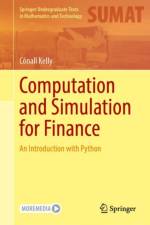
This book offers an up-to-date introductory treatment of computational techniques applied to problems in finance, placing issues such as numerical stability, convergence and error analysis in both deterministic and stochastic settings at its core.The first part provides a welcoming but nonetheless rigorous introduction to the fundamental theory of option pricing, including European, American, and exotic options along with their hedge parameters, and combines a clear treatment of the mathematical framework with practical worked examples in Python. The second part explores the main computational methods for valuing options within the Black-Scholes framework: lattice, Monte Carlo, and finite difference methods. The third and final part covers advanced topics for the simulation of financial processes beyond the standard Black-Scholes setting. Techniques for the analysis and simulation of multidimensional financial data, including copulas, are covered and will be of interest to those studying machine learning for finance. There is also an in-depth treatment of exact and approximate sampling methods for stochastic differential equation models of interest rates and volatilities.Written for advanced undergraduate and masters-level courses, the book assumes some exposure to core mathematical topics such as linear algebra, ordinary differential equations, multivariate calculus, probability, and statistics at an undergraduate level. While familiarity with Python is not required, readers should be comfortable with basic programming constructs such as variables, loops, and conditional statements.
Wirecard was the largest economic scandal in the history of Germany. Following the collapse of Wirecard, numerous lawsuits, both criminal and civil by equity and debt investors, were filed not only against Wirecard but also against the auditor Ernst & Young. This book demonstrates that a proper audit in accordance with the auditing standards would have uncovered the fraud much earlier, and details what went wrong. The book first deals with the fundamentals of auditing and examines the Wirecard business models from a legal and economic perspective. Then, the book deals with the fiduciary structure, which there has been often debated. When the fraud was uncovered, it became clear that 1.9 billion Euros that were supposed to be in escrow accounts were not. The book discusses the balance sheet mapping in detail, including the related audit requirements and examines in which balance sheet item the amounts (allegedly) in escrow accounts should have been reported, before examining and weighing the corresponding income statement items. In each chapter, not only are the accounting requirements presented, but the requirements for audit measures based on the respective Standards on Auditing are highlighted and explained in detail. The book places the requirements for reporting in the context of the Wirecard case, and will be of interest to accountants, auditors, market regulators, and credit risk analysts alongside students of accounting/auditing.
Trying to understand your charity's finances is enough to keepyou awake at night. This no-nonsense guide unpacks the jargon, the processes and the systems that makes the world of charity finance such a tricky one to navigate.
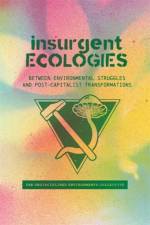
A unique collection of stories about how movements against environmental and climate injustice globally converge into broader struggles for overcoming the racist, patriarchal and colonial structures of global capitalism while creating worlds of life, dignity and justice.
This book offers the first richly layered and contextualized history of the famed 'Solow model' between the 1930s and the 1960s. Attending to the concrete sides of economic abstractions, it provides an accessible account of the forms of knowledge that shaped the predominant notion of 'economic growth' and its discontents.
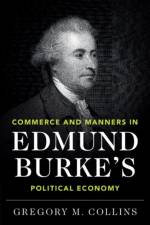
This book examines the economic thought of Edmund Burke. By exploring Burke's understanding of the relation between commerce and manners, it raises timely ethical questions about capitalism and its limits relevant to contemporary debates over neoliberalism and globalization.
The Adam Smith Review is a rigorously refereed annual review that provides a unique forum for interdisciplinary debate on all aspects of Adam Smith's works, his place in history, and the significance of his writings to the modern world.
Prior to this book being originally published in 1992, the study of industrial economics had been dominated by the USA. This collection of essays looks at the market behaviour of an economy more open to international competition: Sweden.
Employing the intellectual migration analytical framework, this book examines the dynamics of student and professional migration. Chapters in this book investigate how key notions of the intellectual migration framework - intellectual capital, nodes, gateways, and peripheries - affect the spatial and social mobilities of migrants.
Originally published in 1988, this study focusses on international economic integration in relation to the passenger car industry and market in the West-European car-making countries, Germany, France, Italy, Sweden and the UK in the second half of the 20th Century.
The primary purpose of this book is to close gaps in the understanding of Organisational Ambidexterity Implementation (OAI) and its relationship with Organisational performance. It identifies key components crucial for successful OAI, including dynamic capabilities, organisational culture, organizational design and market orientation.
Drawing on contributions from nineteen prominent scholars, the book reflects on the quest for sustainable development as a source of competitive advantage for organizations and as a global imperative for society. The chapters in this book were originally published in International Studies of Management & Organization.
This book examines the cultural relations between the Spanish and Austrian Habsburg monarchies in the seventeenth century and explores the central role of transnational aristocratic networks in cultural transfer processes between Spain and Central Europe.
This book is a comprehensive guide to alternative financing methods, offering insights into emerging trends, the role of FinTech, and the intersection of finance with sustainability, innovation, and entrepreneurship. It explores innovative financing channels which have become crucial for startups and businesses.
Takahashi reconstructs the key blocks of one of the founders of the Institutional school, John R. Commons' theories of the evolution of capitalism and of institutional change by taking the concept of transaction as a central point of departure. It will interest researchers of institutional economics, political economy, heterodox economics.
Abonner på vårt nyhetsbrev og få rabatter og inspirasjon til din neste leseopplevelse.
Ved å abonnere godtar du vår personvernerklæring.