








Gjør som tusenvis av andre bokelskere
Abonner på vårt nyhetsbrev og få rabatter og inspirasjon til din neste leseopplevelse.
Ved å abonnere godtar du vår personvernerklæring.Du kan når som helst melde deg av våre nyhetsbrev.

"The Price of Climate Change: Sustainable Financial Mechanisms presents a summary of the effects of global warming with specific emphasis on what these phenomena will cost and the price we must pay for trying to mitigate these processes. Some of these mitigation strategies include reducing our use of carbon by converting to non-carbon energy sources such as solar, wind, and nuclear, or lower-carbon sources such as natural gas. The book examines the financial implications of society adapting to the effects of climate change, including rising sea levels, extreme weather events, and desertification. Further, it addresses the costs to make buildings more resilient to climate change, such as flood considerations, improving durability against severe weather, bolstering insulation, and more. Sources of funding for any type of environmental projects, including those for climate change mitigation, are also examined. These include governmental budgets at the federal, state, and local levels, international development banks, international capital markets, and private funds. Features: Addresses global climate change issues from the standpoints of mitigation, adaptation, and resilience- and the funding mechanisms for each. Describes different types of energy sources as well as their respective costs, including nuclear, solar, natural gas, and more. Examines the effects of agriculture on climate change as well as the potential ways it can be used to help mitigate the issue. The book's straightforward approach will serve as a useful guide and reference for practicing professionals and can also be appreciated by the general public interested in climate change issues and mitigation strategies"--
This textbook offers a detailed account of analytical models used to solve complex supply chain problems. It introduces a unique risk analysis framework that helps the reader understand the sources of uncertainties and use appropriate models to improve decisions in supply chains. This framework illustrates the complete supply chain for a product and demonstrates the supply chain's exposure to demand, supply, inventory, and financial risks. Step by step, this book provides a detailed examination of analytical methods that optimize operational decisions under different types of uncertainty. It discusses stochastic inventory models, introduces uncertainty modeling methods, and explains methods for managing uncertainty. To help readers deepen their understanding, it includes access to various supplementary material including an online interactive tool in Python.This book is intended for undergraduate and graduate students of supply chain managementwith a focus on supply chain analytics. It also prepares practitioners to make better decisions in this field.
Blockchain technologies have been rapidly adopted for the creation of cryptocurrencies and have been explored for a myriad of applications. While this is of important economic interest, the computer science behind how blockchains operate to provide security and provenance has been largely inaccessible to economists. This book is a bridge between the computer science and the economics of blockchains.The focus is on the value and the achievement of blockchain consensus; that is, how distributed and independent nodes are able to reach an agreement on what the current state of digital ledgers, that are the product of blockchains, are. The book shows that the goals of computer scientists in designing blockchains place very high weight on security beyond what an economist trained in game theory and mechanism design would require. It shows how blockchains can be redesigned to account for key economic trade-offs, and will be of interest to researchers and students of economics, financial technology and computer science, alongside policymakers.
This book provides a clear and concise explanation of withholding tax and how to leverage best practice to generate improved investment performance. It gives practical guidance to financial service firms and investors to help them understand the issues involved, trends and practicalities of maximizing returns on investment.Most of the $200 billion of withholding tax lost by investors annually is due to lack of awareness and not asking the right questions of their brokers and custodian banks. Financial institutions are also increasingly being held to a higher standard by investors for provision of withholding tax services because of the impact it can have on portfolio performance. This book seeks to raise awareness of the issues and provide more detail about how the system works and what challenges and changes readers should expect in the future.
This open access book aims to present the cutting-edge research of scholars from the Global South, where scholars from developing countries have begun to join in the production of knowledges of Area Studies and have produced a large body of excellent works of Area Studies based on a variety of disciplines.Articles of this book have been developed from 11 papers which were presented at the 2nd Tsinghua Area Studies Forum, to represent a range of area studies subjects and regions. The book is divided into five chapters that either analyze regional country issues (regions in the world) from the perspective of global linkages and cross-regional linkages or discuss internal issues such as national governance, ethnicity, economy, and civil war, using the nation-state as the unit of analysis.
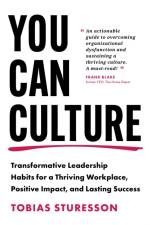
In the pursuit of performance and reputation, it's easy to overlook the actual health of your organizational culture. Before long, however, ominous symptoms often emerge--division, disengagement, silence, dysfunction, and destructive behavioral patterns--hindering you from delivering on your mission and strategy and eroding trust with your clients, team, and other crucial stakeholders.To make things worse, many leaders are perplexed by culture, and typical change efforts are unsustainable and ineffective, with a staggering 85 percent failure rate. But there is a better way. Having personally endured the devastating effects of growing up in a toxic cult, Tobias Sturesson committed his career to helping large purpose-driven organizations overcome their most daunting culture challenges. On his quest, he made a crucial discovery: that, just like our physical health, achieving a thriving culture requires a change of habits. A minor change to what you repeatedly do can have a significant impact on your team and organization.Drawing from his extensive experience and in-depth interviews with many renowned experts, researchers, and executives from well-known organizations, Tobias has identified the four most crucial and timeless culture-building leadership habits.You Can Culture is your meticulously researched guide to these habits, laid out in twelve actionable practices. Each practice is an invitation to growth and introspection, offering reflection questions, practical tools, and leadership actions. Suitable for managers and executives alike, You Can Culture empowers you to strengthen trust, transform your culture, be a values-based leader, and leave a lasting legacy of positive change.
This open access book examines the long-term impact of Christian missionaries in Zambia, and sub-Saharan Africa more generally, on education, health, and economic development. It examines how Christian missionaries provided Western-style education and healthcare within sub-Saharan Africa during the 20th century and how this was provided along unequal gender and regional lines. With sub-Saharan Africa currently facing challenges in the provision of essential public goods and services, the legacy of Christian missionaries in Zambia provides an insightful case study for better understanding how gendered education and regional health inequality have hindered economic development in this region.This book offers a new perspective on colonialism and the economic challenges faced within Africa. It will be relevant to students and researchers interested development economics and economic history.
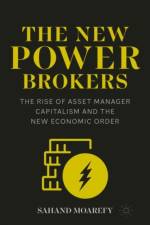
Over the course of the last 70 years, asset managers¿from activist hedge funds to large passive index fund providers¿have come to own the substantial majority of corporate equities in the United States, and have wielded that ownership to fundamentally reshape the economy. For most of American history, investing was simple: you purchased shares and left the operation of the company to management. If you were dissatisfied with the firm's performance, you sold your shares. With the rise of asset managers, shareholders now attempt to directly change the companies in which they invest. The New Power Brokers chronicles the economic, legal and technological changes at the heart of this transformation in our public markets, and provides fresh perspectives on what those changes mean for corporations, investors and society as a whole. Sahand Moarefy is a corporate attorney and writer. His work has been featured in various publications, including Foreign Affairs, Lawfare, The Diplomat and American Affairs. Sahand splits his time between Los Angeles and New York City.
This book provides an updated analysis of political developments in a sample of overseas territories of France, the United States, China, Denmark, the Netherlands, Russia, the United Kingdom, Portugal, Spain and New Zealand. Ranging from Guam, Diego Garcia or New Caledonia/Kanaky to Greenland/Kalaallit Nunaat, Sakhalin, Kuril or Puerto Rico and other territories located all over the globe, these subnational island jurisdictions deserve attention because they lie at the intersection of many evolving issues such as decolonisation, self-determination, post-colonialism, globalisation, climate change, patterns of innovative governance. Moreover, they offer occasional ¿hotspots¿ for analysing international rivalries, conflicts related to illegal migration, disputes pertaining to the delimitation of exclusive economic zones (EEZ) and clashes between mainlands and islands. In addition, they provide fascinating case-studies to grasp the interplay of subnational, national and international politics, particularly in the age of the strategic shift towards the Indo-Pacific. Fred Constant reveals the extent to which these invisible dots on the map may matter in contemporary world affairs.
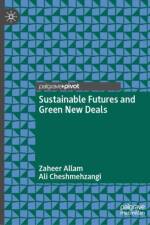
This academic book critically examines the concept of sustainable futures and its interdependence with the policy framework of Green New Deals. We emphasize the inherent link between the two concepts by highlighting how Green New Deals can pave the way for a sustainable and just future in key areas such as environmental policy, economic development, and social equity. Taking a multidisciplinary approach, the book draws on insights from fields such as environmental studies, sustainable development, political ecology, and climate policy to explore the intricacies of these interconnections. The revised description underscores the importance of understanding the Green New Deal's historical and political contexts, as well as its implications for sustainable futures. The book delves into the theoretical perspectives that shape our comprehension of sustainable futures, the diverse strategies employed by countries and regions in implementing Green New Deals, the role of technological innovation and social movements in fostering sustainable transitions, and the political dynamics surrounding the Green New Deal. Through an analysis of the Green New Deal's role in sustainable development, climate policy, and environmental justice, the book provides a necessary and timely contribution to ongoing debates. The chapters offer detailed explorations of the interrelationships between these key areas, emphasizing how the Green New Deal can serve as a transformative policy framework for achieving sustainable and equitable futures. "Sustainable Futures and Green New Deals" is intended for scholars, policymakers, activists, and students interested in understanding the complex and interconnected issues surrounding sustainable development, climate policy, and environmental justice.
This textbook provides a solid introduction to the theoretical and empirical aspects of environmental economics and their links to environmental policy. In this second edition, all chapters have been updated and restructured, and new sections have been added to reflect a greater focus on climate policy.Starting from the need to balance the social costs of pollution against the financial costs of emission abatement, the book discusses the major issues that arise in the context of environmental policy - such as the potential and limitations of monetary valuation of the environment (and in particular the contingent valuation method) and the design of environmental policy. With regard to the choice of environmental policy instruments, the book focuses on the price-based instruments preferred by economists, i.e., environmental taxes and emissions trading, discussing in detail not only their many advantages but also their drawbacks.The second edition especially focuses on green industrial policy as a complementary measure to price-based instruments, the distributional effects of environmental policies, and the resulting challenges for political feasibility. Moreover, the book deals extensively with international environmental problems, in particular climate protection, which is a global public good that will be underprovided when certain countries refuse to cooperate and contribute. Approaches to overcoming this underprovision are described in far more detail than in the first edition, both theoretically and empirically - in particular by assessing the functions of the many international environmental agreements in this field. Finally, a new chapter considers adaptation strategies, especially in the water sector, as an additional pillar of climate policy.
This book provides a concise yet rigorous introduction to probability theory. Among the possible approaches to the subject, the most modern approach based on measure theory has been chosen: although it requires a higher degree of mathematical abstraction and sophistication, it is essential to provide the foundations for the study of more advanced topics such as stochastic processes, stochastic differential calculus and statistical inference. The text originated from the teaching experience in probability and applied mathematics courses within the mathematics degree program at the University of Bologna; it is suitable for second- or third-year students in mathematics, physics, or other natural sciences, assuming multidimensional differential and integral calculus as a prerequisite. The four chapters cover the following topics: measures and probability spaces; random variables; sequences of random variables and limit theorems; and expectation and conditional distribution. The text includes a collection of solved exercises.
What was the role of economists and economics in the making of the European Union? This book sheds light on the activities of a particular type of economic experts: the macroeconomic modellers of the Directorate General for Economic and Financial Affairs (DG II), who built multi-country macroeconomic models of the European Economic Community. These models aim at studying the macroeconomic interactions between national economies and at providing insights about the effects of coordinating (or not) national economic policies. The book documents the origins, challenges, and progress made by DG II¿s experts through building these models.This book provides insight into the influence of multi-country models on modern economics. It will be relevant to students and researchers interested in the history of economic thought and the development of macroeconomic policy.
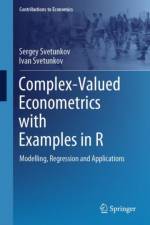
This book explores the application of complex variables to econometric modeling. Providing a thorough introduction to the theory of complex numbers, it extends these concepts to develop complex-valued models that enhance the accuracy and depth of economic forecasting and data analysis. From simple to multiple complex linear regression, the monograph discusses model formulation, estimation techniques, and correlation analysis, supported by examples in R.This comprehensive guide is a useful resource for students, researchers, and practitioners aiming to apply advanced mathematical techniques to tackle complex real-life problems, making it a useful tool for enhancing predictive analytics in business, economics, and finance.
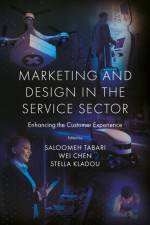
Providing a practical, evidence-based vision of how to enhance and enrich customer experience through tangibles, exterior and interior design and space within the service industry. In other words, looking through the space-scape and design-scape to improve service performance to better address customer needs and desires.
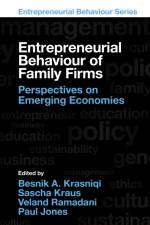
Offering perspectives on the entrepreneurial behaviour of family businesses in emerging economies, the chapters collected here present a systematic analysis focusing on gender, culture, policy, issues of succession, growth and economic impact.
Abonner på vårt nyhetsbrev og få rabatter og inspirasjon til din neste leseopplevelse.
Ved å abonnere godtar du vår personvernerklæring.