









Gjør som tusenvis av andre bokelskere
Abonner på vårt nyhetsbrev og få rabatter og inspirasjon til din neste leseopplevelse.
Ved å abonnere godtar du vår personvernerklæring.Du kan når som helst melde deg av våre nyhetsbrev.

Focusing on the intersection of spatial justice, child rights, and planning policy, this book investigates the challenges of resettlement in East Africa. It will be of interest to planning and development professionals, and researchers across the fields of children's rights and Development Studies.
How apprenticeship shaped the English economy Apprenticeship dominated training and skill formation in early modern Europe. Years spent learning from a skilled master were a nearly universal experience for young workers in crafts and trade. In England, when apprenticeship reached its peak, as many as a third of all teenage males would serve and learn as apprentices. In The Market for Skill, Patrick Wallis shows how apprenticeship helped reshape the English economy. Some historians see apprenticeship as a key ingredient in the industrial revolution; others agree with Adam Smith in seeing it as wasteful and conservative. Wallis shows that neither of these perspectives is entirely accurate. He offers a new account of apprenticeship and the market for skill in England, analyzing the records of hundreds of thousands of individual apprentices to tell the story of how apprenticeship worked and how it contributed to the transformation of England. Wallis details the activities of apprentices and masters, the strategies of ambitious parents, the interventions of guilds and the decisions of town officials. He shows how the system of early modern apprenticeship contributed to the growth of cities, the movement of workers from farms to manufacturing and the spread of new technologies and productive knowledge. In this groundbreaking study, Wallis argues that apprenticeship succeeded precisely because it was a flexible institution which allowed apprentices to change their minds and exit contracts early. Apprenticeship provided a vital channel for training that families could trust and that was accessible to most young people, whatever their background.
Why do we use eighty-year-old metrics to understand today's economy?The ways that statisticians and governments measure the economy were developed in the 1940s, when the urgent economic problems were entirely different from those of today. In The Measure of Progress, Diane Coyle argues that the framework underpinning today's economic statistics is so outdated that it functions as a distorting lens, or even a set of blinkers. When policymakers rely on such an antiquated conceptual tool, how can they measure, understand, and respond with any precision to what is happening in today's digital economy? Coyle makes the case for a new framework, one that takes into consideration current economic realities. Coyle explains why economic statistics matter. They are essential for guiding better economic policies; they involve questions of freedom, justice, life, and death. Governments use statistics that affect people's lives in ways large and small. The metrics for economic growth were developed when a lack of physical rather than natural capital was the binding constraint on growth, intangible value was less important, and the pressing economic policy challenge was managing demand rather than supply. Today's challenges are different. Growth in living standards in rich economies has slowed, despite remarkable innovation, particularly in digital technologies. As a result, politics is contentious and democracy strained. Coyle argues that to understand the current economy, we need different data collected in a different framework of categories and definitions, and she offers some suggestions about what this would entail. Only with a new approach to measurement will we be able to achieve the right kind of growth for the benefit of all.
This volume reflects on the recent political developments in Zimbabwe and their current and future impact on the agrarian sector. The book will be of interest to researchers, NGOs and policymakers interested in the politics of land and agriculture in Zimbabwe and southern Africa.
This book explores the ways in which political settlements can contribute to positive changes in Africa's agricultural and manufacturing sectors. It will be of interest to policy actors and development practitioners, as well as to scholars of African politics and economics, public policy and development.
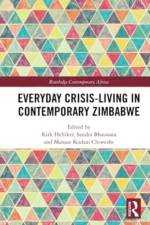
This book examines the everyday lives of ordinary Zimbabweans in the context of national crises in post-2000 Zimbabwe.
This book investigates how non-state actors have become key drivers of the diffusion of the UN 2030 Agenda for Sustainable Development in Brazil. It will be of interest to academics in the field of Sustainable Development, Latin America Studies and Environmental Politics.
Empire of Poverty examines the ways in which the concept of poverty has been a building block of empires, race, and imperial inequalities.
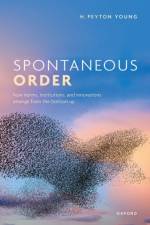
Spontaneous Order brings together Peyton Young's research on evolutionary game theory and its diverse applications across a wide range of academic disciplines, including economics, sociology, philosophy, biology, computer science, and engineering.
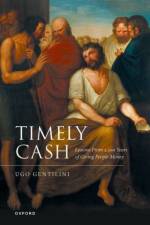
This book provides a historical overview of the 2,500-year history of cash transfers to better understand the roots of contemporary debates on whether and how such assistance should be provided.
Abonner på vårt nyhetsbrev og få rabatter og inspirasjon til din neste leseopplevelse.
Ved å abonnere godtar du vår personvernerklæring.