















Gjør som tusenvis av andre bokelskere
Abonner på vårt nyhetsbrev og få rabatter og inspirasjon til din neste leseopplevelse.
Ved å abonnere godtar du vår personvernerklæring.Du kan når som helst melde deg av våre nyhetsbrev.

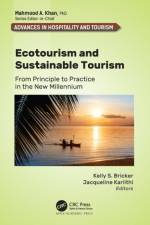
Explores various areas of sustainable development goals (SDGs) that show the contribution of sustainable tourism to cultural heritage, protected areas, and community benefits. Explains how ecotourism can benefit the economy and wildlife in a mutual manner.
This is the first comprehensive history of the Scottish economy to be published in a generation. It provides the essential background on current debates on the condition and future of Scotland under devolution.
This book brings together a classic collection of Andrew Sherratt's work on the economic foundations of prehistoric Europe.
For many entrepreneurs, raising finance is the most important moment in their startup journey. For introverts, this can also be the time when they are at their weakest as well as a time when they absolutely, positively, cannot fail. This book will lead the reader to design that pitching process in the most positive and useful way for their abilities and their strengths.Having the confidence of knowing a presenter's message is clearly constructed and the interaction is engineered for maximum impact will make the presenter more relaxed and therefore, more confident. Featuring a series of case studies and a concise writing approach, this book will guide you through a proven method tested with investors in Europe, the USA and Asia.Author Richard Tierney shares his three decades of global experience as a business coach and media producer across many sectors. When done, The Three Slide Pitch Deck will lead you to greater conversion, greater investment, and more successful business ventures.You will Understand that preparation is the key to success. Focus the pitch process to your strengths. Review case studies that show you how to pitch in differing circumstance. See how you and your company can stand out from the crowd.Who This Book is ForIntroverted entrepreneurs, company founders and start-ups seeking finance.
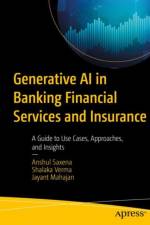
This book explores the integration of Generative AI within the Banking, Financial Services, and Insurance (BFSI) sector, elucidating its implications, applications, and the future landscape of BFSI.The first part delves into the origins and evolution of Generative AI, providing insights into its mechanics and applications within the BFSI context. It goes into the core technologies behind Generative AI, emphasizing their significance and practical applications. The second part explores how Generative AI intersects with core banking processes, ranging from transactional activities to customer support, credit assessment, and regulatory compliance. It focuses on the digital transformation driving investment banking into the future. It also discusses AI¿s role in algorithmic trading, client interactions, and regulatory adaptations. It analyzes AI-driven techniques in portfolio management, customer-centric solutions, and the next-generation approach to financial planning and advisory matters. The third part equips you with a structured roadmap for AI adoption in BFSI, highlighting the steps and the challenges. It outlines clear steps to assist BFSI institutions in incorporating Generative AI into their operations. It also raises awareness about the moral implications associated with AI in the BFSI sector.By the end of this book you will understand Generative AI¿s present and future role in the BFSI sector.What You Will Learn Know what Generative AI is and its applications in the BFSI sector Understand deep learning and its significance in generative models Analyze the AI-driven techniques in portfolio management and customer-centric solutions Know the future of investment banking and trading with AI Know the challenges of integrating AI into the BFSI sectorWho This Book Is ForProfessionals in the BFSI and IT sectors, including system administrators and programmers
First published in 1951, The British Banking Mechanism seeks to enable the reader to obtain a real understanding of the British financial system as it operated back in the 1950s.This book is of historical importance for scholars and students of banking history, British banking and British economics.
This book provides a macro analysis of India's social and economic transformation in the decades leading up to the Covid-19 pandemic and explores both resilience and vulnerabilities in Indian society.
This innovative work delves into the world of ordinary early modern women and men and their relationship with credit and debt. Elise Dermineur focuses on the rural seigneuries of Delle and Florimont in the south of Alsace, where rich archival documents allow for a fine cross-analysis of credit transactions and the reconstruction of credit networks from c.1650 to 1790. She examines the various credit instruments at ordinary people's disposal, the role of women in credit markets, and the social, legal, and economic experiences of indebtedness. The book's distinctive focus on peer-to-peer lending sheds light on how and why pre-industrial interpersonal exchanges featured flexibility, diversity, fairness, solidarity and reciprocity, and room for negotiation and renegotiation. Before Banks also offers insight into factors informing our present financial system and suggests that we can learn from the past to create a fairer society and economy.
Journey through the world of stochastic finance from learning theory, underlying models, and derivations of financial models (stocks, options, portfolios) to the almost production-ready Python components under cover of stochastic finance. This book will show you the techniques to estimate potential financial outcomes using stochastic processes implemented with Python.The book starts by reviewing financial concepts, such as analyzing different asset types like stocks, options, and portfolios. It then delves into the crux of stochastic finance, providing a glimpse into the probabilistic nature of financial markets. You'll look closely at probability theory, random variables, Monte Carlo simulation, and stochastic processes to cover the prerequisites from the applied perspective. Then explore random walks and Brownian motion, essential in understanding financial market dynamics. You'll get a glimpse of two vital modelling tools used throughout the book - stochastic calculus and stochastic differential equations (SDE). Advanced topics like modeling jump processes and estimating their parameters by Fourier-transform-based density recovery methods can be intriguing to those interested in full-numerical solutions of probability models. Moving forward, the book covers options, including the famous Black-Scholes model, dissecting it from both risk-neutral probability and PDE perspectives. A chapter at the end also covers the discovery of portfolio theory, beginning with mean-variance analysis and advancing to portfolio simulation and the efficient frontier.
Navigate the complex landscape of Artificial Intelligence (AI) governance and model risk management using a holistic approach encompassing people, processes, and technology. This book provides practical guidance, oversight structure and centers of excellence, and actionable insights for organizations seeking to harness the power of AI responsibly, ethically, and transparently. By addressing the technical, ethical, and societal dimensions of AI governance, organizations will be empowered to build trustworthy AI systems that benefit both their bottom line and the broader community.Featuring successful mitigating controls based on proven use cases, the book underscores the importance of aligning AI strategy with AI governance, striking a balance between AI innovation, risk mitigation as well as broader business goals. You'll receive pointers for designing a well-governed AI development lifecycle, emphasizing transparency, accountability, and continuous monitoring throughout the AI development lifecycle. This book highlights the importance of collaboration between stakeholders, i.e., boards of directors, CxOs, corporate counsel, compliance officers, audit executives, data scientists, developers, validators, etc.You'll gain practical advice on addressing the challenges related to the ownership of AI-generated content and models, stressing the need for legal frameworks and international collaboration. You'll also learn the importance of auditing AI systems, developing protocols for rapid response in case of AI-related crises, and building capacity for AI actors through education. Principles of AI Governance and Model Risk Management demonstrates its value-added uniqueness by detailing a strategy to ensure a cohesive approach to managing AI-related risks, global compliance, policy, privacy, and AI-human collaboration and oversight.
This book on privatization in Pakistan stands out due to its comprehensive and multifaceted approach towards examining the process, impact, and implications of privatizing state-owned enterprises (SOEs). The book provides an in-depth discussion on privatization in Pakistan which revolves around the historical context, contemporary challenges, and opportunities. It mainly covers the discussion on the rationale behind privatization, evolution of privatization policies, case studies of major privatizations, legal frameworks, and the role of public-private partnerships (PPPs). Along with exploratory analysis, this book also includes the first detailed empirical analysis and case studies to provide evidence-based insights into the performance and efficiency of privatized SOEs. Through exploratory and empirical analysis, and examination of key privatization cases, readers gain valuable insights into the real-world outcomes of privatization efforts in Pakistan. This book will be of interest to scholars of Asian economics, development economics and the future of the Eurasian region.Dr. Ghulam Samad is a Chief of Research Division at the Central Asia Regional Economic Cooperation (CAREC) Institute, ADB. Before joining CAREC Institute, Dr. Samad was a Senior Research Economist at the Pakistan Institute of Development Economics (PIDE), Ministry of Planning, Development and Special Initiatives. Dr. Samad also served as an Economist at the Planning Commission of Pakistan. Dr. Samad holds a Ph.D. in Economics from Colorado State University, USA.Dr. Naseem Faraz is the Deputy Economic Adviser at the Economic Adviser's Wing, Ministry of Finance, Government of Pakistan. Dr. Faraz has also served as Revenue Forecasting Specialist at the Federal Board of Revenue. She has gained a long research experience as a Senior Research Economist at the Pakistan Institute of Development Economics (PIDE), Ministry of Planning, Development, and Special Initiatives. Dr. Faraz hold Ph.D. Economics from Clark University in Massachusetts, USA, with prestigious Fulbright Scholarship, MPhil, and MSc in Economics from Quaid-i-Azam University, Islamabad.
Discover the captivating journey of the history of economic thought through the centuries with this comprehensive textbook. From the dawn of economic thought in ancient times to the emergence of modern economic theory in the twentieth century, this textbook reveals the evolution of ideas that have shaped our understanding of economics.Ideal for advanced bachelor's and master's students in economics and related social sciences, this engaging resource illuminates the historical context of economic thought and its impact on real-world developments. It examines influential schools of economic thought, addresses major theoretical challenges, and highlights fundamental innovations that have shaped the development of the discipline.The textbook explores a wide range of topics, including the economic philosophies of ancient civilizations and the Middle Ages, the influence of mercantilism and physiocracy, the profound contributions of Adam Smith, David Ricardo, and Karl Marx to classical political economy, the marginalist revolution and neoclassicism, German historical economics, the evolution of macroeconomics, the rise of Keynesianism, and the enduring relevance of institutional economics. This is a must-read for students and anyone curious about the history of economics and economic history.
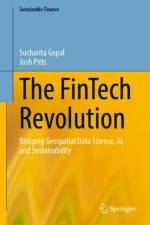
In a world of unprecedented challenges and opportunities, Fintech stands as a pivotal force, at the crossroads of technology, finance, and sustainability. This book invites readers to the forefront of a revolutionary convergence, where economic growth and environmental stewardship align. Whether the reader is a decision-maker, innovator, entrepreneur, or investor within the Fintech industry, this is a guide to a future where finance and technology serve our planet.Authored by experts in GIS, AI, and remote sensing, who are also seasoned entrepreneurs, this unique work offers both theory and practical guidance, discovers sources often overlooked in ESG analytics, dives into specific, not general, KPIs for industry professionals, and navigates global regulations and frameworks with ease.Real-world case studies unveil the value of applied methods, supported by insights from leading practitioners, explore the latest developments in AI and machine learning, and uncover a step-by-step data science analysis framework.
Nearly one-third of US workers must obtain a license from a government agency to perform their jobs legally. This impacts employees across all areas, including lawyers, doctors, and accountants, as well as florists, hairdressers, physical therapists, and plumbers. The justification for occupational licensing is that potential consumers allegedly lack the information and knowledge to judge the competence of a service provider. This necessitates a licensing system built to ensure that customers are served by people who have received adequate training and certification in their profession.While there are recognizable benefits of occupational licensing, the training and certification requirements create barriers to entry for employees or those entering the profession. These barriers can limit competition, raise service costs, and restrict consumer access to essential services. Recent empirical work suggests that consumers have incurred these costs without being adequately protected from incompetent or unscrupulous service providers. This book addresses this situation head on.In light of occupational licensing's shortcomings, the authors of this book propose and analyze constructive reforms, assessing their effects on key professions such as law, medicine, and finance. Chapters identify the significant costs of current policies and they recommend practical reforms that rely more on market forces. The resulting book provides new ways to reduce licensing costs without compromising service quality.Clifford Winston is a senior fellow in the economic studies program at the Brookings Institution.
This Palgrave Pivot book analyses the current state of economic and financial relations between China and the European Union. It illustrates the 'de-risking' strategy that informs much of financial policy between China and the EU and argues that this differs from the policy of 'decoupling' that characterizes the US approach towards China. Exploring how the EU positions itself in the context of a trade and tech race between the US and China, the book sketches out a range of geopolitical challenges for Europe as it navigates current and future scenarios in global economic cooperation and competition. It discusses the concept of 'strategic autonomy' for the EU and explores barriers to achieving this as well as options for re-shaping relations with China. The book provides an excellent overview for researchers and policy-makers of Sino-EU economic relations today and sets them firmly in the contexts of the post-pandemic world with new global value chains, rapid technological development, and evolving environmental challenges.René W.H. van der Linden is lecturer & researcher at the International Business program of The Hague University of Applied Sciences in the Netherlands. Together with Piotr ¿asak, he published The Financial Implications of China's Belt and Road Initiative in 2019 and Financial Interdependence, Digitalization and Technological Rivalries in 2023. Piotr ¿asak is an Associate Professor at the Jagiellonian University in Krakow, Poland. His research focuses on topics related to international financial markets development, including financial market regulation and supervision, mechanisms of financial and currency crises, digitalization of the financial sector, and shadow banking system development (especially in China).
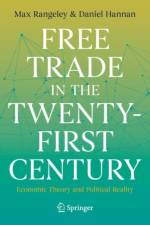
This book offers an assessment of the benefits and contemporary relevance of free trade. With contributions from senior policy-makers-ranging from former prime ministers of Australia and the United Kingdom to ambassadors and political figures who have worked on trade negotiations-as well as some of the most prestigious academics in the field of trade, from a Nobel Prize winner to esteemed economic historians, it teaches how important free trade is to prosperity in this day and age. This book brings together the key approaches to free trade in the modern world, including the practical realities of negotiating trade agreements, how we can move towards a system of genuine free trade and the moral case for free trade. Each chapter in Free Trade in the Twenty-First Century has an eminent expert in the field addressing a specific aspect of modern trade. With a single book, one can gain an understanding of the most important themes, from the impact monetary economics has on trade to the intricacies of free trade agreements. By having chapters written by political figures, trade negotiators and think tank analysts, this book takes trade beyond abstruse economic theory and brings it into political reality so that the reader can understand how we can use trade to create global peace and prosperity.
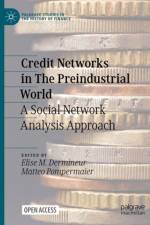
This open access book examines the formation and sustainability of private credit networks in past societies, gathering a global range of case studies from Europe and the Americas. The book represents a fi rst attempt to coordinate the work of different scholars working on credit networks and aims to explore the possibilities offered by social network analysis for the study of past fi nancial markets and networks.Each contribution offers new perspectives for the comprehension of past fi nancial networks, with a broad chronological and geographical scope. The chapters are arranged thematically and study both rural and urban networks, each employing a network perspective to facilitate an increased understanding of the relational dynamics of preindustrial credit transactions. This book models the various ways that SNA can be utilized by economic and fi nancial historians, as well as discusses its limitations and ways in which it can be combined with qualitative archival research. The book is of interest to a broad audience of scholars in the fi elds of economic, fi nancial and social history.
Wars and the need to fund them were the historic reason for banks to create excessive amounts of fiat money. This book explains how banks seized the wealth of society's most vulnerable members to create fiat money. During peacetimes, banks primarily lent to the government depriving the private sector of capital and resources. The unimpeded bank credit offered the government a convenient source for unlimited borrowing and spending. US banks also learned to offer fiat dollars to foreigners seizing the wealth of foreign dollar users. The peremptory confiscation of foreign dollar holdings by the US is poisoning the trust in the dollar and reestablishing gold as a reserve currency.
A Global Adventure to Meet the Farmers, Activists, and Indigenous PeopleGrowing the Roots of a Regenerative FutureThere’s no denying it: we treat our planet like dirt. Humanity’s impact has become a geologic force changing the climate and threatening oceans, glaciers, and the lands that feed us.Living in rural Indiana, author Kelsey Timmerman witnesses first hand the damage modern industrial agriculture has done to our land and our communities. He’s afraid to let his kids swim in the nearby pond filled with farm runoff. There are times, after chicken manure has been spread on the surrounding fields, that it’s hard to breathe.Timmerman recognizes that farming – the occupation of his family heritage -- is the source of these and other problems. But he also suspects it doesn’t have to be that way. In Renewing Earth Timmerman travels across the United States and around the world to meet farmers and activists who employ practices and philosophies that acknowledge the human role in complicated agricultural systems and have found ways to alleviate it. Over and over again he finds farmers who see agriculture as not the problem but the solution, one that builds soil, promotes ecological diversity, provides people with meaningful lives and livelihoods, and sequesters Carbon—maybe even enough to combat climate change.Timmerman takes readers along on his global adventure -- onto melting glaciers in Patagonia, into the Amazon, and down forgotten rivers. He protects a herd of cattle from lions alongside the Maasai warriors of Kenya, sees firsthand how chocolate could save the rainforest in Brazil, and meets American farmers who’ve rejected the agrochemical industry for an approach inspired by that of ancient and Indigenous peoples. By weaving the local with the global, Timmmerman shows readers how the way they live, their eating habits and relationship with nature connect to issues of environmental and social justice. Our hunger, and the agriculture required to alleviate it, can be a gift that connects us to chloroplasts, lions, mycorrhizal fungi, our fellow humans around the block and the world, and it is our responsibility to play an active part in a regenerative – not destructive -- future.
Abonner på vårt nyhetsbrev og få rabatter og inspirasjon til din neste leseopplevelse.
Ved å abonnere godtar du vår personvernerklæring.