









Gjør som tusenvis av andre bokelskere
Abonner på vårt nyhetsbrev og få rabatter og inspirasjon til din neste leseopplevelse.
Ved å abonnere godtar du vår personvernerklæring.Du kan når som helst melde deg av våre nyhetsbrev.

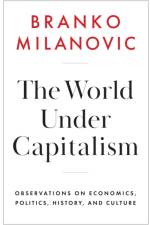
Branko Milanovic is best known as one of the world's leading experts on global inequality. But he is also an unusually wide-ranging and penetrating commentator on subjects across economics and beyond, in politics, history, and culture. This book brings together his most searching, provocative, and entertaining articles of recent years, providing an abundance of vital insights into the evolution and dynamics of the world under capitalism. The volume features important ideas about the struggle to achieve a more equal and prosperous world against not only the predictable forces of deregulation and distraction but new ideas about shrinking the economy to protect the environment. Further from Milanovic's speciality, readers will find an extraordinary array of reflections on subjects including migration, globalization, the politics and economics of Russia and China, the crisis of liberal democracy, economic and literary history, and the intellectual giants of economics. The pieces are united by Milanovic's distinctive voice - humane, wry, and realistic - and by remarkable erudition worn lightly whether the topic is the fall of Constantinople, Jane Austen, or the mores of contemporary soccer. No one can fail to learn from the book, while the sparkling prose, unexpected observations, and sheer importance of the subjects at hand make it a compelling read from start to finish.
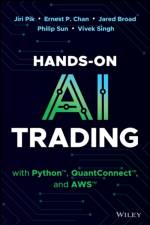
Innovation is critical to increasing global prosperity and is also essential to surviving and overcoming the ongoing challenges of pandemics, wars, climate change and systemic financial turmoil.
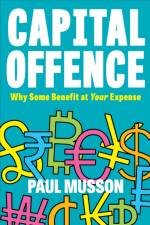
In Capital Offence award-winning investor Paul Musson shows how the world is becoming increasingly divided on many fronts. One of the root causes of this is that well-intended policymakers have drunk the something-from-nothing Kool-Aid and are convinced that there is such a thing as a free lunch. There isn't. They believe that debt-fueled spending is what leads to economic prosperity. It doesn't. The direct result of these central bank-supported policies is growing wealth disparity where some people are able to extract more from our economic system than they create, while others are left to foot the bill. Most books on this subject speak in a language understood only by those steeped in financial jargon; Paul Musson uses everyday language and analogies to help readers understand why the economy is moving in the wrong direction. The next generation is now poised to be worse off than its predecessors, not because they are less productive, but because older generations are benefiting at their expense - an unsustainable and immoral reality. Paul Musson gives us steps for reform, and while the painful choices ahead are inevitable, facing them now will prevent even greater consequences later.
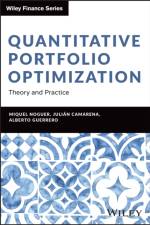
"*Quantitative Portfolio Optimization: Advanced Techniques and Applications* offers a comprehensive exploration of portfolio optimization, tracing its evolution from Harry Markowitz's Modern Portfolio Theory to contemporary techniques. The book combines foundational models like CAPM and Black-Litterman with advanced methods including Bayesian statistics, machine learning, and quantum computing. It bridges theory and practice through detailed explanations, real-world data applications, and case studies. Aimed at finance professionals, researchers, and students, the book provides tools and insights to address future financial challenges and contributes to the field's ongoing development"--
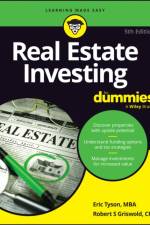
Offers actionable advice for anyone who wants to invest in income-producing properties. This book includes step-by-step explanations of everything you need to know to keep yourself one step ahead of the competition. It provides tips on financing and trusted guidance on mastering the art of property valuation.
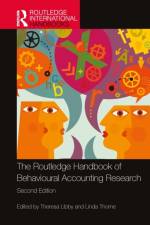
Covers a full range of theoretical, methodological and statistical approaches relied upon by behavioural accounting researchers, giving the reader a good grounding in both theoretical perspectives and practical applications. Eight new chapters reflect the expansion of the topics and theories, methodologies and offer developmental advice.
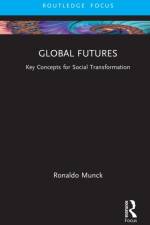
Global Futures is a provocation for us to rethink some of the key words and concepts which define the current global order. This book seeks to re-energise our desire for a better future and will interest students and researchers of sociology, politics, international relations, and global development.
In Real Vanilla, Nature's Unsung Hero LittlePod's founder Janet Sawyer tells of her company's mission over the last fifteen years to save real vanilla which was under threat of being lost within a generation. They have made a huge difference, encouraging the development of vanilla paste in a tube, supporting farming communities in the world's equatorial regions and educating consumers all around the world about the importance and value of vanilla to the planet. Through LittlePod supporting a pioneering polyculture orchard in Indonesia, it has helped educate future generations about a precious plant that is the essence of sustainability. This is a fascinating story of how a determined woman used the 'empty nest' time in her life to build a company whilst learning about biodiversity, supporting farmers' livelihoods and creating a family of human relationships - fondly known as 'LittlePodders'.
This book provides a systematic review of nature-based solutions and their potential to address current environmental challenges. It will be of great interest to policymakers, practitioners and researchers involved in nature-based solutions, sustainable urban planning, environmental management and sustainable development generally.
The only textbook that fully supports the OxfordAQA International AL Economics specification (9640), for first teaching from September 2020. Written by experienced examiners and authors, the clear international approach develops key skills for exam success.
Sie haben viel über Bitcoin, Ethereum, Litecoin, Ripple, Monero, IOTA und Icon gelesen und wollen wissen, was dahintersteckt? Dann ist dieser knappe Einstieg in die Kryptowährungen genau das Richtige für Sie. Zuerst erklärt Ihnen der Autor, wie sich Kryptowährungen vom Geld, so wie Sie es kennen, unterscheiden. Im Folgenden geht er kurz auf die technischen Grundlagen, also auf die Blockchain ein. Und dann erfahren Sie, wie Sie Ihr Kryptogeld in Wallets aufbewahren, wie der Handel funktioniert und wie Sie mit Kryptowährungen - theoretisch - Geld verdienen können. So hilft Ihnen dieses Buch, wenn Sie zuverlässige und etwas tiefergehende Informationen suchen, aber keinen dicken Wälzer drehen wollen.
The co-founder of Harvard's Global Negotiation Initiative and a renowned global guru in negotiations, presents a dynamic strategy for overcoming stalled or failed negotiations that empowers individuals to return to the table with increased strength and resilience, carefully learning from the challenges they encountered.When negotiations fail it can be hard to start over. Some people give up, others forget and move on, but the truly successful negotiator learns. Celebrated negotiation thought-leader and advisor to the UN Mediation Unit, Joshua N. Weiss, introduces an evidence-based model for when negotiations stall or fail. Getting Back to the Table explores the reality of failure in negotiation. It lays out the types of failure that can happen, how to cope with it when it does, and how we can be resilient in the face of it. Using Weiss’s easy-to-use framework, readers can successfully get back to the negotiation table. Failing in negotiations is inevitable, but learning and growing from failure is not.
This book attempts to answer significant questions such as: what is China's 'developing' political economy, what are the major principles of socialist political economy with Chinese characteristics, and how to achieve economic development. From 'new normal' and 'new development concept' to 'innovation driven development strategy' and 'supply side structural reform' to 'the Belt and Road' and 'new urbanization with people as the core', the author explains economic laws and development succinctly and illustrates the key characteristics of Chinese socialist political economy.This book features forward-looking thinking on China's development, explaining that China's development is scientific, its sustainable development follows natural laws and inclusive development follows social laws. The 'political economy' of China's development is explained in an easy-to-understand and assessable way. The author has cooperated with scholars from the Party School of the CPC Central Committee and the Chinese Academy of Social Sciences and this book is the cumulative output of his work with fellow researchers and scholars.
Financial Landscape Transformation collects chapters to present the current and probable future state of banking and money with the advent of fintech.
Humorous accountancy-related articles gathered one book, by the author of 'How to Become a No-Decision Manager'.
Minimize risk and maximize profit with options trading and explore the ins and outs of this popular investment strategy in this engaging, informative, and easy-to-understand guide.Want to make money options trading but don’t know where to start? Are you unsure as to what options trading even is? Is options trading the right strategy for you? Options Trading 101 has the answers to all these questions and more. From explaining what options are and how they differ from stocks in addition to going over key terms, such as calls, puts, strike price, and expiration dates, you will get a crash course in options trading to help you start making money fast. You’ll also find fundamental strategies for trading options, including buying calls and puts, and the risks and rewards associated with each. To build on a solid foundation, the book offers information on technical and fundamental analysis, helping you understand how to evaluate market trends and make informed decisions. Additionally, risk management techniques and the importance of setting trading goals are emphasized to ensure long-term success. By the end of the book, you’ll be confident in your understanding of options trading and be ready to begin your trading journey with a clean and informed strategy.
Become fluent in the language of money and advance of your financial goals with this clear, straightforward guide to essential definitions and easy-to-understand explanations of all the economic terminology you need to know.Understanding the economy so you can effectively manage your money is not an easy job, and it’s made even more complicated by the specific, complex terminology. Even the most financially responsible people can wonder how economic forces impact their personal finance. Now, Economics in Plain English has the answers. Inside you’ll find straight-forward explanations of 350 economic terms ranging from production, markets and consumer behaviors to banking and monetary policies and more! This quick and easy-to-use glossary teaches you what the term means, how the concept works, and how it is used. Read through the chapters for a solid primer in economics and refer back to specific definitions as needed when reviews financial reports, forecasts, and documents.
This book navigates the complexities of local real estate taxation in the dynamic region of Central and Eastern Europe, providing a meticulous analysis of the diverse approaches taken across the region. The book explores the historical roots and evolution of local real estate tax, its importance and its impact on communities.
This book offers contemporary assessment of the challenges facing international investment law and proposes innovative solutions for reform. It will inform a range of stakeholders including investors, Civil Society Organisations, States, students, and international organisations such as the World Bank.
Learning From Near Misses can provide opportunities to improve safety without the need for harm to have first occurred. This book explores how near misses contribute to safety management across high-risk sectors, to help organisations, industries and sectors utilise learning from near misses in line with contemporary safety theory.
This book considers the complex and contradictory role of the United Nations when it comes to human rights around the world. It depicts the United Nations as a global arena in which state and non-state actors continuously contest issues around human rights.
Abonner på vårt nyhetsbrev og få rabatter og inspirasjon til din neste leseopplevelse.
Ved å abonnere godtar du vår personvernerklæring.