












Gjør som tusenvis av andre bokelskere
Abonner på vårt nyhetsbrev og få rabatter og inspirasjon til din neste leseopplevelse.
Ved å abonnere godtar du vår personvernerklæring.Du kan når som helst melde deg av våre nyhetsbrev.

Introduction to Financial Mathematics motivates students through a discussion of personal finances and portfolio management. The book covers nearly all of the syllabus topics of the Financial Mathematics Actuarial examination to provide students with the foundation they require for future studies and in their careers. It begins
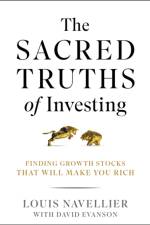
"In The Sacred Truths of Investing, renowned stock picker and well-known media personality Louis Navellier delivers a blueprint to confidently and reliably pick winning stocks rather than relying solely on ESG, ETFs, and other index mutations for investment success. Backed by his proven experience beating the S&P 500 by a margin of 3-to-1 over the past 17 years, Mr. Navellier imparts both underlying theory and practical guidelines to enable readers to holistically understand the forces that shape the market and determine its direction"--
America's #1 bestselling home buying guide Are you looking to buy a house, but don't quite know where to begin? Have no fear! This new edition of Home Buying Kit For Dummies arms you with Eric Tyson and Ray Brown's time-tested advice and strategies for buying a home in current market conditions.
"This book will be useful to practitioners, policymakers, graduate students and researchers of environmental law, environmental studies, human rights, sustainable development, social justice and area studies on the Middle East and North Africa (MENA) and West Asia. This title is also available as open access on Cambridge Core"--
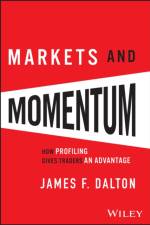
PRAISE FOR MARKETS AND MOMENTUM "In recent years, Jim Dalton has been one of the premier educators in the trading world. His grounding in Market Profile has helped traders think about opportunities multidimensionally, integrating price, time, and volume. In Markets and Momentum, Jim teams up with Rob Dalton to integrate the trading of market psychology with the psychology of trading. Developing and experienced traders alike will find practical wisdom and actionable information in this readable and insightful guide." -BRETT STEENBARGER, PHD, Professor, Psychiatry and Behavioral Sciences, SUNY Upstate Medical University; Trading Psychologist and Author "Jim Dalton has imparted a great deal of useful information in this book. The most important aspect concerns delving into your own psychological approach to why you're winning or losing. This is an extremely insightful and important concept. Keeping a journal, letting your profits run, honestly assessing your performance are all things that a successful trader needs to do. Even experienced traders should be able to learn something from this book." -LAWRENCE G. McMILLAN, Author, Options as a Strategic Investment "Trading is a pursuit that is simple but far from easy. The mechanics are not difficult to learn, but success in the markets is often elusive until one can control their emotions, overcome cognitive dissonance, and act decisively on nuances that most others will miss. As Dalton states in his new book, it is a constant evolution towards a point 'where the subtleties of intuition dance harmoniously with the complexities of experience.' Being in the trader education space for almost 20 years now, I have rare insight into what newer traders struggle with most. Many are simply misunderstanding the importance of context, the difference between price and value, and how to make decisions according to market generated information (MGI) as opposed to news, bias, or opinion. These are the principles at the core of Markets and Momentum and the starting point for true market understanding that can lead to the consistency you seek." -PETER REZNICEK, shadowtrader.net "I wanted to say thank you-I wouldn't be where I am today without your knowledge, experience, and well-crafted e-courses. Your education has not only helped change my life, but also impacted my family's future. Instead of being buried in debt, we've had the freedom to live more fully and even give back. You've made a difference not only in my life but in the lives of many others as well." -PAUL THOMAS, Independent Trader
The authoritative exposé of private equity: what it is, how it kills businesses and jobs, how the government helps, and how we stop it Private equity surrounds us. Firms like Blackstone, Carlyle, and KKR are among the largest employers in America and hold assets that rival those of small countries. Yet few understand what these firms are or how they work. In Plunder, Brendan Ballou explains how private equity has reshaped American business by raising prices, reducing quality, cutting jobs, and shifting resources from productive to unproductive parts of the economy. Ballou vividly illustrates how many private equity firms buy up retailers, medical practices, prison services, nursing-home chains, and mobile-home parks, among other businesses, using little of their own money to do it and avoiding debt and liability for their actions. Forced to take on huge debts and pay extractive fees, companies purchased by private equity firms are often left bankrupt, or shells of their former selves, with consequences to communities that long depended on them. Perhaps most startling is Ballou’s insight into how this is happening with the active support of various arms of the government. But, as Ballou reveals in an agenda for reining in the industry, private equity can be stopped from wreaking further havoc.
Originally published in 1997, the principal object of the editors in compiling this collection of Robert R. Sterling's work was to make more of his publications accessible in a convenient form to the academic and professional accounting communities, and to current and future generations of accounting students.
This book is designed as a short introduction to econometrics for economists and differs from existing texts in that: - it is succinct and user-friendly and is therefore more suitable for use on shorter modules lasting a few weeks.- it moves beyond being a mere applied statistics book and draws upon a wealth of real world examples from economics itself ¿ showing how econometrics can be brought to bear on the world we live in. - the concentration is on simpler cross section models without introducing the student to complicated time series modelsIn the same way that other mathematical disciplines such as game theory can be taught in a less technical way, so can econometrics. This book will allow the student to grasp the basic concepts without plunging them into a world of abstract mathematics.
Ready to stop letting money control your life? Unraveling Your Relationship with Money: Ditch Your Money Trauma So You Can Live an Abundant Life is the no-fluff guide to taking back your power. This isn't about spreadsheets or savings hacks-it's about smashing through the emotional roadblocks holding you back and finally creating the financial life you want. Shannah Game, financial expert and host of the hit podcast Everyone's Talkin' Money, delivers bold insights, relatable stories, and actionable steps to help you heal your relationship with money, ditch guilt and shame, and build unapologetic wealth. Whether you're drowning in debt, saving for your dream home, or just tired of feeling stuck, this book gives you the clarity and tools to take charge-and thrive. It's not just a book-it's your money revolution. "Shannah brilliantly unravels the strange and complex relationship we have with money. As someone who inherited a money mindset of fear and lack, Shannah's guidance has elevated my soul's self-worth, and is the balm to embracing a flourishing relationship with money." -J. KELLY HOEY, Author of Build Your Dream Network "I don't think anyone has had more public conversations helping people untangle their money stories than Shannah Game-and now she's packaged her wisdom into this generous, transformative guide for us all." -CARL RICHARDS, New York Times Sketch Guy Columnist and Author of The Behavior Gap and The One-Page Financial Plan
There has been an unprecedented shift in the attitudes of young individuals toward the key economic issues they encounter as they embark on their adult lives. Addressing a gap in the economic literature, this book uniquely bridges the current understanding of youth with empirical evidence from Poland, Czechia and Germany.
'As the pursuit of profit becomes increasingly surreal, virtual, and exotic by the day, the symbiosis between libidinal and financial flows demands to be rethought. Clickbait capitalism offers a stimulating and game-changing introduction to how the current confluence of economy and desire pre-empts our behaviour, structures our identity, influences our decisions, and tugs at our wallets.'>'Lie back on the couch with this book and let it analyse your triggers and traumas about debt and inequality. Ramble down the royal road of the unconscious, interpreting the collective delirium from Cryptokitties to cryogenics, Squid Game to GameStop. These bracing chapters, invoking theorists from Adorno to Zizek, fuse psychology and economics to diagnose the neuroses of our moment. The results are electric!'> Desire plays a crucial yet poorly understood role within economic life. This is increasingly untenable as potent new cultures of desire take shape around the intersection of digital technology and finance. Clickbait capitalism stages an encounter between psychoanalysis, political economy, and the calling cards of twenty-first-century capitalism. Drawing on a theoretical tradition known as 'libidinal economy', the book engages digital-economic life as a site of ongoing psychological capture and release. What emerges is a unique survey of the moods and structures of feeling that underwrite capitalism today, from online paranoia and the ecstatic mania of the crypto-boom to the escape and revenge fantasies of the indebted young. Adopting a pluralistic approach, the book offers a range of new perspectives on the psychological foundations and ongoing viability of capitalism as a social formation and economic system.
'This book, written in crystal-clear style, develops the most profound philosophical discussion ever held of ecological economics.'>'A brilliant contribution to a radical paradigm of social ecological economics concerned with both disciplinary and social-ecological transformation as necessary conditions for achieving a world in which we all, and all other species, can flourish.'>'The book is deeply rooted in the theory of science, offering a very enlightening text about fundamental issues for science that too often are glossed over or misunderstood.'>Exploring radical dissent from orthodox mainstream economics, this book presents a theoretically grounded vision for the emerging paradigm of social ecological economics. At its heart lies the paradigm-shifting acknowledgement that economies are inextricably embedded in biophysical reality and social structure. The struggle for revisioning in the face of environmental crises is articulated through a critical examination of economic thought, and a nuanced evaluation of contributions from Marxists, socialists, critical institutionalists, feminists and Post Keynesians. Synthesising diverse insights, the book navigates the philosophical underpinnings of a critical and realist revolutionary transformative science, emphasising the pivotal role of values and ideology. These radical and philosophical foundations establish a new preanalytic vision of economics, dismantling entrenched notions of growth and efficiency in favour of social provisioning and needs embedded in ethics. An agenda emerges that requires social ecological transformation and diverse alternative economies. This book provides a compelling call to action in the face of contemporary crises.
Imperial Inequalities takes Western European empires and their legacies as the explicit starting point for discussion of issues of taxation and welfare. In doing so, it addresses the institutional and fiscal processes involved in modes of extraction, taxation, and the hierarchies of welfare distribution across Europe's global empires. The idea of 'imperial inequalities' provides a conceptual frame for thinking about the long-standing colonial histories that are responsible, at least in part, for the shape of present inequalities. This wide-ranging volume challenges existing historiographical accounts that present states and empires as separate categories. Instead, it views them as co-constitutive units by focusing upon the politics of economic governance across imperial spaces. Authors examine the fiscal innovations that enabled European empires to finance their expansion, the politics of redistribution that were important to constructing the veneer of legitimacy of taxation, and the fiscal mechanisms that were established to ensure that the imperial contours of inequality continued to define the postcolonial world. These diverse contributions provide new resources for how we think about issues of taxation and welfare across the longue durée.
In the 1980s, Britain actively engaged with China in order to promote globalisation and manage Hong Kong's decolonisation. Influenced by neoliberalism, Margaret Thatcher saw Britain as a global trading nation, which was well placed to serve China's economic reform. With her conviction in free-market capitalism, Thatcher was eager to extend British rule in Hong Kong beyond 1997. During the 1982-84 negotiations, British diplomats aimed to 'educate' China about how capitalist Hong Kong worked. Nevertheless, Deng Xiaoping held an alternative vision of globalisation, one that privileged sovereignty and socialism over market liberalism and democracy. Drawing extensively upon the declassified British archives and Chinese sources, the book recounts how Britain and China negotiated for Hong Kong's future, culminating in the signing of the Joint Declaration on its retrocession in 1997. It explores how Anglo-Chinese relations flourished after the Hong Kong agreement but suffered a setback as a result of the 1989 Tiananmen Square crackdown. This original and comprehensive study argues that Thatcher was a pragmatic neoliberal, and the British diplomacy of 'educating' China in global free trade and democracy yielded mixed results. By examining Britain-China-Hong Kong relations from multiple perspectives, this book will be of interest to scholars and students in the fields of diplomatic, imperial, and global history.
[Not final] Southern Interregnum maps and analyzes the ruptures and mutations that are currently reshaping the political economy of the global South. The contemporary global South, the book proposes, is in the throes of an interregnum - a period, as Gramsci put it in his reflections on the inter-war era, in which the old is dying and the new cannot be born. Crafted around a comparative conjunctural analysis of Brazil, India, South Africa, and China, and set against the backdrop of deep geopolitical transformations, the book explores how governing elites across the global South work to remake hegemony in the face of deep disjunctures between accumulation and legitimation. In contexts where neoliberalization has generated perverse inequalities and rampant precarity, popular protests have unsettled hegemonic configurations and thrown up a conjuncture of durable crisis across Asia, Latin America, and Africa. This book explores how dominant classes and governing elites across four emerging powers have attempted to navigate this interregnum. Focusing on the trajectories of hegemonic projects centred on distinctive ideologies, institutions, and practices - a new authoritarianism in Brazil; neoliberal Hindu nationalism in India; a patronage-violence complex in South Africa; digital accumulation and global expansion in China - Southern Interregnum proposes a novel critical reading of the convulsions that are currently reshaping the political economy of the global South and reordering the vectors of economic and political power in the world-system in the early twenty-first century.
The 1980 national steelworkers strike was an epic social and political event. It was the first national industrial conflict between trade unions and the new Thatcher government, lasting for three months and involving over 100,000 workers. The strike was also, at that time, the longest national industrial stoppage since 1926.The strike was nominally in response to a 2% pay offer made by British Steel Corporation (BSC), at a time when inflation was 17%, but was generated by deeper factors, namely the widespread works closures that were devastating the industry. Over 60,000 jobs were lost between 1973-1978 and shortly before the strike occurred, BSC had announced a further 52,000 redundancies, around one-third of the workforce.> Using oral history testimonies taken from workers throughout the country, the book explores the strike, its origins, development, outcome, and longer-term impact and consequences. It argues that the strike was a critical turning point in British history and one which would have serious implications for working class organisations and communities in the years that followed.
Despite its current dominant status, economic growth emerged as a field of study and as a political objective only after the Second World War. This book provides an alternative perspective to the Anglo-centric historical analysis of growth by turning the focus on Finland and other Nordic countries from the late 19th Century until WWII.
Abonner på vårt nyhetsbrev og få rabatter og inspirasjon til din neste leseopplevelse.
Ved å abonnere godtar du vår personvernerklæring.