









Gjør som tusenvis av andre bokelskere
Abonner på vårt nyhetsbrev og få rabatter og inspirasjon til din neste leseopplevelse.
Ved å abonnere godtar du vår personvernerklæring.Du kan når som helst melde deg av våre nyhetsbrev.

'As we start the preparations for the Earth Summit in 2002, 10 years from Rio and 30 years from Stockholm, we need to set targets and dates that are realistic to deliver the change that is needed. There will also need to be a debate on the international machinery to achieve what we want, and 2002 will be significant in setting out the direction. This book has drawn in some of the key people who are working to make 2002 a significant event' FROM THE FOREWORD BY KLAUS TOPFER, EXECUTIVE DIRECTOR, UNITED NATIONS ENVIRONMENT PROGRAMME AND CENTRE FOR HUMAN SETTLEMENTS At the Earth Summit in Rio in 1992, world leaders adopted a comprehensive programme of action for implementing sustainable development worldwide. As preparations for Earth Summit 2002 proceed, leading players from around the world present a frank assessment of progress to date. They set goals and describe mechanisms that will enable the international community to complete the tasks set in Rio and prepare for new challenges and opportunities. This book will be a catalyst for the public and political momentum required to push forward the global sustainable development agenda.
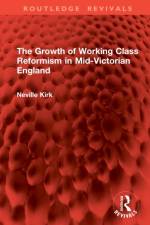
Post-Chartist period saw an easing of class tensions and the growth of a reformist working class. Using evidence based upon the cotton districts of north-west England, the author shows that enhanced socio-political stability owed much to economic restabilisation in this book (originally published in 1985).
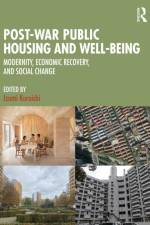
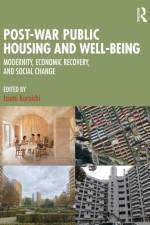
This collection illustrates the evolving role of housing as a symbol of modernity, a tool for economic recovery, and a response to societal transitions. It draws on case studies that focus on the intersection of public housing, well-being, and social change in the aftermath of the Second World War.
This collection illustrates the evolving role of housing as a symbol of modernity, a tool for economic recovery, and a response to societal transitions. It draws on case studies that focus on the intersection of public housing, well-being, and social change in the aftermath of the Second World War.
Gain a strong understand of today''s key mathematical concepts and learn how to use math for success in business today with Brechner/Bergeman''s CONTEMPORARY MATHEMATICS FOR BUSINESS AND CONSUMERS, 9E. This reader-friendly approach helps you overcome any math anxiety and confidently master mathematical concepts. A proven step-by-step instructional model allows you to progress through one topic at a time without being intimidated or overwhelmed. Learning features connect the topics you''re learning to the latest business news and even provide helpful personal money tips. You can immediately practice concepts and hone essential skills with more than 2,000 exercises. Jump Start problems introduce each new topic and provide worked-out solutions to help you start homework, while Master-it Problems offer detailed interactive explanations. In addition, author-created videos walk you step-by-step through sample problems to ensure understanding.
The British economy altered radically between 1934 and 1947. Some of the most dramatic changes were in Wales as its struggling private-sector-led economy was supplanted by one dominated by the state. Initial changes were barely noticeable as pre-war rearmament had little impact on its economy and labour market - yet wartime demands for munitions and raw materials prompted the state to govern an all-encompassing mobilisation that upended its relations with business and eliminated unemployment. New factories employed many thousands of people, agriculture was modernised and metal manufacturing thrived, although coal mining remained mired in crisis. As the war ended, lessons learnt during the conflict helped guide the government as it reconverted the economy to peacetime while retaining a dominant role. This book is the first to fully set out and explore these linkages in Wales between government planning, workplaces and their employees.
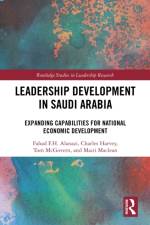
Leadership Development in Saudi Arabia offers a comprehensive examination of the role of leadership development in expanding capabilities for national economic development, accelerating realization of the ambitious goals of Vision 2030, the country's blueprint for socioeconomic transformation.
Carbon pricing is one of the key policy instruments available to help countries reach the goals of the Paris Agreement and the United Nations Framework Convention on Climate Change (UNFCCC).
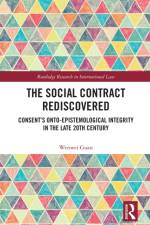
The Social Contract Rediscovered conducts a critical analysis of the historical evolution of legitimacy, tracing its development from natural law to positive law and finally to post-modern critiques. It fills a scholarly gap by addressing the overlooked aspect of the consent process.
This book provides a robust argument for an upgrade of the financial system to enable a more sustainable approach. The author argues that a new green Bretton Woods 2.0 will provide the agenda to transform our economy and our society, and a Green Transition plan is included in the book.
Building The City elaborates new critical insights into the everyday lives of migrant workers in cities around the world.
Identity politics has widened representation for the marginalised groups in democracies, while neoliberalism has deepened inequality. This volume finds answers to the paradox of widening representation and worsening inequality especially in India exploring the themes of development and identity in recent times.
How the subtle but significant consequences of a hotter planet have already begun-from lower test scores to higher crime rates-and how we might tackle them todayIt's hard not to feel anxious about the problem of climate change, especially if we think of it as an impending planetary catastrophe. In Slow Burn, R. Jisung Park encourages us to view climate change through a different lens: one that focuses less on the possibility of mass climate extinction in a theoretical future, and more on the everyday implications of climate change here and now. Drawing on a wealth of new data and cutting-edge economics, Park shows how climate change headlines often miss some of the most important costs. When wildfires blaze, what happens to people downwind of the smoke? When natural disasters destroy buildings and bridges, what happens to educational outcomes? Park explains how climate change operates as the silent accumulation of a thousand tiny conflagrations: imperceptibly elevated health risks spread across billions of people; pennies off the dollar of productivity; fewer opportunities for upward mobility. By investigating how the physical phenomenon of climate change interacts with social and economic institutions, Park illustrates how climate change already affects everyone, and may act as an amplifier of inequality. Wealthier households and corporations may adapt quickly, but, without targeted interventions, less advantaged communities may not. Viewing climate change as a slow and unequal burn comes with an important silver lining. It puts dollars and cents behind the case for aggressive emissions cuts and helps identify concrete steps that can be taken to better manage its adverse effects. We can begin to overcome our climate anxiety, Park shows us, when we begin to tackle these problems locally.
The destruction left by Nazi Germany was horrendous. Tobias Straumann tells the story of how, why, and to what extent 'Hitler's Debt' was 'paid' in the aftermath of WWII.
This 2-volume handbook covers the importance of quality management tools and construction management principles, procedures, concepts, methods, and tools. Due to the varied nature of construction management processes, the addition of certain topics, and for proper understanding of the information the new edition is divided into two volumes.
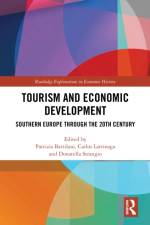
By the end of the nineteenth century, there were already some countries in southern Europe whose economies benefitted from the arrival of tourists. But it was during the twentieth century, and particularly after the Second World War, that the phenomenon of mass tourism arrived and dramatically impacted the economies of southern Europe.
Everything in our world can be interpreted as a sign. This opens up the question: How do we proceed from semantics to pragmatics, from theory to practice and vice versa? What is the nature of the relation between interpretation, action and reality? And, what can we learn by viewing economics and the economy through this lens?
Abonner på vårt nyhetsbrev og få rabatter og inspirasjon til din neste leseopplevelse.
Ved å abonnere godtar du vår personvernerklæring.