












Gjør som tusenvis av andre bokelskere
Abonner på vårt nyhetsbrev og få rabatter og inspirasjon til din neste leseopplevelse.
Ved å abonnere godtar du vår personvernerklæring.Du kan når som helst melde deg av våre nyhetsbrev.

Romi Neustadt is passionate about helping others build lucrative direct sales and network marketing businesses that help create lives with more freedom and flexibility, greater purpose and a lot more fun. In this book she offers you the same direct, no-BS coaching she's given to tens of thousands to help you acquire the skills to build this sucker and teach your team to do the same. And, equally important, she'll work on your mindset so you stop overcomplicating it all and stop letting the negative voices in your head win.You're going to learn:*; The Posture to confidently connect with anyone about your businessand your products.*; The Possibilities for a lucrative, efficient and enormously rewarding turn key business.*; The Power that's already within you to build the life you really wantif you dare.
If you want to be the best, you have to have the right skillset. From sales strategy and account management to negotiation and customer service,THE ULTIMATE SALES BOOK is a dynamic collection of tools, techniques, and strategies for success. Discover the main themes, key ideas and tools you need and bring it all together with practical exercises.This is your complete course in successful selling. ABOUT THE SERIESULTIMATE books are for managers, leaders, and business executives who want to succeed at work. From marketing and sales to management and finance, each title gives comprehensive coverage of the essential business skills you need to get ahead in your career. Written in straightforward English, each book is designed to help you quickly master the subject, with fun quizzes embedded so that you can check how you're doing.
This book presents a practical approach to ensuring your retail stores success with consumers.It explores topics, such as merchandising and display techniques, retail promotions, consumer perception and behavior, impulse buying, store environment and operations, visual merchandising, customer care, and the promotional work force.Simple, practical, and illustrated with real photos taken in many countries, this book allows even a small store with a limited budget to stay ahead of global retailers with limitless resources.Learn how to: pick the best location to locate a store; make your exterior design inviting; set up an ideal atmosphere for purchasing; understand about gondola arrangement and planograms; analyze your customers conduct different types of promotions.
If you want to be the best, you have to have the right skillset. From strategy, mobile and ecommerce to social media, SEO and PR, THE ULTIMATE MARKETING & PR BOOK is a dynamic collection of tools, techniques, and strategies for success. Discover the main themes, key ideas and tools you need and bring it all together with practical exercises.This is your complete course in modern marketing. ABOUT THE SERIESULTIMATE books are for managers, leaders, and business executives who want to succeed at work. From marketing and sales to management and finance, each title gives comprehensive coverage of the essential business skills you need to get ahead in your career. Written in straightforward English, each book is designed to help you quickly master the subject, with fun quizzes embedded so that you can check how you're doing.
Finally the book explore how both younger and older consumers perceive the representation of older people in advertising as stereotypical and partly negative, and are willing to boycott companies portraying older people negatively.
In 1933, John W. Hill opened the New York office of what would become the most important public relations agency in history: Hill & Knowlton, Inc. The Voice of Business chronicles Hill & Knowlton's influence on American public discourse in the years following World War II.
Branding always seems to be shrouded with mystery. What is branding? How do we brand anything? Why can't we just leave it to the marketing guys?Are You Brand Dead? is a light-hearted and essential guide book for brand owners to help them unravel the mystery of branding and build a brand through a tried and proven methodology – the Creativeans BrandBuilder™. A brainchild of brand consultants Kimming Yap and Yulia Saksen, and writer Judy Tham, this self-guide is a practical companion for every CEO, entrepreneur, marketer, communication specialist and business student. It ensures that those who want to learn about branding can do so easily, less the industry jargon.The book also features step-by-step instructions on how to build a brand, self-assessments at the end of each chapter, and case studies on successful brands that offer insights on how branding has helped these companies in their respective industries.If you are looking to breathe new life into your brand or desperately seeking help to revive what is almost or already dead, Are You Brand Dead? is the answer to your problem. "...the book's brevity and focus will make it a valuable read." Publishers Weekly
Game Changer is a compilation of tried and true practices that have helped generate top producers, and high income earners at the top of their industry across the country. There is a clearly defined process to success and Game Changer explores all aspects of that process as it relates to building results and creating the income and life style you are working so hard to create. Through its pages you will discover the central pillars of success and become empowered through the applied practices of top performers while comparing their efforts and results to average sales professionals who have fallen by the wayside. In the end you will find these practices of high performers, also transfer to your personal world and will help create a more meaningful, moment focused, productive life.
Coffee is one of the most important cash generative crops in the mid hill regions of Nepal. This study examines the production economics along with marketing performance of coffee in Pakuwa VDC of Parbat district, Nepal. The Survey was done in June 2014. Data collection was conducted through semi-structured pre-tested questionnaire administered on 40 farmer respondents selected randomly. Gross margin analysis, profitability index and the benefit-cost ratio (B-C ratio) were used to analyze the production economics of coffee in the study area.
The present book has been written with two clear objectives in mind - to enable researchers, irrespective of their discipline, to develop the most appropriate methodology for their research studies; and to make them familiar with the art of using different research methods and techniques. It is hoped that the humble efforts made in the form of this book will assist in the accomplishment of exploratory as well as result-oriented research studies. The book is primarily targeted to serve as text book to Post Graduate, M.Phil. and Ph.d students of research methodology in all disciplines of various universities. The book seems to be designed specifically for those students who are newcomers to research, and who may have a basic barrier with regard to the subject. The areas covered in the book follow a simple-to-complex approach in terms of their discussion. Overall, this book clearly reflects the teaching experience of the author with this subject. The book can be of value to researchers by introducing some information on how to carry out reviews of literature and its importance in research. All possible efforts have been made to further enhance the usefulness of the book. The feedback received from different sources has been incorporated.
This guide describes the self-publishing process in an easy-to-follow manner. After defining what self-publishing is, it outlines the essential considerations you will face as a self-publishing author. First, it walks you through the top five goals of most authors. Then it addresses the manuscript plan, followed by editing, design, publishing, distribution, and marketing. These nine short chapters will quickly teach you how to self-publish your title calmly and successfully.
Contemporary public relations practice has developed over the last several decades from the weak third sister in marketing, advertising, and public relations mix to a full player. To help you keep up to speed with the exciting changes and developments of publications, this book has been updated to provide you with the necessary understanding of the problems and promises of public relations research, measurement, and evaluation. As a public relations professional, this book will guide you through the effective use of methods, measures, and evaluation in providing grounded evidence of the success (or failure) of public relations campaigns. This third edition takes a best practices approach-one that focuses on choosing the appropriate method and rigorously applying that method to collect the data that best answers the objectives of the research. It also presents an approach to public relations that emphasizes the profession's impact on the client's return on investment in the public relations function, the measurement of social media and the use of standardized measures.
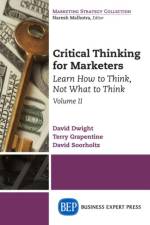
This second volume of Critical Thinking for Marketers expands your background knowledge of other areas of critical thinking that are making major contributions to both marketing as a social science and marketing as an applied science. Section I, Think Better, provides introductory discussions of - marketing as a science; the difference between correlation and causation; the meaning of what a "e;concept"e; is and why it is critical for marketers to develop good concept definitions (e.g., "e;What is customer satisfaction?"e;); why the 18th century Scottish philosopher David Hume is relevant to marketers today; and the impact that behavioral economics is having on how marketers do their job. Section II, Cognitive Biases and Their Importance, talks about recent discoveries in cognitive psychology and neuroscience that have relevance to marketers. You'll learn that marketers need to be aware of their own cognitive biases and irrational thinking processes, which often lead to making bad decisions, and that the retail and business customers we market to are not as rational as we may think and hope they are. Finally, Section III, Conclusions, draws on both Volumes I and II to summarize the book's primary messages with helpful hints on applying your new tools and making better marketing decisions.
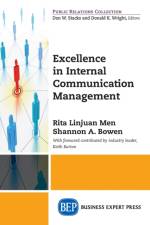
This book integrates theories, research insights, practices, as well as current issues and cases into a comprehensive guide for internal communication managers and organizational leaders on how to communicate effectively with internal stakeholders. Important topics such as engagement, trust, change communication, new technologies, leadership communication, ethical decision making, transparency and authenticity, and measurement are discussed. The book concludes with predictions of the future of internal communications research, theory development, and practices.
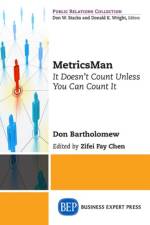
MetricsMan presents opinions, insights, and best practices of public relations and social media research and measurement. It discusses the evolution of measurement, return on investment, the Barcelona Principles, social media measurement models, marketing mix modeling, the battle against advertising value equivalents, and establishing accountability of the public relations profession. Through this book, public relations professionals will be able to set clear measurement goals and objectives, identify right from wrong in the metrics they use, and understand how to apply valid measurement models and frameworks in their practices. This book also provides valuable information for public relations educators and students to learn about the best practices of research and measurement in the industry.
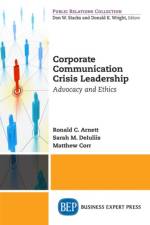
Corporate Communication Crisis Leadership: Advocacy and Ethics addresses strategic moments of leadership during corporate communication crises. This work examines the interplay of issue, argument, conflict, and crisis in eventual organizational success or failure. This book explicates the performative consequences of inadequacy in crisis leadership. With investigation of the 2010 British Petroleum oil spill off the southern coast of the United States.
While the profession of public relations is only a century old, man has been practicing the art of influencing public attitudes since the dawn of civilization. This book looks at modern America through the lens of public relations, showing how many of the events that have changed the course of our nation's modern history were triggered by campaigns to influence attitudes, opinions, and behaviors. And while the channels may have evolved in the modern era-from radio and newspapers, billboards and magazine ads, to television and the Internet, to Tumblr and Instagram-the underlying power of public relations to shape organizations and issues, and to change human behavior has not. Inside this book you'll find case studies on campaigns from the Women's Movement through Civil Rights to public education on health and safety issues that document the role public relations has played in shaping contemporary American culture and society.
"e;A must read for every aspiring entrepreneur. A clear guide to effective and realistic selling for those with a "e;big idea"e; who wish to achieve success for their products and to avoid costly and ineffective pitfalls in their quest. The framework balances entrepreneurs' creativity with a foundation of solid business principles."e; --Jim McCann, Founder, 1-800-FLOWERS
If we are creating most of our competitive advantage at the strategic planning stage, why are we spending so little time on this and so much time on technology? This book is not about why you should digitally transform and become more strategic; it's about how. It lays out the steps that must be taken, the data that should be used, and the decision tree to be followed. Following the principles laid out in this book allows organizational leaders, marketers, and technologists to talk at a high strategic level without getting bogged down in the tactics and delivery that consumes most of the time, attention, and activity in the modern workplace. Use the seven principles of digital business strategy to define the direction of travel for your business in today's digital economy.
This book represents a practical guide to ethical decision-making tailored specifically to the needs of those who practice and study public relations. It traces the development of ethical theory from ancient Greece through the works of Socrates, Plato, and Aristotle to modern day public relations executives including Harold Burson, Robert Dilenschneider, and Richard Edelman. The book helps readers build personal frameworks for ethical reasoning that will enable them not only to recognize the ethical issues at play in public relations practice but also to analyze the conflicting duties and loyalties in these situations. This volume fills a gap in the currently available books on the subject, most of which either lack theoretical grounding or practical application. Illustrative cases used in this book span a wide range of public relations functions. To update readers on issues discussed in this book, the authors have started an online conversation. Please join the discussion at http://Updates.PRethics.com.
All marketing actions, whether preceded by formal or informal decision-making processes, are based on what philosophers call "e;arguments."e; An argument is a set of related statements comprising premises and a conclusion. Ideally, premises give an audience good reasons for accepting your argument's conclusion. In marketing, these "e;conclusions"e; are normative decisions about what an organization should do, for example, raise prices by five percent, add a new sales territory or, perhaps, change the marketing communications mix to invest more in digital and less in print. The premises are the rationale behind why the organization should take such actions. Critical Thinking for Marketers: Learn How to Think, Not What to Think provides information and guidelines on not only how to develop good arguments, but also what it means to develop a good argument. For example, the book describes two basic kinds of arguments-deductive and inductive-and how to examine whether such arguments are "e;good"e; or not. To do this, the book explains 60 logical fallacies-or errors in reasoning-that marketers should avoid. Additionally, the authors' several "e;Think Better"e; discussions examine how fields such as philosophy, behavioral economics, and marketing theory have informed the principles of critical thinking in marketing.
Smart Marketing is designed to help organizations looking for significant growth. Offering a great product or service does not guarantee success-to win these days, a business must also excel at marketing and selling. In most instances, a big marketing team and budget also isn't necessary. To achieve big goals, focus must be put on the most important marketing and sales activities that generate the biggest impact for the business. This book outlines what those activities are and how to implement them. This book will appeal to CEOs, business owners, and independent professionals. It will also be very useful for marketers and sales managers. It is a "e;how to"e; guide to help readers cut through the hype and get straight to what really matters to this audience-growing business and revenue.
This workbook coaches business leaders to magnify the profits of a business. They learn a unique scientific system for predicting and achieving results. Their systematic decisions will spark the profits of any business. This system comprises all strategic decisions in the marketing plan for a business. The first part uses the SWOT Analysis to assess its strengths and weaknesses and identify possible opportunities and threats. The SWOT Analysis clarifies the mission, target market, specialty, and suppliers of the business. The questions at the end of these four chapters guide business leaders to focus on quality, describe key customers, compete on strength, and delegate weaknesses. The next part positions the business relative to its competitors with marketing mix decisions. Business leaders specify its products and services, and how to distribute, promote, and price them. These four chapters close with questions that lead the business to offer treasures, deliver delight, trumpet empathy, and price as valued. The final part motivates them to implement their decisions. The closAing questions motivate business leaders to target key prospects, reward the best, concentrate resources, and jump into action. These twelve decisions transform a marketing plan and build the business. Her unique scientific system coaches business leaders to use the 80/20 rule to magnify their profits.
Abonner på vårt nyhetsbrev og få rabatter og inspirasjon til din neste leseopplevelse.
Ved å abonnere godtar du vår personvernerklæring.