
















Gjør som tusenvis av andre bokelskere
Abonner på vårt nyhetsbrev og få rabatter og inspirasjon til din neste leseopplevelse.
Ved å abonnere godtar du vår personvernerklæring.Du kan når som helst melde deg av våre nyhetsbrev.

The PR Knowledge Book is for everyone, irrespective of where you are in the world-whether a student starting out in this industry, self-employed, a home business, small business, start-up, charity, or any other type of organization wanting to embark on your PR journey or someone just plain curious about what it entails. This book covers everything within the world of PR from how to create a brand, how to use social media, how to be newsworthy, to how to contact the media, how to have a global mind-set, the power of networking, and more. It is written in an easy style, packed with powerful tips, proven tools, and real-life case studies from around the world. In 12 chapters you will discover how to get your brand out there so you can attract clients and new business.
This book explores the basic tenets of service excellence, opening to distinguish customer service from service excellence, and explore the driving aspects of strategy and philosophy.The brand promise to customers creates expectations; hooks targeted and segmented customers into a relationship. Service operations deliver expectations, delight, or on occasion, disappointment, and marketing responds to create loyalty, further delight, or recover the relationship.Freshness of product or service offering, the injection of a characterful sense of fun, and sensitive personalization of service combine to deliver an authentic, pleasurable and memorable service experience prompting much sought loyalty and advocacy. In turn, staff are happy, profits rise and the organization has long-term sustainability.The first volume offers some theoretical background, while the second suggests mechanisms, tools, and techniques to help embed to excellence as the foundation of value that the organization delivers. Both contain practical examples and a self-assessment diagnostic tool to identify organizational areas of strength, and aspects to improve.
This book discusses qualitative research modeling and new approaches of qualitative data collection, interpretation of results, reporting, and deriving managerial implications. Qualitative research manages the fundamental challenge in interpreting the complexities associated with consumer behavior, particularly in large diversified marketplace and guides managers towards understanding consumers. This book discusses qualitative research modeling and new approaches of qualitative data collection, interpretation of results, reporting, and deriving managerial implications. Discussions in the book present new insights on conducting and applying qualitative market research and emphasizes on the application of qualitative research in consumer-centric companies. The book argues that companies need to consider a broader perspective of marketing research to support marketing decisions derived by understanding consumer behavior using qualitative research methodology.
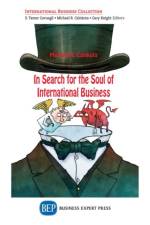
A New World Order has begun for trade and globalization. Inundated with constant information, new concepts, and endless data, individuals are caught in the whirlwind of a fast-paced world, often without the ability to stop and think, particularly when it comes to issues of the soul. I consider the soul the center of our activities and inspirations. If one says of an individual, "e;his soul has left him,"e; one connotes death. This also will apply to societies and corporations. Are we willing to permit the gradual march toward solitude with all the accompanying sharp cutting edges? Will the balloon go up? The reader can judge. I hope to supply the content here. With a foreword by Ambassador Laszlo Szabo, a preface by the Rev. Horkan, and the humorous yet pensive illustrations by award-winning cartoonist David Clark, this book increases one's ability to gain a comprehensive understanding of the most pressing international business and trade issues that the world faces today.
As a constantly evolving and developing industry, the music business environment continues to establish new standards in terms of operational efficiency, dynamics between the different parties involved in the professional cycles, and constructing and performing methodologies in the process of achieving the desired results that all the participants in the music world have to adapt to in order to establish a sustainable career. Hence, the main purpose of this book is to provide practical advice suitable to both aspiring music professionals and artists that need detailed guidance in the process of developing the basis of a fruitful, promising, and sustainable profile, not only in terms of business performance, but psychologically as well.
The focus of the book is to help readers understand how certain concepts and values influence the way Germans like to do business. Germany is the strongest economy in Europe, and one of the largest worldwide. The business climate is good, people are highly skilled, and consumers have plenty of spending money in their pockets; for companies that are doing business internationally, Germany is a market that simply cannot be overlooked. However, many business relationships with Germans come to an end even before they begin; intercultural differences very often result in misunderstandings, frustration, and an unnecessary loss of time and money. Especially with Germans, even small things can be crucial when you are speaking to a (potential) business contact. This book aims at helping students and professionals avoid the common pitfalls that international business people typically step into when dealing with Germans for the very first time. Unlike with the other business- or text-books focusing on culture, this book will do more than just arm you with some simple "e;Dos and Don'ts;"e; it will provide interesting and easy-to- understand descriptions and anecdotes that highlight the cultural standards and dimensions that are (typically) theoretically discussed in scientific texts. Essentially, while talking about what makes "e;the average"e; German tick, readers will be equipped with the relevant background knowledge. The focus of the book is to help readers understand how certain concepts and values influence the way Germans like to do business. It will guide them on how to successfully interact with Germans, whether at trade shows, during virtual and face-to-face meetings, or when they are negotiating their first contract.
This book will bridge the knowledge gap and provide valuable insights into how sustainable HRM practices can contribute not only to organizational sustainability but also to sustainability at large. The 2030 Agenda for Sustainable Development adopted at the United Nations Sustainable Development Summit on September 25, 2015 contains holistic, far reaching, and people-centered set of universal and transformative goals and targets. These call for strengthening capacities and providing an enabling environment for access to opportunities that are sustainable from economic, social, and environmental standpoints. Sustainability focus of the organization needs to go hand in hand with sustainable HRM systems, processes, and practices. But the reality is that sustainability is seldom a part of HR plans or strategic HR practices of most of the organizations. Human Resource Management for Organizational Sustainability offers a new paradigm by focusing on human resource systems and processes from the lens of sustainability. The book puts together the concepts, researches, and practices that advance the understanding of organizational sustainability through human resource management contributed by specialists from Austria, Germany, India, Netherlands, Spain, United Kingdom, and United States, with examples, cases, and review questions. Whereas environment-related aspects have been receiving increasing attention over the years, the "e;people"e; element of social responsibility has received limited attention in management education and also in the business world.
This book explores the basic tenets of service excellence, opening to distinguish customer service from service excellence, and explore the driving aspects of strategy and philosophy.The brand promise to customers creates expectations; hooks targeted and segmented customers into a relationship. Service operations deliver expectations, delight, or on occasion, disappointment, and marketing responds to create loyalty, further delight, or recover the relationship.Freshness of product or service offering, the injection of a characterful sense of fun, and sensitive personalization of service combine to deliver an authentic, pleasurable and memorable service experience prompting much sought loyalty and advocacy. In turn, staff are happy, profits rise and the organization has long-term sustainability.The first volume offers some theoretical background, while the second suggests mechanisms, tools, and techniques to help embed to excellence as the foundation of value that the organization delivers. Both contain practical examples and a self-assessment diagnostic tool to identify organizational areas of strength, and aspects to improve.
This book will help you understand how social media recruitment works and encourages you to take personal branding toward professional career development seriously. What is branding and what makes people passionate about it? How can people develop and maintain a unique online persona? Who are the current trendsetters in personal branding? What makes social recruiting so important in today's business world? Why is it necessary to set up a personal brand strategy early on? What are the future trends in social recruiting and personal branding? The rules of recruitment and job searching have undoubtedly changed with the entry of a new breed of concept workers into the global workforce. We are witnessing the emergence of a non-age-specific generation of professionals who are exposed to ubiquitous digital technology and seek a more impactful job, an easy-going life, and a safe future. Social natives are looking for jobs following strategies that did not exist five years ago. Artificial intelligence, advanced software, wearable gadgets, and social media define today's fast-paced professional world. Social natives use blogs, podcasts, online bios, video resumes, images, selfies, recommendations, and endorsements to demonstrate their skills publicly. In comparison, global organizations take advantage of big data, business intelligence, and people analytics, as well as a plethora of social media screening tools to recruit and retain great talent. This book will help you understand how social media recruitment works and encourages you to take personal branding toward professional career development seriously.
Published in 1837, Hans Christian Andersen's The Emperor's New Clothes tells the tale of two weavers who present a non-existent suit of clothes to the Emperor with the caution that the suit is invisible to those who are unfit for their positions, stupid, or incompetent. As the Emperor parades in his underwear no one dares to say that they see no clothes-with the exception for one small child who exclaims; "e;he isn't wearing anything at all."e; Fast forward to the present day and business owners and managers around the world are told that anyone who cannot see the benefits of social media marketing are unfit for their positions, stupid, or incompetent. As organizations, brands and products fill the social media landscape with meaningless, objectiveless drivel that has interest to no one and serves only to waste resources and alienate customers, a small voice can be heard exclaiming; "e;who told you that was a good idea?"e; The caveat to this contemporary tale is that for a very few organizations, brands and products, social media has provided a kind-of marketing panacea. Correction: make that a very, very few organizations. For the rest, they are metaphorically parading in their digital underwear. All is not lost however. Although many have been duped in a new clothes-esque sting, and that their social media marketing efforts are indeed, invisible-but marketing on social media might just be riding to the rescue.
The Customer Experience is the sensory, cognitive, emotional, social and behavioral dimensions of all activities that connect the customer and the organization over time across touch points and channels. It encompasses all activities involving the customer where the organization is the focal object, including pre-purchase activities (such as exposure to a website ad), and purchase, consumption, and engagement behaviors (blogging, sharing photos). This book analyzes the challenges of creating excellent customer experiences, including the management of technology and new media. It describes how customers co-produce and co-create their experiences, and how these activities influence business revenues and costs. The book takes a deep dive into the psychology of customers, revealing the conceptual building blocks of customer experiences and how they build relationships over time. These ideas provide a business perspective on how to manage relationships with customers to generate cash flows and profitability, including the role of pricing.
The mobile, device-led integration of online and offline worlds has introduced many uncertainties and opportunities. These have driven businesses, researchers, and policymakers to learn more about this rapidly changing domain. To help businesses compete, survive, and thrive in this transforming environment, it is essential to structure their understanding of the field and provide conceptual frameworks as decision aids. In M-Powering Marketing in a Mobile World, we present a concise guide for executives in general, digital marketers, and for interested researchers and policymakers. We identify key emerging trends, develop frameworks based on critical variables, and draw lessons for marketers. The book illustrates the processes by which mobile devices have transformed economies worldwide, the evolving face of Internet usage, strategies adopted by corporations, their applications in retail, emerging data and metric generation processes, as well as policy issues. It explains how mobile devices have become the market's steppingstone toward an IoT-infused environment, a gateway for artificial intelligence-driven marketing processes and the entry portal for a potentially hyperautomated future of consumption.
Traditional marketing faces challenges as never before. The way that people interact with each other and with companies is changing completely in todayOs era of 24/7 connectivity. This book explores tectonic changes in buyer behavior and how businesses are responding to those changes. It describes how data is used to track and analyze customers in almost everything they do, and how marketing communications are delivered with precision to individual mobile devices. The connected customer is blurring the line between online and offline sales resulting in an entirely new purchase cycle.
Each day, millions of consumers venture online to search and exchange product information and to seek out and share opinions. Electronic word-of-mouth (eWOM) communication has been shown to influence consumer actions across a variety of industries (King, Racherla, and Bush 2014). A significant portion of eWOM occurs on social media platforms. Whether it is a status update to Facebook of an upcoming vacation, a picture of a laundry room makeover on Pinterest, or a YouTube video discussing the features on the new iPhone, consumers are turning to a variety of social platforms to make everyday purchasing decisions easier for themselves and others. Indeed, social word of mouth (sWOM)-a subset of eWOM-has incredible reach with the potential to influence over two billion active social media consumers. The purpose of this book is to examine the influence of sWOM and provide guidance on how to operationalize its growing power. The goal of this book is to bring together industry best practices and academic research to help construct social media content that speaks with your brand voice, stimulates engagement, inspires consumers to share (#share), and complies with industry and federal guidelines. Each chapter highlights a key area of sWOM that will further your understanding and provide actionable information to assist you in mobilizing positive sWOM for your company.
Marketing is arguably amidst a paradigm shift. With the emerging value co-creation perspective, a single transaction can blossom to a process in which the customer and the marketer collaborate (rather than negotiate) for best total value through products, features, delivery terms, maintenance, and financing options for both B2B as well as B2C markets. Marketers increasingly need to develop and maintain long-term, win-win relationships that extend beyond customers, such as those with distributors, dealers, suppliers, competitors and other external influencers. Business executives, marketing students, and those who are interested in learning about the transformative power of relationship marketing and CRM analytics in the business enterprise would highly benefit from reading this book.
Despite annual predictions of its demise, email marketing remains one of the most important tools for businesses and other organizations. The reason is simple. Other communication tools, including social and digital media channels, cannot duplicate or recreate the unique capabilities of email marketing. This book is for those who wish to learn more about how email marketing works, whether as students, teachers, or practitioners. The authors recap the history of email and email marketing and explain how it informs email today. They cover the fundamentals of email marketing, including types of emails, the elements of an email, email metrics, best practices for email for improving performance, list development, and the benefits of segmenting an email list. Also addressed are special topics in email strategy, including the psychology of email recipients, AB testing for optimizing email elements, integrating email with social media, and aligning email with big data sources.
This book focuses on building and maintaining brand community in the emerging, dynamic space of social media. A theoretical model encompassing brand characteristics, relational factors, and characteristics of the brand user community is used as a structure to explain the various aspects of online brand communities. Furthermore, the authors discuss how online brand communities differ from and can be used to complement traditional, face-to-face brand communities. Brand managers, social media managers, and other members of the brand team will find this book useful for strategic decision-making in both building and maintaining brand communities. In addition, this book will serve as a practical guide for working professionals enrolled in executive education degree programs as these programs continue to be developed in universities throughout the world.
Abonner på vårt nyhetsbrev og få rabatter og inspirasjon til din neste leseopplevelse.
Ved å abonnere godtar du vår personvernerklæring.