




















Gjør som tusenvis av andre bokelskere
Abonner på vårt nyhetsbrev og få rabatter og inspirasjon til din neste leseopplevelse.
Ved å abonnere godtar du vår personvernerklæring.Du kan når som helst melde deg av våre nyhetsbrev.

Learn to transform your perspective and lead with positivityIn The Negativity Fast: Proven Techniques to Increase Positivity, Reduce Fear, and Boost Success, sales leader and strategist Anthony Iannarino delivers an exciting and effective new take on creating and sustaining powerful sales processes. You'll learn to lead with positivity as you harness negative emotions to make lasting changes for the better and explore the power of gratitude to transform your mental outlook.Discover how to reframe the negative events of your life into the ways they made you stronger and prepared you for future setbacks. The author also offers:* Concrete advice on perspective-taking and strategies for avoiding being triggered by people with different beliefs* A thirteen-week Negativity Fast, in which you'll eliminate sources of negativity for 90 days and introduce positivity into your mental diet* Discussions of the necessity for optimism in a difficult worldAn inspiring and exciting take on leadership, The Negativity Fast walks you through how to cultivate a positive attitude and perspective you can pass on to the people who follow you.
This book focuses on the Base of the Pyramid (BOP) in Africa, and examines the role of the private sector in the fight against poverty.
This book offers a critical examination of the latest published research on sport and environmental sustainability. It examines how strategic management, policy and education influence the relationship between sport and the natural environment, and how the advancement of knowledge via research journals can have an impact on policy and practice.
We've helped thousands of entrepreneurs easily build the website of their dreams! Let us guide you through our website planning process and get you confident and excited about your website as you watch all those leads and sales pouring in!
Obwohl sich Journalismus und Unternehmenskommunikation in Funktion und Selbstverständnis immer noch deutlich voneinander unterscheiden, hat die digitale Transformation für eine zunehmende Konvergenz beider Berufsfelder gesorgt. Die Frage, wie und unter welchen Voraussetzungen Öffentlichkeit erzeugt wird, stellt sich angesichts eines tiefgreifenden Medienwandels mit zunehmender Dringlichkeit. Dieses Buch beschreibt das Spannungsverhältnis zwischen beiden Feldern mit Blick auf technologische, ökonomische und praktische Aspekte. Expert*innen aus Journalismus, Unternehmen und Forschung erläutern ¿ wissenschaftlich fundiert und anhand von zahlreichen Praxisbeispielen ¿, wie sich das neue Miteinander gestaltet: von den jeweils berufsspezifischen Umbrüchen über Wissensvermittlung, -transfer und Netzwerkarbeit bis hin zu neuen Businessmodellen und -strategien für beide Berufsfelder.Ein Buch für Journalist*innen, journalistische Unternehmer*innen, Kommunikationsverantwortliche in Unternehmen, Studierende und praxisorientierte Wissenschaftler*innen.Mit Beiträgen von:¿ Dr. Matthias Albisser, Hochschule Luzern¿ Prof. Dr. Christopher Buschow, Bauhaus-Universität Weimar¿ Prof. Dr. Matthias Degen, Westfälische Hochschule¿ Prof. Dr. Alexander Godulla, Universität Leipzig¿ M.A. Benjamin Held, Westfälische Hochschule¿ Dr. Constanze Jecker, Hochschule Luzern¿ Prof. Dr. Florian Meißner, Hochschule Macromedia¿ M.A. Megan Neumann, Ostfalia Hochschule für angewandte Wissenschaften¿ Prof. Dr. Marc-Christian Ollrog, Ostfalia Hochschule für angewandte Wissenschaften¿ Rosanna Planer, Universität Leipzig¿ Prof. Dr. Lars Rademacher, Hochschule Darmstadt¿ Prof. Dr. Christoph Raetzsch, School of Communication and Culture¿ Dr. Jonas Schützeneder, Katholische Universität Eichstätt-Ingolstadt¿ Prof. Dr. René Seidenglanz, Quadriga Hochschule¿ M.A. Hauke Serger, Bauhaus-Universität Weimar¿ Dr. Klaus Spachmann, Universität Hohenheim¿ B.A. Karoline Steinbock, Ostfalia Hochschule für angewandte Wissenschaften¿ M.A. Maike Suhr, Bauhaus-Universität Weimar¿ Dr. Daniel Vogel, fög ¿ Forschungszentrum Öffentlichkeit und Gesellschaft¿ Prof. Dr. Stefan Weinacht, Westfälische Hochschule¿ Prof. Dr. Cornelia Wolf, Universität Leipzig
In a globalized world full of noise, brands are constantly launching messages through different channels. For the last two decades, brands, marketers, and creatives have faced the difficult task of reaching those individuals who do not want to watch or listen to what they are trying to tell them. By producing fewer ads or making them louder or more striking, more brands and communications professionals are not going to get those people to pay more attention to their messages; they will only want to avoid advertising in all media. The Handbook of Research on the Future of Advertising and Brands in the New Entertainment Landscape provides a theoretical, reflective, and empirical perspective on branded content and branded entertainment in relation to audience engagement. It reviews different cases about branded content to address the dramatic change that brands and conventional advertising are facing short term. Covering topics such as branded content measurement tools, digital entertainment culture, and government storytelling, this major reference work is an excellent resource for marketers, advertising agencies, brand managers, business leaders and managers, communications professionals, government officials, non-profit organizations, students and educators of higher education, academic libraries, researchers, and academicians.
Marketers have attracted criticism from advocates of marketing ethics for not giving equal attention to all consumers. In other contexts, other nomenclatures such as "less privileged" or "low-income consumers" are being used to describe consumers. However, a critical view of the scope of the disadvantaged consumers shows that it is beyond having limited income and encapsulates all forms of limitations that prevent full inclusion in marketplace opportunities. Critical Perspectives on Diversity, Equity, and inclusion in Marketing focuses on exploring diversity, equity, and inclusion in marketing as related to individuals, groups, organizations, and societies. It provides insight into consumption practices, diversity, inclusion, limitations, and their theoretical and practical implications. Covering topics such as ethnic identity negotiation, marketing implications, and consumer vulnerability, this premier reference source is an eclectic resource for business leaders and managers, marketers, sociologists, DEI professionals, libraries, students and educators of higher education, researchers, and academicians.
Create and manage a powerful marketing technology stack that will add value and connect all key areas of marketing, with this jargon-free and easy-to-follow guide.
This book covers the fundamentals of research, including all the basic elements of method, techniques and analysis. The presentation is from primarily a pragmatic and user-oriented perspective which aides the student to evaluate the research presented to them. It explores cutting-edge technologies and new horizons while assuring students have a thorough grasp of research fundamentals. It: contains a wealth of modern methods and techniques not found in competing texts; provides numerous illustrative cases at the end of each section; integrates international marketing research throughout instead of placing it in a separate chapter; has a full chapter devoted to the essential topic of online research.
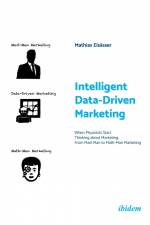
Following Einstein¿s sentence: ¿Everything should be made as simple as possible, but not simpler. If you can¿t explain it simply, you don¿t understand it well enough,¿ this book puts a spotlight on the complex marketing ecosystem from a physicist¿s point of view. Today¿s marketing world is overcomplex; CMOs face the challenge to transform their current target operating models towards a 100% customer-centric and data-driven way of working. A journey from good old mad-men toward math-men marketing.This book consists of three parts: The first part strips down the complexity of the marketing universe to the leanest frame of reference and then brings back the complexity, step by step, in single dimensions. Part two and three just follow these thoughts and provide a detailed description of 56 small atoms that can be used in a maturity assessment of your marketing. How to use them in a broader transformation concludes the book.In summary: An end-2-end guideline how to pursue and master the transformation from mad-men towards a math-men marketing operating model.
Not so long ago, being reasonably trustworthy was good enough. But soon only the extremely trustworthy will thrive. In the age of smartphones and social networks, every action an organization takes can be exposed and critiqued in real time. Nothing is local or secret anymore. If you treat one customer unfairly, produce one shoddy product, or try to gouge one price, the whole world may find out in hours, if not minutes. The users of Twitter, Yelp, and similar outlets show little mercy for bad behavior. The bar for trustworthiness is higher than ever and continues to rise. Bestselling authors Don Peppers and Martha Rogers, Ph.D., argue that the only sane response to these rising levels of transparency is to protect the interests of customers proactively-even if that requires spending extra money in the short run to preserve your brand reputation in the long run. The payoff of generating extreme trust will be worth it. With a wealth of fascinating research as well as practical applications, this book will show you how to earn-and keep-the extreme trust of everyone your company interacts with.
Abonner på vårt nyhetsbrev og få rabatter og inspirasjon til din neste leseopplevelse.
Ved å abonnere godtar du vår personvernerklæring.