















Gjør som tusenvis av andre bokelskere
Abonner på vårt nyhetsbrev og få rabatter og inspirasjon til din neste leseopplevelse.
Ved å abonnere godtar du vår personvernerklæring.Du kan når som helst melde deg av våre nyhetsbrev.

This book aims to improve the understanding of smart service innovations. It contributes to evidence-based knowledge about service systems engineering and its embedding in service ecosystems, in particular how existing reference process models can be extended by considering actors, roles, activities and methods. At the same time, it aims to stimulate discussions on how methods from different disciplines can be used and combined for the development of various aspects of Smart Service Systems. Thus, the book offers support for practitioners to better organize and execute SSI projects and to develop internal competencies.
The North American Wildlife Conservation Model (NAM) is the driver of a strong anthropocentric stance, which has legalized an ongoing, annual exploitation of hundreds of millions of wild animals, who are killed in the United States through trapping, hunting and other lethal practices. Increasingly, the American public opposes the killing of wild animals for recreation, trophies and profit but has little-if any-knowledge of the Model. The purpose of this book is to empower the public with knowledge about the NAM's insufficiencies and to help expedite the shift from lethal to compassionate conservation, an endeavour urgently needed particularly under the threats of climate change, human population growth and accelerating plant and animal species extinctions.With a focus on trapping, this book exposes the NAM's belief in human supremacy and its consequences for wild animals and their ecosystems, the same value that is driving the ongoing global destruction of nature and accelerating species extinction. Motivated by a deep concern for wild animals who suffer and whose lives are extinguished each year by 'sportsmen and women', this book exposes the violent treatment of wild animals inherent in governmental-promoted hunting and trapping programs, while emphasizing the importance of empathy and compassion for other animals in conservation and in our lives.
This volume brings together contributions from women business scholars from a range of disciplines and countries. The starting point was a collaborative research meeting organised by Daughters of Themis: International Network of Female Business Scholars in June 2017. The volume highlights the difficulties and the possibilities that lie in working together across disciplines with the aim of achieving corporate sustainability. The volume is written from the perspective of women business scholars, thereby offering outside viewpoints in fields that still are very much dominated by men, and fresh insights and innovate ideas. In three main parts, the authors address the need for interdisciplinarity in research to identify ways to ensure the contribution of business to sustainability, showcasing a number of theoretical and applied approaches for researching sustainable business. The volume 's introductory chapter situates the volume in discourses of sustainability and corporate sustainability. It presents the Daughters of Themis Network and provides a short description of the successive eleven chapters. In Part I, Reflections, contributors discuss the significance of interdisciplinary research, how to work across disciplines, as well as the challenges of doing so. In Part II, Theory, contributors discuss theoretical and methodological aspects of interdisciplinary research. Part III presents the Practice of interdisciplinary research. In the introductory chapter, the editors reflect on the insights that can be drawn out of the contributions, and discuss the potential for future developments of interdisciplinary research for sustainability, as well as how interdisciplinary research can be communicated. The book is intended for business scholars, and will particularly appeal to those working in law, accountancy and finance, management, and organization studies.
Dieser Leitfaden führt zuverlässig durch alle Entwicklungsstadien von Unternehmensbüchern. Kurz und komprimiert wird aufgezeigt, worauf es bei der Gestaltung und Vermarktung ankommt. Die Autorin erläutert das Vorgehen bei der Planung, Realisierung und Publikation von Corporate Books als Premium-Instrumenten der Unternehmenskommunikation.Unternehmensbücher haben viele Vorteile: Sie erhöhen den Bekanntheitsgrad, stärken die Markenidentität, dienen als Zugpferd für Kampagnen und unterstreichen den Expertenstatus für ein Thema. Sie können von Konzernen, Mittelständlern, Kleinunternehmern und Freiberuflern gleichermaßen eingesetzt werden. Gekonnt positioniert, entfalten Corporate Books ihre Wirkung langfristig und beeinflussen die Wahrnehmung in der Öffentlichkeit positiv.Die aktualisierte 2. Auflage wurde überarbeitet, verbessert und ergänzt. Der InhaltIndustrie-Unternehmen publizieren über ihre Geschichte(n)Dienstleister publizieren ExpertenwissenDie strategische Planung: Buchprojekte gekonnt einfädelnDie Umsetzung: Von der Manuskriptgestaltung bis zur VermarktungDie ZielgruppenInhaber, Geschäftsführer und Verantwortliche für Corporate Communications, PR und MarketingAgenturen sowie freie Buch-DienstleisterDie AutorinDr. Sonja Ulrike Klug realisiert seit über 30 Jahren Buchprojekte im Auftrag von mittelständischen Unternehmen und Dienstleistern. Mehr als 200 Corporate Books hat sie betreut, darunter etliche, die zu Bestsellern und Longsellern geworden sind. Sie ist selbst Autorin von 24 Büchern und zahlreichen Artikeln zu Themen der Unternehmenskommunikation, der Wirtschafts- und Kulturgeschichte.
Are you struggling to make sense of the latest emerging technology trends, like artificial intelligence (AI), and manage the change they bring about? If so, you're not alone. Many business leaders are grappling with the same challenge. This book provides a framework to help you become an Innovation Navigator, who can lead and navigate their business through innovation and transform emerging technology trends into revenue-generating reality and success.Let this book unlock the Innovation Navigator in You!Benefits of reading this book include:Gain the foresight to develop winning strategies that leverage technology for competitive advantageLearn how to manage the delicate balance between innovation and risk management for maximum successDiscover how to determine the potential impact of emerging technologies and use them to your advantageUnderstand how embracing a growth mindset and overcoming limiting beliefs will empower you to lean into innovationThe writing style of the book "Become an Innovation Navigator" is informative, engaging, and inspiring. The author uses a conversational tone to explain complex concepts in a clear and accessible way. The book is filled with practical advice, real-world examples, and thought-provoking strategies that inspire readers to think differently about innovation and its role in their personal and professional lives.¿¿¿
Understanding Creative Entrepreneurship In the world of art and creativity, entrepreneurship has become an essential aspect of success. Artists and creative individuals are not only expressing their passions but also seeking to turn their talents into profitable ventures. This subchapter aims to provide a comprehensive understanding of creative entrepreneurship, exploring its significance and offering valuable insights to anyone interested in pursuing a career in the art of creativity. Creative entrepreneurship is the fusion of artistry and business acumen. It involves harnessing one's creative abilities and channeling them into viable and sustainable ventures. It goes beyond the traditional perception of artists as solely driven by passion, emphasizing the importance of strategic thinking, marketing, and financial management. One of the key aspects of creative entrepreneurship is recognizing the value of one's creative work. Artists often struggle with attaching a monetary value to their creations, fearing that commercialization might compromise their artistic integrity. However, understanding the market and identifying the target audience is crucial for creative entrepreneurs to thrive. By finding the right balance between artistry and profitability, artists can transform their passions into profitable businesses without sacrificing their artistic vision. Another vital element of creative entrepreneurship is innovation. In an ever-evolving creative landscape, entrepreneurs must continuously adapt to changing trends and technologies. Embracing innovation allows artists to opportunities. By staying abreast of industry developments and adopting new tools and techniques, creative entrepreneurs can stay ahead of the curve and carve a niche for themselves in the competitive world of creativity. Furthermore, creative entrepreneurs must develop strong business skills to effectively manage their ventures. This includes financial planning, marketing strategies, networking, and legal considerations. Understanding these crucial aspects helps artists build sustainable businesses and establish themselves as professionals in their respective fields. Ultimately, creative entrepreneurship offers artists the opportunity to not only pursue their passions but also thrive in the business world. By understanding the significance of strategic thinking, innovation, and business acumen, artists can successfully navigate the challenges and find fulfillment in their creative endeavors.
This book considers new analytics and AI approaches in the areas of inventory control, logistics, and supply chain management. It provides valuable insights for the retailers and managers to improve business operations and make more realistic and better decisions. It also offers a number of smartly designed strategies related to inventory control and supply chain management for the optimal ordering and delivery policies. The book further uses detailed models and AI computing approaches for demand forecasting to planning optimization and digital execution tracking. One of its key features is use of real-life examples, case studies, practical models to ensure adoption of new solutions, data analytics, and AI-lead automation methodologies are included.The book can be utilized by retailers and managers to improve business operations and make more accurate and realistic decisions. The AI-based solution, agnostic assessment, and strategy will support the companies for better alignment and inventory control and capabilities to create a strategic road map for supply chain and logistics. The book is also useful for postgraduate students, researchers, and corporate executives. It addresses novel solutions for inventory to real-world supply chain and logistics that retailers, practitioners, educators, and scholars will find useful. It provides the theoretical and applicable subject matters for the senior undergraduate and graduate students, researchers, practitioners, and professionals in the area of artificial intelligent computing and its applications in inventory and supply chain management, inventory control, and logistics.
This book mainly discusses the background of e-commerce, the basic knowledge of e-commerce, the basic models of e-commerce, the basic principles of e-commerce and the cases of e-commerce. This book has formed a theoretical system of e-commerce with a clear integration boundary. The introduction of the systematic theory is guided by the background of e-commerce, centered on the model of e-commerce, paved with the principles of e-commerce and integrated with the cutting-edge cases. This book defines the basic concepts, models and principle of e-commerce in the form of mathematical analysis and analyzes the basic theory of e-commerce from the perspective of mathematical model. This enables readers to form an abstract understanding of the connotation and extension of e-commerce. It establishes a knowledge system with the background of social ecology, engineering ecology and innovative ecology, taking the models of e-commerce as the core, the principles of e-commerce as the process, the architecture of e-commerce as the platform and the operation and management of e-commerce as the means to integrate the knowledge into application. This book uses case study to comprehensively analyze and apply the knowledge system involved in e-commerce, combining theoretical research with engineering research. Through this book, readers can systematically master all kinds of theories involved in e-commerce. This book aims at different professional and diverse reader groups. It can be used as the basic books for students of various e-commerce-related specialties.
This book attempts to establish an inter-disciplinary discourse evaluation framework to analyze multi-dimensional discursive features along 4 dimensions in Chinese and American banks' CSR reports: sentiment, readability, CSR keyword, and visualization. It analyzes Chinese and American banks' different discursively constructed CSR images via the employment of various discursive features in CSR reports within their different contexts. Lastly, it examines the effects of Chinese and American banks' discursively constructed CSR images on capital markets, with an inter-disciplinary approach of linguistics, management, and economics. Theoretically, this book contributes to the development of institutional identity's cross-disciplinary research. Additionally, it reveals the problem-solving function of discourse. This sheds light on theoretical research into both corporate governance and business discourse. Practically, this book contributes to the improvement of Chinese banks' awareness in CSR disclosure and the establishment of Chinese banks' international images. Since more and more Chinese companies in different sectors are choosing overseas listings, findings in this book also have practical implications for their information disclosure, international images construction, and corporate value enhancement through corporate narratives, such as annual reports and IPO prospectuses.
This is the first of its kind book that describes key elements of enterprise data and analytics strategy, and prescribes a pragmatic approach to define the strategy for large enterprises. The book is based on successful digital transformation experience of multiple Fortune 500 and other large enterprises. It is estimated that more than 50% of data and analytics initiatives fail globally because of the inherent complexity of such initiatives. Some of the questions that enterprises struggle with are: How to define enterprise data and analytics strategy? What are the key elements that should be considered while doing so? Why one-size-fits-all approach does not work for all enterprises? How to align data and analytics initiative with the business strategy of the CEO? How to establish a futuristic technology and architecture foundation, given the exponential rate of innovation in data and analytics technologies? How to define the right data and analytics organization model? Why data and analytics organization and processes need to be different from other functions? How to manage organizational change to ensure success of data and analytics initiative? How to define a business value measurement framework and calculate ROI from data and analytics initiative? What are the key skills required in a data and analytics leader to wade through political and other challenges of a large enterprise? This book will help executives, chief digital/analytics officers, data and analytics professionals, and consultants, in answering the above questions. It will help them in addressing various dilemmas that they face every day and making their enterprises data-driven.
The fight for a better future needs radical collaboration, with the joint effort of governments, NGOs, investors, and corporates, but it also needs exponential technological innovation and new perspectives. Almost a miracle is needed: But this miracle is increasingly being made possible by female leaders from all generations, who have found the courage to act. The book presents stories of sustainability, from small startups to large corporations, but above all, it tells the stories of extraordinary women who have decided to dedicate their time and personal resources to try to save our world. It intends to show real life examples of women, who made pivotal changes in their lives, creating value for all stakeholders at the table, including the planet we live in. Their stories demonstrate that this is not a battle that we win once and for all, but rather a continuous progress, in which we will be evolving the way we leverage and utilize the resources around us. No project has been able to tackle the sustainability dilemma with such grace, and very few with so many real-life examples of leadership and impact from a remarkable group of women, who are changing the rules of the game in their own industries and fields.
"The fully updated fifth edition of the go-to guide for crafting winning essays for any type of graduate program or scholarship, including PhD, master's, MD, JD, Rhodes, and postdocs, with brand new essays"--
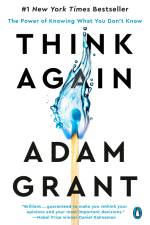
#1 New York Times Bestseller"Think Again is a must-read for anyone who wants to create a culture of learning and exploration, whether at home, at work, or at school…In an increasingly divided world, the lessons in this book are more important than ever."-Bill and Melinda GatesThe bestselling author of Give and Take and Originals examines the critical art of rethinking: learning to question your opinions and open other people's minds, which can position you for excellence at work and wisdom in lifeIntelligence is usually seen as the ability to think and learn, but in a rapidly changing world, there's another set of cognitive skills that might matter more: the ability to rethink and unlearn. In our daily lives, too many of us favor the comfort of conviction over the discomfort of doubt. We listen to opinions that make us feel good, instead of ideas that make us think hard. We see disagreement as a threat to our egos, rather than an opportunity to learn. We surround ourselves with people who agree with our conclusions, when we should be gravitating toward those who challenge our thought process. The result is that our beliefs get brittle long before our bones. We think too much like preachers defending our sacred beliefs, prosecutors proving the other side wrong, and politicians campaigning for approval-and too little like scientists searching for truth. Intelligence is no cure, and it can even be a curse: being good at thinking can make us worse at rethinking. The brighter we are, the blinder to our own limitations we can become.Organizational psychologist Adam Grant is an expert on opening other people's minds-and our own. As Wharton's top-rated professor and the bestselling author of Originals and Give and Take, he makes it one of his guiding principles to argue like he's right but listen like he's wrong. With bold ideas and rigorous evidence, he investigates how we can embrace the joy of being wrong, bring nuance to charged conversations, and build schools, workplaces, and communities of lifelong learners. You'll learn how an international debate champion wins arguments, a Black musician persuades white supremacists to abandon hate, a vaccine whisperer convinces concerned parents to immunize their children, and Adam has coaxed Yankees fans to root for the Red Sox. Think Again reveals that we don't have to believe everything we think or internalize everything we feel. It's an invitation to let go of views that are no longer serving us well and prize mental flexibility over foolish consistency. If knowledge is power, knowing what we don't know is wisdom.
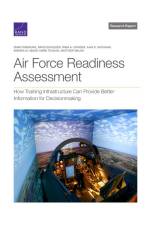
Investments in U.S. Air Force training infrastructure to improve readiness assessment can better inform decisions amid changing environments, an increased pace of warfare, and the potential loss of superiority.
Change the choices. Change the culture. Change the outcome.Have you ever wondered why some families, businesses, and organizations function in a harmonious way and the people generally like each other and enjoy living and working together? Or has your experience been the opposite, working in an environment of discord and distrust or growing up in a home filled with conflict and anger?Most people have resigned themselves to accept the cultures around them and fail to recognize where they are contributing to conflict or blurring the battle lines. As a leader, you greatly contribute to the culture in your workplace and your home. The key to changing the culture is in your hands: you choose how to change the game. What character principles will you choose to guide your life? How will you allow those principles to drive your core values? How will you allow those core values to set up a culture you can enjoy?Let Culture Battles serve as a compass and a guide for helping you create the culture outcome you desire.
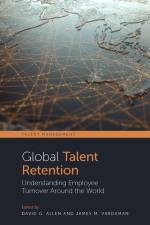
Retaining top talent is a universal concern that is increasingly global. However, the context, meaning, and mechanisms for changing jobs varies around the world. Global Talent Retention: Understanding Employee Turnover Around the World provides the first context-specific global perspective on retaining talent.Although extensive research informs understanding of why employees decide to leave or remain with organizations, the bulk of theory and research adopts a U.S.-centric perspective, problematic because most employees do not work for firms that are U.S.-owned or based. Global Talent Retention addresses the need for turnover theory and research to give more careful consideration to global and cross-cultural perspectives on employee retention, and includes contributions from a global range of scholars in differing cultural contexts in Africa, Asia, Europe, Latin America, and the Middle East.The chapters represent many of the largest and most dynamic economies in the world, including Bulgaria, China, Denmark, Germany, India, Mexico, South Africa, South Korea, Spain, Turkey, and the UK. Each chapter provides a description of the institutional, legal, and cultural context as it relates to employee mobility, a review of context-specific research leading to a description of how the mechanisms of prominent turnover theories may operate differently in particular contexts, and the implications for research and practice related to employee turnover and retention.
The ebook edition of this title is Open Access and freely available to read online.Attaining the 2030 Sustainable Development Goal of Gender Equality focuses on Sustainable Development Goal number five (SDG#5): ending all forms of discrimination against women and girls. Examining family businesses in Honduras, Australia, Austria, and Lebanon, each case study presents a unique perspective from their respective country, analysing how SDG#5 translates into empowering women and girls around the world. The case studies presented generate insights and key takeaways into the role of family businesses in eliminating violence and other harmful practices as well as ensuring equal opportunities and participation for women in business and beyond.The United Nations' (UN) Sustainable Development Goals (SDGs) are 17 Goals pledged by 193 nations in 2015 which would help engender an improved, fairer, and more sustainable world - one in which 'no one is left behind'. The SDGs are a call to action, to develop innovative solutions to the most complex, societal, and environmental global challenges.In Family Businesses on a Mission, series editors Naomi Birdthistle and Rob Hales bring together international case studies to illustrate how family businesses can attain the UN 2030 SDGs. Accessible to those working in the field beyond academia - such as family business practitioners, family business owners, government and policymakers, members of NGOs, business associations and philanthropic centres - this book series equally appeals to those with a general interest in entrepreneurship and business.
The ebook edition of this title is Open Access and freely available to read online.Attaining the 2030 Sustainable Development Goal of Good Health and Well-Being focuses on Sustainable Development Goal number three (SDG#3): prioritising the emotional and physical health of humans around the world. Examining family businesses in Germany, Malaysia, Mexico, and Australia, each case study presents a unique perspective from their respective country, analysing how SDG#3 translates into ensuring healthy lives and promoting well-being for all. The case studies presented generate insights and key takeaways into the role of family businesses in fostering safety and equality in healthcare systems and infrastructure across the globe.The United Nations' (UN) Sustainable Development Goals (SDGs) are 17 Goals pledged by 193 nations in 2015 which would help engender an improved, fairer, and more sustainable world - one in which 'no one is left behind'. The SDGs are a call to action, to develop innovative solutions to the most complex, societal, and environmental global challenges.In Family Businesses on a Mission, series editors Naomi Birdthistle and Rob Hales bring together international case studies to illustrate how family businesses can attain the UN 2030 SDGs. Accessible to those working in the field beyond academia - such as family business practitioners, family business owners, government and policymakers, members of NGOs, business associations and philanthropic centres - this book series equally appeals to those with a general interest in entrepreneurship and business.
This book is a demonstration of how the interpretive phenomenology and hermeneutics of Hans Georg Gadamer can be applied to the study and practice of business pedagogy.
Organizational decision-making and ethics have often been treated as different topics. This separation impacts both the ethical quality of decisions and the quality of ethical decisions. Decision analysis provides a wealth of tools that can help decision-makers achieve clarity of action and can capture uncertainty and preferences in decisions with ethical implications. Further, decision analysis provides many insights into decision traps that are relevant to decisions with (and without) ethical implications. Decision analysis also highlights situations where individuals become reluctant to change a course of action because of the sunk cost bias, even if a change is appropriate and even if it has ethical implications. Despite these (and many other) well-known human biases in decision-making, decision analysis has not been fully integrated into the teachings of ethics. On an organizational level, teaching ethics without a focus on decision analysis can render the teachings irrelevant to organizational decisions and can steer the focus towards deterministic reasoning that overlooks uncertainty and ignores a wealth of knowledge on traps, biases, and normative methods for making decisions.This book is written for anybody interested in learning about and researching ethical decision-making. It can be used in classroom discussions that combine ethics and organizational decision-making. It is also particularly relevant for MBA and Executive MBA programs.
Knowledge translation is a topic that originated in the field of health sciences where the need to move research to practice is of critical importance. In parallel, the field of knowledge sciences has developed a research base around knowledge transfer, knowledge sharing, knowledge exchange, knowledge articulation and knowledge absorption. This book brings these two important tracks together and synthesizes the fragmented literatures. It also draws from essential work on human communication and considers how these concepts are affected by the knowledge economy.The book raises awareness of the critical role that knowledge translation plays in every academic field of study, and in everyday life. To demonstrate this role, the book presents a grounding model that readers can use to better 'see' their knowledge translation challenges and opportunities. Drawing on the author team's experience in a range of domains and sectors, the book explores knowledge translation in the fields of manufacturing, infectious diseases, automated call centers, regulatory development and compliance, financial lending, transportation safety, and doctor-patient discourse.
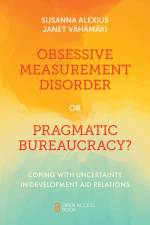
The ebook edition of this title is Open Access and freely available to read online.Complex coordination across time, space, and cultures involves a great deal of uncertainty. This uncertainty may be accepted and handled with judgment and pragmatism, but more often in contemporary modern society, it is treated as a technical problem to be 'solved'. This is a book about the paradoxical implications of the quest for certainty in interorganizational relations in the complex field of development aid.Authors Alexius and Vähämäki scrutinize questions related to the concept Obsessive Measurement Disorder, i.e. what causes an increase in control mechanisms, and how and when can this prove counterproductive? They further investigate the question on why performance management - and measurement requirements seem in some instances to hinder, and in others to support the implementation of aid projects and programs.Drawing on 80 original interviews with aid bureaucrats working at different levels and in different organizations, including public agencies, companies, non-government organisations, and universities all involved in development aid projects financed fully, or in part, by the Swedish taxpayer, they identify coping mechanisms and responses that may help to prevent the extremes of obsessive measurement disorder, and foster instead pragmatic, constructive organizing and learning that benefits not only aid organizations and their employees, but also - and more fundamentally - the societies in need.
Monica Santana and Ramon Valle-Cabrera's wide-ranging study explores vital research and industrial issues that are central to understanding the concepts of the Future of Work and address key challenges in this evolving area of debate.A global cast of leading research specialists provide chapters examining a broad spectrum of areas relating to the Future of Work including leadership, talent management, AI and digitalisation, digital skills, new forms of work, industrial relations, vulnerable workers as well as well-being, happiness, satisfaction and burnout. Each chapter offers insights on how individuals and leaders can make choices to shape the future of work and effectively respond to changing contextual conditions, demystifying the future of work from a set of interesting insights into specific actions and choices that will help imagine, invent, and implement a work setting that works.New Directions in the Future of Work is illuminating reading for scholars of HRM, Talent Management, Leadership, Industrial Relations, and all those seeking to understand directions of travel for the workplaces of the future.
"With examples and testimony from nonprofit leaders around the world framed by Grono's expertise, How to Lead Nonprofits is a highly practical guide to harnessing the power of purpose to shape everything your organization does-internally and externally-as you seek to change the world"--
Abonner på vårt nyhetsbrev og få rabatter og inspirasjon til din neste leseopplevelse.
Ved å abonnere godtar du vår personvernerklæring.