


















Gjør som tusenvis av andre bokelskere
Abonner på vårt nyhetsbrev og få rabatter og inspirasjon til din neste leseopplevelse.
Ved å abonnere godtar du vår personvernerklæring.Du kan når som helst melde deg av våre nyhetsbrev.

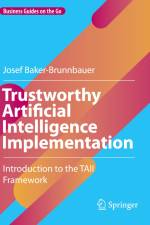
Rapidly developing Artificial Intelligence (AI) systems hold tremendous potential to change various domains and exert considerable influence on societies and organizations alike. More than merely a technical discipline, AI requires interaction between various professions. Based on the results of fundamental literature and empirical research, this book addresses the management's awareness of the ethical and moral aspects of AI.It seeks to fill a literature gap and offer the management guidance on tackling Trustworthy AI Implementation (TAII) while also considering ethical dependencies within the company. The TAII Framework introduced here pursues a holistic approach to identifying systemic ethical relationships within the company ecosystem and considers corporate values, business models, and common goods aspects like the Sustainable Development Goals and the Universal Declaration of Human Rights. Further, it provides guidance on the implementation of AI ethics in organisations without requiring a deeper background in philosophy and considers the social impacts outside of the software and data engineering setting. Depending on the respective legal context or area of application, the TAII Framework can be adapted and used with a range of regulations and ethical principles.This book can serve as a case study or self-review for c-level managers and students who are interested in this field. It also offers valuable guidelines and perspectives for policymakers looking to pursue an ethical approach to AI.
This book demonstrates how hospitals can be transformed into dynamic, patient-centered, and cost-effective organizations. It describes systems for providing safe, high-quality medical services and outlines the importance of data for health outcomes. In this regard, the book underscores the importance of decision-making and delegation, as well as the effective use of administrative staff, new technologies, and evidence-based medicine to benefit patients and boost efficiency. At the same time, it emphasizes the importance of applying metrics to improve cost-effectiveness.Although primarily intended as a hands-on book for clinical leaders, it also considers hospitals from a broader societal perspective, making it of interest to leaders at all organizational levels in hospitals and to policymakers alike.
This textbook provides a comprehensive overview of noncooperative and cooperative dynamic games involving uncertain parameter values, with the stochastic process being described by an event tree. Primarily intended for graduate students of economics, management science and engineering, the book is self-contained, as it defines and illustrates all relevant concepts originally introduced in static games before extending them to a dynamic framework. It subsequently addresses the sustainability of cooperative contracts over time and introduces a range of mechanisms to help avoid such agreements breaking down before reaching maturity. To illustrate the concepts discussed, the book provides various examples of how dynamic games played over event trees can be applied to environmental economics, management science, and engineering.
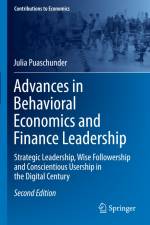
This book explores human decision-making heuristics. The monograph studies how nudging and winking can help citizens to make rational choices and governments to create choice architectures that aid in stabilizing markets and flourishing society. By applying the behavioral economics approach to political outcomes, it demonstrates how economics can be employed for personal benefits but also foster the greater societal good. A review of the current literature on human decision-making advantages and failures in Europe and North America opens the book. A wide range of nudges and winks is presented that aid to curb the harmful consequences of human decision-making fallibility. Awareness of mental heuristics and biases in the finance domain is strengthened in order to understand how to nudge people to benefit from economic markets but also help governments to stabilize economies in providing strategic market communication. The author also proposes concrete leadership and followership directives on nudging in the digital age. This book appeals to scholars and policy makers interested in rational decision-making. The behavioral perspective features the strategic use of nudging and winking in the digital age.The second revised and expanded edition offers the newest insights on behavioral e-Economics and the latest developments regarding the COVID-19 pandemic. It covers topics such as the role of social media in finance and discrimination in searchplace competition. It also offers new insights on strategic leadership and smart followership directives to successfully navigate through complex and fast-paced e-architectures.
This book aims at presenting a unified framework for the description of working principles, recent advances and applications of cutting-edge measurement technologies for the water sector. Instrumentation and measurement technologies are currently playing a key role in the monitoring, assessment and protection of environmental resources. Measurement techniques and sensing methods for the observation of water systems are rapidly evolving and are requiring an increased multi-disciplinary participation.The whole water sector is characterised by multiple technological contexts concerning the monitoring of the resource, given the broad coverage that includes water from its natural domains to the men-made infrastructures. In particular, instrumentation and measurement technologies have a pervasive presence in all the necessary aspects for the assessment, monitoring and control of the water resource and of its relationship with the various environmental stressors, including the anthropic pressures.Therefore, the book aims at presenting how the diagnostics/monitoring methodologies and the related technologies can give an answer to the issues raised by the complex scenario characterising the water cycle management (WCM). The book is structured in five topical sections, grouped by similarity of their technological and/or applicative contexts.
This book describes bedside pain management interventions for basic clinical situations commonly encountered during the inpatient care. It aims to provide clinicians with real-world practical information, including patient selection, required equipment, and procedure guidance, that will optimize patient management. Each chapter addresses a particular procedure or a set of procedures, with specialties selected according to the subject matter. Physicians of any specialty practicing in hospital settings, residents, fellows in training, medical students, physician assistants, nurse practitioners, nurses, psychology, chiropractors, physical therapy and integrative medicine specialists will find this text to be comprehensive and practical.
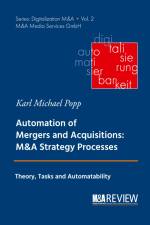
This book addresses key issues during the creation of corporate strategy and M&A strategy by explaining how to define a complete and consistent strategy, use an all-encompassing scope for the strategy to avoid blind spots, include ecosystem and platform strategy, define M&A strategy and its exact relationships to corporate strategy, and how to define strategic fit of two companies. It also lays the foundation for a data-driven strategy.
WHO'S ALWAYS HUNGRY? THE CONTENT BEAST The Content Beast is a book for anyone who wants to learn about effective content marketing.It's divided into four easy-to-understand parts: WHY You Need To Feed The Content BeastWHO Are You Really FeedingWHAT To Feed The Content BeastHOW To Feed The Content Beast This book provides practical tips and strategies to use the power of story to create consistent and valuable content that connects with your audience. "I love how approachable this book is. The Content Beast demystifies the creation and distribution of content, and makes it viable for all businesses and individuals. Bravo!" - Jay Baer, New York Times best-selling author of Youtility: Why Smart Marketing is About Help not Hype "Modern business owners face a unique challenge in capturing their audience's attention. The Content Beast by Geoffrey Klein provides a guide to creating and sharing compelling content that cuts through the noise and captivates your target market. This book is a must read for entrepreneurs, marketers, and anyone seeking to improve their content marketing efforts." - Melinda Emerson, SmallBizLady, best-selling author, Become Your Own Boss in 12 Months
El ocio de las personas y las dimensiones que lo confi guran son cada vez más importantes para construir la felicidad y el bienestar social. El derecho a la práctica del ocio, en el caso de los colectivos con menos recursos y oportunidades, debe ser garantizado desde las diferentes políticas, instituciones y profesionales que trabajan y promueven la inclusión social.En este libro participan expertos e investigadores en la temática del ocio. En los diferentes capítulos se presentan prácticas de ocio valiosas que permiten una socialización, especialmente en la juventud, con mayores garantías y que no depende tanto de la capacidad de acceso a las actividades y espacios de ocio.Esta obra tiene interés al promover alternativas de ocio valiosas e inclusivas en las que la participación es una vía de aprendizaje dentro del proceso de socialización a lo largo de la vida de las personas. También, se realizan propuestas que pueden inspirer a representantes de instituciones y entidades sociales, profesionales e investigadores interesados en la intervención socioeducativa en diferentes contextos sociales. Estas propuestas se basan en resultados de investigación y contribuyen a adaptar espacios de ocio desde el rigor de la innovación que implica la transferencia social del conocimiento.
Derzeit kommt der rechtspolitischen Diskussion über Nachhaltigkeitsthemen im Unternehmensrecht, der sog. Corporate Social Responsibility (CSR), besonderes Gewicht zu. Neue Regulierungsansätze im Allgemeinen wie das Lieferkettensorgfaltspflichtengesetz (LkSG) und das EU-Richtlinienpendant Corporate Sustainability Due Diligence Directive (CSDDD) sowie aktuelle Fälle aus der internationalen Gerichtspraxis im Besonderen haben den rechtswissenschaftlichen Diskurs über die Verantwortung von inländischen Gesellschaften für (Menschen-)Rechtsverstöße neu befruchtet.Vor diesem Hintergrund bildet die Autorin Fallgruppen konzern- und lieferkettendimensionaler Verkehrspflichten und untersucht deren Administration in die Unternehmenspraxis. Dabei liegt ein besonderes Augenmerk auf der Umsetzung innerhalb der Corporate Governance- und Compliance-Systeme sowie den Haftungsrisiken der Leitungsorgane. Die Thematik wird interdisziplinär unter Berücksichtigung der verschiedenen Teildisziplinen der Rechtswissenschaften sowie unter Beachtung betriebswirtschaftlicher Aspekte erforscht und abschließend thesenartig beurteilt.
As societies strive for progress, the need to ensure equal access to education for all, irrespective of socioeconomic, ethnic, or gender backgrounds, emerges as a pivotal factor. In the thought-provoking book, Socio-Economic Implications of Global Educational Inequalities , the complex interplay between education and its profound impact on human capital, economic growth, and development is meticulously explored. The book delves into the multifaceted dimensions of education as a critical determinant of income and gender disparities, poverty levels, and financial sector advancement. Drawing on the expertise of professional researchers, this comprehensive work presents a panoramic view of the socio-economic implications of educational inequalities on a global scale. By examining the profound link between education and various societal aspects, the book opens avenues for insightful discussions and strategic policymaking. In addition to catering to scholars and researchers, this book addresses a broader audience, including individuals, managers, and governmental employees who recognize education's pivotal role in shaping economic, financial, and social landscapes.
The Link between Incarceration and EducationIn today's society, the issue of incarceration has become increasingly prevalent. As students, it is crucial for us to understand the link between incarceration and education. Education plays a pivotal role in both preventing individuals from entering the criminal justice system and rehabilitating those who have already been incarcerated.Firstly, let's delve into the importance of education in preventing individuals from becoming involved in criminal activities. Research consistently shows that individuals with higher levels of education are less likely to engage in criminal behavior. By providing quality education to all, we can equip individuals with the tools and knowledge necessary to make informed decisions, pursue meaningful careers, and contribute positively to society. Education acts as a protective factor, offering alternatives to crime and reducing the likelihood of individuals resorting to illegal activities.Furthermore, education plays a vital role in the rehabilitation of incarcerated individuals. The prison system should not solely focus on punishment, but also on providing opportunities for personal growth and development. Education programs within correctional facilities are essential in helping inmates acquire new skills, enhance their cognitive abilities, and develop a sense of self-worth. By offering educational opportunities, we can empower incarcerated individuals to break the cycle of crime and reintegrate successfully into society upon their release.Moreover, education in correctional facilities not only benefits the individual inmates but also has wider societal implications. Studies have shown that providing education to incarcerated individuals reduces recidivism rates, which means fewer individuals reoffend and return to prison. This ultimately leads to safer communities and significant cost savings for taxpayers, as resources can be allocated to more effective strategies instead of housing repeat offenders.As students, it is crucial for us to recognize the importance of education in both preventing crime and rehabilitating those who have been incarcerated. By advocating for educational programs within correctional facilities, we can contribute to building a more just and equitable society. Education as rehabilitation is a powerful tool that can transform lives, break the cycle of incarceration, and provide hope for a brighter future.
The modern woman's guide to authentic leadershipIn today's rapidly changing world, traditional leadership models are being turned on their heads. More than ever, the traits often associated with women - empathy, collaboration, and flexibility - are proving essential to effective leadership. Lead Like a Girl delves deep into these traits, showcasing how they are reshaping industries and businesses across the globe.Author Lovell Casiero, a seasoned executive, professional life coach, and mentor, weaves together compelling narratives of female leaders who've made their mark, backed by personal life lessons that underscore the strengths women bring to the boardroom.Regardless of gender, whether you're an aspiring leader or a seasoned professional, Lead Like a Girl is your indispensable guide to embracing your unique leadership style and making a lasting impact.In this book, readers will discover: Key traits that define feminine leadership and why they're critical in today's world.Inspirational stories of women leaders who've broken the glass ceiling in diverse sectors.Practical tools and exercises to hone your leadership style and capitalize on your innate strengths.The inherent ability to empower yourself, lead with authenticity, and inspire those around you to do the same.Lovell Casiero's engaging writing style and her ability to connect with readers on a personal level make Lead Like a Girl a must-read for anyone aspiring to make a difference in their professional and personal lives. By sharing her own journey and the stories of other remarkable women who have blazed trails in various fields, Casiero offers a roadmap for leadership success.
Valley Girls is an impassioned call-to-action and a clear-eyed guide for every woman with a brilliant business idea who has been sitting on the sidelines. It offers inspiration, role models, and a clear path to empower women to follow their dreams.Author Kelley Steven-Waiss, founder and former CEO of the SaaS tech start-up Hitch Works ("Hitch"), knew that less than 3% of venture capital went to all-women founding teams in the year she set out to be an entrepreneur. And yet, she managed to succeed. Now, she gives other women the benefit of her experience as well as that of the diverse female founders she interviewed. What did they all have in common? Which strategies brought success and which failed? How did they persevere through the hard times? This practical, hands-on guide and the powerful and passionate women profiled in it answer these questions and more, paving the way for all women to succeed.
All Physicians Lead Every Day...but we may not recognize we are leading.If you ask 100 physicians to name a physician leader, they will uniformly name a department chair, hospital chief medical officer, or dean. In reality, the day-to-day life of every physician is a series of leadership events. Whether coaching a group of residents through morning rounds, taking an OR team through a five-hour surgery, or convincing a patient to try a new medication, doctors are in the business of leadership, that is: influencing thoughts and behaviors to achieve a desired result. But although we focus on their training and require physicians' clinical skills to be top-notch, we don't recognize leadership as a fundamental skill used by all physicians--and one that impacts team performance and patient outcomes. A few leadership-related courses are taught in most medical schools without an overarching leadership rubric, and many student doctors are too busy learning anatomy and physiology to give even those courses wholehearted attention.Leadership matters in medicine. Good physician leadership results in better patient communications and higher-performing healthcare teams. Ultimately it leads to better health outcomes for patients. All Physicians Lead argues that the medical community will benefit from recognizing leadership as a core competency for all physicians--not just CMOs and department heads, but for all practicing doctors--and lays the groundwork for accomplishing this. It offers a "clinic" in leadership skills for the working physician and makes the case that a focused leadership training curriculum, grounded in good theory and research, should be an essential part of every physician's lifelong training.All physicians lead. Now let's train them for it.
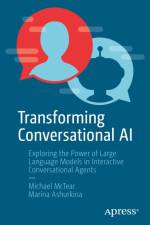
Acquire the knowledge needed to work effectively in conversational artificial intelligence (AI) and understand the opportunities and threats it can potentially bring. This book will help you navigate from the traditional world of dialogue systems that revolve around hard coded scripts, to the world of large language models, prompt engineering, conversational AI platforms, multi-modality, and ultimately autonomous agents.In this new world, decisions are made by a system that may forever remain a ¿black box¿ for most of us. This book aims to eliminate unnecessary noise and describe the fundamental components of conversational AI. Past experiences will prove invaluable in constructing seamless hybrid systems. This book will provide the most recommended solutions, recognizing that it is not always necessary to blindly pursue new tools.Written in unprecedented and turbulent times for conversational interfaces yoüll see that despite previous waves of advancement in conversational technology, now conversational interfaces are gaining unparalleled popularity. Specifically, the release of ChatGPT in November 2022 by Open AI revolutionized the conversational paradigm and showed how easy and intuitive communication with a computer can be. Old professions are being disrupted, new professions are emerging, and even the most conservative corporations are changing their strategy and experimenting with large language models, allocating an unprecedented amount of budget to these projects. No one knows for sure the exact future of conversational AI, but everyone agrees that it¿s here to stay. What You'll LearnSee how large language models are constructed and used in conversational systems Review the risks and challenges of new technologies in conversational AI Examine techniques for prompt engineering Enable practitioners to keep abreast of recent developments in conversational AIWho This Book Is For Conversation designers, product owners, and product or project managers in conversational AI who wish to learn about new methods and challenges posed by the recent emergence in the public domain of ChatGPT. Data scientists, final year undergraduates and graduates of computer science
Five million new businesses were created last year - a 42% increase from pre-2020 levels. While this surge has the power to propel millions of Americans forward, it also has the potential to shatter the American dream because of two simple words: tax troubles. Yes, the tax code can be overwhelming and complex. But, the bigger issue is when uninformed social media influencers make wildly outrageous tax claims and give very bad advice that can lead to very serious consequences for millions of Americans. Some of the myths and misinformation we bust: Become an Influencer and Deduct Everything!Start an LLC to Make Everything Tax Free!No Tax Forms? Your Income Isn't Taxable!Not My Fault. TikTok Told Me I Could Do It!"TAX MYTH BUSTERS DON'T FALL PREY TO THESE TAX MISCONCEPTIONS: EXPOSING THE TRUTHS ABOUT THE TOP TAX MYTHS offers practical guidance that busts the most prevalent myths and provides readers with accurate, up-to-date information from real tax experts and financial leaders. We simplify the daunting world of taxes and give entrepreneurs the right tools to make informed and accurate financial decisions so that they can take advantage of all the best tax saving strategies while keeping them in compliance with tax laws and regulations, and on their way to building their dream business.LEARN FROM THESE SUBJECT MATTER EXPERTSLily Tran, EA, CTPDuke Alexander Moore, EAAl Leruth, MBA, MAcc, EA, CPA, CMAJessica Smith, EAMatthew Gaylor, EA, CTP Jamie O'Kane, CPA, CTCJanet Sienicki, EA, ABA Fred Stein, CPA, EA
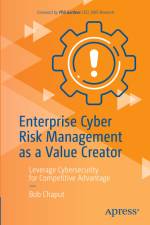
"This book should be mandatory reading for C-suite executives and board members. It shows you how to move from viewing cybersecurity as a risk to avoid, and a cost center that does not add value and is overhead, to seeing cybersecurity as an enabler and part of your core strategy to transform your business and earn customer and stakeholder trust."-Paul Connelly, First CISO at the White House and HCA HealthcareThis book will help you learn the importance of organizations treating enterprise cyber risk management (ECRM) as a value creator, a business enabler, and a mechanism to create a competitive advantage. Organizations began to see the real value of information and information technology in the mid-1980s. Forty years later, it's time to leverage your ECRM program and cybersecurity strategy in the same way.The main topics covered include the case for action with specific coverage on the topic of cybersecurity as a value creator,including how the courts, legislators, and regulators are raising the bar for C-suite executives and board members. The book covers how the board's three primary responsibilities (talent management, strategy, and risk management) intersect with their ECRM responsibilities.ECRM was once solely focused on managing the downside of risk by defending the organization from adversarial, accidental, structural, and environmental threat sources. Author Bob Chaput presents the view that we must focus equally on managing the upside of cyber strengths to increase customer trust and brand loyalty, improving social responsibility, driving revenue growth, lowering the cost of capital, attracting higher quality investments, creating competitive advantage, attracting and retaining talent, and facilitating M&A work. He focuses on the C-suite and board role in the first part and provides guidance on their roles and responsibilities, the most important decision about ECRM they must facilitate,and how to think differently about ECRM funding. You will learn how to the pivot from cost-center thinking to value-center thinking.Having built the case for action, in the second part, the book details the steps that organizations must take to develop and document their ECRM program and cybersecurity strategy. The book first covers how ECRM must be integrated into business strategy. The remainder of that part presents a sample table of contents for an ECRM Program and Cybersecurity Strategy document and works through each section to facilitate development of your own program and strategy. With all the content and ideas presented, you will be able to establish, implement, and mature your program and strategy.
It's natural to either run from giants or try to mow them over. But it takes a lot more patience and fortitude to methodically turn them to your advantage.In Turning the Giant, John Berra shares his amazing life's journey that took him from being a shy, uncertain university student to becoming the Chairman of Emerson Process Management. As someone who was voted into the Process Automation Hall of Fame, Berra writes from a place of authority and conviction. Because he has faced countless giants along his path, he knows what it takes to turn them.Today, the challenges leaders face are more complex than they have ever been. Giants such as technological advancement and global competition make it tough for the average business leader to survive. But it's here that Berra's challenge to "turn giants" is invaluable. Most giants leaders face will never be slain and will always exist in some form. But rather than see them as a threat, great leaders realize it's even more valuable to turn giants to their advantage.Turning the Giant will inspire a new generation of leaders to face the complex obstacles they face today. Yes, the technological challenges of this generation are different than the ones Berra faced in the 1990s, but the principles for turning giants remain the same. Every leader faces the giants of corporate bureaucracy, self-doubt, innovation, skepticism, competition, and success. But it's up to them to turn them.
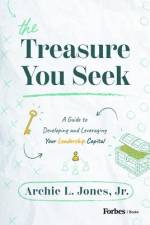
Archie L. Jones, Jr. wants you to win-to find the treasure you seek, whatever it may be. And the way to do that is to develop as a leader. This is true whether you're an entrepreneur, a corporate leader, a nonprofit employee, or just someone who wants to have some impact on the world. Leadership just means the ability to influence others to accomplish shared goals, and the amount of influence you have is your leadership capital. In this book, Archie L. Jones, Jr. walks you through the 5 Cs of leadership capital-capability, culture, communication, connection, and confidence-to show you how to develop and leverage your leadership capital. He draws on his own stories and those of others to provide concrete, actionable steps that you can take to leverage your leadership capital-and pursue your personal or organizational treasure.
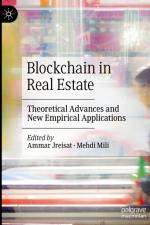
This book provides an overview of the latest developments in real estate blockchain technology and its applications. It explores blockchain technologies in all industries, cryptocurrencies¿ effect on the payment system, money transfers and currency exchange, investment, venture capital, etc. It examines the urgent need to build trust in digital technologies as companies rethink their approach to operations. It describes how Blockchain technology can enable property or land ownership to be managed through immutable records and verifiable transaction history to register and transfer land and how it can also be used to improve the efficiency of property management through the use of smart contracts.It explores how blockchain can upgrade the traditional Multi-Listing System (MLS) - a professional information system that combines the offers of market participants from different real estate agencies and creates a much more transparent MLS, in which brokers and agents can see the entire history of transactions in relation to property. In real estate, blockchain can help organize new forms of registries, titles, and transactions. The blocks recorded in the blockchain system certify the process of transfer of ownership and confirm money transfers and owner data. There are several regulatory and administrative challenges in implementing blockchain real estate tokenization. If and when this is implemented, it could greatly simplify and speed up the process of buying, receiving dividends, and financial benefits from owning real estate around the world. This book explores the implications of real estate blockchain and the opportunities and challenges. It will interest scholars, researchers, and real estate, finance, and financial technology students, real estate agents, town planners, developers, real estate experts, investors, communities.
This book reports the developments of the Total Least Square (TLS) algorithms for parameter estimation and adaptive filtering. Specifically, this book introduces the authors¿ latest achievements in the past 20 years, including the recursive TLS algorithms, the approximate inverse power iteration TLS algorithm, the neural based MCA algorithm, the neural based SVD algorithm, the neural based TLS algorithm, the TLS algorithms under non-Gaussian noises, performance analysis methods of TLS algorithms, etc. In order to faster the understanding and mastering of the new methods provided by this book for readers, before presenting each new method in each chapter, a specialized section is provided to review the closely related several basis models. Throughout the book, large of procedure of new methods are provided, and all new algorithms or methods proposed by us are tested and verified by numerical simulations or actual engineering applications. Readers will find illustrative demonstration examples on a range of industrial processes to study. Readers will find out the present deficiency and recent developments of the TLS parameter estimation fields, and learn from the the authors¿ latest achievements or new methods around the practical industrial needs. In my opinion, this book can be assimilated by advanced undergraduates and graduate (PH.D.) students, as well as statisticians, because of the new tools in data analysis, applied mathematics experts, because of the novel theories and techniques that we propose, engineers, above all for the applications in control, system identification, computer vision, and signal processing.
The book covers up-to-date theoretical and applied advances in grey systems theory from across the world and vividly presents the reader with the overall picture of this new theory and its frontier research. Many of the concepts, models and methods in the book are original by the authors, including simplified form of grey number, general grey number and the operations of grey numbers; the axiomatic system of buffer operators and a series of weakening and strengthening operators; a series of grey relational analysis models, including grey absolute, relative, synthetic, similarity, closeness, negative and three dimension degree, etc.; grey fixed weight clustering model, grey evaluation models based on center-point and end-point mixed possibility functions; original difference grey model (ODGM), even difference grey model (EDGM), discrete grey model (DGM), fractional grey models, self-memory grey models; multi-attribute intelligent grey target decision models, weight vector group with kernel and the weighted comprehensive clustering coefficient vector, and spectrum analysis of sequence operators, etc.This book will be appropriate as a reference and/or professional book for courses of grey system theory for graduate students or high-level undergraduate students, majoring in areas of science, technology, agriculture, medicine, astronomy, earth science, economics, and management. It can also be utilized by researchers and practitioners in research institutions, business entities, and government agencies.
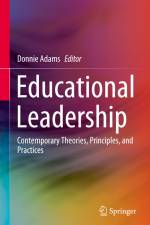
This book provides a rigorous grounding in contemporary educational leadership theories and their application to policy and practice globally across educational contexts. The book showcases contributions from authors with a deeply embedded understanding of educational leadership and in schools¿ context. It will focus on major aspects of school leadership, including contemporary theories and models in the 21st century, the role of the principal, the work of senior and middle leaders, leadership, and student outcomes. Each chapter will engage with theory, policy, and practice, and draw on authors¿ own research and with other empirical and conceptual sources.
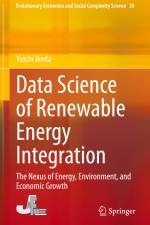
This book covers various data scientific approaches to analyze the issue of grid integration of renewable energy for which the grid flexibility is the key to cope with its intermittency. It provides readers with the scope to view renewable energy integration as establishing a distributed energy network instead of the traditional centralized energy system. Specifically, quantitative valuation system-wise of the levelized cost of energy, which includes both initial cost and various operational costs, enables readers to optimize energy systems in order to minimize economic cost and environmental impact. It is noted, however, that the high cost of integrating renewable energy on a large scale might slow economic growth considerably. Topics addressed in the book also include statistical comparative study of the relationship between energy and economic growth, a graphical model of determinant factors for foreign direct investment in renewable energy, the coupled oscillator model and unitcommitment model to capture intermittency of renewable energy, and the network model of evolving micro-grids. The book explains desired innovation to reduce the integration cost significantly using innovative technologies such as energy storage with hydrogen production and vehicle-to-grid technology. Illustrated by careful analysis of selected examples of renewable integration using different types of grid flexibility, this volume is indispensable to readers who make policy recommendations to establish the distributed energy network integrated with large-scale renewable energy by disentangling the nexus of energy, environment, and economic growth.
This is the Final Report of the Forty-fifth Antarctic Treaty Consultative Meeting (ATCM) held in Helsinki, Finland, 29 May - 8 June 2023. This volume includes the ATCM Final Report, the Report of the Committee for Environmental Protection and the Measures, Decisions and Resolutions adopted at this meeting. This edition is written in the Russian language. There are also editions in English, French and Spanish. More information at www.ats.aq
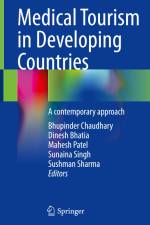
This book provides a detailed insight into the amalgamation of the healthcare and hospitality sector, which brought forward the concept of healthcare tourism or medical tourism. There have not been comprehensive resources in this particular area. The available quality resources focus on the Western world. Countries like India are an upcoming and one of the most favored destinations for medical tourism, and this trend is going to increase exponentially in the coming years. This book is developed in a very simple and lucid manner to enable even a layman to grasp the key components of the healthcare and hospitality sector at different levels and gradually link it to the present scenario where factors like accreditation, health insurance, corporatization, and public policy make an impact. Scholars in these sectors attempt to provide the recent trends and prospects supported with updated information. Therefore, it can solve the problem of a single source of detailed information relevant to different yet interconnected industries with a focus on developing countries.
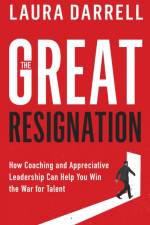
In the wake of a global pandemic, why are more employees resigning than ever before?The post-COVID working era has witnessed the highest number of employee resignations since records began in 2000. The disruptions caused by COVID-19 presented people with the opportunity to reevaluate their employment conditions and make changes based on what was most important to them. In The Great Resignation, Laura Darrell delves into the driving forces behind this seismic shift and offers five proven retention strategies for business leaders seeking to enhance their workplace culture. By consistently implementing these strategies across the board, organizations can attract and retain the best of today’s workforce talent.
Abonner på vårt nyhetsbrev og få rabatter og inspirasjon til din neste leseopplevelse.
Ved å abonnere godtar du vår personvernerklæring.