





















Gjør som tusenvis av andre bokelskere
Abonner på vårt nyhetsbrev og få rabatter og inspirasjon til din neste leseopplevelse.
Ved å abonnere godtar du vår personvernerklæring.Du kan når som helst melde deg av våre nyhetsbrev.

In the vast realm of technology, electronic materials play a crucial role in shaping our modern world. From the smallest microprocessors to the largest power grids, electronic materials are the foundation of countless devices and systems that drive our society forward. In this subchapter, we will delve into the definition and importance of electronic materials, providing students in the field of Materials Science and Engineering with a comprehensive understanding of this fascinating subject.Electronic materials can be broadly defined as substances that possess properties conducive to the flow of electric current. These materials exhibit a wide range of electrical behaviors, such as conductivity, resistance, and insulating properties, which make them invaluable in the design and development of electronic devices. From semiconductors like silicon and germanium to conductors like copper and aluminum, electronic materials come in various forms, each with its unique set of properties and applications.The importance of electronic materials in the field of Materials Science and Engineering cannot be overstated. These materials are the building blocks of electronic devices, enabling the conversion, storage, and transmission of electrical energy. They are essential in the production of integrated circuits, transistors, solar cells, batteries, sensors, and countless other electronic components that power our daily lives. Understanding the properties, behavior, and fabrication methods of electronic materials is fundamental for students pursuing a career in this field.Moreover, the study of electronic materials is crucial for advancing technology and driving innovation. As the demand for faster, smaller, more efficient, and environmentally sustainable electronic devices continues to grow, researchers and engineers need to explore new materials and improve existing ones. By understanding the properties and behaviors of electronic materials, students can contribute to the development of cutting-edge technologies, such as flexible electronics, wearable devices, renewable energy systems, and quantum computing.
The hospital buildings are one of the most complex buildings/projects to plan, design, build, and operate. Hospital project planning involves site selection, Detailed Project Report (DPR) preparation, feasibility studies, room planning, hospital building zoning, and construction.This book provides in-depth knowledge and synchronization of the operational policies, licensing, services, equipment procurement, workforce recruitment, and establishing the set of Standard Operating Procedures (SOPs) before the start of hospital operations.This book helps enlighten site engineers and various in-charges to plan their hospital projects efficiently, completing all the jobs and activities well in time. This book narrates all the relevant issues and details about the hospital planning and construction activities in a tabular form and explains each activity extensively. Moreover, the tables provided in the book will also help the planners and executors assess the activity's progress and the person responsible for it.The key feature of the book is a very easily understandable English language that provides the best understanding to the students of Hospital Management, Para Medical Sciences, Architecture, Site Engineers, Site Supervisors, Hospital Promoters, Planners, and Designers.
The book explores the advanced façade systems according to the productive and constructive contents, in a cognitive and operative form, as a manual text to provide guidelines for researchers, technicians and professionals. It provides operational guidance for the technological design, production planning and site executive coordination for the realization of façade systems. The analysis deals with the main building elements and technical interfaces. The study of the façade systems, after explaining the anchoring structures and their connections to the load-bearing elements, investigates the criteria for the assembly between the framings. In particular, the book examines the technical interfaces of the main advanced envelope systems with respect to the functional, constructive and applicative coordination procedures of the mullions and transoms framing, of the structural sealant glazing façade system, of the unit façade system, of the suspended façade system and of the double skin façade system. The technical and manual character of the book is also expressed through the analysis of the functional and application procedures of the gaskets with respect to the façade systems in order to prevent the transmission of air and water loads: the analysis focuses on the connections between the framing and the enclosure elements of the envelope, in accordance with the compensation of height differences in order to guarantee impermeability, airtightness and insulation. Then, the book describes the assembly and interface conditions between elements of different composition and production within the façade systems: the examination of the technical interfaces involves the development and application of sealants, based on the loads exerted on the jointing devices, in order to fulfill the requirements of sealing and tightness with respect to mechanical, thermal and hygrometric, water, air and wind stresses. Moreover, the study of the envelope systems examines the methodologies directed toward fulfilling the requirements with respect to the actions caused by fire loads, considering the contents related to both components and connections and fixing surfaces.
The only book you need to build better systems for rapid business growth while working less.With over 40 years of experience as a serial entrepreneur, John Seiffer, past president of the International Coaching Federation, shares what he's learned about running a business remotely in ways you can apply to a small business to a medium company-whether you want to move 1,500 miles away like he did or stay where you are but change the demands on your time.For CEOs and business owners who want to grow faster, Output Thinking will show you how to systemize your business by viewing your company through the lens of the outputs people produce. Outputs can help you manage your employees better, make your company a better place to work, and build a successful business-all while removing yourself from day-to-day operations. This book will help you: ¿ Hire better. ¿ Reduce frustration with employees. ¿ Help your team work more efficiently. ¿ Improve performance reviews. ¿ Delegate more effectively. ¿ Run fewer but more efficient meetings. ¿ Have more time so you can do the kind of work you love to do. ¿ Live where you want and manage remotely.The expert business advice and tools in this book will teach you how to get better results and serve your life so your life doesn't have to serve your company. Whether you're a solopreneur or the leader of a global corporation, this book is the practical business guide you need to redesign your business-and life.
"An exploration of how investing in relational work and transformational relationships can make us happier and healthier"--
A Confidently M.A.D.E. Entrepreneur know they are "Marvelous All Day Everyday." But what does that look like in practice? I've developed a ten-part strategy for optimizing your entrepreneurial experience, growing your business, and strengthening the qualities necessary to appreciate, enjoy, and sustain your success. It's one thing to have an idea, launch a campaign, or start an enterprise. It's another thing to be the kind of person who weathers storms and maximizes opportunities with style and grace.85% of people wrestle with self-confidence at some point in their lives. But the very things that make us lack confidence can prevent us from seeking help or exploring the root causes! Luckily, there are practical steps you can take to boost your confidence and experience tangible benefits - even if you've struggled in vain for years.
In today's business landscape, software engineering teams must deliver innovation faster than ever. However, outdated management approaches centered on tools and metrics rather than people strangle velocity and creativity. Legacy leaders cling to rigid structures mismatched with market dynamics, draining effort and morale from burnt-out teams.The Engineering Leadership Playbook provides a modern framework to unlock your team's potential through empathy, clarity, and empowerment. Unlike traditional leadership books fixated on delivery metrics, Raphael Neves offers a refreshing people-oriented leadership model tailored to nuances of engineering culture.With 15+ years leading high-growth tech teams, Raphael demystifies how to balance autonomy with alignment, reconstruct feedback models on psychological safety, and sustain excellence amidst uncertainty. You'll learn his proven conflict resolution blueprint for defusing clashes through mutual understanding while tangibly tracking progress. Additionally, his continuous feedback system grounded in evidence spotlights gaps early while accelerating strengths.This playbook moves systematically from foundational concepts like emotional intelligence and leading by example into team development frameworks around high-impact coaching, mentorship, and performance reviews. The method is brought full circle through innovation catalysts that maintain creative momentum at scale.Step-by-step, Raphael unpacks human-centered leadership aligned with accelerating market realities. Apply his engineering management playbook, and your teams will thrive fuelled by vision, trust, and care. What You'll Learn A modern, human-centered framework to empower engineering teams through clarity, trust, and purpose. Techniques to match coaching and mentoring styles to individual motivations and development needs. A customizable 9-box talent assessment model grounded in objective competency evidence. Conflict resolution blueprint focused on mutual understanding and win-win integrative solutions. Methodologies to sustain growth mindsets, celebrate experimentation, and extract learnings from setbacks. Systems to provide caring yet candid career feedback tailored to team members' personalities. Frameworks to secure executive buy-in, influence without authority, and craft compelling narratives. Engineering hiring practices focused on competencies over credentials to diversify innovation perspectives. Approaches for compassionate yet accountable performance management grounded in structure. Processes to create mentorship programs for individual learning styles and career ambitions.Who This Book Is ForAspiring engineering leaders seeking management fundamentals, new managers transitioning into people leadership, and experienced executives refreshing approaches to performance and innovation. Its practical takeaways scale across software teams from lean startups to large enterprises.
This book presents a curated selection of recent research in functional analysis and fixed-point theory, exploring their applications in interdisciplinary fields. The primary objective is to establish a connection between the latest developments in functional analysis and fixed-point theory and the broader interdisciplinary research landscape. By doing so, this book aims to address the needs of researchers and experts seeking to stay up-to-date with the cutting-edge research trends in functional analysis, fixed-point theory and related areas. It also aims to pave the way for applying functional analysis and fixed-point theory to solve interdisciplinary problems in various domains, including but not limited to fractional calculus, integral equations, queuing theory, convex analysis, harmonic analysis and wavelet analysis.
This book continues the discussion from the first four volumes on the challenges that organizations face in order to implement sustainability, ethics, and effective corporate governance, all of which are important elements of ¿standing out¿ from other companies. Examining the background of the New European Consensus on development with the new guiding motto ¿Our World, Our Dignity, Our Future,¿ the authors explore how this new legislation on sustainability issues around the world is forcing companies to deal directly with sustainability issues. The 2030 Agenda for Sustainable Development (2030 Agenda), adopted by the United Nations in September 2015, is the international community¿s response to global challenges and trends in connection with sustainable development. With the Sustainable Development Goals (SDGs) at its core, the 2030 Agenda is a transformative political framework designed to eradicate poverty and achieve sustainable development globally. It balances the economic, social, and environmental dimensions of sustainable development, including the key issues of governance and peaceful and inclusive societies, and recognizes the essential interlinkages between its goals and targets, i.e., that they must be implemented as a whole and not selectively. The respective chapters in this volume raise a number of questions regarding corporate social responsibility, ethics, and corporate governance in the face of new technology and new approaches to climate change and sustainability reporting.
This book demonstrates why and how social activism targeting companies can produce unintended consequences. While it is challenging for social movement organizations (SMOs) to successfully change corporate behavior, it is even more difficult or impossible for SMOs to control the spillover effects of success. Successful social activism affects companies and consumers with diverse interests and intentions beyond the initial target of SMOs, which creates various business opportunities. Entrepreneurs are mobilized by the new opportunities that they identify to initiate their own businesses, and the chain of their actions may produce new market categories unintended by the SMO, including ones that are inconsistent with its superordinate goal. This book explores the process by which an SMO succeeds in changing corporate behavior and how this success leads to unintended market emergence by longitudinally examining the shoe industry in postwar Japan. The Japan Institute of Footwear, a private organization, began advocating shoe functionality over fashion in the 1960s and succeeded in changing corporate behavior in the 1980s through learning by doing; its success led to the unintended emergence of new market categories. The book¿s findings offer novel theoretical insights into the relationship between social activism and market change. The analysis also helps us understand the historical context of a movement that emerged in 2019, #KuToöthe word being an amalgam of kutsu (shoes), kuts¿ (pain), and #MeToöand to consider its future.
China has made a major strategic decision to achieve carbon peak before 2030 and carbon neutrality by 2060. The country has formulated a clear timetable, roadmap, and construction plan and introduced the "1+N" policy system from the top. This book provides a theoretical study and practical exploration of nine key aspects related to China's carbon peaking and carbon-neutral strategy: the background of Carbon Peaking and carbon neutrality, scientific and legal basis, strategic planning and path framework, energy-saving and carbon reduction measures, renewable energy, carbon sinks, carbon pricing mechanisms, the green financial system, and practical case studies.The translation was done with the help of artificial intelligence. The present version has been revised technically and linguistically by the authors in collaboration with a professional translator.
This book focuses on ¿Disruption and Change¿ in the Asian region. In this context, managers and policymakers face a fast transformation of existing structures and business environments. From a business perspective, change is the adoption of business strategies, activities, and operations that meet the needs of the firm and its stakeholder today while protecting, sustaining, and enhancing the human and natural resources that will be needed in the future. Disruption refers to the radical changes in existing industries or markets due to technological innovation breakthroughs. There is a consensus among scholars and practitioners that organizations must manage the change well to flourish in a competitive business environment. Many business models need to be rethought to establish new ways to stay competitive. The book, with its practical examples, gives the reader impulses for new Asian¿s approaches and encourages the readers to dare to think and act in new ways.
This book presents the latest research in the areas of development and application of risk-informed and risk-based technologies. The book discusses how advances in computational technologies, availability of accumulated experience and data on design, operations, maintenance and regulations, new insights in human factor modelling and development of new technologies, such as physics-of-failure modelling, prognostics and health management, have paved the way for implementation of risk and reliability tools and methods. The book will be useful for researchers, academicians, and engineers, particularly the field engineers, designers and regulators working on complex engineering systems.
In today's complex and ever-changing world of work, understanding employment law is crucial for every employee. Whether you work for a large corporation, a small business, or are self-employed, having a solid grasp of employment laws can protect your rights, enhance your job security, and foster a fair and harmonious workplace environment. This subchapter will delve into the significance of employment law for employees, providing you with a comprehensive understanding of its role in your career.One of the primary reasons employment law is so critical for employees is that it safeguards their rights and ensures fair treatment in the workplace. Employment laws protect individuals from discrimination based on race, gender, age, disability, religion, and other protected characteristics. They also establish guidelines for fair wages and overtime pay, provide protection against harassment and retaliation, and guarantee the right to a safe and healthy work environment. By familiarizing yourself with these laws, you can assert your rights and hold your employer accountable if any violations occur.Moreover, employment law plays a pivotal role in job security. Understanding your rights as an employee can help you navigate issues such as wrongful termination, unfair labor practices, and unlawful contract provisions. By knowing the legal protections available to you, you can confront these challenges with confidence and seek appropriate remedies if necessary. Employment law also regulates the hiring and firing process, ensuring that employers make decisions based on merit and fair practices rather than discriminatory or arbitrary reasons.Furthermore, employment law promotes a positive and harmonious work environment. It requires employers to provide reasonable accommodations for employees with disabilities, establish policies against workplace harassment, and create avenues for employees to voice their concerns without fear of retaliation. By adhering to these laws, employers foster a culture of inclusivity, respect, and fairness, which ultimately benefits all employees.
Toyota Motor Corporation created a production system that aims to achieve high-quality products, minimize expenses, and shorten the time it takes to make them by reducing waste. TPS consists of two main components, just-in-time and jidoka, and is usually represented by the "house" image shown on the right. To make TPS better and keep it working well, we follow a process called PDCA or the scientific method. We do this by repeatedly doing standardized work and making small improvements called kaizen.The development of TPS is attributed to Taiichi Ohno, who was in charge of production at Toyota after World War II. Ohno started implementing TPS at Toyota in the 1950s and 1960s, beginning with machining operations. He then expanded its use to other areas within the company and shared it with other suppliers during the 1960s and 1970s. Outside of Japan, spreading started in a serious way when Toyota and General Motors created a partnership called NUMMI in California in 1984.The ideas of just-in-time (JIT) and jidoka were developed before the war. Sakichi Toyoda, who started the Toyota group of companies, came up with the idea of jidoka a long time ago. He did this by adding a device to his automatic looms that would make the loom stop if a thread broke. This made things a lot better in terms of quality and allowed people to focus on more important work instead of just watching machines for quality. Over time, this simple idea became a part of every machine, every production line, and every Toyota operation.Kiichiro Toyoda, the son of Sakichi and the person who started the Toyota car company, came up with the idea of JIT (Just-in-Time) in the 1930s. He ordered that Toyota should not have too much extra inventory and that Toyota will try to work together with suppliers to have a consistent production level. Ohno led the development of JIT, a special system to manage production and control overproduction.TPS became well-known when The Machine That Changed the World was published in 1990. This book was the result of five years of research led by the Massachusetts Institute of Technology. The scientists at MIT discovered that TPS was much better and faster than traditional mass production. It was such a big change that they called it lean production to show how different it was.
In today's rapidly changing world, the significance of sustainable energy cannot be emphasized enough. As our dependence on fossil fuels continues to contribute to climate change and other environmental issues, it has become imperative to shift towards sustainable energy systems. This subchapter will delve into the crucial reasons why sustainable energy is essential for everyone, with a particular focus on its significance in the field of environmental engineering.First and foremost, sustainable energy sources such as solar, wind, hydro, and geothermal power are renewable and inexhaustible. Unlike fossil fuels, which are finite resources, sustainable energy can be harnessed indefinitely without depleting the Earth's resources. This aspect alone makes sustainable energy a viable long-term solution to our energy needs.One of the most pressing concerns of our time is climate change. The burning of fossil fuels releases greenhouse gases into the atmosphere, leading to a rise in global temperatures and extreme weather events. By transitioning to sustainable energy, we can significantly reduce our carbon footprint and mitigate the impacts of climate change. Environmental engineers play a vital role in this transition by developing innovative technologies and systems that harness sustainable energy efficiently.Furthermore, sustainable energy sources have a minimal impact on the environment compared to traditional energy sources. For instance, solar and wind power do not produce harmful emissions or pollution during their operation. This reduction in pollution has numerous health benefits, including lower rates of respiratory diseases and improved air quality. Environmental engineers, with their expertise in sustainable energy systems, can help design and implement these technologies to minimize the negative environmental impacts.
Are you frustrated that sales management is harder than selling?Maybe you are feeling overwhelmed and don't know where to turn for help? Or maybe you are questioning your decision to become a sales manager in the first place? In this quick-read and action focused book, Gretchen Gordon shares the secrets to sales management happiness and success by helping you avoid the common mistakes sales managers make. This book provides the roadmap to drive sales, lead your team with ease, and have fun again. In The Happy Sales Manager you will learn:· The essentials to master which will make every aspect of your job easier· How to get your team to take responsibility for outcomes without having to babysit them· The secrets to inspiring your sellers to execute to the best of their ability· The recipe for successfully dealing with underperformers· How to improve the mindsets that might be hindering your successThe Happy Sales Manager turns frustrated sales managers into confident, goal-achieving leaders.The Happy Sales Manager will help you love your job again and get your life back. Don't delay - buy the book and get your mojo back!
Leadership is in crisis. Scandals are commonplace, only 20% of employees claim they trust their leaders, two in three think politicians are only motivated by self-interest, three-quarters of firms say they don't have the leadership bench that they need today, and major societal problems are not being resolved. In the context of this scenario, this book answers two important questions: What skills do you need to be successful as a leader today that are different from those required previously? How can you develop these differentiating skills and mindsets? The antidote to the crisis of leadership lies in four attributes: Aspire: Make clear personal choices of what purpose to pursue, what values to resolutely promote and which stakeholder interests to represent. Ally: Form mutually respectful, supportive relationships with others within and beyond the organisation. Adapt: Navigate through turbulence, flexing the enterprise and flowing resources to the priority issues. Accelerate: Continually learn to remain relevant and heighten impact. Antidote to the Crisis of Leadership is replete with quotes, vignettes and encouragement contributed by over 50 leaders from a broad variety of backgrounds, sectors, and countries. Each chapter includes commentary, draws on the most relevant theory and reference texts and concludes with suggested exercises to increase your impact.
This book shows how logistics service providers can develop viable strategies for sustainable growth and thus position themselves for the future. The logistics industry is changing rapidly, and in this one of the most fiercely competitive industries, predominantly stationary distribution organizations are helping to keep their own companies on track for success. However, the existence of these companies has never been more at risk than it is today, as most not only have outdated IT, but also a deficient distribution structure. Especially during the high rate increases of recent years, most companies fell far short of their earnings potential. In terms of volume, they are no longer growing at a sufficient rate or are even risking their continued existence.The author explains the new rules for success in the logistics industry using examples and shows step by step which trends the future will bring and which strategies must be used to meet these demands today. The book also makes clear how logistics companies can establish a lasting high-performance culture in their sales department and how they can succeed in winning over sales staff and retaining them in the long term.
This book presents an extension of fuzzy set theory allowing for multi-polar information, discussing its impact on the theoretical and practical development of multi-criteria decision making. It reports on set of hybrid models developed by the authors, and show how they can be adapted, case by case, to the lack of certainty under a variety of criteria. Among them, hybrid models combining m-polar fuzzy sets with rough, soft and 2-tuple linguistic sets, and m-polar hesitant fuzzy sets and hesitant m-polar fuzzy are presented, together with some significant applications. In turn, outranking decision-making techniques such as m-polar fuzzy ELECTRE I, II, III and IV methods, as well as m-polar fuzzy PROMETHEE I and II methods, are developed. The efficiency of these decision-making procedures, as well as other possible extensions studied by the authors, is shown in some real-world applications. Overall, this book offers a guide on methodologies to deal with the multi-polarity and fuzziness of the real-world problems, simultaneously. By including algorithms and computer programming codes, it provides a practice-oriented reference guide to both researchers and professionals working at the interface between computational intelligence and decision making.
This book gives an overview of the most common techniques used by analysts and experts to assess and value banks in all phases of a Bank¿s life, from licensing to resolution. These include licensing procedures, going concern market valuation techniques, liquidation, and resolution methodologies. The author sheds light on financial institutions¿ reporting and financial statements and explains how to interpret the data. Special attention is given to the different valuation approaches for financial institutions ranging from the basic PE and PBV methodologies to the more sophisticated ones such Discount cash flow (DCF), Dividend discount model (DDM), excess return models (EVA), and their variant, the warranted equity value (WEV) method. The authors also illustrate how to build a sum-of-the-parts model (SOTP) and how to treat capital in the process as well as developing a bottom-up approach for the cost of equity. The book provides numerous real-world examples which will hopefully help practitioners build their own MS Excel models. Furthermore, this publication investigates some of the critical aspects of banking M&A and its valuation implications.This book also takes a deep dive into valuation for Banks in gone concern status, describing the basis for three different types of valuation of Banks in resolution: to inform a decision on whether to put a bank into resolution; to inform the choice of resolution tools and the extent of any bail-in of liabilities; and to determine whether any creditors would have been better off had the bank gone into insolvency. Special attention is given to the valuation of non-performing loans (NPLs) and financial assets focusing on some operational aspects of winding-down a bank¿s loan and trading book portfolio.
Dieses Lehrbuch betrachtet Data Management als interdisziplinäres Konzept mit Fokus auf den Zielen datengetriebener Unternehmen. Im Zentrum steht die interaktive Entwicklung eines Unternehmensdatenmodells für ein virtuelles Unternehmen mit Unterstützung eines online Learning Games unter Einbeziehung der Aufgaben, Ziele und Grundsätze des Data Managements, typischer Data-Management-Komponenten und Frameworks wie Datenmodellierung und Design, Metadaten Management, Data Architecture, und Data Governance, und verknüpft diese mit datengetriebenen Anwendungen wie Business Warehousing, Big Data, In-Memory Data Management, und Machine Learning im Data Management Kontext.Das Buch dient als Lehrbuch für Studierende der Informatik, der Wirtschaft und der Wirtschaftsinformatik an Universitäten, Hochschulen und Fachschulen und zur industriellen Aus- und Weiterbildung.
Dieses Buch beschreibt anschaulich die verschiedenen Aspekte der Distributionslogistik und zeigt anhand zahlreicher Beispiele leistungsfähiger Distributionslogistik, wie Unternehmen den vorgestellten Methodenbaukasten als Wettbewerbsvorteil nutzen können. Nur wer liefern kann, macht das Geschäft. Diese alte Kaufmannsregel ist die Kernaufgabe der Distributionslogistik: Sicherzustellen, dass die Kunden die bestellten Waren rechtzeitig, sicher und in guter Qualität erhalten. Der Verkäufer muss darauf achten, dass auch die Bestands- und Transportkosten stimmen. Mit der Leistungsfähigkeit moderner Distributionslogistik werden die Kunden anspruchsvoller, d. h. alle Produkte sollen in der gewünschten Form überall, schnell und preisgünstig verfügbar sein. In der 4. Auflage wurden die Inhalte und Daten überarbeitet und an die aktuellen Entwicklungen angepasst.
Dieses Trainingsmanual bietet alles, was Sie für das Führungskräftetraining zur Förderung gesundheitsorientierter Führungskompetenz benötigen. Als Grundlage und Ausgangspunkt dient das Health-oriented Leadership Konzept (HoL) mit dem Fokus auf gesundheitsorientierter Selbst- und Mitarbeiterführung (SelfCare und StaffCare). Das Training selbst ist modular aufgebaut und besteht aus den folgenden 5 Bausteinen:Baustein 1 ¿Warm up¿Baustein 2 ¿Grundlagen¿Baustein 3 ¿SelfCare¿Baustein 4 ¿StaffCare¿ Baustein 5 ¿Cool down¿Somit ist das Manual mit dem klaren Anwendungsbezug bestens geeignet, das Training in der Praxis direkt umzusetzen. Im Manual werden auch die Voraussetzungen und Bedingungen für die erfolgreiche Trainingsdurchführung thematisiert. Der theoretische Hintergrund des Trainings wird anschaulich dargestellt und die Konzeption des Trainings praxisnah erläutert. Zusätzlich gibt es für jedes Modul konkrete und detaillierte Traineranweisungen und das Material für die Durchführung des Trainings.
Diese Abhandlung entstand im Zuge des Innovationsfonds-Projektes ¿Land|Rettung ¿ Notfallmedizinische Neuausrichtung eines Landkreises¿. Das Ziel war die Ermittlung, ob die mit Land|Rettung eingeführten Innovationen im Landkreis Vorpommern-Greifswald zu Unterschieden in dem Patienten-Outcome und den prä- und klinischen Behandlungskosten geführt haben. Dafür wurden vergleichend die Jahre 2017 (ohne Telemedizin im Landkreis) und 2018 (mit Telemedizin im Landkreis) gegenübergestellt. Das methodische Vorgehen bestand in einer postalischen Patientenbefragung, die in Kooperation mit dem Eigenbetrieb Rettungsdienst Landkreis Vorpommern-Greifswald in 2018 und 2019 durchgeführt wurde. Die Ergebnisse zeigen, dass weder eine signifikante Verbesserung der rettungsdienstlichen Notfallversorgung gegeben ist, noch dass es zu einer signifikanten Verschlechterung in der Versorgung kommt.
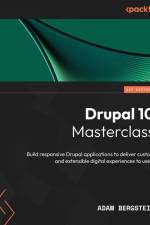
Get started with Drupal 10 using this comprehensive guide for beginners and learn key concepts such as building, installing, maintaining, managing content, and advanced topics through real-world examples and use casesKey FeaturesExplore Drupal 10 concepts in depth and discover how you can engage with the Drupal open-source communityBuild Drupal applications with powerful features such as structured content, media, views, and displaysLearn how to create modules and themes with metadata, hooks, and Drupal's customization pluginsPurchase of the print or Kindle book includes a free PDF eBookBook DescriptionLearning Drupal can be challenging because of its robust, extensible, and powerful capability for digital experiences, making it difficult for beginners to grasp and use it for application development. If you're looking to break into Drupal with hands-on knowledge, this Drupal 10 Masterclass is for you.With this book, you'll gain a thorough knowledge of Drupal by understanding its core concepts, including its technical architecture, frontend, backend, framework, and latest features. Equipped with foundational knowledge, you'll bootstrap and install your first project with expert guidance on maintaining Drupal applications. Progressively, you'll build applications using Drupal's core features such as content structures, multilingual support, users, roles, Views, search, and digital assets. You'll discover techniques for developing modules and themes and harness Drupal's robust content management through layout builder, blocks, and content workflows. The book familiarizes you with prominent tools such as Git, Drush, and Composer for code deployments and DevOps practices for Drupal application management. You'll also explore advanced use cases for content migration and multisite implementation, extending your application's capabilities.By the end of this book, you'll not only have learned how to build a successful Drupal application but may also find yourself contributing to the Drupal community.What you will learnUnderstand Drupal's architecture and infrastructure dependenciesBootstrap, install, and configure your first Drupal projectMaintain Drupal through updates, automation, and DevOps practicesHarness Drupal features like multilingual, search, Views, and content moderationUnderstand content management and how to effectively put it into actionExplore advanced topics such as Git, Drush, DevOps, and ComposerLeverage Drupal's framework for modules and themesDiscover advanced use cases for migration and multisite managementWho this book is forIf you are a CMS professional new to Drupal and want to learn all aspects of building and maintaining Drupal websites, this book is for you. While hands-on experience with Drupal is not assumed, having foundational knowledge of CMS development will help you get the most out of this book.Table of ContentsWhat is Drupal?Core, Contributed, and Custom Projects (Modules, Themes)Infrastructure and Overview of Technical ArchitectureDrupal TerminologyWhat is new in Drupal 10?Bootstrapping, installing, and configuring a new Drupal projectMaintaining DrupalContent Structures and MultilingualUsers, Roles, and PermissionsDeveloping Drupal Views and Display ModesManaging Static AssetsBuilding Search in DrupalUser Engagement with Contact FormsManaging Content and MediaVisual Content ManagementModerated content with workflows(N.B. Please use the Look Inside option to see further chapters)
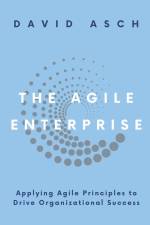
A group of eminent software developers gathered at a Colorado ski lodge in 2001, codifying The Agile Manifesto, a philosophy for efficiently accomplishing technical work. In this accessible, real-world-example-laden, and unexpectedly entertaining book, The Agile Enterprise explains how to apply The Agile Manifesto's ideas company-wide.The wisdom imparted in The Agile Enterprise teaches students to decompose large problems into manageable chunks, helps managers find their value among self-managing teams, and enables executives to measure and recognize success in their own Agile Enterprises.
Behind the Sales delves deep into the intricate world of sales, revealing the people, motivations, and strategies that drive success. Explore the detailed preparations, digital systems, and routes taken by seasoned sales professionals. This book goes beyond just the mechanics, touching upon the personal motivations that fuel achievement. From team dynamics to tactical approaches, it offers a comprehensive guide designed to help you hit and surpass your targets. Discover the unseen facets of sales and unlock the secrets to success.
Abonner på vårt nyhetsbrev og få rabatter og inspirasjon til din neste leseopplevelse.
Ved å abonnere godtar du vår personvernerklæring.