

















Gjør som tusenvis av andre bokelskere
Abonner på vårt nyhetsbrev og få rabatter og inspirasjon til din neste leseopplevelse.
Ved å abonnere godtar du vår personvernerklæring.Du kan når som helst melde deg av våre nyhetsbrev.

This book explores how Islamic principles and tools can be applied to improve operations management across industries.
This edited book focuses on the role and use of emerging technologies within the healthcare sector. This text will draw on expertise from leading practitioners and researchers who either utilise and/or are at the forefront of researching with emerging technology in anticipation of enhancing patient outcomes
This book offers a holistic view of some of the key questions in M&As in the biotechnology and pharmaceutical industries whilst attempting to bridge the gap between theory and practice.
The Routledge Handbook on Corruption in Public Procurement showcases the most innovative and exciting research being conducted in this important area of study, providing a comprehensive go-to reference for all who are interested in the topic.
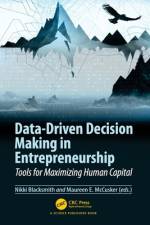
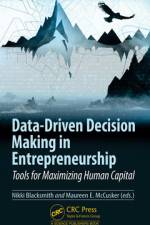
Since the beginning of the 21st century, there has been an explosion in startup organizations. Together, these organizations have been valued at over $3 trillion. In 2019, alone, nearly $300 billion of venture capital was invested globally (Global Startup Ecosystem Report 2020). Simultaneously, an explosion in high volume and high velocity of big data is rapidly changing how organizations function. Gone are the days where organizations can make decisions solely on intuition, logic, or experience. Some have gone as far as to say that data is the most valuable currency and resource available to businesses, and startups are no exception. However, startups and small businesses do differ from their larger counterparts and corporations in three distinct ways: 1) they tend to have fewer resources, time, and specialized training to devote to data analytics; 2) they are part of a unique entrepreneurial ecosystem with unique needs; 3) scholarship and academic research on human capital data analytics in startups is lacking. Existing entrepreneurship research focuses almost exclusively on macro-level aspects. There has been little to no integration of micro- and meso-level research (i.e., individual and team sciences), which is unfortunate given how organizational scientists have significantly advanced human capital data analytics. Unlike other books focused on data analytics and decision for organizations, this proposed book is purposefully designed to be more specifically aimed at addressing the unique idiosyncrasies of the science, research, and practice of startups. Each chapter highlights a specific organizational domain and discuss how a novel data analytic technique can help enhance decision-making, provides a tutorial of said regarding the data analytic technique, and lists references and resources for the respective data analytic technique. The volume will be grounded in sound theory and practice of organizational psychology, entrepreneurship and management and is divided into two parts: assessing and evaluating human capital performance and the use of data analytics to manage human capital.
This important book provides an accessible yet scholarly overview of key academic findings and theories on organizational compassion.
The main focus of this volume is to increase our understanding of the "learning turn" referring, in this book, to the frequent occurrence and usage of terms in the last few decades where the word "learning" is the premodifier, such as "learning city" and "learning organization".
As creative people, we have ideas. Don't Read This Book focuses on how to make choices about everything you do in your daily creative practice and life. The book follows the 'To Don't List' method: When you say 'no' to one idea, you have more time to execute another one. In short: the more you subtract, the more focus and time you get.
In this book, senior experts from across the world provide a comprehensive analysis of the conditions needed for AfCFTA to successfully spur economic development in Africa. The book is an essential read for policy makers, development practitioners, economics researchers and everyone with an interest in the future of Africa.
"Educators with a vision for more equitable, caring schools often struggle with where to begin. I'm just one teacher, where can I start to make change? Is it even possible? How do I do this within current constraints? In this new book, bestselling author Alex Shevrin Venet empowers everyday changemakers by showing how equity-centered trauma-informed practices can guide our approach to school change. Unlike other books on social justice, this powerful resource doesn't tell you which changes to implement; instead, it focuses on helping you develop the skills, strategies, and tools for making change meaningful and effective. Topics include change opportunities and why trauma makes change harder; skill for navigating the change journey such as building relationships, working from strengths, and navigating many streams of information; and sustainable structures for lasting change. Throughout, there are reflection questions to use as conversation-starter with fellow changemakers, as well as Rest Stops so you can pause and process what you are thinking about and learning. This book will help you start your change journey now, putting you and your students on the path to equity, justice, and healing"--
With a focus on the progression and dismantlement of the Asylum system, this book examines key issues around the policy and practice of in-patient mental health provision in the UK, making comparisons with similar services in other parts of the world.
This book provides a comprehensive summary of the field of employee recruitment. Written from a scientific evidence-based perspective, and with contributions from global experts, it reviews research from various areas of recruitment, considers current issues in studying recruitment topics, and designs future research agendas for the field.
"First edition published by Routledge 2013"--T.p. verso.
This edited book focuses on the role and use of emerging technologies within the healthcare sector. This text will draw on expertise from leading practitioners and researchers who either utilise and/or are at the forefront of researching with emerging technology in anticipation of enhancing patient outcomes
This second edition of the book provides a complete guide to research practice on project management.
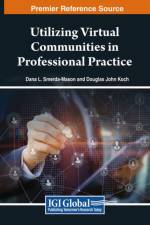
In an era dominated by the demands of the 21st-century workforce, the imperative for distributed and asynchronous work has never been more pronounced. Global organizations grapple with the challenge of fostering connections for diverse purposes, ranging from team building to promoting inclusivity in the context of diversity, equity, and inclusion (DEI), and addressing collaborative operational needs. A deep dive into the creation and utilization of virtual communities, illuminating their effectiveness in various professional settings across industries is necessary to empower leaders to connect with their teams. From informal social learning environments to formal organizational structures, more knowledge is needed to showcase how professionals can leverage authentic connections to inform and support modern professional practice. Utilizing Virtual Communities in Professional Practice serves this purpose and stands as a comprehensive guide that seeks to support professionals in exploring the latest theoretical frameworks underpinning successful virtual communities. Each chapter of the book combines theoretical insights with practical applications, rooted in research and supported by relevant literature. By providing examples from diverse industries, the book empowers individuals to consider new virtual community approaches for their unique professional settings. The objective is to equip readers with new ideas and considerations, enabling them to customize and implement virtual communities effectively in realms such as education, business, and community engagement.
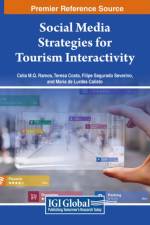
"In an increasingly interconnected world, with the uncertainty related to new tourist behaviors, and the pressure towards a circular economy, coopetition between TMSEs might be the most effective way to respond (collaboratively) to the challenges ahead, using technological advances to their benefit, promoting digitalization, gaining scale, more efficient use of resources, and rapid adaptation of the tourism product to the new demand in balance with sustainable concerns"--
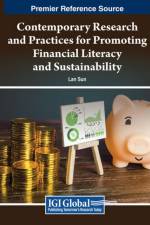
The global economy is undergoing profound shifts, powered by technological advancements and financial innovations, reshaping the role of finance in ways we've never seen before. As these forces reshape the world of finance, it becomes increasingly essential for academic scholars, practitioners, and future finance professionals to stay ahead of the curve, understanding the latest developments and trends. The problem is that finance education and practice often struggle to keep pace with these transformative changes. Standard textbooks and curricula tend to lag behind advancements in the field, leaving aspiring accountants and finance practitioners ill-prepared to tackle the challenges and opportunities of the modern financial world. Additionally, there is a gap between academic research and practical applications, making it difficult for scholars to bridge the divide and offer real-world solutions. Contemporary Research and Practices for Promoting Financial Literacy and Sustainability presents a comprehensive solution to these challenges. It serves as a beacon of knowledge, bringing together classical finance topics and the latest developments, ensuring that future accountants and finance professionals are equipped with the knowledge necessary to navigate the reshaped financial landscape. By integrating contemporary research into finance teaching, this book bridges the gap between theory and practice, offering innate insights into theoretical concepts and their practical applications.
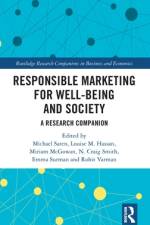
This book will provide an overview of recent and current research which defines and scopes the field of responsible marketing in one single edited book.
More than 70% of digital transformations fail. This book challenges established thinking and offers The Galapagos Framework a new way to drive digital change. This framework allows organisations to move from digital transformation to digital acceleration, resulting in innovative products and a positive impact on organizational morale.
Since the beginning of the 21st century, there has been an explosion in startup organizations. Together, these organizations have been valued at over $3 trillion. In 2019, alone, nearly $300 billion of venture capital was invested globally (Global Startup Ecosystem Report 2020). Simultaneously, an explosion in high volume and high velocity of big data is rapidly changing how organizations function. Gone are the days where organizations can make decisions solely on intuition, logic, or experience. Some have gone as far as to say that data is the most valuable currency and resource available to businesses, and startups are no exception. However, startups and small businesses do differ from their larger counterparts and corporations in three distinct ways: 1) they tend to have fewer resources, time, and specialized training to devote to data analytics; 2) they are part of a unique entrepreneurial ecosystem with unique needs; 3) scholarship and academic research on human capital data analytics in startups is lacking. Existing entrepreneurship research focuses almost exclusively on macro-level aspects. There has been little to no integration of micro- and meso-level research (i.e., individual and team sciences), which is unfortunate given how organizational scientists have significantly advanced human capital data analytics. Unlike other books focused on data analytics and decision for organizations, this proposed book is purposefully designed to be more specifically aimed at addressing the unique idiosyncrasies of the science, research, and practice of startups. Each chapter highlights a specific organizational domain and discuss how a novel data analytic technique can help enhance decision-making, provides a tutorial of said regarding the data analytic technique, and lists references and resources for the respective data analytic technique. The volume will be grounded in sound theory and practice of organizational psychology, entrepreneurship and management and is divided into two parts: assessing and evaluating human capital performance and the use of data analytics to manage human capital.
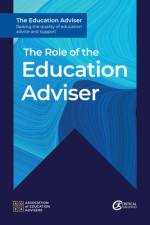
An in-depth look at the key roles and responsibilities of the education adviser.
Abonner på vårt nyhetsbrev og få rabatter og inspirasjon til din neste leseopplevelse.
Ved å abonnere godtar du vår personvernerklæring.