





Gjør som tusenvis av andre bokelskere
Abonner på vårt nyhetsbrev og få rabatter og inspirasjon til din neste leseopplevelse.
Ved å abonnere godtar du vår personvernerklæring.Du kan når som helst melde deg av våre nyhetsbrev.

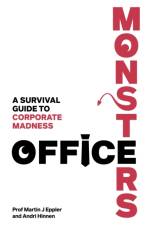
This is not your typical management guideit's gooey, graphic, and downright monstrous. Ever been ambushed by the Yes Yeti or cornered at the coffee machine by an Energy Draining Dracula? Learn how to slay it at work by facing the monsters within and around you. A laugh-out-loud guide to mastering the most monstrous of management challenges.
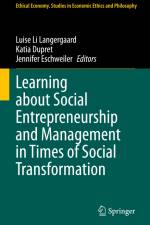
The book brings together perspectives on entrepreneurship research, education and practice to understand social entrepreneurship in its wider societal, political and economic context. Its unique contribution comes from its interdisciplinary approach that spans from the societal to the organizational level, with specific focus social innovation and management. It views management of social entrepreneurship and social enterprise in light of its societal context and employs social innovation to critically assess social entrepreneurship as driver of change. The emergence of social entrepreneurship as an academic field is linked to several societal trends such as public austerity, financial crises, new social challenges and a growing counter-movement to globalised capitalism. Generally seen as organisations serving both social and economic objectives, social enterprises, social innovation and social entrepreneurship have their roots in civil society, civic activism or the solidarityeconomy, but also manifest themselves as for-profit companies, with new organisational forms emerging and old ones changing. The contributions in this book elucidate these developments and the role of social entrepreneurs and social enterprises. Furthermore, the book offers great insight into the specific ways of managing, leading and creating innovation in social enterprises as well as perspectives on how to understand their social impact or value creation.
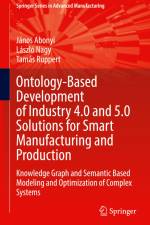
This book presents a comprehensive framework for developing Industry 4.0 and 5.0 solutions through the use of ontology modeling and graph-based optimization techniques. With effective information management being critical to successful manufacturing processes, this book emphasizes the importance of adequate modeling and systematic analysis of interacting elements in the era of smart manufacturing.The book provides an extensive overview of semantic technologies and their potential to integrate with existing industrial standards, planning, and execution systems to provide efficient data processing and analysis. It also investigates the design of Industry 5.0 solutions and the need for problem-specific descriptions of production processes, operator skills and states, and sensor monitoring in intelligent spaces.The book proposes that ontology-based data can efficiently represent enterprise and manufacturing datasets.The book is divided into two parts: modelingand optimization. The semantic modeling part provides an overview of ontologies and knowledge graphs that can be used to create Industry 4.0 and 5.0 applications, with two detailed applications presented on a reproducible industrial case study. The optimization part of the book focuses on network science-based process optimization and presents various detailed applications, such as graph-based analytics, assembly line balancing, and community detection.The book is based on six key points: the need for horizontal and vertical integration in modern industry; the potential benefits of integrating semantic technologies into ERP and MES systems; the importance of optimization methods in Industry 4.0 and 5.0 concepts; the need to process large amounts of data while ensuring interoperability and re-usability factors; the potential for digital twin models to model smart factories, including big data access; and the need to integrate human factors in CPSs and provide adequate methods tofacilitate collaboration and support shop floor workers.
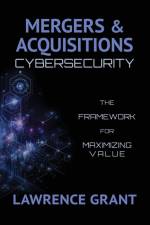
In 2016, during its merger with Verizon, Yahoo reported improperly resolved previous cyber incidents, which resulted in a $350 million reduction in the acquisition price, tarnished its reputation, and led to legal action. Two years later, shortly after their merger, Marriott International and Starwood Hotels and Resorts Worldwide Inc. reported a prior cyberattack that they estimated would result in over $1 billion in lost revenue, legal fees, and remediation costs. These repercussions were swift and significant, plundering the original value and valuation the principals sought at the outset of the deals. These two episodes are among the case studies in the book and are emblematic of the elevated risks cyber incidents and threats pose in M&A. The fallout from cybersecurity incidents undermines transactions, damages reputation, erodes value and triggers legal liabilities. To their chagrin, many companies realize until it is too late that even if they have a functioning corporate security program, it is not and was never designed to mitigate the unique risks and challenges of the mergers and acquisitions process. In Mergers & Acquisitions Cybersecurity, Lawrence introduces a structured cybersecurity framework that outlines specific strategies to enhance security and value in M&A deals. This book is an indispensable resource for owners, investors, attorneys, and anyone participating in high-value M&A transactions. Whether preparing for a merger, sale or due diligence, this book will prove invaluable for minimizing the risk of cyber threats and optimizing the economic and strategic value of transactions of all sizes.
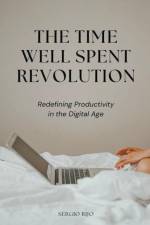
Dive into "The Time Well Spent Revolution," a compelling exploration of productivity in our fast-paced digital world. This book transcends conventional wisdom, delving into the psychological and physiological aspects of attention and focus. From the historical roots of productivity to the challenges of constant connectivity, this work provides a comprehensive analysis.More than a guide, this book offers practical insights for individuals, teams, and organizations seeking a mindful and intentional approach to work. Case studies spotlight companies that have successfully implemented strategies to enhance employee well-being and productivity.The author emphasizes the need for a cultural shift, urging readers to redefine success on their terms. They advocate for a future where meaningful work, creativity, and sustainable practices take precedence. Engaging and actionable, "The Time Well Spent Revolution" is an indispensable companion for those navigating the evolving landscape of work and productivity in the digital age.
Las finanzas personales son cruciales para cualquiera que desee alcanzar la libertad financiera. Gestionar el dinero y planificar nuestras finanzas para distintas etapas y situaciones es sensato si no queremos encontrarnos en un lío. Quienes carecen de esta capacidad de gestión o planificación suelen acabar sintiéndose perdidos. Les cuesta pagar sus deudas y estar al día de sus facturas. Educarse en conocimientos financieros es una habilidad vital necesaria si no quieres vivir toda tu vida de cheque en cheque. Aunque consigas llegar a fin de mes, una emergencia, como un problema médico o un accidente de coche, puede hacer mella en tu bolsillo. Tu situación financiera puede mejorar drásticamente cuando sabes presupuestar tu dinero y aprendes a invertirlo en los lugares adecuados.
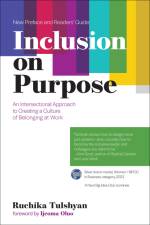
"A guide for organizations to improve their diversity, equity, and inclusion efforts, focusing specifically on the experiences of women of color"--
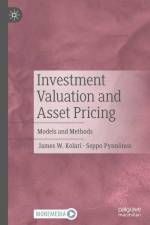
This textbook is intended to fill a gap in undergraduate finance curriculums by providing an asset pricing text that is accessible for undergraduate finance students. It offers an overview of original works on foundational asset pricing studies that follows their historical publication chronologically throughout the text. Each chapter stays close to the original works of these major authors, including quotations, examples, graphical exhibits, and empirical results. Additionally, it includes statistical concepts and methods as applied to finance. These statistical materials are crucial to learning asset pricing, which often applies statistical tests to evaluate different asset pricing models. It offers practical examples, questions, and problems to help students check their learning and better understand the fundamentals of asset pricing., alongside including PowerPoint slides and an instructor¿s manual for professors.
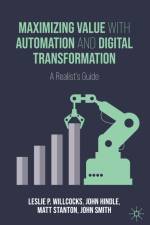
This book is an indispensable guide for executives, programme leaders, and business owners on maximising value from automation and digital transformation. It provides a real-world journey map of automation, from RPA through to intelligent automation, with a focus on practical strategy and management principles intended to help seize the trillions of dollars that are still being left on the table by companies that have not yet made this leap. Though grounded on the research and advisory work of the author team, this book offers clear eyed, easy to read advice for avoiding the ¿transformation bog¿ where many organisations find themselves, struggling to maintain their strategy in an environment that feels increasingly dynamic and confusing. This book is not blinded by the brilliant new technology and hones in on what works and what distracts. It provides a total value of ownership framework for navigation and identifies seven core digital capabilities required for success. Ultimately a book for realists rather than digital idealists, it will be a vital resource for professionals who must chart a course to verifiable business performance improvement through digital enterprise empowerment amid often conflicting priorities.
Abonner på vårt nyhetsbrev og få rabatter og inspirasjon til din neste leseopplevelse.
Ved å abonnere godtar du vår personvernerklæring.