
























Gjør som tusenvis av andre bokelskere
Abonner på vårt nyhetsbrev og få rabatter og inspirasjon til din neste leseopplevelse.
Ved å abonnere godtar du vår personvernerklæring.Du kan når som helst melde deg av våre nyhetsbrev.

The Dark Side of Organizational Behavior aims to gather all the micro and meso level topics about the dark side of organizations that may guide management practitioners, researchers, and students.
This book includes studies on regions, industries and tendencies of industrial change and spatial concentration of competences and industrial potentials. The chapters in this volume provide for discussions concerning a wider understanding of situations related to Industry 4.0 and digitization. It also reaches out further than towards technology and economy because it includes regional and metropolitan societies, workforces and the divergencies of effects and opportunities.Industry 4.0 and digitization are new transformations for regions and metropolises where technologies are applied but regionally can appear as a continuation of innovative processes where it is developed. The divergent presence of competences creates a selectivity process among regions. There are individual industry-location-nexuses formed out of competences of industries, labour force and research which are complemented by public policies providing support towards such adaptation of innovation and change. Regional societies formed from skilled and educated labour become an important basis for participation in innovation and supply chains. Since smart factories widely can be managed remotely, this also shows a concentration of decision making. Simultaneously, it forms a polycentric de-concentration, indicating some more important locations as central within the networks. These systematic changes continue to deepen over time. While public policies may match innovative opportunities at the appropriate moment, they also contribute to a continuation of uneven development and divergent societal tendencies. Industry 4.0 and digitization indicate a wide and selective change of organization associated with new technologies and innovation. While some regions and metropolises can continue to build both innovative competences and innovative societies based on innovative labour force, others will participate because of their position in supply chains.The chapters in this book were originally published as a special issue of the journal, European Planning Studies.
This book covers distinct but complementary and related aspects concerning the existing gap between the hitherto unexploited potential of social innovation in relation to socio-economic challenges regions across Europe and globally face.
Big Data and Information Theory are a binding force between various areas of knowledge that allow for societal advancement. Rapid development of data analytic and information theory allows companies to store vast amounts of information about production, inventory, service, and consumer activities. More powerful CPUs and cloud computing make it possible to do complex optimization instead of using heuristic algorithms, as well as instant rather than offline decision-making. The era of "big data" challenges includes analysis, capture, curation, search, sharing, storage, transfer, visualization, and privacy violations. Big data calls for better integration of optimization, statistics, and data mining. In response to these challenges this book brings together leading researchers and engineers to exchange and share their experiences and research results about big data and information theory applications in various areas. This book covers a broad range of topics including statistics, data mining, data warehouse implementation, engineering management in large-scale infrastructure systems, data-driven sustainable supply chain network, information technology service offshoring project issues, online rumors governance, preliminary cost estimation, and information system project selection. The chapters in this book were originally published in the journal, International Journal of Management Science and Engineering Management.
With contributions from several Asia-pacific countries, this book compares performance and productivity in higher education from the perspective of institutional change. The authors focus on shedding light on the efficacy of institutional policies and reforms.
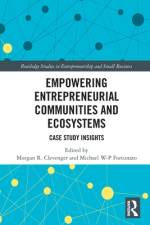
Entrepreneurial Communities and Ecosystems: Case Study Insights aims to provide applied examples that embody the theories, principles, and processes that contribute to empowering everyday entrepreneurial communities and ecosystems. Relying on a diversity of narratives from a wide range of entrepreneurial communities, entrepreneurial ecosystems, and organizations, this book presents a collection of case studies that take the reader inside the minds of leaders who are working to empower entrepreneurs and build entrepreneurial ecosystems and entrepreneurial communities--sometimes from scratch. The book features research and stories from entrepreneurs, development agencies, entrepreneurial support and assistance organizations (i.e. feeders and supports), governments, and involved citizens and local leaders in their quest to make their communities more entrepreneuring. The book presents an analytic frame through which the case studies are cross-analyzed, providing "meta-guidelines" for pursuing a broad range of strategies for supporting local and regional entrepreneurial action. This research volume is equally useful as an undergraduate or graduate text on the sociology of entrepreneurs and entrepreneurship as it is a field guide for ecosystem builders, policy makers, nonprofits, and entrepreneurship and social researchers worldwide.
This companion is a prestige reference work that offers students and researchers a comprehensive overview of the emerging co-created, multi-stakeholder, and sustainable approach to corporate brand management, representing a paradigm shift in the literature. The volume contains 30 chapters, organised into 6 thematic sections. The first section is an introductory one, which underscores the evolution of brand management thinking over time, presenting the corporate brand management field, introducing the current debates in the literature, and discussing the key dimensions of the emerging corporate brand management paradigm. The next five sections focus in turn on one of the key dimensions that characterize the emerging approach to corporate brand management: co-creation, sustainability, polysemic corporate narratives, transformation (history and future) and corporate culture. Every chapter provides a deep reflection on current knowledge, highlighting the most relevant debates and tensions, and offers a roadmap for future research avenues. The final chapter of each section is a commentary on the section, written by a senior leading scholar in the corporate brand management field. This wide-ranging reference work is primarily for students, scholars, and researchers in management, marketing, and brand management, offering a single repository on the current state of knowledge, current debates, and relevant literature. Written by an international selection of leading authors from the USA, Europe, Asia, Africa, and Australia, it provides a balanced, authoritative overview of the field and convenient access to an emerging perspective on corporate brand management.
Culture studies in international business are passing through difficult times of scrutiny and critique. This is due to the fact that the paradigms, approaches, and methods used so far to study culture have been limited in their scope. For several decades now, approaches that consider national cultures and geo-ethnic origins of interacting individuals have dominated management literature.This book distinguishes itself from other books on Culture in International Business (CIB) studies in two important ways. First, it illustrates how Mary Douglas's Cultural Theory framework (referred to commonly as DCF) can be used to explore different aspects of international business. This sets the stage for future scholars to consider DCF as an alternative tool of cultural sense-making as opposed to limiting themselves to categorical frameworks grounded in static notions of national and/or corporate culture. The second unique feature is that it focuses on the complexities of the applied side of culture (i.e., it takes a culture-in-practice perspective), while simultaneously emphasizing the dynamicity and diversity of culture. The book concludes by offering suggestions for the future of CIB studies. This domain, it predicts, may witness significant changes in the way culture is seen as influencing workplace relations. It also identifies other areas on which CIB scholars may need to focus attention in the future: culture in an increasingly digitalized world, culture and the organization as a system, and culture and the intelligent/knowledgeable organization.It will be of interest to researchers, academics, and students in the fields of cross-cultural management, international business, human resource management.
Current models of corporate citizenship largely consider business as one coherent entity. This view of business as a corporate force overlooks the growing evidence that most businesses are run by families. Family businesses are the most common form of business in existence - across countries, continents and geopolitical divides - and yet we know remarkably little about their approach to corporate citizenship. Where families run businesses, they create a concentration of family values that - for good or ill - influence the way business practices and behaviours develop. The role of the family in business has, therefore, an influence on the development of society that is partially mediated through corporate citizenship. This book pulls together current thinking from several diverse research fields that intersect with family business research to offer insight into current research and examples of practice for those studying and researching in the fields of family business, business values and corporate practice. The book will also explore the fact that family businesses tend to take a longer-term approach to business and that this is reflected in their behaviour towards the environment, community engagement, employee development and innovation.Bringing together contributions from researchers in the diverse fields of family business, philanthropy, community engagement, corporate social responsibility, innovation and policy, this book explores the many ways in which family businesses contribute to the corporate citizenship agenda.
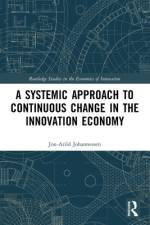
While intense efforts of clarification have been made to distinguish between the concept of system and ecosystem, and between the different forms of ecosystems, very few works have addressed the issues of how these different forms of ecosystems are interacting in a dynamic perspective, or of how the notion of a dynamic ecosystem could emerge from the static frame of a system approach. The five chapters in this volume precisely aim at adding to this literature by highlighting the interplay between different types of innovation systems. A common thread among the five chapters of the book is the recognition of the need to develop new lenses to formally account for adaptative behaviour within clusters, networks, or regional innovation systems using the ecosystem metaphor. The diversity and heterogeneity of agents, the complexity of relationships, and new forms of organisation (underground, middleground, and upperground) are the main characteristics of innovation ecosystems, in contrast to more traditional concepts like clusters or networks. In essence, the five chapters add various complexity dimensions (relationships, knowledge, systems, etc.) to the existing knowledge on ecosystems. The chapters in this book were originally published as a special issue of the journal Industry and Innovation.
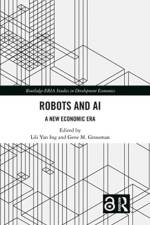
Robots and Artificial Intelligence (AI) are powerful forces that will likely have large impacts on the size, direction and composition of international trade flows. This book discusses how industrial robots, automation, and AI affect international growth, trade, productivity, employment, wages, and welfare.
This book redefines the current paradigm of public goods in the era of the fourth industrial revolution. It proposes a model of production and distribution of public goods that acknowledges the participation of entities from the public, private, and nonprofit sectors.
This book covers key aspects of the governance of the world economy, from the structures of capitalism, to regional economic integration through the trading and production systems.
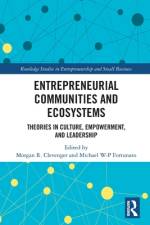
Entrepreneurial Communities and Ecosystems: Theories in Culture, Empowerment, and Leadership examines the deep sociocultural dynamics supporting effective and emergent entrepreneurial ecosystems and communities for a new generation of ecosystem builders and researchers.The book provides current theories and discussion with relevant examples regarding culture, empowerment, and leadership in entrepreneurship to build more entrepreneurial communities anywhere, beginning with any set of local advantages. It clarifies the role of community in building an entrepreneurial ecosystem, and expands the theory on how entrepreneurial communities and ecosystems differ, and how they relate. The book also illuminates the often avoided discussion about power, with special attention to diversity with examples of Black, women, and LGBTQA+ entrepreneurship; provides a deep dive into the range of formal and informal education framed as entreprenology; ties the importance of entrepreneurship and entrepreneuring to resources available at the community, state, and national levels; and introduces a new concept -- omnipreneurship -- which puts the skills of entrepreneurship in the service of global benefit and everyday action.This research volume will be equally useful as an undergraduate or graduate text on the sociology of entrepreneurs and entrepreneurship as it is a field guide for ecosystem builders, policy makers, nonprofits, and entrepreneurship and social researchers worldwide.
This comprehensive text brings together leading contributors from across three continents and numerous fields to provide an interdisciplinary exploration of boredom, its theoretical underpinnings, experiential properties, and the applied contexts in which it occurs. It examines boredom from a range of perspectives.
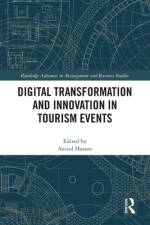
This book provides a comprehensive treatment of the nature of tourism, events and practices in the digital context. It will be a useful reference to those researching on tourism, culture, hospitality and marketing and as well as destination planners, regulators, certification bodies, local tourism board authorities and policy makers.
The aim of this book is to present selected theoretical and practical aspects of corporate social responsibility and sustainability, with particular emphasis on the journey (transition) from values to impact.Values play an important role in business world and they shape the responsible approach of organizations. However, pressing and still unresolved challenges of the present day show evidently that there exist significant discrepancies between organizations' declarations on values and their real impact. COVID-19 pandemic, Globalization 4.0, climate catastrophe and challenges emphasized by SDGs, constitute the new environment that contemporary organizations face. In effect business is part of the problem and a solution as well. It is necessary to quickly and effectively push for action taking into account the power of responsible business to co-create human live and environment. Both the theoretical considerations and the practice-based studies presented in this monograph make a significant contribution to the theory and practice of management. The book is an extension and enrichment of the existing knowledge in the field of socially responsible management in organizations. Corporate Social Responsibility and Sustainability will be of value to academics, researchers and advanced students in the fields of business and management, especially those interest in the intersection of management and CSR and sustainability, and those focusing the impact that business activities have on the environment.
This new book of leadership narratives fleshes out the reality of working to achieve change in primary care and will be relevant to a wide primary care audience, empowering both clinicians and non-clinicians to recognize and use their leadership qualities.
This new book of leadership narratives fleshes out the reality of working to achieve change in primary care and will be relevant to a wide primary care audience, empowering both clinicians and non-clinicians to recognize and use their leadership qualities.
Abonner på vårt nyhetsbrev og få rabatter og inspirasjon til din neste leseopplevelse.
Ved å abonnere godtar du vår personvernerklæring.