















Gjør som tusenvis av andre bokelskere
Abonner på vårt nyhetsbrev og få rabatter og inspirasjon til din neste leseopplevelse.
Ved å abonnere godtar du vår personvernerklæring.Du kan når som helst melde deg av våre nyhetsbrev.

This book is your ultimate guide to understanding the significance of employee retention and unlocking the secrets to building an engaged and committed workforce. Whether you are an HR professional seeking comprehensive strategies or a business leader looking to foster a culture of loyalty and productivity, this book will equip you with the tools and insights you need.
"Drawing upon Sun Tzu's 'Art of War', 'The New Art of War: Strategies for the Digital Age' reinterprets timeless battle tactics for the 21st century. Balancing classical wisdom and contemporary strategy, this guide navigates the intricacies of communication, competition, and environmental adaptation, delivering a route to victory for today's leaders."
Discover the rollercoaster ride of my 15-year journey as a seasoned landlord, where I tackled the never-ending whirlwind of managing 110 unique tenants each month. Brace yourself for a collection of hilarious stories that will leave you in stitches as I recount the ups and downs, the triumphs and tribulations of navigating the world of tenant management. In this captivating and light-hearted book, I share valuable lessons from my experiences, offering a helping hand to overwhelmed landlords drowning in tenant drama. From outrageous escapades to unforeseen challenges, I provide practical insights and expert tips to empower landlords to conquer their rental adventures. Whether you're a seasoned landlord seeking a good laugh or a newbie needing guidance, this book is your essential companion. I delve into the nitty-gritty of tenant management with wit, wisdom, and a touch of humor, ensuring an entertaining and enlightening read that will keep you captivated from start to finish. Get ready to immerse yourself in the world of tenant management as I regale you with tales of outrageous characters, bizarre situations, and the invaluable lessons they taught me. Learn how to handle difficult tenants with finesse, transform stressful situations into opportunities, and emerge as the master of your rental empire. With its blend of humor, practical advice, and relatable anecdotes, this book is a must-have for landlords navigating the turbulent waters of tenant management. Prepare to laugh, learn, and master the art of landlordship with this entertaining and insightful guide. Don't let the dramas of tenant management overwhelm you any longer. Today, grab your copy of Millionaire Landlord Chronicles: Hilarious Stories and Proven Strategies for Tenant Management and join me on this unforgettable journey!
Neste livro, proponho "uma leitura... além". Sem desprezo nem menosprezo! Não excluo nem as salas de aula nem o setting terapêutico, mas sim, articulo conhecimentos estabelecidos para satisfazer a minha necessidade básica de "conversão" profissional. Busquei o discernimento crítico, a análise, a reflexão sobre os aspectos coincidentes na Abordagem Integrativa Transpessoal e na Pedagogia Empresarial e vice-versa, com intenção sincera de poder contribuir para retirar os véus do Ser Integral, chegar a Yvy marã e'ỹ, implantar o Reino das Bem-aventuranças, implementar um Mundo Bem Melhor.
Certified Executive Assistance Professional "CEAP" is a certification for professionals who demonstrate knowledge, skills and competencies in executive assistance and office administration as per the requirements of the Canadian College for Leadership and Management "CCLM". CEAP's are effective assistants to executives; whether CEO's or COO's. They are effective in managing their activities, dress and dine for success and master business etiquette and are effective gate keepers for their managers and executives.If you are a new secretary, office admin or executive assistant, then, CEAP certification is for your. With CEAP, you earn the knowledge and get the status and recognition.Many people are pursuing the CEAP certification, including, but not limited to: Personal Assistants, Support StaffExecutive AssistantsSecretaries, Office AdministratorsCall Centre Agents, Customer RepresentativesHR executives and many moreWhat is the CEAP Certification Body of Knowledge? The CEAP BoK comprises of various themes of knowledge and skills which a CEAP must demonstrate competency in. A CEAP: Understands how to deal with their managers, has effective time and meeting management skills, and is effective gate keeper.Is organized, administers office work and workplace effectively and communicates effectively, both verbally and non-verbally.Understands etiquette, professional in meeting and greeting people and dines and dresses for success.Has efficient and effective writing skills for professional emails, business letters, reports and proposals.Is presentable, confidently addresses media and the public with unique public speaking skills, when required.Is personally organized with unique skills to prioritize and schedule activities.Is productive with clear goals and objectives.Is ethical, endorses and enforces ethical practices and respects people's rights in workplaces.This is the third version (2023) of the Certified Executive Assistance Professional CEAP Body of Knowledge textbook and comes with sample exam questions.Become a Certified Executive Assistance Professional CEAP now and register at http: //www.CCLMCanada.org
Have you ever wondered why you are always busy chasing opportunities? Why do you feel you have to pursue too many projects? The Qualification Struggle is written to make your sales pipeline healthier. Readers will understand why their attempts to structure the qualification process consistently fail. Why do you sometimes pursue too many and sometimes too few opportunities? You can only spend your resources once. You better direct those resources to the prospects that add the most value to your business. It would be best if you stopped wasting energy on the wrong activities. You have to understand the factors that impact the qualification process. The Qualification Struggle shows you the factors that influence your target opportunities. You will learn that traditional qualification frameworks, like BAND or MEDDICC, fall short in your business. Have you ever wondered why you have trouble opening up a new market or entering a business relationship with your dream client? Have you ever wondered why fewer new opportunities present themselves in the weeks before the vacation season? Human behavior guides salespeople in the direction of least resistance. Why should a salesperson put in additional effort to attract a dream client if the rest of the organization punishes him because the opportunity does not fit into the qualification criteria? Should the qualification framework be the same for all sales team members at all times? For example, what happens if you keep disqualifying the opportunities from the new salesperson you just hired? We all know the qualification process is flexible, but you can get a firm grip. Read The Qualification Struggle and regain control of finding the right opportunities. Those opportunities are a perfect fit for your core competencies. Re-ignite your entrepreneurial flame and spark the motivation of the sales team again. Get your copy of "The Qualification Struggle" today. Change your life.
Productivity Hacks 101: Streamlining Your Workflow "Productivity Hacks 101: Streamlining Your Workflow" provides readers with a comprehensive guide to enhancing productivity in their personal and professional lives. Through twelve chapters covering a wide range of topics, readers will gain valuable insights and actionable strategies for managing time effectively, optimizing organization and workspace, setting goals, improving communication, focusing and concentrating, utilizing technology tools, and developing productive habits. By implementing these productivity hacks, readers will be empowered to streamline their workflow and achieve their goals with greater efficiency and success. The book covers the following: Chapter 1: Introduction to Productivity HacksUnderstanding the concept of productivity and its importance in personal and professional life.Exploring common productivity challenges and roadblocks.Setting goals and priorities to align productivity efforts.Developing a growth mindset for continuous improvement.Strategies for maintaining work-life balance while increasing productivity. Chapter 2: Time Management TechniquesThe importance of effective time management in boosting productivity.Prioritizing tasks and creating a daily/weekly schedule.Techniques for overcoming procrastination and managing distractions.Time blocking and batching to optimize workflow.Strategies for delegating tasks and effective task management. Chapter 3: Organization and Workspace OptimizationOrganizing physical and digital spaces for improved productivity.Decluttering and creating an organized workspace.Implementing effective file management and digital organization strategies.Maximizing productivity through efficient email management.Utilizing productivity tools and apps for streamlined organization. Chapter 4: Goal Setting and PlanningSetting SMART (Specific, Measurable, Achievable, Relevant, Time-bound) goals.Breaking down long-term goals into actionable steps.Creating a productivity roadmap and action plan.Implementing strategies for effective goal tracking and progress monitoring.Strategies for adapting goals and plans to changing circumstances. Chapter 5: Task and Project ManagementTechniques for effective task and project prioritization.Utilizing task management tools and software for enhanced productivity.Implementing project management methodologies (e.g., Agile, Kanban) for streamlined workflow.Collaborative task and project management strategies.Strategies for managing and minimizing task and project interruptions. Chapter 6: Effective Communication and CollaborationImportance of clear and concise communication in boosting productivity.Strategies for improving email and digital communication efficiency.Effective meeting management and optimizing meeting productivity.Collaborative tools and platforms for efficient teamwork and collaboration.Strategies for fostering effective communication in remote work environments. Chapter 7: Focus and Concentration TechniquesTechniques for enhancing focus and minimizing distractions.Implementing strategies for deep work and eliminating multitasking.Managing information overload and avoiding cognitive overload.Practicing mindfulness and meditation for improved focus.Creating an environment conducive to concentration and flow state. Chapter 8: Energy Management and Well-being Chapter 9: Automation and Technology Tools Chapter 10: Mindset and Productivity Habits Chapter 11: Productivity in Different Environments Chapter 12: Sustaining Productivity and Continuous Improvement
Existe uma batalha constante entre o desejo de fechar negócios e a inevitável presença das objeções. Elas surgem como sombras misteriosas, capazes de desviar até mesmo o cliente mais promissor do caminho da compra. Mas o que realmente está por trás dessas objeções? O que motiva as pessoas a resistirem, a hesitarem, a dizerem "não"?Imagine desvendar os segredos ocultos da mente humana, desvendar as intricadas teias de pensamentos, emoções e motivações que influenciam cada objeção. Agora, você tem a oportunidade de mergulhar fundo nessa fascinante jornada pela psicologia por trás das objeções.Ao adentrar esse reino desconhecido, você será confrontado com uma infinidade de perguntas intrigantes. Por que algumas pessoas resistem a uma oferta irresistÃvel? O que faz com que outras abandonem uma compra no último minuto? Quais são os fatores que moldam as objeções, transformando-as em barreiras intransponÃveis?Prepare-se para desvendar os mistérios por trás das respostas negativas. Ao longo desta exploração, você descobrirá técnicas persuasivas, estratégias inteligentes e insights reveladores que irão desarmar as objeções e abrir portas para o sucesso nas vendas. Você aprenderá a identificar os sinais sutis, a decifrar as entrelinhas das objeções e a desvendar os verdadeiros motivos por trás do "não".
Presentation Skills 101: Captivating and Persuading Audiences "Presentation Skills 101: Captivating and Persuading Audiences" serves as a comprehensive guide for individuals seeking to enhance their presentation abilities. Through the twelve chapters, readers will gain insights into various aspects of effective presentations, from preparation and content organization to delivery techniques and handling challenging situations. By emphasizing engagement, persuasion, and audience connection, this book aims to empower individuals to deliver impactful presentations that leave a lasting impression and achieve their intended goals. The book covers the following: Chapter 1: Introduction to Effective PresentationsThe importance of effective presentation skills in various professional and personal settings.Understanding the goals and objectives of a presentation.Overcoming common fears and anxieties associated with public speaking.The impact of body language, voice modulation, and non-verbal communication.Building confidence and establishing credibility as a presenter. Chapter 2: Preparing for SuccessResearching the topic and gathering relevant information.Identifying the target audience and tailoring the presentation accordingly.Setting clear objectives and structuring the presentation for maximum impact.Effective use of visual aids, such as slides, videos, and props.Practicing and rehearsing the presentation for smooth delivery. Chapter 3: Engaging the AudienceGrabbing attention with a compelling opening and introduction.Techniques for storytelling and using narratives to captivate the audience.Involving the audience through interactive elements, questions, and activities.Creating a connection and establishing rapport with the audience.Utilizing humor and anecdotes to engage and entertain. Chapter 4: Organizing the ContentStructuring the presentation with a clear beginning, middle, and end.Creating a logical flow and sequencing of ideas.Utilizing effective transitions between topics and sections.Outlining main points and supporting details for clarity and coherence.Emphasizing key messages and using repetition for reinforcement. Chapter 5: Developing Powerful VisualsDesigning visually appealing slides that enhance the message.Selecting appropriate fonts, colors, and graphics for readability and impact.Using visual hierarchy to prioritize information and guide the audience's attention.Incorporating charts, graphs, and images to convey data and statistics effectively.Ensuring consistency and simplicity in visual design for a polished presentation. Chapter 6: Mastering Verbal DeliveryDeveloping a clear and confident speaking style.Using vocal variety and tone to engage and convey emotions.Articulating words and enunciating clearly for audience comprehension.Managing pace and rhythm for effective communication.Practicing effective pausing and utilizing silence for emphasis. Chapter 7: Utilizing Body LanguageUnderstanding the impact of body language on audience perception.Maintaining strong posture and using gestures purposefully.Establishing eye contact to connect with individuals in the audience.Using facial expressions to convey emotions and enhance message delivery.Managing nervous habits and cultivating a confident physical presence. Chapter 8: Persuasive Techniques Chapter 9: Handling Q&A Sessions Chapter 10: Overcoming Presentation Challenges Chapter 11: Presenting in Different Settings and Formats Chapter 12: Continued Growth and Improvement
Principles of Management and Leadership in a Global World is the second edition of the book that aims at elaborating the concept of management and leadership, and insights concerning different aspects of them. As we go through the chapters, we will consider a variety of key learnings to be conveyed to the readers. In the first chapter, the history of management is discussed and application of management principles. Then, management theories are systematically elaborated, and types of and their choice in terms of globalization are argued. Chapter two considers organizational structure and change management. In chapter three is investigated relationship between organizational culture, behavior, and job satisfaction in modern business conditions. Types of leadership models and theories are the most important axis of chapter four. In this chapter, the types of leadership theories and their common attributes and their requirements are discussed. Chapter five is dedicated to different modalities of work and the changing role of leadership which is a critical topic in gig economy. Personalized learning and job success in the digital economy is investigated in chapter six both theoretically and practically. In this chapter is concluded that has been a lag between the introduction of new ways of doing jobs and labor displacement from the old economy into the digital one. In chapter seven is discussed time and stress management. Namely, on an organizational level, stress can affect performance and attitudes and can cause burnout.The book is recommended to businesspersons, lecturers, and students in order to consolidate their understanding of the nature of management and leadership
Research in the area of intellectual property (IP) is increasingly relevant to the rapidly growing artificial intelligence (AI) and robotics industries, affecting the legal, business, manufacturing, and healthcare sectors. This contributed volume aims to develop our understanding of the legal and ethical challenges posed by artificial intelligence and robotics technologies and the appropriate intellectual property based legal and regulatory responses. It provides a philosophical and legal framework for considering concepts and principles that relate to the development and use of such technologies at the international, regional, and national levels. The legal discourse in IP concerns the ever-growing AI sector and how businesses can protect their IP and incorporate AI. Moral sentiments often take a back seat to market sentiments, even in shaping the direction of ethical business strategy. This anomaly persists despite growing interest in ethics and IP. Taking an interdisciplinary and diverse perspective, this book enriches the evolving definition and scope of IP literature by focusing on actors, products and regulation that shape the business sector. Considering the gap between theory and practice, this book bridges academic and professional knowledge in unpacking legal, ethical and governance issues in the intellectual property industry. In an effort to include as many viewpoints as possible, contributions have been gathered from diverse fields, including business, ethics, governance, law, philosophy and technology studies. This book will appeal to academics in the field of intellectual property, business ethics, AI, emerging technologies and strategic innovation, as well as practitioners and policy makers.
Grow your business by growing your relationships. Nearly all the common advice about growing a business points at getting the deal done. Give the pitch, push the prospect, close the deal. Relationships are rarely mentioned at all, and if they are, the focus is on persuasion and pressure. It just doesn't feel right.And sure, a great deal might make your year, but a great relationship can make your entire career. The better approach is to invest in relationships, creating wins for everyone at every turn, even before a decision is made. When you focus on relationships, you're focused on helping instead of selling. You win more of the work directly in front of you. You create demand for the higher value work you want to do, for the clients you want to do it for. And when this flywheel of success starts spinning, everything becomes effortless. Give To Grow will show you: The science and steps to get great at growth. It's not rocket science, it's brain science. The Five Lies that keep professionals from becoming successful, and how to remove each from your mind. The Four Gifts to use to deepen relationships and grow your business in ways everyone wins. And how to implement everything you learn to get the highest return on your most important investment--your time. No matter where you are in your career, Give to Grow will help you build the relationships you need to make the impact you want.
Inventing isn't easy! In this book, twelve "valleys of death" are identified which, following a linear approach, correspond to the various obstacles that limit the various passages from an original idea to invention, and then to industrial innovation. These various limiting factors have a variety of origins: disciplined scientific training, weak general and scientific culture, New Public Management, hierarchical support, funding, evaluation, proof of concepts, complexity management, and heuristic and interdisciplinary approaches on the one hand, and attractiveness for the new on the other. After an idea is formulated, these contexts bring small elements of science into play, but above all human aspects ranging from motivation and the quality of exchanges to responsibility. In short, it is a possible dynamic way of living together to promote innovations stemming from science. This is not easy, but if the invention is profitable for society, the downstream sector can greatly facilitate the various stages of commercialization.
Generative AI and the remote-work revolution show us every day that we are in a new era. The rules and norms have changed--and so must leadership.And yet, coercive bureaucracy, hierarchy, and control--old ways of thinking and working--are still with us, a deep and powerful legacy. We are living through a profound transition from an old, industrial era to a new one that is digital, transparent, and complex. In this transition, leadership is changing--and it needs to change.In this important new book by former dean of Harvard Business School Kim Clark, written with his business school professor son, Jonathan, and Deloitte consultant daughter, Erin, the dynamic struggle between two competing paradigms of leadership is compellingly illustrated: an old paradigm that involves control and power over people versus a new one that enables and inspires power through people.With rich examples and stories, the authors show how deeply ingrained the legacy model of leadership remains, and how destructive it is, causing waste and loss of human potential, stifling innovation, and ultimately resulting in what the authors call "organizational darkness." They go on to articulate a new, positive model, one that consciously seeks to do good and to make things better for the long term; that cares for people, helping them to thrive; and that mobilizes people to solve tough problems. These three elements, they argue, are the soul, heart, and mind of leadership, and activating them requires careful attention to both the personal and the organizational dimensions of leadership.The narrative is interwoven with probing analysis and reflection, and the authors speak clearly and frankly about the moral aspects and impact of leadership. They also provide a concrete frame and approach for scaling the new model and creating a vibrant leadership system.Leading Through is a deep and essential account of the evolution of our leadership thinking and practice that is both timely and timeless.
Named one of 22 new booksthat you should consider reading before the year is out by FortuneThis practical and empathetic guide to taking the high road is worth a look for workers lost in conflict. Publisher's WeeklyA research-based, practical guide for how to handle difficult people at work.Work relationships can be hard. The stress of dealing with difficult people dampens our creativity and productivity, degrades our ability to think clearly and make sound decisions, and causes us to disengage. We might lie awake at night worrying, withdraw from work, or react in ways we later regretrolling our eyes in a meeting, snapping at colleagues, or staying silent when we should speak up.Too often we grin and bear it as if we have no choice. Or throw up our hands because one-size-fits-all solutions haven't worked. But you can only endure so much thoughtless, irrational, or malicious behaviorthere's your sanity to consider, and your career.In Getting Along, workplace expert and Harvard Business Review podcast host Amy Gallo identifies eight familiar types of difficult coworkersthe insecure boss, the passive-aggressive peer, the know-it-all, the biased coworker, and othersand provides strategies tailored to dealing constructively with each one. She also shares principles that will help you turn things around, no matter who you're at odds with. Taking the high road isn't easy, but Gallo offers a crucial perspective on how work relationships really matter, as well as the compassion, encouragement, and tools you need to prevailon your terms. She answers questions such as: Why can't I stop thinking about that nasty email?! What's behind my problem colleague's behavior? How can I fix things if they won't cooperate? I've tried everythingwhat now?Full of relatable, sometimes cringe-worthy examples, the latest behavioral science research, and practical advice you can use right now, Getting Along is an indispensable guide to navigating your toughest relationships at workand building interpersonal resilience in the process.
An exploration of the dynamic transformations and future possibilities of the space industry.Space is the next great, untapped market opportunity, and it's undergoing a commercial revolution right now. No, it's not hotels on Mars or day trips to orbit (yet), but it's still an awe-inspiring transformation driven by innovation, creativity, and new technology. A wave of companies led by gutsy entrepreneurs with big dreams about our opportunities beyond the atmosphere is the driving force for creating humanity's space future. But it's not happening through dreams alone. The space economy is just that--an economy--impelled by the same laws of supply and demand as any business. The authors, who teach a wildly popular course on the topic at Harvard Business School, explain how this market is forming, why it's forming so quickly (as access to space becomes dramatically more affordable and routine), and how it's fast becoming an increasingly important source of value for businesses across industries, and for society as a whole, propelling us once more toward the moon and beyond.Weinzierl and Rosseau bring to life this revolution through the players you've heard of--Musk's SpaceX and Bezos' Blue Origin--and many you haven't, like Astroscale, founded by an IT executive who quit his job to start a company to clean up space junk.With clarity and rigor, Weinzierl and Rosseau get past the breathless hype to explain what's real, what's not, what comes next, and how you can be part of the burgeoning market in the endless black ocean of space.
It's time for B2B companies to rethink their growth logic.Business-to-business selling is still dominated by "value selling"--trying to match products to needs and making deals. It's a buyer-seller relationship built on transactions, and it's not the way you should be doing business.There's a better way--"value creation"--in which supplier and customer collaborate as partners to build joint strategies and grow together. If you can escape the product-centric mindset of value sellers and put customers at the heart of your sales strategy, results will follow. What kind of results? The authors' own data shows that customers who get value creation right can double account values in three years.With clarity and precision, Christoph Senn and Mehak Gandhi lay out the framework, called Triple Fit Strategy, for helping you move to value creation. Their process, along with their Triple Fit Canvas tool, ensures a fit between customer and supplier across three areas: planning, execution, and resources. It's a proven approach they've implemented with many B2B companies over twenty years and validated with data from those engagements.This breakthrough approach has the power to transform B2B businesses, better aligning them with customers, creating better internal organization, and uncovering new opportunities for growth. Your journey to becoming a value creator starts here.
Sales leadership essentials for an era of rapidly advancing digital technology.Effective sales management--and running an effective sales organization--is the key to revenue generation, customer satisfaction, and business results. Whether you are a sales manager or a sales executive, your role is complex, and it is increasingly challenging to balance today's demands with leading the digital sales transformation that will position your team for future success.In the HBR Sales Management Handbook, Prabhakant Sinha, Arun Shastri, and Sally Lorimer provide the resources you need to build value for your company, your customers, and your sales teams. The book lays out hundreds of actionable ideas to manage your sales force better and drive digital success in your sales organization.With case studies from many industries worldwide, this comprehensive guide explores the fundamentals every sales manager needs to know, complete through today's most challenging issues around digital: Bringing value to customers while managing the businessHiring, onboarding, and retaining the best sales talentManaging sales in the remote, multichannel worldUsing AI and analytics to make crucial decisionsBuilding the next generation of sales information hubsNavigating sales force change with continuous improvementYour job is vast and dynamic. The HBR Sales Management Handbook is a collection of comprehensive and forward-looking ideas to help you win by helping your salespeople and customers win.HBR Handbooks provide ambitious professionals with the frameworks, advice, and tools they need to excel in their careers. With step-by-step guidance, time-honed best practices, and real-life stories, each comprehensive volume helps you to stand out from the pack--whatever your role.
With disruptive technologies on the horizon, traditional employment models are becoming outdated. How will your organization adapt to the evolving landscape of work?Business is on the cusp of an inevitable and profound transformation. Conventional work paradigms are failing to adapt to the evolving needs and expectations of the modern workforce. Simultaneously, the emergence of disruptive technologies such as artificial intelligence, coupled with Web3 innovations including the metaverse, blockchain, and decentralized work models, is unlocking a whole new realm of work. It raises a pivotal question: Is the era of traditional employment over?The tools of tomorrow will amplify human potential, from collaborating in virtual spaces through digital avatars, to managing transactions transparently on the blockchain. Those who embrace these technologies--and the manner in which people want to work--will unleash unprecedented levels of productivity and innovation. Conversely, those who remain tethered to outdated work patterns risk losing out on the best talent, and even becoming obsolete.Employment Is Dead ventures into unexplored territories to reveal how these innovations can transform work into more democratic, human-centric, and empowering work experiences. Deborah Perry Piscione and Josh Drean bring to life the seismic shifts occurring in the workforce, propelled by employees' growing demand for autonomy, flexibility, and a sense of purpose in their work. The authors challenge leaders to embrace these changes, offering vital insights into navigating this new landscape. With compelling case studies and cutting-edge examples, this book is an essential read for those aiming to stay ahead in a rapidly evolving digital environment and harness disruptive technologies to redefine the future of work.
A first-of-its-kind look at the outrage being directed at organizations across the globe--and how leaders can respond to it.Outrage is everywhere--on the left and on the right--and many companies are finding themselves in the crosshairs. Go Fund Me was pressured to cut off funding to protesting truckers in Ottawa. Disney's CEO was dragged down for mishandling both sides of Florida's "Don't Say Gay" law. Facebook and other tech companies have been accused of manipulating elections in many countries and by many parties. People are angry with the world--in some cases, rightfully so--and now view companies as they do governments: as targets of their ire and potential forces for social change. Managing outrage has moved from being an occasional leadership challenge, such as handling a PR crisis, to a necessary and critical leadership capability, like strategic thinking or financial acumen.Based on his popular Oxford leadership program and deep-dive case studies on organizations such as IKEA, Nestlé, the London Metropolitan Police, the Vatican, and others, Karthik Ramanna offers a set of practices for leaders to navigate this age of polarization--steps leaders can take to make sense of the outrage they encounter, work with relevant stakeholders to progress through it, and emerge stronger for it. Ramanna's practical framework, developed through years of experience with organizations, helps leaders "turn down the temperature," analyze root causes, develop and implement distinctive organizational responses that are mission consistent, and build individual and organizational resilience.Just as governments have systems for managing regular adverse-weather events such as hurricanes, organizations and their leaders now need an equivalent for managing the stakeholder hostilities that contextualize nearly all their decisions. This book is the essential guide for managing in the age of outrage.
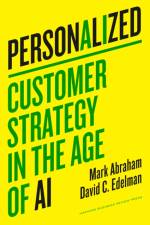
In a world where consumers expect more--instantly, seamlessly, and the way they want it--personalization is a strategic imperative.Research shows that the vast majority of consumers want personalized experiences, and a select few companies are rising to the challenge. These personalization leaders build trusted relationships with millions of customers across channels and engage with them at every step throughout their journey. They are rethinking their operations and unleashing the creativity of their teams--combined with the power of AI and technology--to fine-tune each successive interaction, delighting customers in the process.Most companies, though, are not doing personalization well, leading to wasted money, squandered effort, and missed expectations. To be done effectively, personalization must be a critical element of your organization's strategy.Personalized is a playbook to deliver true personalization at scale. In this book, Boston Consulting Group's Mark Abraham and Harvard Business School's David C. Edelman describe the Five Promises of Personalization that companies must live up to: Empower Me: Understand each customer's unique needs and decide how to best help them.Know Me: Win customers' trust and permission to securely use their data to improve their experience.Reach Me: Reach out to the right customer, in the right channel, at just the right moment.Show Me: Tailor unique content to be relevant to each customer, enabled by generative AI.Delight Me: Design new ways of working and processes to speed up the velocity of continuous improvement and make a customer's experience feel magical.With detailed examples across industries--including retail, health care, banking, B2B, technology, fashion, and travel--this book will help executives learn how to put personalization at the center of their strategy, accelerate growth, and capture their share of the $2 trillion personalization prize.
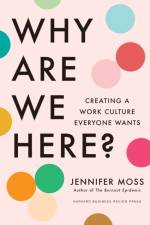
A deeply human account of how our relationship with work has changed and a guide for leaders who want to make things right--from the author of The Burnout Epidemic.There's a post-pandemic phenomenon that many of us feel but can't quite explain. Some of us have felt extra motivated, while others have experienced a malaise that still lingers. No matter your situation, at some point, you've probably asked yourself, Why are we here?Things are changing. Employees feel differently about work, and leaders have been forced to scramble. Everyone is figuring this out together--and we're only getting started. We're merely in the awareness stage. There's so much we need to learn.In Why Are We Here?, workplace expert and author of The Burnout Epidemic Jennifer Moss takes readers to the front lines of this massive and historic shift. Through extensive interviews, she uncovers the reasons why work has changed and highlights the leaders and organizations who are doing things right.Filled with unvarnished takes, new research, and revealing stories, Why Are We Here? shines a light on this historically turbulent time while offering clues and inspiration for leaders navigating our new, complex, and ever-changing world.
Trust is the essential commodity of sales. Yet, establishing and maintaining trust can feel impossible in a world where skepticism is at an all-time high.Selling In a Post-Trust World coaches sales professionals in how to establish trust with prospects and clients. Based on The Trust Formula™, a proven model used to coach thousands of sales professionals, readers learn how to build authentic relationships, communicate meaningful value, create an inspirational experience, and establish disciplined habits.Each chapter ends with practical action items. By putting the ideas in this book to work, readers will discover the secret to building trust with skeptical prospects and clients. As a result, they will grow sales as they master skills to prospect more effectively, increase win rates, and develop long-term relationships with clients.
Lead Like a Girl is a holistic look at how to achieve purpose and joy at work. It is about turning the world of work into a place where empathy, intuition, passion, and resilience take their rightful place, where women can lead like women and men can tap into their more feminine leadership traits and dare to lead (more) like a girl!
Timely and authoritative research on the latest issues in tax policy. Tax Policy and the Economy publishes current academic research on taxation and government spending with both immediate bearing on policy debates and longer-term interest. This volume presents new research on taxation and public expenditure programs, with particular focus on how they affect economic behavior. John Guyton, Kara Leibel, Dayanand Manoli, Ankur Patel, Mark Payne, and Brenda Schafer study the disallowance of Earned Income Tax Credit (EITC) benefits as a result of IRS audits, and find that in post-audit years, audited taxpayers are less likely than similar non-audited taxpayers to claim EITC benefits. Janet Holtzblatt, Swati Joshi, Nora Cahill, and William Gale provide new empirical evidence on racial differences in the income tax penalty, or bonus, associated with a couple being married. Haichao Fan, Yu Liu, Nancy Qian, and Jaya Wen evaluate how computerizing value-added tax transactions in China affected the tax revenue collected from large manufacturing firms. Niels Johannesen, Daniel Reck, Max Risch, Joel Slemrod, John Guyton, and Patrick Langetieg study data on the ownership of foreign bank accounts and other financial accounts as reported on income tax returns. They find that many of these accounts are in tax havens, and they discuss the impact of the Foreign Account Tax Compliance Act on tax compliance and government revenue. Louis Kaplow integrates charitable giving into an optimal income tax framework, and shows that the externalities associated with such giving are key to determining its optimal tax treatment. Finally, Roger Gordon compares caps or quantity targets on emissions with carbon taxes and points out that which one dominates can be situation-specific and depend on a number of features of the economy.
Abonner på vårt nyhetsbrev og få rabatter og inspirasjon til din neste leseopplevelse.
Ved å abonnere godtar du vår personvernerklæring.