




















Gjør som tusenvis av andre bokelskere
Abonner på vårt nyhetsbrev og få rabatter og inspirasjon til din neste leseopplevelse.
Ved å abonnere godtar du vår personvernerklæring.Du kan når som helst melde deg av våre nyhetsbrev.

Most boards are faced with the paradox of growth. Organic growth is slow and can be difficult in mature markets. M&A provides more rapid growth but is higher risk in terms of outcome. Businesses need growth not just to satisfy investors but to create market power and scale economies. This book helps to navigate the difficult terrain faced by boards wishing to grow through acquisition. It identifies which strategies are more likely to be effective and how the chosen strategy largely determines the form of integration. Taking a step-by-step approach, this book guides readers through the key decisions and likely business outcomes. Each chapter is accompanied by lessons which are helpful in summarising and consolidating the key issues.This book tackles key topics, such as:M&A performance and risksStrategic growth optionsImproving integration performanceLearning from private equityM&A process and business valuationFuture of private equityPerformance driven governanceGrounded in cutting-edge theory and combined with engaging, real world case studies and practical exercises and lessons, this is an indispensable guide not only for MBA and Executive students, but also for anyone likely to be involved in setting strategy and the process of buying, selling or integrating a business.
In the boardroom, executive and non-executive directors must frequently make decisions balancing competing interests and conflicting moral norms, with their actions impacting employees, customers, shareholders, and society at large. These decisions are not always understood, frequently criticised, and sometimes deemed immoral or unethical.Disbelief over the apparent mismatch between the actions of the company and the moral norms of wider society can damage the corporate reputation and lead to embarrassing U-turns. However, despite the importance of these decisions and the interest they generate, we rarely ask how these decisions are made? What role do moral norms and moral identity have in the boardroom? And how do companies sometimes interpret the moral norm so spectacularly poorly? The picture revealed is of a decision-making process that is neither simple nor morally black-and-white.This eye-opening book examines the role of moral judgement in the boardroom and how the actions and behaviours of directors in tackling moral dilemmas can lead to wildly different outcomes and consequences. It includes forensic breakdowns of recent, high profile boardroom decisions, with alternative outcomes explored and assessed. The detailed descriptions of the case studies include the moral dilemmas and the subsequent decisions of the directors of Adidas, Bud Light, Ajax, Yahoo!, G-Star, and many others. This book provides practical guidance for corporate decision-makers looking to assign the right weight to conflicting moral norms and interests, as well as all those seeking to gain more insight into the workings of the boardroom.Mijntje Lückerath-Rovers is Professor in Corporate Governance at TIAS Business School, Tilburg University, the Netherlands. She holds a PhD in financial economics and is also a labour and organisational psychologist. Before starting in academia, she worked in finance and continues to hold numerous board positions in large corporates, as well as non-profits. She has previously held positions at Erasmus University and Nyenrode University. Her research focuses on the role of the board of directors, board diversity, corporate governance and long-term value creation.
A practical guide to life and workplace coaching which uses non-technical language and practical engaging exercises to maximise results. It offers an innovative and dynamic new approach to coaching.
A handbook for aligning personal values with work and sustainability issues, to create profitable, ethical and long-lasting businesses. Sacred Business presents a transformational journey through nurturing personal growth and consciousness interwoven with pioneering business strategies. The goal: to liberate businesses from the fear, scarcity, competition and patriarchy that have long constrained them. Until now business success has been defined almost entirely by financial returns. As a result, businesses are the leading contributors to our climate crisis, mass extinction, rising temperatures, increasing extreme weather and depleting resources. Whilst 'sustainability' has reached boardrooms, necessary efforts are falling short. It's not enough to merely sustain; we must actively rejuvenate our planet, shifting towards regenerative business practices that give back more than they take. Meanwhile, the human toll of business is evident: slave labour, sweatshops across the globe, and the persistent lack of diversity in leadership highlight further systemic issues. The basic connection between planet and human, and their current distresses, is palpable: an unhealthy planet cannot support healthy people, and vice versa. Business can be a great vehicle for change, and we are now in a moment where purpose, mindfulness and sustainability are coming together to redefine the future of businesses and their leaders. This is not a tale of giving up on profit and growth to save the planet; rather, it shares how to unlock the full potential of individuals and businesses so everyone and everything can benefit and thrive together. A 'sacred' business is both deeply respectful of life but also aligned with abundant flow and profitability. Capturing the loyalty of increasingly conscious consumers, providing the tools to navigate market disruptions, reducing risk through ethical practices, and maintaining trust through transparency. The result: fulfilled leaders implementing future-proofed strategies that ultimately boost their organizations ahead of those using traditional models.
This book explores Edith Penrose's work and legacy, not just on economics - she was the founding Head of Department of Economics at SOAS University of London - but also on the related fields of management and political economy where her contribution has had significant impact.
The chapters in this book showcase how accounting information relates to a wide spectrum of important issues like carbon emissions, international trade and the supply chain. It also considers the development of the audit market in China and highlights important future directions for accounting researchers interested in China-related studies.
Bringing together an international cast of diplomats, lawyers and academics, Empowering the UN Security Council offers a roadmap to reform the UNSC to be more legitimate and effective in addressing modern threats.
As leaders plan to make significant investments to harness the power of foundational models such as ChatGPT, they need to understand the changes in organizational behaviors required for the successful implementation of such systems. The size, complexity and nature of this new wave of technologies requires a refresh in roles and responsibilities in conventional IT organizations. This book reveals practical and no-nonsense guidance on how to leverage generative AI to transform your business processes and organizational structures to achieve breakthroughs in efficiency, effectiveness and competitive advantage.You'll review the key changes in current state roles and responsibilities that are required to successfully deploy generative AI systems. You'll also see how to combat financial, regulatory, and operational risks created by organizational behavioral issues that arise when organizations build and deploy large language models. Then compare the strategic differences in emerging versus traditional organizational behaviors, incentives, roles and responsibilitiesWritten in a lively, engaging, and often humorous style, this work provides practical insights and timely survival skills for leaders with anonymous but real-world experiences and case studies. If you're looking to understand how large language foundation models such as ChatGPT are reshaping managerial roles and organizational structures, and how they can leverage this knowledge to survive and thrive in this brave new world then Organizing for Generative AI and the Productivity Revolution is the book for you.
This book helps you explore the fusion of artificial intelligence with the world of online retail, providing an in-depth understanding of how AI technologies are revolutionizing ecommerce. From decoding ecommerce business models to optimizing efficiency in ecommerce deliveries, each chapter delves into a specific aspect of AI-powered ecommerce, providing practical insights and strategies for success.The journey commences with decoding ecommerce business models in a diverse landscape. From direct selling to marketplace platforms, the book illuminates the inner workings of each model, exploring revenue drivers, cost considerations, and the components of profitability. As you progress through the book, it delves deeper into the ecommerce platform itself, exploring its role in facilitating transactions and nurturing customer relationships. Subsequent chapters delve into the intricacies of merchandising in ecommerce, search, recommendation engines, ranking algorithms, personalization techniques, and efficiency improvements. From teaching the science behind matching queries to products to crafting personalized customer experiences, each chapter offers invaluable insights and actionable strategies for leveraging AI in ecommerce.Whether you're a seasoned ecommerce professional or a newcomer, this book equips you with the knowledge and actionable use cases needed to stay ahead of the curve in an increasingly competitive landscape.What You Will Learn Understand the buyer and seller aspects of ecommerce platforms and how they engage customers Know the diverse landscape of ecommerce business models Apply AI/ML technologies to ecommerce to enhance user experience and drive business outcomes Know how AI/ML can influence revenue generation and cost optimization in ecommerce businesses
This book emphasizes the concepts of strategic innovation and entrepreneurship, which are quite prevalent in today's organizations. Going beyond traditional approach that follows strategic analysis, choice and implementation framework, and traditional theories based on industrial organization paradigm and resource-based view, the book considers current business environment, which is volatile, uncertain, complex, chaotic, conflicting, and ambiguous (VUCA). It takes the strategic flexibility view to cope with these strategic challenges.The book introduces the subject matter of strategic management in retrospect and prospect, highlighting critical theories of strategic management. It uses a strategic learning framework rather than a purely analytical approach to dynamically learn about the external situation, internal resources, and capabilities. The evolution of strategy is given in terms of generic strategies in practice and adaptation in specific contexts. It further deals with essential topics such as strategic alliances and networks, mergers and acquisitions, and global strategy. It then provides the execution framework and models covering restructuring, leadership, corporate governance, and change management. The strategy in specific areas such as strategic technology management, e-business and knowledge management, and functional strategies and policies are discussed to understand the implementation depth. Finally, it touches upon contemporary issues such as sustainable enterprise, stakeholder perspectives, and comparative strategies in various contexts. It then outlines future directions of strategic management. In the end, case analysis guidelines are provided with sample cases from different parts of the world. The book also used interpretive and simulation methods such as system dynamics and total interpretive structural modeling to grasp the relationships and their dynamic impact provided throughout the book. It will be an invaluable resource for researchers of business strategy as well as students studying these courses; it will also be useful for industry practitioners, corporates and business policy makers.
This is the fifth publication under the IIIT-A Series on e-Governance. It is a collection of 20 articles based on the presentations made in the Seminars. This book will of interest to all stakeholders in the disability rehabilitation management as the population of people with disabilities in growing.
This book documents a national investigation of attitudes from teaching staff on the reforms and changes. Nearly 1800 teaching staff from 23 medical universities participated in this investigation.
This book is based on our most recent investigations revealing the complexity of the determinants of burn out in different populations at risk (health care professions, teachers, social workers etc.).
Providing recent research advances on Sustainable Human Resource Management, it can be used in an undergraduate management and engineering course (for example, management, human resource management, industrial, manufacturing, economics, etc.), or as a subject on human resource management and industrial engineering at the postgraduate level.
The organizational environment in the 21st century is not what it was in the 20th Century. It metamorphosed with bulk outsourcing and computer-based decision support tools, and easily coupled with low-cost PC hardware which has created improvements in the productivity of the people, resulting in the reduced numbers. Managers of today manage the results expected of the position rather than managing to get things done as it was expected.In the physical sciences, academia leads the industry whilst in social sciences like management, marketing and economics, industry leads academia. To bridge the knowledge gap that exists between theory and practice, two practitioners from the industry have authored Managing People at Work - A New Paradigm for the 21st Century.
Big Data is a concept of major relevance in today's world, sometimes highlighted as a key asset for productivity growth, innovation, and customer relationship, whose popularity has increased considerably during the last years. Areas like smart cities, manufacturing, retail, finance, software development, environment, digital media, among others, can benefit from the collection, storage, processing, and analysis of Big Data, leveraging unprecedented data-driven workflows and considerably improved decision-making processes.The concept of a Big Data Warehouse (BDW) is emerging as either an augmentation or a replacement of the traditional Data Warehouse (DW), a concept that has a long history as one of the most valuable enterprise data assets. Nevertheless, research in Big Data Warehousing is still in its infancy, lacking an integrated and validated approach for designing and implementing both the logical layer (data models, data flows, and interoperability between components) and the physical layer (technological infrastructure) of these complex systems. This book addresses models and methods for designing and implementing Big Data Systems to support mixed and complex decision processes, giving special attention to BDWs as a way of efficiently storing and processing batch or streaming data for structured or semi-structured analytical problems.
In dealing with the IUCN, one must bear in mind that there never has been, and undoubtedly never will be, any other organization even remotely resembling it. Its peculiarities, subtleties and complexities are sometimes mind-boggling (Nicholson 1990 in Holdgate 1999: ix). Green Web-II investigates IUCN's role in global biodiversity conservation policy as well as in national program development in India, Pakistan, Nepal and Bangladesh. It explores how nature protection priorities and approaches are promoted or addressed by IUCN, an international organization, and how environment conservation policies are created and maintained in states with different capacities of South Asia. It also evaluates IUCN's competency in bio-diversity, climate change, nature conservation and environmental policy formulation at global, regional and country level. This study is the first detailed scholarly study on the IUCN as an organization as well as on its efforts in biodiversity conservation. This book adds to our knowledge, firstly by contributing to a small but growing body of work on the sociology of international organizations. IOs, especially International Governmental Organizations (IGOs), have long been the subject of mostly political science. Secondly, it applies a fuller sociological imagination to the study of IOs by critically exploring one of the largest and most active nature conservation organizations in the world. Thirdly, it also explores how the IUCN actually goes about building protectoral programs with individual member nations. Additionally, the book explores the recent development of the green economy (GE) concepts into IUCN's program planning today. The green economy initiative applies a people-first approach. Although the concept is relatively new, this research explores the theoretical development of a green economy and illustrates how this theory is applied in IUCN's program planning to program implementation.
This book, written by the world's foremost thinkers in this area, aims to increase feelings of openness and respect toward others, solidarity and sharing based on a sense of security in one's own identity and a capacity to recognize the many dimensions of being human in different cultural and social contexts.
While the JPEG image standard was developed more than 25 years ago, it is still dominant in terms of image formation, manipulation and transmission over the internet and other media. As technology advances, new demands have arisen for the efficient transmission and storage of images causing other formats to emerge. Over the years, several extensions such as, JPEGLS, JPEG2K, JPEGXT, JPEGXR, JPEGXS and JPEG Pleno, have been added, constructing a series of standards for the compression and transmission of images. This book is the first to bring together most of the series of JPEG standards in a book.This book covers the descriptions of the JPEG standards and gives the reader an overview of the latest advances in the standards of the Joint Photographic Experts Group.Topics discussed include: * JEPG;* JPEG XR;* JPEG XT;* JPEG 2000;* JPEG XS;* JPEG Pleno;* JPEG AIC;* JPEG LS;* JPEG XL;* JPSearch;* JPEG Systems;* JBIG
This book analyzes the intricate relationship between football fans and clubs, presenting new approaches for those in charge to actively involve fans in club management¿a complex task often fraught with emotional tension. Fan communities are spaces for integration and identity formation, but also for exclusion and demarcation. Moreover, the author highlights the resistance of active soccer fan scene towards increasing commercialization of their sport and their skeptical view of powerful institutions. This book therefore emphasizes that the goal of club management should be to develop fans from stakeholders to stakeowners, so that they can take on responsibility as equal participants in club affairs. The author, Edeltraud Hanappi-Egger, introduces the fundamentals of the "fan" phenomenon and outlines paths towards greater transparency and integrity, as well as productive dialogue between clubs and fan communities.This book is targeted at academics, sports managers, and soccer enthusiasts interested in the intersection of fan culture, club management, and the socio-political dimensions of sports.
Die Literatur erhebt ihre Stimme innerhalb einer männlich geprägten Ökonomiegeschichte nicht erst seit dem 18. Jahrhundert. Hier, so die Prämisse des Bandes, wird jedoch der Grundstein der modernen Geschlechterordnung gelegt, die die westlich-kapitalistische Produktionsweise bis heute prägt.Die im Band versammelten literaturwissenschaftlichen Beiträge untersuchen das komplexe Wechselspiel von Geschlecht und Ökonomie in der neueren und neuesten deutschsprachigen Literatur. Sie fragen, wie sich Literatur als Kunstform in die Wissensordnung des Ökonomischen und in die Geschlechterordnung einschreibt, wie sie beider Denkfiguren reproduziert oder als kritische Gegenstimme die Wirksamkeit dieser Denkfiguren offenlegt.
Competitive advantage is the core of a winning strategy. Still, only a few companies have a competitive advantage. This book helps a business create a competitive advantage. It replaces product- and production-oriented thinking with a market-oriented way of thinking. Competitive advantages are created only by thinking in new way. By thinking what has not been thought.
In today¿s increasingly service-oriented global economy, the activities and transactions within and between supply chain members in the service sector have experienced substantial growth. This book addresses the unique challenges faced by service businesses and emphasizing the importance of service supply chain management decisions on competitiveness and performance.By adopting a service supply chain perspective, this book offers valuable insights for defining, designing, and effectively managing service procurement processes for all stakeholders involved, such as service suppliers, service providers, and customers. This inclusive viewpoint ensures a holistic understanding of the entire service supply chain, considering the interconnected relationships and dependencies among its members. By combining scholarly insights, practical examples and guidelines, it will be of great interest to students and academics of supply chain management and procurement, as well as service supply chain managers looking for advanced strategies.
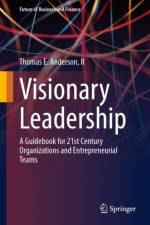
This book provides managers and leaders with a conceptual framework for visionary leadership to help them rediscover their vision in a more meaningful way with long-lasting results. It guides managers and leaders through four overlapping phases of the vision development and realization cycle at different levels and during various life stages. It teaches leaders to embrace employees as visionary partners in the journey to build a better organization. The founder-CEO¿s journey to lead a high-growth company begins with the ability to see their role within the company¿and the company itself¿through new lenses. While it requires a CEO to evolve and grow with their company as their plans for the company expand, the visionary should not solely set their sights on new horizons. Their ability to see within their company should become more granular as well. Featuring real-world case examples and chapter summaries with key takeaways, this book allows the business leader to walk themselves through the process of visioning with their team from start to finish. It also allows consultants and coaches to see the full lifecycle of a vision and support the visionary at any level of an organization.
This book brings together a diverse range of findings on current and emerging business concerns when the authors were developing a series of 12 working Analytic Research Consortium (ARC) White Papers. It presents several, differently configured scenarios, drawing on cyber as an example; the use and further optimization of estimative/probabilistic language; communicating analytical insights and other findings concerning ¿(un)certainty¿ to decision-maker end-users; and mitigating risk. It also evaluates in detail today¿s rapidly evolving Gen-AI systems and technologies, e.g. those underlying OpenAI¿s ChatGPT and Google¿s Bard/Gemini. This includes their respective value concerning scenario development and other business-relevant methods, tools and techniques, e.g. ¿Red Teaming¿. The topics discussed are assessed using the multi-methodologies of, firstly, ¿Intelligence Engineering¿ (IE) and, secondly, ¿Strategic Options Analysis¿ (SOA). The latter half of the book introduces an alternative scenario planning process, including use of new computer-software and AI tools. In addition to Gen-AI, we identify that the emerging discipline of Causal AI may work better for foresight and scenario activities.The book is a valuable read for a diverse readership from the public and private sectors, spanning government, the military, law enforcement, education, industry, commerce, retail, and enterprises of all sizes. Also, students at business schools and high-level decision-makers, including politicians, military commanders, and C-Suite leaders in various fields, will benefit from it.
More stories showing how negotiation is the stuff of life, to mark Scotwork's 50th anniversary.
Covering expert reports of nineteen jurisdictions across four continents, this Handbook re-examines the positions of shareholders in a comparative, global, and empirical setting. Useful for researchers, policymakers, and corporate professionals, it shows how shareholders use their voting rights to finance the activities of their companies.
Abonner på vårt nyhetsbrev og få rabatter og inspirasjon til din neste leseopplevelse.
Ved å abonnere godtar du vår personvernerklæring.